 ultimate-guide
Whiskey Cellar Management: Best Practices
Table of Contents
- Why Proper Whiskey Cellar Management Matters
- Temperature Control and Cellar Stability
- Humidity Management and Environmental Conditions
- How to Store Whiskey Bottles for Long-Term Preservation
- Cellar Cleaning and Sanitation Protocols
- Whiskey Collection Inventory Template and Organization
- Using a Whiskey Collection Tracking App for Stock Rotation
- How Long Does Whiskey Last After Opening
- Best Practices Summary
- Frequently Asked Questions
Last Updated: October 4, 2026
Why Proper Whiskey Cellar Management Matters
Whiskey cellar management is the practice of maintaining optimal storage conditions for a spirits collection to preserve flavor, value, and authenticity over time. A well-managed cellar protects your investment from environmental damage, spoilage, and deterioration that can render bottles undrinkable or worthless.
The stakes are real. Improper storage, fluctuating temperatures, excessive humidity, poor organization, or neglected inventory, degrades whiskey quality within months. A $200 bottle stored carelessly becomes a $50 bottle. Worse, you won't know which bottles are at risk until you open them.
Beyond preservation, proper whiskey cellar management ensures you know what you own, can access it safely, and understand its condition at any moment. Whether you're a casual enthusiast with 20 bottles or a serious collector with 150+, the fundamentals remain the same: control temperature, manage humidity, maintain cleanliness, organize inventory, and track stock rotation.
Temperature Control and Cellar Stability
The single most important factor in whiskey cellar management is maintaining a consistent temperature. Whiskey expands and contracts with temperature fluctuations, causing the cork to loosen, seals to fail, and liquid to leak from the bottle.
The ideal storage temperature for whiskey ranges between 55°F and 65°F, with 60°F as the sweet spot. This range mimics natural cellar conditions and slows oxidation without freezing the spirit. Consistency matters more than hitting an exact number.
Temperature fluctuations cause what collectors call "ullage", the space between the liquid and the cork that expands when air enters the bottle.
Achieving stable temperature requires either a dedicated cooling system or a naturally cool space, a basement, underground room, or insulated closet away from direct sunlight and heat sources. If you're using a cooling system, invest in one rated for the volume you're storing.
Humidity Management and Environmental Conditions
Humidity control is the second pillar of whiskey cellar management. The ideal humidity level for storage is between 50% and 70%, with 60% as optimal. Too little humidity dries out corks, allowing air to enter and whiskey to evaporate.
Low humidity is the more common problem in most climates. Dry air causes cork shrinkage, which breaks the seal between the cork and bottle neck. Once air enters, oxidation accelerates and the whiskey deteriorates. A bottle sealed improperly can lose 5-10% of its volume annually through evaporation alone.
High humidity creates different risks. Mold grows on labels and boxes, making them illegible and reducing collection value. Metal foil capsules corrode, and wooden shelving warps or rots. If humidity exceeds 75%, mold becomes visible within weeks.
Measure humidity with an affordable digital hygrometer placed in the cellar. If readings fall below 50%, consider a humidifier, ultrasonic models are quiet and effective. If humidity exceeds 70%, improve ventilation or add a dehumidifier.
How to Store Whiskey Bottles for Long-Term Preservation
Proper bottle placement and storage conditions directly affect how long whiskey remains drinkable. Unlike wine, which should be stored on its side to keep the cork moist, whiskey bottles must be stored upright.
Store bottles upright on shelves or in racks designed for spirits. Ensure shelves are level and stable, uneven surfaces cause bottles to tip, corks to loosen, and contents to spill.
Avoid storing whiskey in direct sunlight or near windows. UV light degrades the spirit and fades labels. Keep bottles away from heat sources, radiators, vents, or exterior walls that experience temperature swings.
For long-term storage (10+ years), consider UV-protective glass or opaque storage boxes. These block light without requiring you to remove bottles from visibility. Label each box clearly so you know what's inside without opening it.
Organize bottles by type, age, or collection date, whatever system you'll actually maintain. Whiskey stored randomly becomes impossible to locate, and you'll accidentally open rare bottles for casual tasting.
Cellar Cleaning and Sanitation Protocols
A clean cellar prevents contamination, mold growth, and pest infestation. Establish a cleaning schedule and follow it consistently.
Weekly tasks: Remove dust and debris from shelves. Wipe down bottle exteriors with a soft cloth to prevent dust accumulation. Check for signs of leakage or cork deterioration.
Monthly tasks: Vacuum or sweep the floor. Wipe down shelves and racks with a damp cloth. Inspect all bottles for condition changes. Check thermometer and hygrometer readings.
Quarterly tasks: Deep clean all shelves and storage surfaces. Inspect the cooling system for leaks or malfunction. Check seals on doors and windows.
Annual tasks: Full cellar inspection by a professional if you have a dedicated cooling system. Check for structural issues, seal integrity, and equipment performance. Replace air filters in cooling systems.
Use only mild soap and water for cleaning surfaces. Avoid harsh chemicals that leave residue or fumes.
For drain cleaning (if your cellar has floor drains), use a simple water flush monthly to prevent clogs and bacterial growth.
Whiskey Collection Inventory Template and Organization
Tracking what you own is the foundation of effective whiskey cellar management. Without a system, you'll forget bottles, accidentally open rare ones, lose track of condition, and miss opportunities to complete sets or find trading partners.
Create an inventory template that captures essential information: bottle name, distillery, age statement, proof, purchase date, purchase price, current estimated value, storage location, condition notes, and tasting notes.
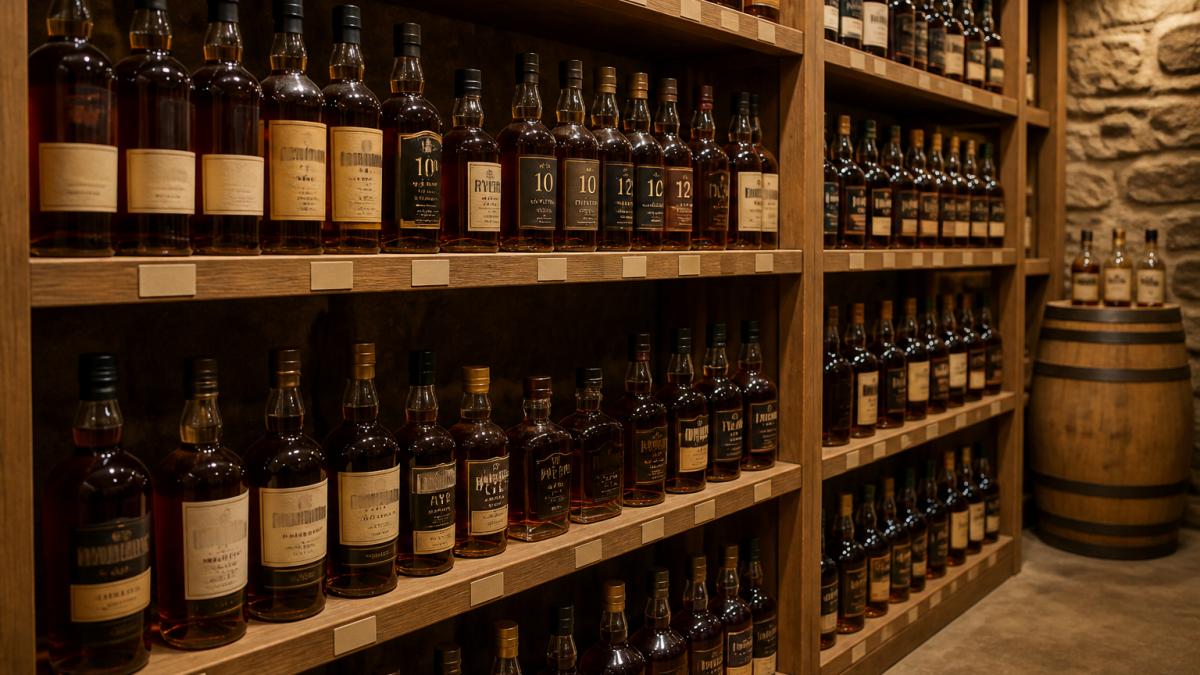
Here's a basic template structure:
| Field | Purpose | Example |
|---|---|---|
| Bottle Name | Identification | Buffalo Trace Kentucky Straight Bourbon |
| Distillery | Source tracking | Buffalo Trace Distillery |
| Age | Quality indicator | 8 years |
| Proof | Strength reference | 90 proof |
| Purchase Date | Timeline | March 15, 2026 |
| Purchase Price | Cost basis | $45.99 |
| Current Value | Collection worth | $52.00 |
| Location | Cellar placement | Shelf 3, Position 2 |
| Condition | Bottle state | Sealed, label intact |
| Notes | Custom details | Slight oxidation visible |
Update your inventory whenever you add a bottle, move one, or open one. This discipline prevents confusion and helps you catch problems early.
Organize your cellar layout to match your inventory system. If you organize by type in the spreadsheet, arrange bottles by type on shelves. If you organize by distillery, do the same physically. Misaligned systems create chaos.
Using a Whiskey Collection Tracking App for Stock Rotation
A whiskey collection tracking app transforms how you manage inventory and practice first-in, first-out stock rotation. The best apps let you log bottles, track tasting notes, manage wishlist items, and receive recommendations based on your palate preferences.
Bourbon Tracker™ is built specifically for this purpose. It allows you to log every bottle in your collection with custom notes, curate a wishlist of bottles you're hunting for, and receive AI-powered recommendations tailored to your taste profile.
The key advantage of a tracking app is visibility. Open the app, search your collection, and instantly see what you own, where it's stored, and whether it's been opened.
Stock rotation means consuming older bottles before newer ones, ensuring nothing sits untouched for so long that it deteriorates. First-in, first-out (FIFO) practices keep your collection fresh and prevent accidental waste.
For serious collectors, an app also tracks collection value over time. As you log purchase prices and update current estimates, you'll see how your collection appreciates.
How Long Does Whiskey Last After Opening
Once a whiskey bottle is opened, the clock starts ticking on quality. The spirit begins to oxidize immediately, changing flavor profile and gradually degrading.
An opened bottle of whiskey remains drinkable for 1-2 years if stored properly. The high alcohol content (40%+ ABV) acts as a natural preservative, slowing oxidation compared to lower-proof spirits.
Several factors affect how quickly an opened bottle deteriorates. A bottle that's 3/4 full oxidizes faster than one that's nearly full, because more air space means more oxygen contact.
To extend the life of an opened bottle, store it upright in a cool, dark place with a tight cork or cap.
For bottles you're not actively drinking, consider transferring small amounts to a smaller bottle with less air space. A 750ml bottle that's 1/4 full contains a lot of air.
Some collectors freeze opened bottles to halt oxidation, but this isn't necessary and can affect flavor.
Best Practices Summary
Effective whiskey cellar management combines environmental control, organization, and tracking into a sustainable system. Start with temperature stability, this is non-negotiable. Add humidity management, maintain cleanliness, organize your bottles logically, and track your inventory with a tool that works for you.
The investment in these practices pays dividends. Your collection stays in perfect condition, you know exactly what you own, you avoid waste, and you can enjoy your whiskey for years without degradation. Whether you're building a collection of 20 bottles or managing 150+, the fundamentals remain the same.
Frequently Asked Questions
What is the ideal temperature for storing whiskey in a cellar?
The optimal temperature range for whiskey cellar storage is 55-65°F, with 60°F as the target. Consistency matters more than the exact number, fluctuations above or below this range accelerate oxidation and evaporation. Temperature swings of more than 5°F per day can damage bottles over time. Use a reliable thermometer and maintain stable conditions year-round to preserve flavor and value.
Should whiskey bottles be stored upright or on their sides?
Store whiskey bottles upright. Unlike wine, whiskey's high alcohol content (40% ABV or higher) does not require cork contact with liquid. Upright storage prevents cork degradation from alcohol exposure, reduces evaporation loss, and makes inventory tracking easier. Horizontal storage is unnecessary and increases the risk of cork deterioration and leakage over time.
How long does whiskey last after opening?
An opened bottle of whiskey remains drinkable for 1-2 years if properly sealed. High-proof whiskeys (above 50% ABV) last longer than lower-proof bottles. The key is minimizing air exposure, use airtight caps and store in a cool, dark place. Once opened, whiskey gradually oxidizes and loses complexity, though it won't spoil like wine. Check for off-flavors or cloudiness before drinking old opened bottles.
What humidity level should a whiskey cellar maintain?
Maintain humidity between 50-70% in your whiskey cellar. Levels below 50% cause corks to dry out and shrink, increasing evaporation and oxidation risk. Above 70%, moisture can damage labels, encourage mold growth, and compromise the cellar environment. Use a hygrometer to monitor humidity and install a dehumidifier or humidifier as needed to stay within the ideal range.
How can I organize a large whiskey collection effectively?
Organize by whiskey type (bourbon, rye, Scotch, Irish), then by distillery or age. Use a whiskey collection inventory template or tracking app to log bottle details, purchase price, tasting notes, and location. Implement first-in, first-out (FIFO) rotation to prevent bottles from aging too long on the shelf. Clear labeling and a digital backup ensure you know exactly what you own and where it is.
What cooling system should I install in my whiskey cellar?
A dedicated wine or spirit cooling unit maintains consistent temperature better than a standard refrigerator. Look for systems with thermostat controls that hold 55-65°F and include humidity regulation. For smaller collections, a room air conditioner with a thermostat works. For larger cellars, a professional HVAC system with proper insulation and ventilation is ideal. Ensure your cooling system can handle your cellar's square footage and thermal load.
How do I protect my whiskey collection from light damage?
Store bottles in a dark cellar away from direct sunlight and UV light, which degrade whiskey and fade labels over time. If natural light enters, use UV-blocking window film or heavy curtains. Keep bottles in opaque storage boxes or on shelves shielded from windows. LED lighting in the cellar should be minimal and low-wattage. Proper storage conditions preserve the whiskey's color, flavor, and collectible value.
Track your whiskey collection with confidence. Bourbon Tracker™ makes it simple to log every bottle, receive personalized recommendations based on your taste, and stay connected with the bourbon community. Start managing your collection today, it's free, requires no download, and syncs across all your devices. Track My Collection