 ultimate-guide
Beginner's Guide to Whiskey Flavor Profiles
Quick Summary
Whiskey flavor profiles are the smells, tastes and textures you notice when you drink a spirit, such as vanilla, oak, dried fruit, pepper and smoke. Flavor comes from grain, yeast, distillation and barrel aging, filtered through each taster's senses. Beginners can learn them by tasting nose, palate and finish separately and logging notes.
- Start by naming one or two dominant notes, then build outward to more specific words.
- Corn tends to produce sweetness, rye adds peppery spice, and malted barley contributes malt.
- Taste whiskey in three stages: nose, palate and finish, writing one note for each.
- Compare pours in a flight of three half-ounce tastes to isolate what one production choice does.
- Keep a written log of bottle, date, notes and rating so your vocabulary builds over time.
Table of Contents
- What Whiskey Flavor Profiles Actually Describe
- How Grain, Yeast, and Distillation Shape Flavor
- How Aging and Oak Change What You Taste
- Whiskey Flavor Profiles by Type
- How to Taste Whiskey: Nose, Palate, and Finish
- Reading the Whiskey Flavor Wheel
- Whiskey Tasting Notes Examples to Practice With
- Start Logging Your Own Tasting Notes
- Frequently Asked Questions
What Whiskey Flavor Profiles Actually Describe
Last Updated: November 7, 2026
A whiskey flavor profile is the set of smells, tastes and textures you notice when you drink a spirit: vanilla, oak, dried fruit, pepper, smoke. Those descriptors are shorthand for a whiskey's character, and they are what Bourbon Tracker™ helps you record and compare across bottles.
Most beginners assume flavor is a fixed property printed on the label. It isn't. A profile is the sum of ingredients, production choices and time in the barrel, filtered through your own senses. Two people can taste the same pour and name different notes, and both can be right.
Flavor profiles break into a few broad families:
- Sweet: vanilla, caramel, toffee, brown sugar, honey
- Fruit: dried fruit, cherry, orange peel, apple, stone fruit
- Spice: cinnamon, black pepper, clove, nutmeg, baking spice
- Wood and smoke: oak, char, tobacco, leather, peat smoke
- Grain and cereal: malt, bread crust, corn sweetness, rye bite
Professionals use these families as starting points, not final answers. Your job as a taster is to notice which family dominates and then get specific. "Sweet" becomes "toffee and dark brown sugar" with practice.
A common mistake is trying to name everything at once. Start with one or two dominant notes, then build outward. The vocabulary sharpens with repetition, and a written log makes that repetition easy to track.
How Grain, Yeast, and Distillation Shape Flavor
The mash bill, the mix of grains that goes into fermentation, is the first major influence on flavor. Corn tends to produce sweetness and a round, rich body. Rye adds a peppery, spicy edge. Malted barley contributes malt, bready notes and a drier finish.
Yeast and fermentation come next. Yeast converts sugars into alcohol and also produces compounds that become fruity or floral esters. Longer fermentations generally give more of those fruity notes, which is why you can sometimes detect banana, pear or cherry in a young spirit before any barrel influence registers.
Distillation controls how much of that character survives. Distilling to a higher proof keeps the spirit lighter and cleaner, while distilling to a lower proof retains more of the grain and fermentation flavors. Column stills and pot stills produce noticeably different results, so the equipment matters as much as the recipe.
Watch out: a grain you cannot taste in the glass is not necessarily absent. Barrel aging can mask or transform it, so the same mash bill can taste very different after five years in oak than after two.
How Aging and Oak Change What You Taste
Aging is where most of a whiskey's color and many of its signature flavors come from. The barrel, usually charred American white oak in the bourbon world, releases vanillin, which gives the familiar vanilla note, along with caramel-like compounds and tannins that add structure and dryness.
Time in the barrel is not a simple "more is better" equation. Early years tend to add sweetness and color quickly. Longer aging can add depth and tannic spice, but it can also flatten a spirit if the barrel dominates everything. Warehouse climate matters too. Hotter, drier warehouses tend to speed extraction, while cooler conditions slow it.
Previous contents of the barrel and the char level also affect flavor. Sherry or port casks add dried fruit and nutty notes, while heavier char can push toward smoke and bitterness. Reading these influences is a useful skill: when you taste a whiskey with obvious vanilla and little grain, the barrel is probably doing most of the work.
Whiskey Flavor Profiles by Type
Broad styles come with recognizable flavor tendencies, though individual bottles vary widely.
- Bourbon: Corn-forward mash bill, new charred oak. Expect vanilla, caramel, brown sugar and baking spice, often with a sweet, full-bodied finish.
- Rye whiskey: Higher rye content. Expect pepper, dill-like herbal notes, spice and a drier, sharper profile.
- Scotch single malt: Malted barley, often aged in used casks. Flavor ranges from honey and fruit to briny, peated smoke, depending on region and production.
- Irish whiskey: Typically triple distilled and lighter in character. Expect smooth, approachable notes of green apple, vanilla and light cereal.
- Japanese whisky: Often precise and balanced, with delicate fruit, floral and oak notes.
Bourbon and rye are a good pairing for a beginner comparison. If you want to pick out the fruit specifically, this guide shows how to identify fruity notes in bourbon. Pour one of each and notice how the rye pushes spice and dryness while the bourbon leans sweet and rounded. Keep a log so you can see the pattern across several bottles rather than relying on memory.
How to Taste Whiskey: Nose, Palate, and Finish
Tasting works in three stages, and separating them is the single biggest skill a beginner can build. For a step-by-step method for identifying tasting notes, follow each stage in order. Most confusion comes from blending the stages together: you smell alcohol, taste sweetness, and feel warmth all at once, then reach for one word that doesn't quite fit. Slowing down and assigning one observation to each stage fixes that.
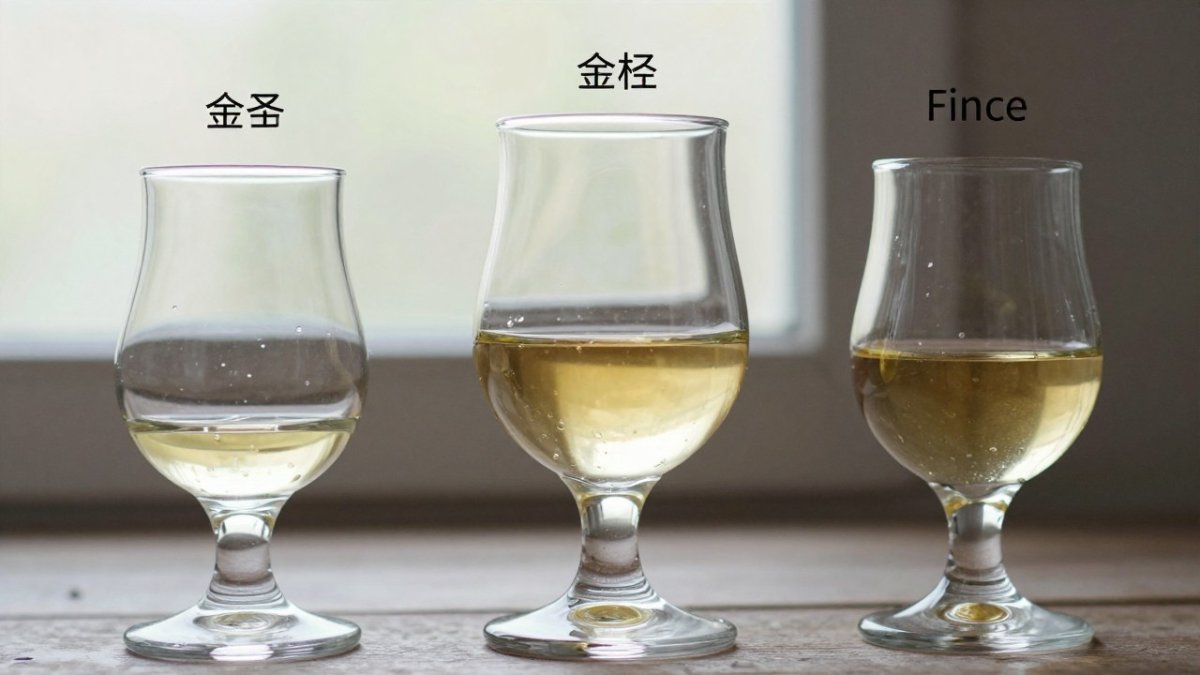
1. Nose. Pour about half an ounce into a tulip-shaped glass. Hold it at chest height and sniff gently with your mouth slightly open, then wait 30 to 60 seconds and sniff again.
2. Palate. Take a small sip and let it coat your tongue. Notice three things in sequence: the initial taste as it hits the front of your mouth, the mid-palate as it moves back, and the texture.
3. Finish. Swallow, then breathe out gently through your nose. The finish is what lingers: flavor, warmth, and texture after the whiskey is gone.
A useful habit is to write one note per stage before moving on.
Watch out: confusing aroma with flavor is the most common beginner error. A note you smell on the nose may not appear on the palate, and a flavor you taste may not have been obvious in the glass.
Reading the Whiskey Flavor Wheel
A flavor wheel is a circular chart that arranges descriptors in categories, starting with broad families in the center and moving to specific notes at the edge. For a practical, beginner-friendly walkthrough of using one, see Whiskey Flavor Wheels for Beginners: A Practical Guide. The aim is to move from "fruity" to "dried apricot" in a few steps.
To use one, start at the center and identify the family that matches your first impression. Then move outward to the more specific word that fits best. Don't force a match. If the wheel offers nothing close to what you taste, write your own note in the margin.
Flavor wheels are a tool for shared language, not a scoring system. Two wheels can organize the same aromas differently. The value is consistency: once you pick a wheel and stick with it, your notes become comparable across sessions.
Whiskey Tasting Notes Examples to Practice With
A table of example notes is useful reference, but the fastest way to learn flavor differences is a structured side-by-side flight.
Start with a three-pour progressive flight built around one variable. The goal is not to find a favorite; it is to isolate what one production choice does to flavor.
- Flight 1, Grain: a corn-forward bourbon, a high-rye bourbon, and a wheated bourbon. Notice how the rye pushes pepper and dryness while wheat softens the mid-palate.
- Flight 2, Barrel: the same style aged in new charred oak versus a used or sherry cask. Notice vanilla and caramel from fresh char versus dried fruit and nuttiness from a used cask.
- Flight 3, Peat: an unpeated single malt and a lightly peated single malt. Notice smoke on the nose versus smoke on the finish, which are often different.
Pour about half an ounce of each, nose them in order, then taste in the same order, and write one nose note, one palate note, and one finish note per glass before comparing.
Here is how the notes might read for a beginner-friendly comparison:
| Pour | Nose | Palate | Finish |
|---|---|---|---|
| Corn-heavy bourbon | Vanilla, brown sugar | Caramel, toffee, baking spice | Warm, medium |
| High-rye bourbon | Pepper, herbal | Black pepper, cinnamon, dill | Dry, lingering |
| Light Irish whiskey | Green apple, cereal | Light honey, vanilla | Short, clean |
| Peated Scotch | Peat smoke, brine | Smoke, honey, malt | Long, drying |
After the flight, rank the pours on one axis only, sweetness, spice, smoke, or texture, rather than overall preference.
Watch out: tasting flights go wrong when the pours are too large or the order runs from strongest to lightest. Start with the lightest whiskey and move toward the boldest, and keep pours small, or the peat or high-proof pour will dull everything that follows.
Start Logging Your Own Tasting Notes
Memory is unreliable. A week after a tasting, most people can't recall whether a bottle was spicy or sweet. A simple log fixes that.
Record the bottle name, the date, the style, your nose, palate and finish notes, and a rating out of ten. Add a line about what you'd pair it with or who it would suit. Over time, the log shows you which flavors you consistently enjoy.
Bourbon Tracker™ is built for exactly this. Follow a step-by-step guide to tracking tasting notes to set up your first log. You can log tasting notes, keep a personal wishlist and get AI-powered suggestions tailored to your palate, all in a free web tool with no download required. Start your first entry and build a record that gets more useful with every bottle. Track My Collection
Frequently Asked Questions
What are the main whiskey flavor profiles?
Most whiskey flavors fall into a handful of families: sweet (vanilla, caramel, toffee, brown sugar), fruity (dried fruit, apple, orange peel), spicy (cinnamon, black pepper, clove), grainy or cereal-like (malt, bread crust), woody (oak, cedar, tobacco), and smoky or peaty (char, campfire, iodine). Bourbon tends to lean sweet and vanilla-forward because of its corn-heavy mash bill and new charred oak barrels. Rye is usually spicier and drier, while many single malts show fruit, cereal, or smoke depending on the region and whether peat was used in malting. Learning these families gives you a vocabulary for describing almost any pour.
How do beginners taste whiskey?
Start with a small pour, about half an ounce, in a tulip-shaped glass. Look at the color and how it moves on the glass. Then nose it gently, first without swirling and then with a light swirl, and note what comes up. Take a small sip, let it coat your palate, and notice sweetness, heat, texture, and spice. Swallow or spit, then pay attention to the finish, the flavors that linger. Taste slowly, write down one or two words for each stage, and compare across pours. Adding a few drops of water often opens up aromas for newer drinkers.
What flavors should I look for in bourbon?
For bourbon, begin with vanilla, caramel, and brown sugar, which usually come from the new charred oak barrels and the corn-heavy mash bill. Then look for baking spice such as cinnamon or nutmeg, dried fruit like cherry or raisin, and a woody or toasty finish. Higher-rye bourbons often add pepper or mint-like spice, while higher-wheat bourbons tend to taste softer and sweeter. Use the tasting notes on a bottle as a starting point, then check whether you find those flavors yourself.
Does adding water change the flavor of whiskey?
Yes. A few drops of water can loosen the alcohol's hold on aromas, making floral, fruity, or grainy notes easier to pick up, and it can soften perceived heat. Too much water dilutes flavor and can flatten the finish, so add it a few drops at a time. Many experienced tasters taste a pour neat first, then add water and taste again to see what changed. Whether you prefer whiskey with or without water is a matter of personal taste.