 how-to
Whiskey Flavor Wheels for Beginners: A Practical Guide
Table of Contents
- What Is a Whiskey Flavor Wheel and Why Beginners Need One
- How to Taste Whiskey for Beginners: The Sensory Process
- Common Bourbon Flavor Profiles and What They Mean
- Using a Whiskey Tasting Notes Template to Track Your Progress
- Troubleshooting Common Beginner Mistakes with Flavor Wheels
- Building Your Palate: From Confusion to Confidence
- Frequently Asked Questions
Last Updated: September 24, 2026
What Is a Whiskey Flavor Wheel and Why Beginners Need One
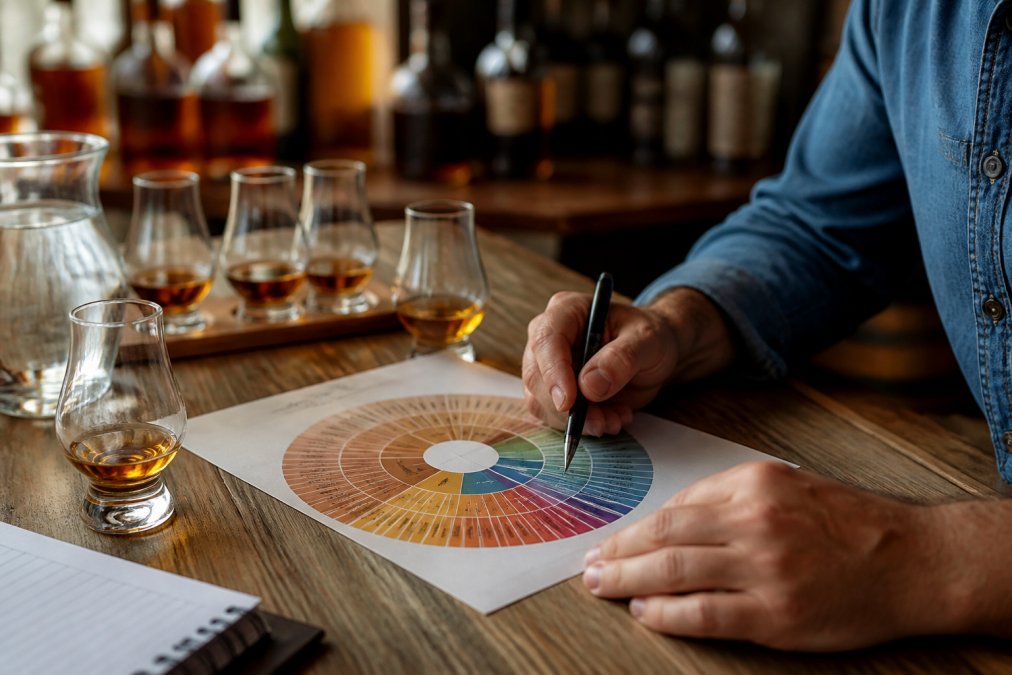
Whiskey flavor wheels are circular charts that map common tasting notes and aromas you'll find in bourbon and whiskey. It helps you name flavors you taste but can't quite describe. Think of it as a visual dictionary for your palate.
Most beginners face the same problem: they taste something pleasant, but when asked what they notice, they freeze. A flavor wheel solves this by organizing descriptors into categories. You start at the center with broad categories like "fruity" or "spicy," then move outward to specific notes like "cherry" or "cinnamon."
The real value isn't the wheel itself. It's what happens when you use it. Your brain starts making connections between aromas and memories. Over time, you develop what professionals call palate development, the ability to identify flavors without needing the wheel at all.
Collectors who start with a flavor wheel often move faster from confusion to confidence than those who try to wing it. The wheel gives your tasting process structure. Without it, you're just guessing.
How to Taste Whiskey for Beginners: The Sensory Process
Tasting whiskey properly involves four steps: observe, nose, taste, and evaluate. Each step uses a different part of your sensory analysis system. Skip any step and you'll miss half the experience.

Step 1: Observe the color and clarity. Pour about one ounce into a proper tasting glass. Hold it up to light. Note the color, from pale gold to deep amber. This tells you about cask maturation and age. Clarity matters too. Any haziness suggests the whiskey wasn't filtered properly.
Step 2: Nose the whiskey. Bring the glass close and take a gentle sniff. Don't plunge your nose in, that burns your olfactory system and ruins your ability to smell anything else for minutes. Swirl the glass slightly first. This releases volatile compounds that carry aroma. Your sense of smell dominates tasting. Most of what you think you "taste" is actually aroma.
Step 3: Taste and evaluate mouthfeel. Take a small sip. Let it coat your mouth for a few seconds before swallowing. Notice the texture, is it thin and watery, or thick and oily? This is mouthfeel, and it's determined by alcohol content and barrel interaction.
Step 4: Note the finish. After swallowing, notice what lingers. Does the flavor fade quickly or persist? A long finish suggests quality and complexity.
The Role of Your Olfactory System and Sensory Memory
Your nose does most of the work in tasting. The olfactory system sends signals directly to your brain's sensory cortex. This happens before taste buds even register anything.
Your tongue only detects five basic tastes: sweet, salty, sour, bitter, and umami (Human Biology of Taste). Everything else, the fruit notes, spice, wood character, comes from smell. When you taste whiskey, you're mostly smelling it.
Here's where beginners hit a wall: your brain can detect thousands of distinct aromas, but without a reference framework, those aromas remain unnamed sensations. Neuroscience calls this the semantic gap, the disconnect between what you perceive and what you can articulate. You smell something real, but you can't find the word for it, so you feel stuck.
This is precisely why a flavor wheel works. It bridges that gap by providing a shared vocabulary. When you smell a note and the wheel offers "cherry," your brain creates a memory link between that specific aroma and that label. After repeated exposure, typically 15-20 tastings, your brain internalizes these associations. You no longer need the wheel because your olfactory memory has been trained to recognize and name the pattern automatically.
This process is called flavor memory encoding. The wheel accelerates it by eliminating the guesswork. Without a wheel, you're asking your brain to invent its own categories, which is inefficient and inconsistent. With a wheel, you're training your brain using a standardized sensory language that professionals use.
Evaluating Mouthfeel and Finish
Mouthfeel describes how the whiskey feels in your mouth, not how it tastes. A whiskey with high alcohol content and long barrel time feels thick and coating. A younger, lighter whiskey feels thin and sharp.
The finish is what happens after you swallow. Some whiskeys fade within seconds. Others linger for minutes. A longer finish usually indicates more complexity and barrel interaction. Premium bourbons typically have finishes that last 30 seconds or longer.
Pay attention to both. They tell you about the whiskey's age, proof, and how it was made. They're part of your sensory evaluation toolkit. Importantly, mouthfeel and finish are less subjective than aroma, they're tied to measurable chemical properties like alcohol content and wood compounds. This makes them reliable anchors for beginners who are still building confidence in their sensory judgment.
Common Bourbon Flavor Profiles and What They Mean
Bourbon flavor profiles vary based on mash bill, barrel char, and maturation time. Understanding common profiles helps you predict what you'll taste before you open the bottle.
Vanilla and oak notes come from the barrel. New charred oak releases vanillin, the compound that tastes like vanilla. This is why most bourbons have vanilla in their aroma profile. The longer the bourbon sits, the more oak character it picks up.
Caramel and sweetness develop from the barrel char and grain interaction. The char creates caramelized sugars. The grain, usually corn in bourbon, adds natural sweetness. A bourbon with strong caramel notes has spent time in the barrel and likely has significant barrel influence.
Spice notes like cinnamon, pepper, and clove come from rye in the mash bill. High-rye bourbons taste spicier. Low-rye bourbons taste sweeter. This is one of the biggest flavor differences between bourbons.
Fruit notes like cherry, apple, and banana come from fermentation and aging. These are called flavor descriptors in the tasting world. They're real compounds created during the distillation and maturation process.
Tobacco and leather appear in older bourbons. These develop over years in the barrel as the spirit interacts with wood compounds. They're signs of age and complexity.
Using a Whiskey Tasting Notes Template to Track Your Progress
Tracking your tastings creates a record. Over time, you'll see patterns in what you like and how your palate has developed.
A good whiskey tasting notes template captures:
- Bottle name and proof
- Color and clarity
- Nose (initial, after swirling)
- Palate (mouthfeel, flavor notes)
- Finish (length, lingering notes)
- Overall rating
- Price and availability
Write down your impressions immediately after tasting. Don't wait. Your memory of flavor fades fast.
Troubleshooting Common Beginner Mistakes with Flavor Wheels
Most beginners make the same errors. Knowing them helps you avoid wasted tastings and understand why a flavor wheel alone isn't enough, the environment and technique matter just as much.
Sensory Mistakes That Undermine the Wheel
Mistake 1: Forcing flavors that aren't there. You see "cherry" on the wheel and convince yourself you taste cherry when you don't. This happens because the wheel creates expectation bias, your brain wants to find the label you're looking at. Stop. Taste what's actually in the glass. If you don't taste cherry, move on. There's no prize for finding every descriptor. The wheel is a guide, not a checklist.
Equipment and Environmental Mistakes
Mistake 4: Using the wrong glass. A proper tasting glass has a narrow opening and a bowl that concentrates aromas toward your nose. This is not optional, it's foundational. A wide glass disperses aromas into the air. A shot glass forces your nose into the alcohol burn zone. A coffee mug is worse. The glass shape directly affects what you can smell, which means it directly affects how useful the flavor wheel is.
The Interaction Problem: Why the Wheel Isn't Enough
The biggest mistake isn't on this list: it's assuming the wheel solves everything. A flavor wheel is a tool for naming aromas, but it can't compensate for poor technique, wrong equipment, or sensory fatigue. A beginner with a wheel, the wrong glass, and a fatigued palate will still feel lost. The wheel works only when the sensory conditions are right.
Building Your Palate: From Confusion to Confidence
Palate development happens through repetition and attention. You taste the same whiskey multiple times, or similar whiskeys in sequence. Your brain learns to recognize patterns.
Frequently Asked Questions
How do I read a whiskey flavor wheel?
Start at the center with broad flavor categories (fruity, spicy, woody, sweet), then move outward to specific descriptors. Smell the whiskey first without the wheel, note what comes to mind, then use the wheel to validate or refine your observation. The wheel helps you name what your nose already detected, it's not a test. Most wheels use concentric rings that narrow down from general to precise flavor notes.
Why do beginners struggle to identify specific whiskey flavors?
Your olfactory system needs training to distinguish between similar aromas. Beginners often experience 'tasting paralysis', they know something smells good but can't name it. A flavor wheel solves this by providing a vocabulary and framework. You're not developing new senses; you're building the language to describe what you already smell. Regular tasting with a wheel accelerates this learning curve significantly.
What are the primary flavor categories on a whiskey wheel?
Most whiskey flavor wheels organize aromas into broad categories: fruity (citrus, berries, stone fruit), spicy (pepper, cinnamon, clove), woody (oak, cedar, vanilla), sweet (caramel, honey, chocolate), and grain-based notes (cereal, corn, wheat). Within each category are sub-descriptors. Common bourbon flavor profiles often emphasize sweet and spicy notes due to corn mash bills and charred barrel aging, while rye whiskeys lean toward spicier, peppery characteristics.
Can a flavor wheel help me identify notes in bourbon?
Yes. A flavor wheel is specifically designed to help you map the aromatic complexity in bourbon. Since bourbon's character comes from grain selection, kilning methods, and cask maturation, the wheel helps you trace these influences to specific tasting notes. For example, if you detect vanilla and caramel, the wheel connects those to barrel aging. Over time, using a wheel trains your palate to spot these connections automatically.