 how-to
Is Your Whiskey Bottle Seal Actually Intact?
Last Updated: November 5, 2026
Quick Summary
A whiskey bottle seal inspection checks the capsule, cork, wax, or tax strip for tears, lifts, glue residue, and uneven seating, since these are the first evidence of tampering or a leak. Photograph the whiskey bottle seal before touching it, then compare fill level, label, and base markings against known-good examples.
- Photograph the closure, fill level, label, and base markings before you touch the bottle.
- A capsule that lifts at the seam or leaves sticky residue suggests a rewrap.
- A cork sitting proud, sunken, or at an angle is a red flag.
- Fresh wax is smooth and continuous; a re-dip often shows a waxy smear at the base.
- Never peel a capsule or pick at wax, as it can wipe out resale value.
Table of Contents
- Why a Whiskey Bottle Seal Tells You Almost Everything
- Whiskey Bottle Inspection Checklist: What to Check Before You Buy
- Whiskey Bottle Leak Inspection: Spotting Evaporation and Oxidation
- Signs of Whiskey Bottle Tampering You Should Never Ignore
- How to Spot Fake Whiskey Bottles: Where Seal Checks Fall Short
- How to Inspect a Bottle Without Damaging It
- Documenting Your Inspection for Resale, Insurance, or Shipping
- Log Your Inspected Bottles in Bourbon Tracker
- Frequently Asked Questions
Why a Whiskey Bottle Seal Tells You Almost Everything
A whiskey bottle seal is the first and best evidence of what happened to that bottle before it reached your hands.
Here is the hard truth most buyers learn too late: the liquid inside can look perfect while the seal tells a different story.
Below, we walk through a full whiskey bottle seal inspection guide, from the first glance at the capsule to the moment you log the bottle in your collection.
Whiskey Bottle Inspection Checklist: What to Check Before You Buy
Run this whiskey bottle inspection checklist before money changes hands. It covers the closure types you are likely to meet. The order matters: work from least invasive to most invasive so you never damage a bottle you might walk away from.
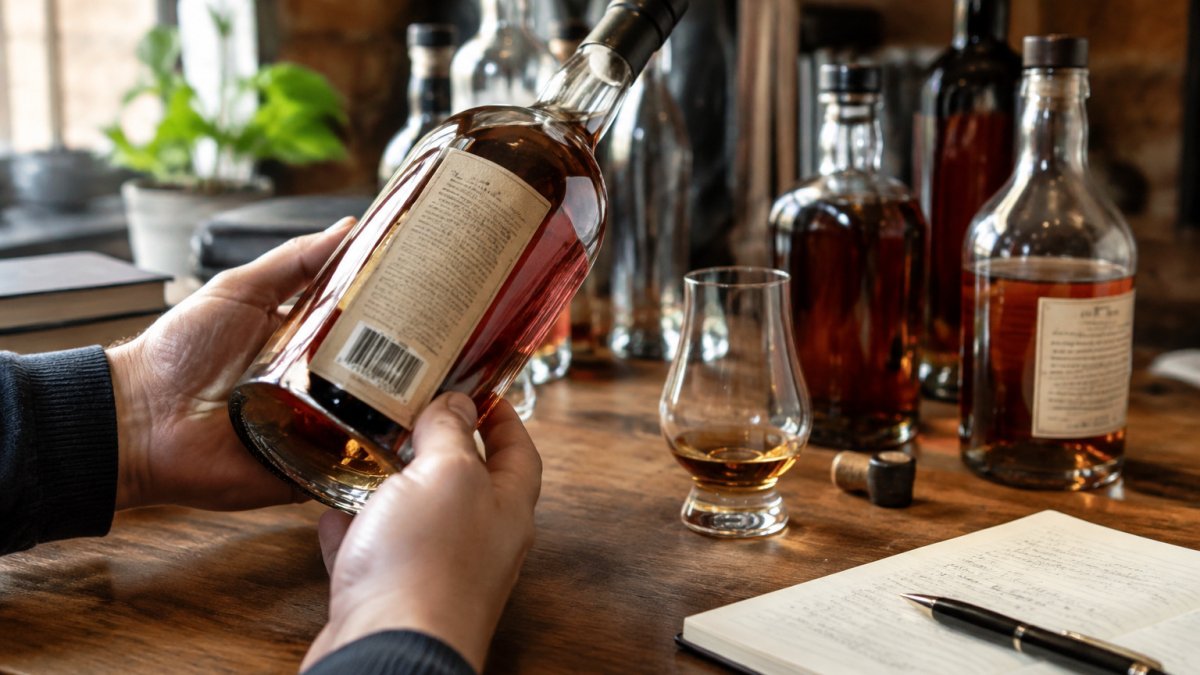
- Photograph the bottle before you touch it. Capture the closure, fill level, label, and base markings from several angles under even light. These photos become your baseline if a dispute arises later.
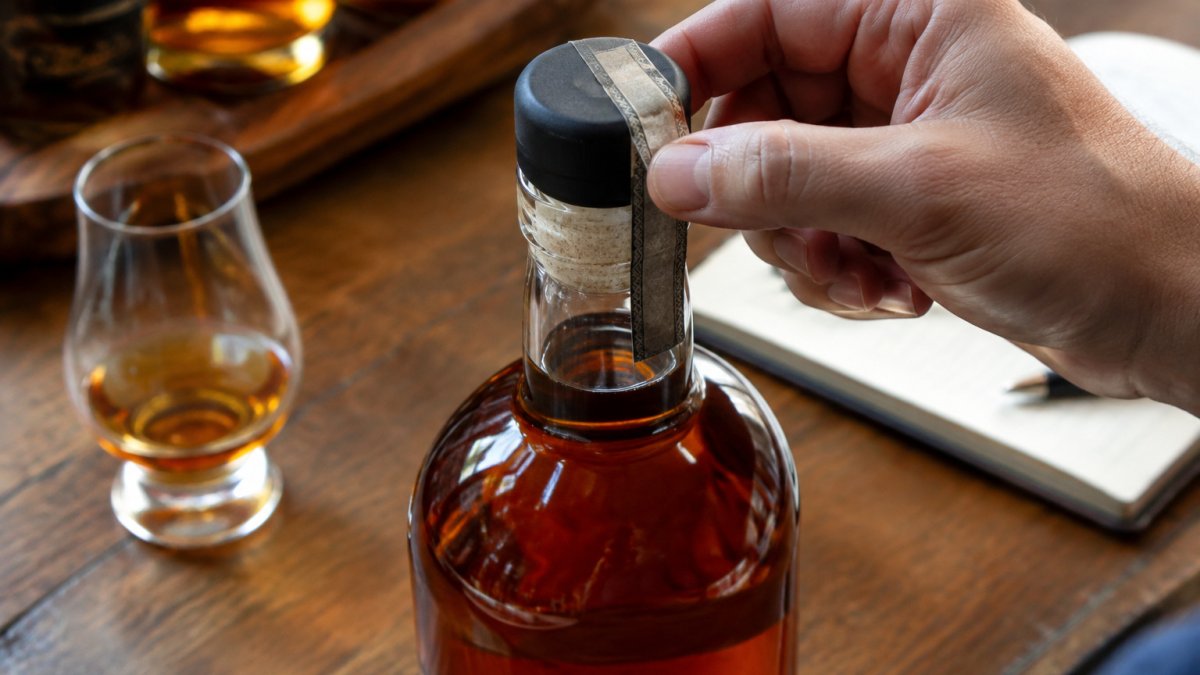
- Check the capsule or seal for tears, lifts, or glue residue. Run a fingernail lightly along the seam without pulling. A capsule that lifts at the seam or leaves sticky residue suggests a rewrap.
- Look at the cork or cap seating. It should sit flush and even with the bottle finish. A cork that sits proud, sunken, or at an angle is a red flag.
- Tip the bottle gently and watch for seepage at the closure. Do this over a soft cloth and never over a hard surface.
- Hold it to the light and check the fill level against a known-good bottle of the same release and age.
- Examine the wax for cracks, uneven pours, or reheated patches. Fresh wax is smooth and continuous; a re-dip often shows a waxy smear at the base.
- Inspect the glass for seams, bubbles, and correct embossing. Sloppy glass is not proof of a fake, but it earns a closer look.
- Read the label for placement, print quality, and paper age. Compare against known originals for that release.
- Log your findings in a simple record before you open or move the bottle.
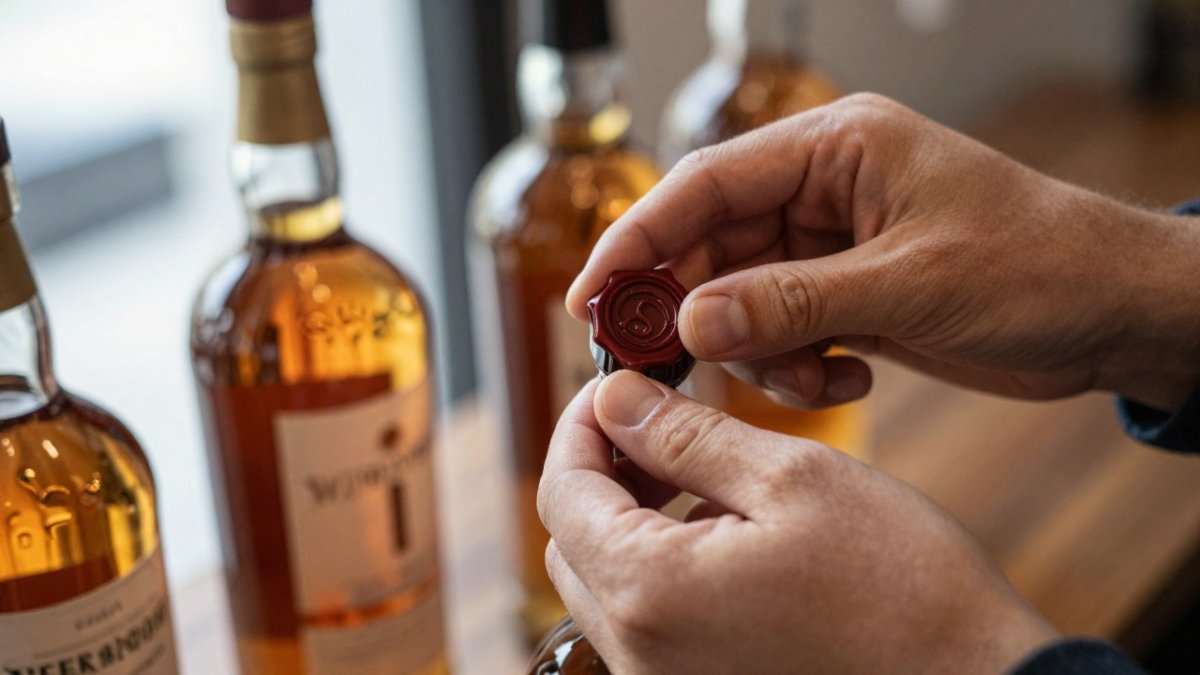
Seal Types and What Each One Should Look Like
Each closure fails in its own way, so judge it on its own terms.
| Closure Type | Normal Condition | Tampering or Failure Signal |
|---|---|---|
| Screw cap | Band unbroken and tight to the neck; cap does not spin freely | Torn band, free spin, or glue residue under the skirt |
| Cork and capsule | Cork level with the finish; capsule tight at the seam | Capsule lifts at the seam, sticky residue, or cork sitting proud |
| Wax seal | Smooth, continuous wax with an even pour | Cracks, bubbles, reheated patches, or a waxy smear at the base |
| Tax strip or paper seal | Crisp, unbroken edges; strip matches the bottle and era | Lifted corners, mismatched strip, or a strip that was clearly re-glued |
Screw cap: The band should be unbroken and tight to the neck.
Cork and capsule: The cork should sit level with the bottle finish.
Wax seal: Fresh wax is smooth and continuous.
Tax strip or paper seal: Edges should be crisp and unbroken. Lifted corners or a mismatched strip are red flags.
Fill Level, Bottle Shape, and Packaging Clues
Fill level is your quietest witness. Compare the liquid line to the shoulder of the bottle. A bottle that sits noticeably lower than others of the same age has likely lost whiskey to evaporation or a slow leak.
Bottle shape and markings matter too. Check that the embossing is crisp, the glass has no odd seams, and the label sits straight. Sloppy packaging is not proof of a fake, but it earns a closer look.
Whiskey Bottle Leak Inspection: Spotting Evaporation and Oxidation
A whiskey bottle leak inspection starts with three checks: seepage, smell, and fill level.
Look for sticky residue or staining around the closure and under the capsule. Tilt the bottle and watch the seam for a slow bead of liquid.
Watch for these signs:
- Lower fill level than comparable bottles
- Staining or crust around the cork or cap
- Dull or cloudy liquid where it should be clear
- A flat, papery smell instead of the expected aroma
Evaporation and oxidation rarely happen overnight. If you spot early signs, our guide to whiskey bottle storage that protects flavor covers how to slow the damage.
Signs of Whiskey Bottle Tampering You Should Never Ignore
Tampering is usually subtle. The most common signs of whiskey bottle tampering are a resealed capsule, a cork that sits proud of the finish, and a label that was clearly re-glued. But a single clue is rarely enough. What separates a real tampering case from a false alarm is the pattern: two or more independent signals that point the same direction.
Here is what to look for, with the mechanism behind each sign:
- Capsule seams that are glued, wrinkled, or misaligned. A factory capsule is applied in one pass; a rewrap shows a second adhesive line or a seam that does not match the original print.
- Cork seating that sits high, low, or at an angle. A cork that was pulled and reinserted rarely seats at the same depth, and the capsule often sits a millimeter off as a result.
- Wax that looks reheated, with a dull or greasy surface. Re-dipped wax loses the sharp edge of a factory pour and often shows a tide line where the new wax meets the old.
- Glue residue around the label edges or under the capsule. Fresh adhesive yellows differently than factory glue, and a re-glued label often sits a fraction of an inch off the original position.
- A fill level that is too high for the bottle's age. Whiskey slowly loses volume to evaporation; a bottle that should have lost a little to time but looks full was likely topped up.
Trust the pattern, not the single clue.
Documenting Tampering Findings for Resale, Insurance, or Shipping
If you spot tampering signs, stop and get guidance before you buy. But even a clean inspection deserves a record, because the same documentation protects you at resale, at claim time, and if a bottle is damaged in shipping.
Photograph the seal, the fill level, the label, and the base markings from several angles. Note the date, the seller, and the price you paid. Keep a simple log for each bottle:
| What to Record | Why It Matters |
|---|---|
| Seal and capsule photos | Proves condition at purchase |
| Fill level photo | Shows liquid condition over time |
| Label and base markings | Supports authenticity claims |
| Purchase date and seller | Builds provenance |
| Storage location | Tracks conditions for insurance |
For shipping, photograph the bottle packed in its shipping container before you seal the box.
Watch out: an intact seal alone does not prove authenticity. Our walkthrough on buying authentic vintage bourbon bottles safely explains how to verify a seller and protect yourself, and our guide on insuring a high value bourbon collection explains what insurers typically want to see.
How to Spot Fake Whiskey Bottles: Where Seal Checks Fall Short
Knowing how to spot fake whiskey bottles means knowing what a seal cannot tell you.
Seal checks confirm that a closure is intact. They do not confirm that the bottle left the distillery with that closure. That gap is where fakes live.
So layer your checks:
- Compare label print against known originals for that release
- Check glass embossing for crisp, correct lettering
- Verify bottle markings and date codes against the era
- Weigh the bottle against a known-good example
- Ask for provenance and a paper trail
For a deeper look at label and print verification, read our guide on identifying authentic vintage bourbon labels.
How to Inspect a Bottle Without Damaging It
Safe inspection means hands off the seal and no pressure on the closure. Never peel a capsule to "check underneath." Never pick at wax. Never twist a cork to test it.
Follow these rules:
- Hold the bottle by the body, never the neck
- Use a soft cloth under the bottle on hard surfaces
- Photograph before you touch anything
- Skip the fridge and freezer tests some sellers suggest
- Store upright after inspection, never on its side
Watch out: peeling a capsule to inspect the cork can turn a collectible bottle into an opened one and wipe out its resale value in seconds. If a seller invites you to open it, that is your cue to decline.
Documenting Your Inspection for Resale, Insurance, or Shipping
Good records protect your money. Photograph the seal, the fill level, the label, and the base markings from several angles. Note the date, the seller, and the price you paid.
Keep a simple log for each bottle:
| What to Record | Why It Matters |
|---|---|
| Seal and capsule photos | Proves condition at purchase |
| Fill level photo | Shows liquid condition over time |
| Label and base markings | Supports authenticity claims |
| Purchase date and seller | Builds provenance |
| Storage location | Tracks conditions for insurance |
Documentation is also the first step toward coverage. Our guide on insuring a high value bourbon collection explains what insurers typically want to see.
Log Your Inspected Bottles in Bourbon Tracker
Once a bottle passes inspection, log it before it goes on the shelf. Bourbon Tracker™ lets you log tasting notes, curate your wishlist, and receive AI-powered recommendations.
It is free to use and requires no download. That gives you an organized record of each bottle.
Frequently Asked Questions
What should an intact whiskey bottle seal look like?
An intact whiskey bottle seal should sit flush and even around the closure with no gaps, lifting edges, or wrinkles. A wax seal should be continuous and unbroken, with no cracks radiating from the cap. A screw cap's tamper band should be fully attached and unbroken. The capsule should align with the bottle's neck without being twisted or stretched. Any unevenness, discoloration, or loose fit is worth a closer look before you buy.
Can you check a sealed bottle of liquor without opening it?
Yes. Most whiskey bottle seal problems are visible without opening anything. Tilt the bottle and watch for seepage around the closure, check the fill level against the shoulder, look for crusting or staining under the capsule, and examine the tamper band for cuts or resealing marks. A bright light behind the neck helps reveal hairline cracks in wax and residue trails that a quick glance would miss.
What does a leaking whiskey bottle look like?
A leaking whiskey bottle usually shows a sticky residue ring around the base of the cap, dark staining on the label near the neck, or a fill level noticeably lower than other bottles of the same release. Evaporation from a poor seal leaves a faint whiskey smell when you open the shipping box. If you see any of these during a whiskey bottle leak inspection, treat the closure as compromised and avoid long-term storage.
What should you do if a whiskey bottle seal looks damaged?
Photograph the defect before touching anything, then decide based on where the bottle came from. For a retail or shipped purchase, contact the seller with the photos and ask for a replacement. For a secondary-market buy, walk away or renegotiate. If you keep the bottle, drink it sooner rather than later, since a compromised seal lets oxygen in and flattens flavor over time.
Your next bottle deserves a paper trail, not a guess. Start with your bourbon collection, perfectly tracked and give every seal, fill level, and purchase a permanent home. Bourbon Tracker™ gives you AI label scanning, market value tracking, and a community that shares your obsession, all free to start. Get started with Bourbon Tracker™ and turn every inspection into a record you can rely on.