 how-to
How to Protect Bourbon from Sunlight Damage
Last Updated: November 4, 2026
Quick Summary
To protect bourbon from sunlight damage, store bottles in a dark, cool spot with steady temperature, like an interior closet or closed cabinet away from windows. Move any bottle in direct sun immediately, and add barriers such as solid doors, UV-filtering film, or bottle tubes where relocation isn't possible.
- UV light breaks down barrel compounds, fading color and flattening aroma and flavor.
- Light damage is cumulative, so every hour of exposure adds up over time.
- Glass blocks some UV but not all, so a sunlit display cabinet still passes light.
- Audit storage spots at morning, midday, and late afternoon because sun moves.
- Stand bottles upright so liquid never touches the cork, and keep seals tight.
Table of Contents
- Does Sunlight Damage Bourbon? What Actually Happens
- How UV Light Affects Whiskey and Spirits
- The Best Place to Store Bourbon Away from Light and Heat
- Step-by-Step: How to Protect Bourbon from Sunlight Damage
- How to Store Bourbon After Opening to Limit Light and Air Exposure
- Is LED Light Bad for Whiskey? What You Need to Know
- What to Do After a Bottle Has Been Exposed to Sunlight
- Your Bourbon Storage Monitoring Checklist
- Track Your Collection's Storage Conditions with Bourbon Tracker
- Frequently Asked Questions
Does Sunlight Damage Bourbon? What Actually Happens
Yes, sunlight damages bourbon, and it starts faster than most collectors expect. This guide explains how to protect bourbon from sunlight damage, from the first week on your shelf to long-term storage.
UV light breaks down the compounds that give whiskey its flavor and color. A bottle left on a bright windowsill for a few weeks can taste flatter and look paler.
How UV Light Affects Whiskey and Spirits
Ultraviolet light is the invisible part of sunlight that does the most damage to whiskey. It carries more energy than visible light, and that energy breaks chemical bonds in the liquid.
Here's what happens inside the bottle:
- Color fades. The amber hue comes from barrel compounds. UV exposure breaks those down, and the whiskey turns pale gold.
- Aroma weakens. Light degrades the aromatic compounds behind vanilla, caramel, and oak notes.
- Flavor flattens. Sun-exposed whiskey can taste duller and thinner than a protected bottle.
Light damage is cumulative.
For a deeper look at how light interacts with open bottles, the scientific overview of photodegradation in foods and beverages explains the chemistry in plain terms.
Assessing Your Bottles' Sunlight Risk by Exposure Level
Not every sunny spot carries the same risk. Use this quick scale to sort your bottles:
| Exposure Level | What It Looks Like | Risk | Action |
|---|---|---|---|
| Direct sun | Windowsill, sun-facing shelf, glass cabinet near a window | High | Move immediately |
| Bright indirect light | Open shelf across the room from a window | Moderate | Add a barrier |
| Dim ambient light | Interior closet, cabinet with doors | Low | Leave as is |
| Total darkness | Boxed, cellared, or in a closed case | None | Ideal for long-term storage |
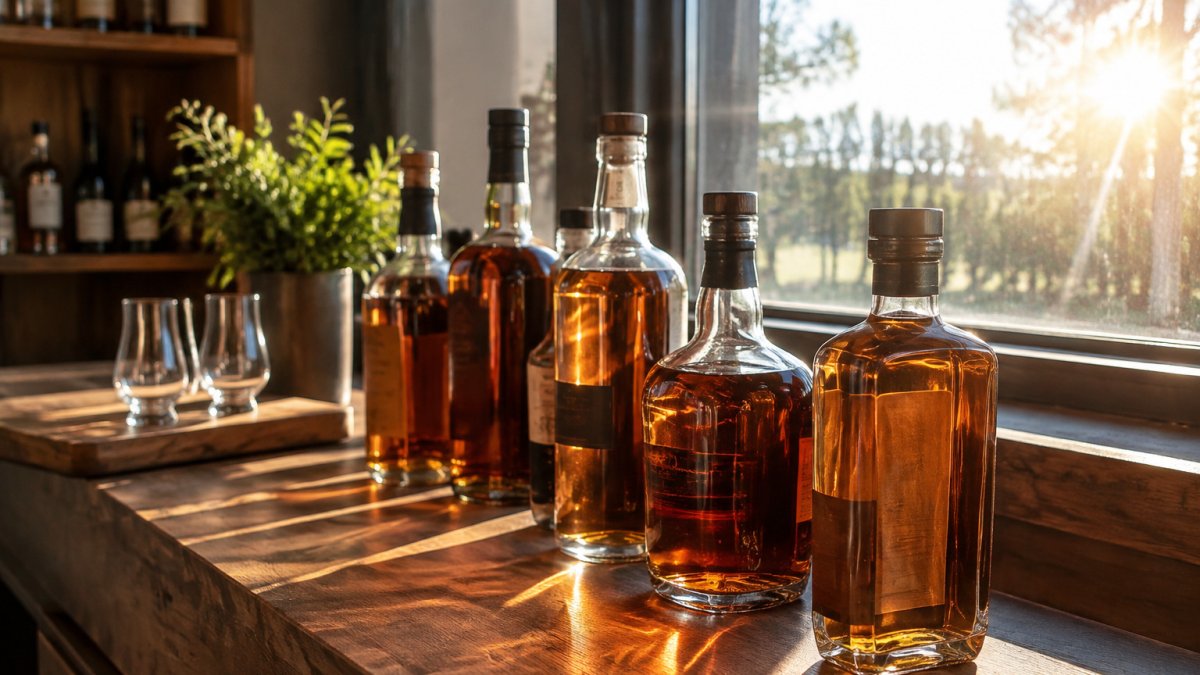
A common mistake is assuming a glass display cabinet protects a collection. Glass blocks some UV, but not all of it, and a cabinet in a sunbeam still passes plenty of light through.
The Best Place to Store Bourbon Away from Light and Heat
The best place to store bourbon is a dark, cool spot with a steady temperature, like an interior closet, a lower cabinet, or a basement shelf away from windows.
Rank your options like this:
- Interior closet or pantry. No windows, stable temperature, easy access. This is our pick for most homes.
- Lower kitchen or bar cabinet. Good if the doors stay closed and it's away from the oven.
- Basement shelf. Cool and dark, but watch for dampness.
- Display shelf near a window. The worst option. Move bottles off it today.
Heat speeds up every chemical reaction, including the ones that degrade flavor. Temperature swings are just as bad.
If you want broader bottle-storage guidance that protects flavor, see our best practices for whiskey bottle storage that protect flavor.
Step-by-Step: How to Protect Bourbon from Sunlight Damage
Protecting a collection takes one focused afternoon. Work through these three steps and most sunlight problems disappear.
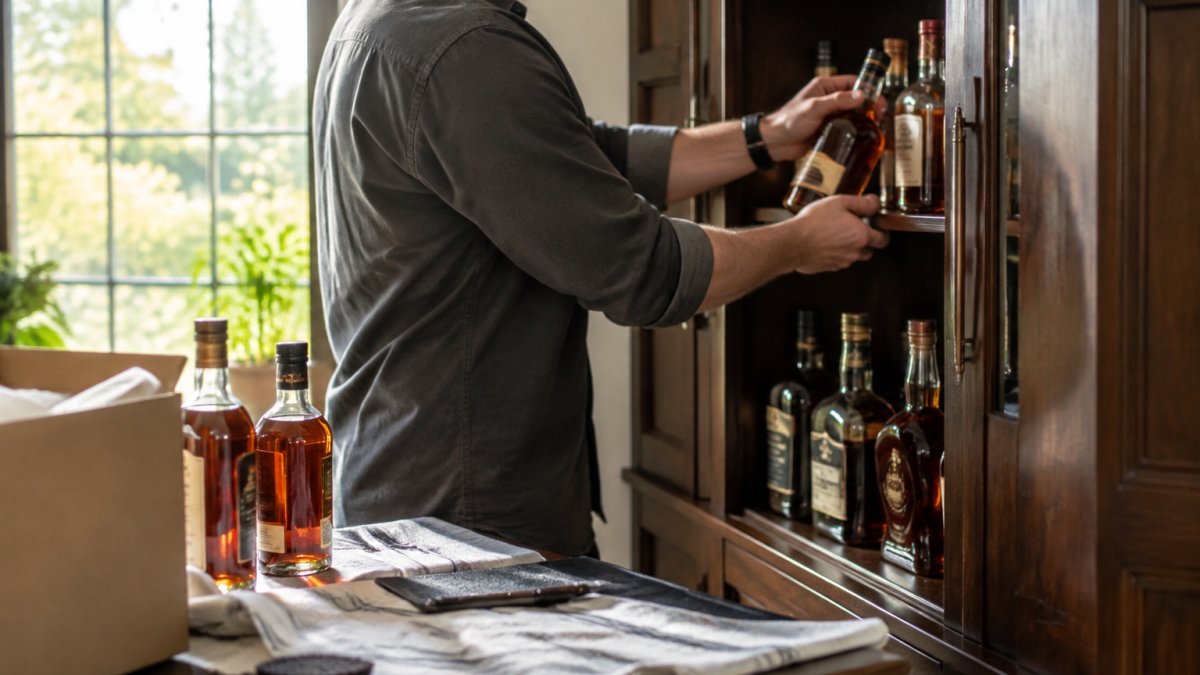
Step 1: Audit Your Storage Space for Light Exposure
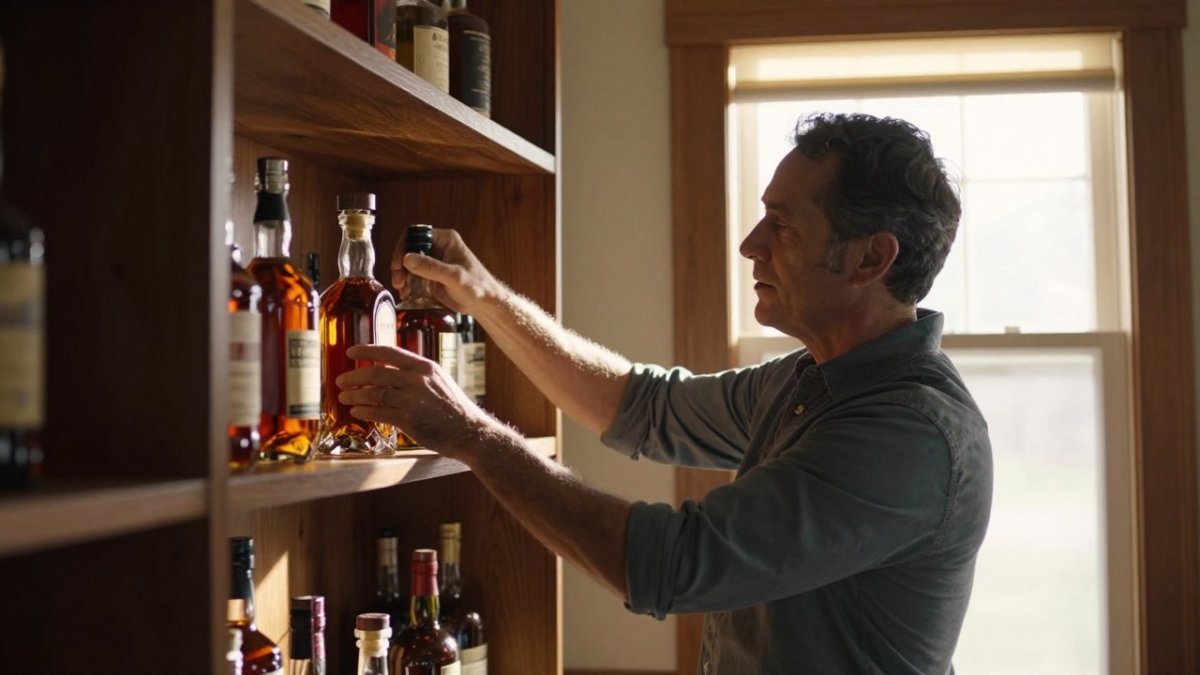
Walk through every room where you keep bottles and check each spot at three times of day: morning, midday, and late afternoon. Sun moves, and a shelf that looks safe at noon may catch a beam at 4 p.m.
Note these details for each storage area:
- Does direct sun hit the bottles at any point?
- Is there a window, skylight, or glass door nearby?
- Do the bottles sit in an open display or behind a solid door?
Step 2: Relocate Bottles and Add Barriers
Move the highest-risk bottles first. Anything in direct sun goes into a closet or closed cabinet today.
Then add barriers where full relocation isn't possible:
- Solid doors on cabinets instead of glass.
- UV-filtering film on nearby windows.
- Boxes or bottle tubes for long-term storage.
If you're weighing a display cabinet as a barrier, our guide on whether a whiskey display cabinet is bad for your collection covers the trade-offs before you buy.
Step 3: Control Temperature and Seal Bottles Properly
Keep the storage area cool and steady, and away from heat sources like radiators, ovens, and heating vents. Check the seal on every bottle.
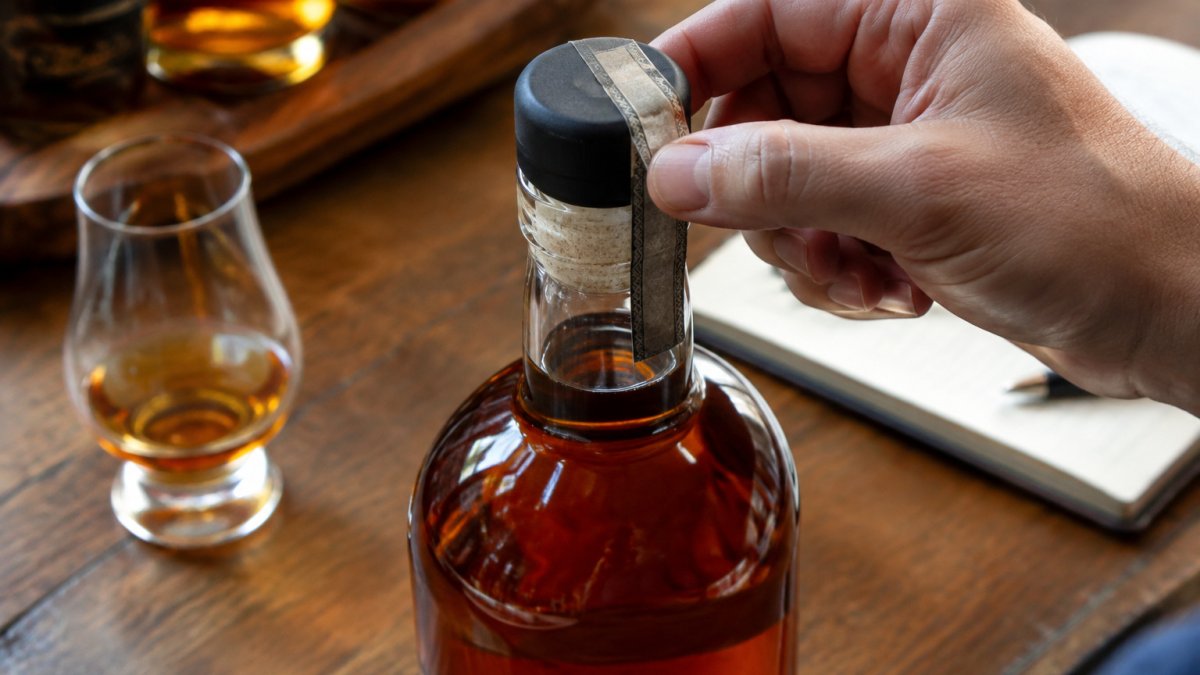
- Stand bottles upright so liquid never touches the cork.
- Make sure corks sit flush and caps are tight.
- Watch for leakage or a loose fit, which means air is getting in.
For the specific temperature rules that protect bottles during sealing and relocation, read our whiskey storage temperature rules.
How to Store Bourbon After Opening to Limit Light and Air Exposure
Store opened bourbon in a dark cabinet with a tight cork, upright, and away from heat. Air and light both speed up oxidation, and an opened bottle has less liquid to buffer the change.
- Keep it dark. The same rules apply as for unopened bottles.
- Reseal tightly. Press the cork in fully after every pour.
- Limit headspace. A bottle that's nearly empty has more air contact. Finish it or move it to a smaller container.
For a full walkthrough, our guide to storing open bourbon bottles covers light and air protection in detail.
Is LED Light Bad for Whiskey? What You Need to Know
LED light is far less harmful to whiskey than sunlight because it gives off almost no UV.
That said, LED isn't zero risk. Bright LED display lighting left on for hours daily adds up over years.
The bigger concern with display lighting is heat. Some fixtures run warm, so check that the light source isn't heating the bottle directly.
What to Do After a Bottle Has Been Exposed to Sunlight
Act quickly, and most bottles recover fine. Stop further exposure, then make a calm, evidence-based call about whether the liquid is still worth drinking or keeping.
Step 1: Stop the Exposure and Record What You Know
Move the bottle to a dark, cool spot immediately, an interior closet or a closed cabinet away from windows and heat sources.
A bottle that spent one afternoon in a sunbeam is a very different case from one that sat on a windowsill for six months. If you cannot remember, check the label and the liquid level for clues.
Step 2: Assess the Bottle in a Fixed Order
Evaluate the bottle from least invasive to most invasive so you do not disturb a bottle that may still be in good shape.
- Check the fill level first. A sealed bottle that has lost liquid points to a failing cork or cap, air exposure on top of light exposure, which is more serious than light alone.
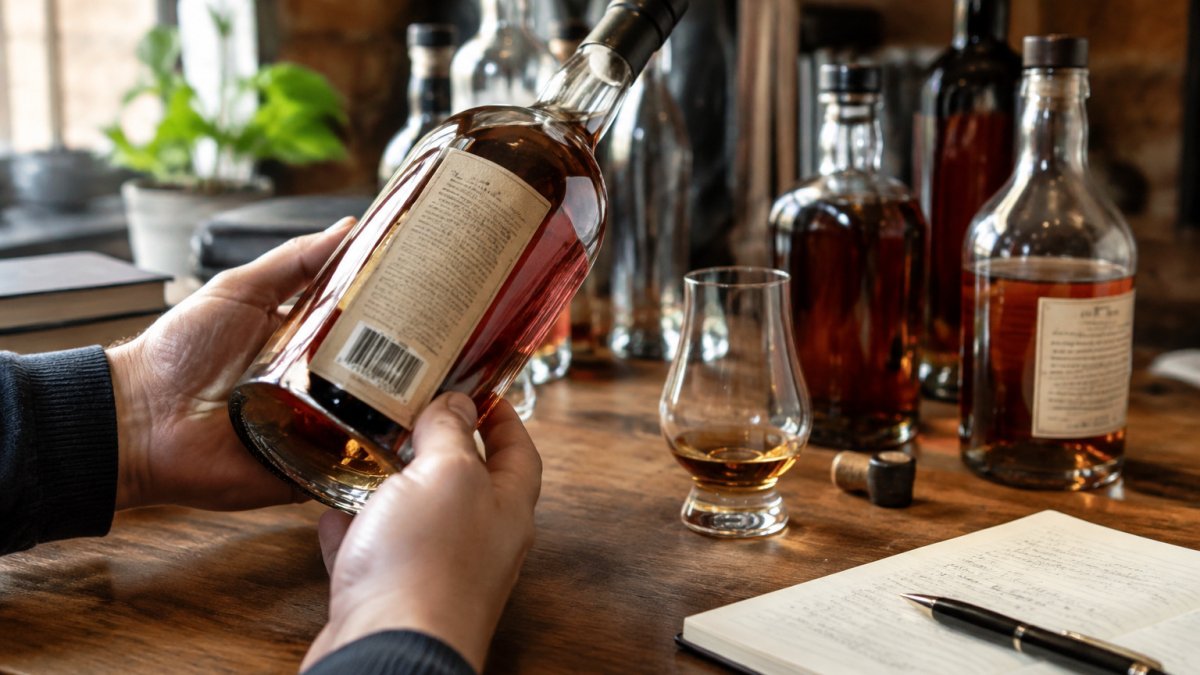
- Inspect the label and packaging. Fading, yellowing, curling, or cracking is a reliable sign of sustained light exposure. Compare to a known-protected bottle from the same brand if you have one.
- Look at the liquid color against a white background. Hold the bottle next to white paper in normal room light. A washed-out, pale gold color compared with a fresh bottle of the same expression suggests real light damage. Do not judge color under colored or dim lighting.
- Smell a small sample. Pour about half an ounce into a clean glass and let it sit for a minute. A protected bourbon should still show its expected vanilla, caramel, and oak notes. Flat, dull, or slightly cardboard-like aromas point to oxidation or light damage.
- Taste a small sip. If the aroma is intact, taste. Thin, hollow, or bitter flavors that do not match your memory of the bottle confirm a problem. If the flavor is close to normal, the bottle is likely fine.
Step 3: Decide the Bottle's Future
Use the assessment to sort the bottle into one of three outcomes:
- Drink it soon. If color, aroma, or flavor has clearly faded, the bottle will not improve. Finish it over the next few weeks rather than saving it for a special occasion.
- Keep it as a display or collectible piece. If the liquid held up but the label faded, the bottle may still have value as a display item. Store it dark from then on and document its condition with photos.
- Keep it in normal rotation. If nothing changed, treat it like any other bottle and return it to proper dark storage.
Watch out: do not pour a sun-exposed bottle down the drain based on color alone. Color fades before flavor does in many cases, and a pale bottle can still taste close to normal. Taste before you discard.
Step 4: Separate Light Damage from Heat and Oxidation
Light, heat, and air all degrade bourbon, and they often act together. Knowing which one caused the change helps you prevent a repeat.
- Light damage shows up as faded color and a dull, flat aroma, usually with a faded label on the same bottle.
- Heat damage tends to produce a cooked or stewed note and is often accompanied by a pushed or leaking cork.
- Oxidation shows up in opened bottles as a sharp, stale, or nutty flavor that develops over weeks to months, especially in bottles with a lot of headspace.
A bottle near a sunny window may have suffered all three. Fixing the light problem alone will not help if the bottle also sits next to a radiator or has been open for a year.
Step 5: Document and Prevent a Repeat
For collectible bottles, photograph the label, fill level, and any packaging before and after storage changes. The TTB labeling rules for distilled spirits explain why label condition matters to a bottle's identity and provenance.
Finally, find out how the bottle ended up in the sun. A shelf that catches a late-afternoon beam, a glass cabinet near a window, or a display that only gets direct light in winter are all common causes.
Your Bourbon Storage Monitoring Checklist
Run this checklist every few months to keep light damage from creeping back in. The goal is not just to confirm bottles are dark, but to catch the specific conditions that let light, heat, and air reach a bottle in the first place.
Light Path Checks
- Walk each storage area at three times of day, morning, midday, and late afternoon, and note where sunlight actually lands. Sun angles change with the season, so repeat the check in winter and summer.
- Confirm no bottle sits in direct sun at any point during the day.
- Check glass cabinet doors, skylights, and glass-block walls for light transmission. Glass blocks some UV but not all, and a cabinet in a sunbeam still passes plenty of light.
Temperature and Heat Checks
- Feel the storage area at the warmest part of the day. A spot that feels warm in the afternoon is a heat risk even if it is dark.
- Check that no bottle sits near radiators, ovens, heating vents, or appliances that run warm.
- Confirm the storage area stays steady rather than swinging between warm and cool each day. Repeated expansion and contraction stresses corks and lets air in.
Seal and Bottle Condition Checks
- Inspect every cork and cap for a tight, flush fit. A loose or pushed cork means air is getting in.
- Stand all bottles upright so liquid never touches the cork.
- Check fill levels on sealed bottles. A sealed bottle that has lost liquid points to a failing seal.
Recordkeeping
- Update your storage notes for every bottle that moved.
- Flag bottles that have been open the longest and plan to finish them before they fade.
- Note any spot that failed a check and what you changed to fix it.
A quick quarterly review catches problems before they cost you a bottle. If a check fails, fix the spot first and then reassess the bottles stored there using the post-exposure steps above.
Track Your Collection's Storage Conditions with Bourbon Tracker
Keeping a collection safe is easier when you know exactly what you own and where it lives. Bourbon Tracker™ lets you log every bottle and keep tasting notes in one place, free and with no download required.
You can set a wishlist for future finds and get AI-powered recommendations based on your palate.
Ready to get organized? Track your bourbon collection with Bourbon Tracker™ and keep every bottle protected, documented, and easy to find.
Frequently Asked Questions
Will sunlight ruin bourbon?
Sunlight can damage bourbon over time, especially with repeated or long exposure. Ultraviolet light breaks down some of the compounds that give whiskey its flavor, aroma, and color, and the heat that comes with direct sun speeds up oxidation. A bottle left in a bright window for weeks or months may taste flatter and look lighter than one stored in a dark cabinet. Short exposure during a pour won't ruin a bottle, but consistent direct sunlight is a real risk for long-term storage.
Is LED light bad for whiskey?
LED light is generally safer for whiskey than direct sunlight because it emits very little ultraviolet radiation, which is the main cause of light damage. That said, strong, continuous LED light can still contribute to slow changes over long periods, and the heat from any lamp matters. For long-term storage, keep bottles in a dark place or behind a cabinet door. LED display lighting is fine for short-term showing, but don't leave collectible bottles under bright lights for months.
How should you store an opened bottle of bourbon to protect it from sunlight?
Store opened bottles upright in a cool, dark place, away from windows and heat sources. Keep the original cork or cap tightly sealed to limit air exposure and evaporation. If you plan to keep a bottle for months, consider transferring the remaining bourbon to a smaller bottle to reduce the air gap. Avoid display shelves near windows, and check the seal every few weeks. Logging the open date in a tracker helps you keep tabs on how long each bottle has been exposed.
Does indirect sunlight affect whiskey?
Indirect sunlight affects whiskey much less than direct sun, but it isn't zero risk. UV light can still reach a bottle through a window over time, and the warmth from a bright room can slowly raise the liquid's temperature. For bottles you plan to keep for years, treat indirect light as a mild risk and move them to a dark cabinet. For bottles you'll finish within a few months, indirect light is usually fine as long as the room stays cool.
Sunlight damage is quiet. It happens while a bottle sits on a shelf looking fine, and you only notice when you pour a glass that tastes flat. Take one afternoon to audit your storage, move the risky bottles, and set a reminder to check again in a few months.
Bourbon Tracker™ makes that easier with free bottle logging, label scanning, and a wishlist that keeps your whole collection in view. Get started with Bourbon Tracker™ and give every bottle a safe, tracked home.