 how-to
7 Whiskey Storage Temperature Rules That Protect Your Bottles
Last Updated: October 29, 2026
Quick Summary
The best whiskey storage temperature is a steady room temperature of roughly 59 to 68°F (15 to 20°C), kept away from heaters, windows and appliances. Stability matters as much as the exact number, because daily and seasonal swings stress the seal and push air in and out of the bottle.
- Aim for about 59 to 68°F (15 to 20°C) and keep it steady.
- Temperature swings between 40°F and 90°F cause more damage than a constant 75°F.
- Store unopened bottles upright, ideally in their original boxes.
- Opened bottles change faster as headspace grows; move them to a smaller bottle when below one-third full.
- Brief heat or cold rarely ruins whiskey, but check the seal before pouring after any extreme.
Table of Contents
- The Ideal Whiskey Storage Temperature Range
- Why Temperature Swings Matter More Than the Exact Number
- Choosing a Cool, Dark, Stable Spot in Your Home
- How to Store Unopened Whiskey for the Long Term
- How to Store Opened Whiskey So It Keeps Its Flavor
- Can You Freeze Whiskey, and What Happens If a Bottle Gets Too Hot or Cold
- Setting Up Your Storage So Your Collection Stays Protected
- Frequently Asked Questions
Whiskey bottles don't spoil the way milk does, but storage conditions still shape what ends up in your glass. Heat, light and wild temperature swings can dull aroma, flatten flavor and push the liquid in ways you'll notice over months or years. This guide walks through seven storage temperature rules.
The Ideal Whiskey Storage Temperature Range
The best temperature to store whiskey is a steady room temperature, roughly 59 to 68°F (15 to 20°C). That whiskey storage temperature range is cool enough to slow changes in the liquid but not cold enough to stress the seal.
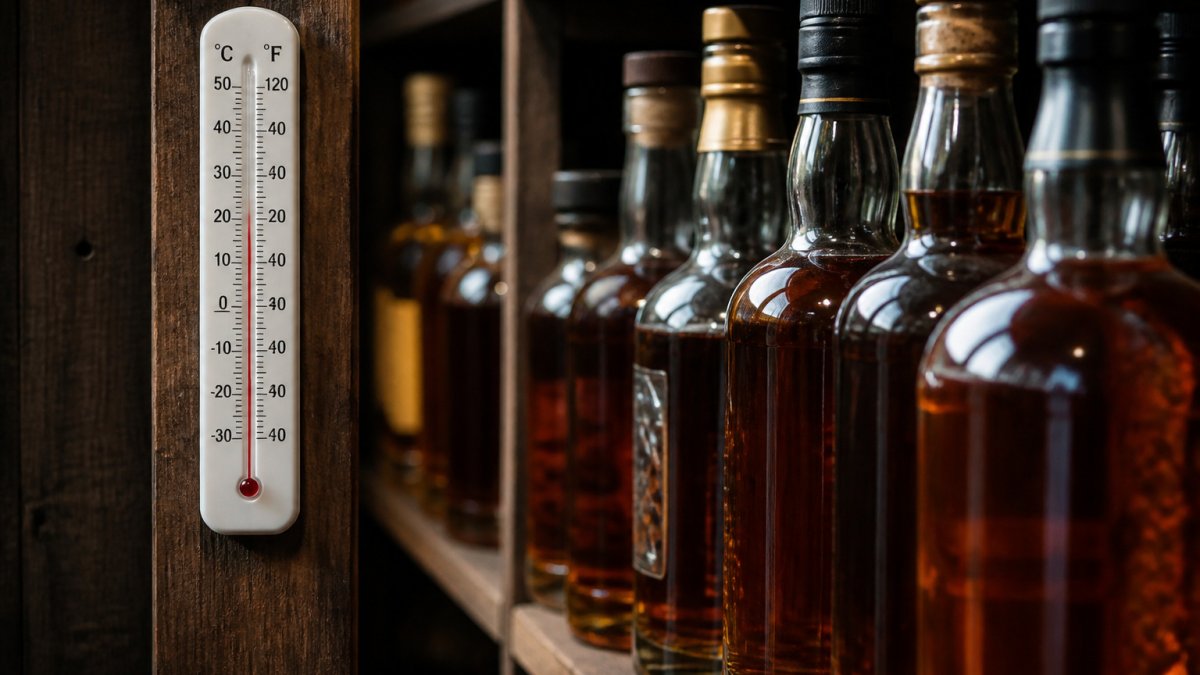
Most collectors aim for a number they can hold for years, not one that is perfect for a single day. A thermometer in the storage spot tells you more than any guess about your home.
- Aim for about 59 to 68°F (15 to 20°C)
- Keep the spot away from heaters, radiators and appliances
- Check the reading once a month with a cheap thermometer
Why Temperature Swings Matter More Than the Exact Number
A bottle kept at 75°F all year is usually in better shape than one that bounces between 40°F and 90°F.
This is where many collectors go wrong. They focus on a perfect number and ignore the daily and seasonal swings that actually cause trouble.
Watch out: A closet next to an exterior wall can swing many degrees between day and night.
Choosing a Cool, Dark, Stable Spot in Your Home
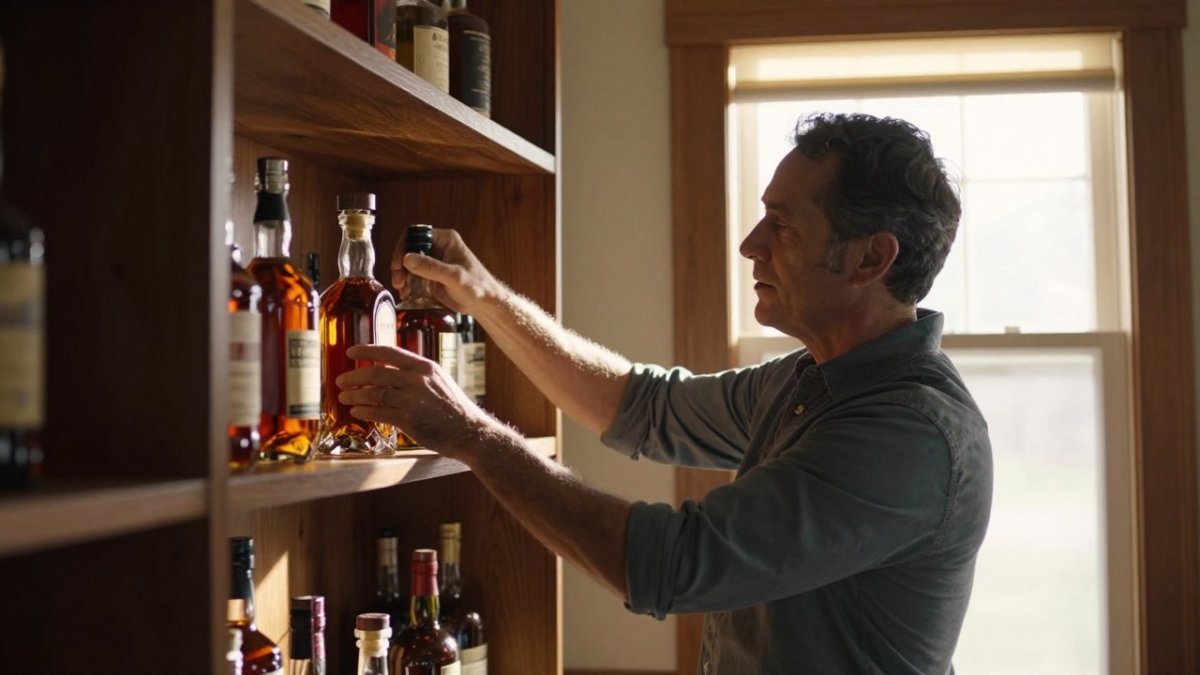
A good storage spot is cool, dark and stable. An interior closet, a cabinet away from windows, or a basement area that stays steady all work well.
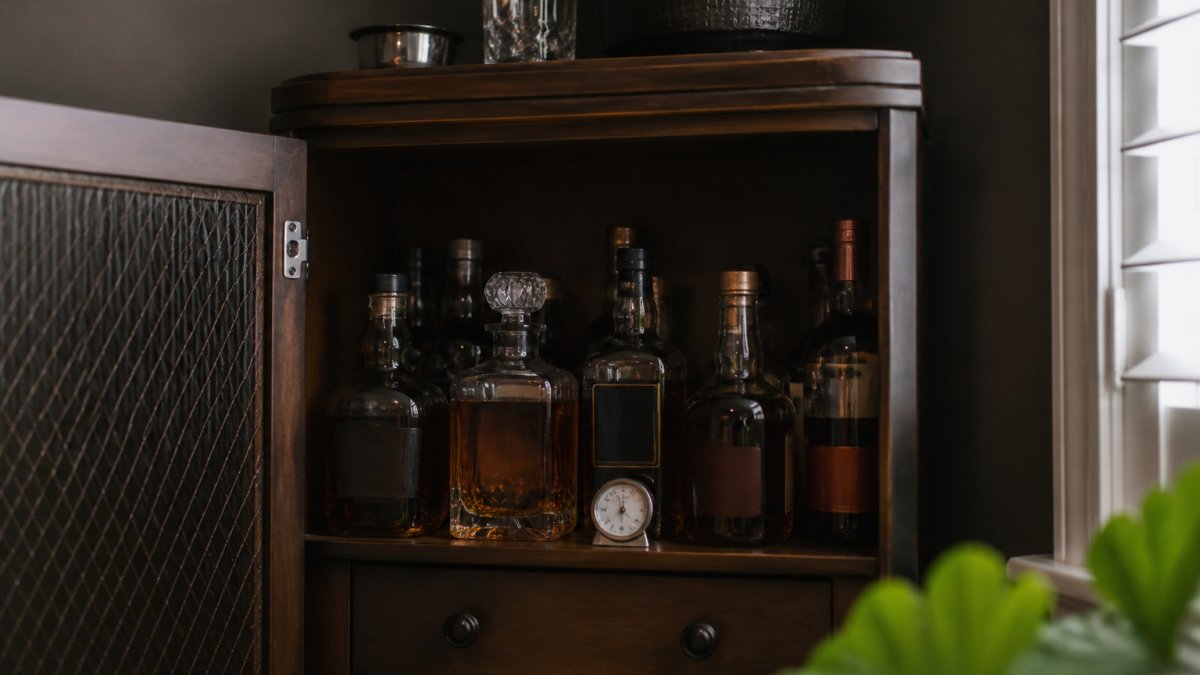
Avoid spots that get direct sunlight, because light and heat both push the liquid toward change. Also skip kitchens and garages, which swing in temperature more than most rooms.
How to Store Unopened Whiskey for the Long Term
Unopened bottles handle storage best when they stay upright in a cool, dark, stable place. Upright storage keeps the liquid away from the cork or closure, which helps prevent it from drying out or taking on odd flavors.
For long-term storage, keep the bottles in their boxes if you have them. The box blocks light and adds a bit of insulation against small temperature changes.
- Store bottles upright, not on their sides
- Keep them in their original boxes when possible
- Stay consistent: avoid moving them between rooms often
How to Store Opened Whiskey So It Keeps Its Flavor
An opened bottle is a different storage problem from a sealed one. Once air is in the bottle, oxidation begins, and the pace depends on how much air is in contact with how much liquid. That ratio, headspace to whiskey, is the single most useful thing to understand about storing opened bottles, and it is the part most guides skip.
Why fill level matters more than age
A bottle that is 90% full has a small pocket of air above the liquid. A bottle that is 10% full has a large pocket of air and a small amount of liquid, so the same oxygen has far more surface area to work on relative to the whiskey.
A common pattern among collectors is to treat the last third of a bottle as a different storage category. That is the point where headspace starts to dominate, and where the choices below start to matter.
Practical guidance by fill level
- Full to about two-thirds full: Keep the cap tight, store upright in a cool, dark spot, and check the seal every few months. Oxidation is slow at this level, and most bottles hold well for a year or more.
- About one-third to two-thirds full: This is the transition zone. Keep the bottle out of heat and light, and consider drinking it within a few months if it is a bottle you care about. A tight cap and a stable spot are still doing most of the work.
- Below about one-third full: Headspace is now large relative to the liquid. Options: drink it soon, transfer the remainder to a smaller bottle that minimizes air, or accept that the flavor will soften over the coming weeks. A smaller container is the most effective single step, a clean 375 ml bottle or a dedicated inert-gas wine preserver both reduce the air-to-liquid ratio.
The steps that actually help
- Keep the cap tight after every pour. A cap that is snug but not over-tightened is enough; the goal is to limit air exchange, not to seal the bottle for years.
- Store upright. Lying a bottle on its side puts whiskey against the cork, which can degrade the cork over time and add off-flavors.
- Keep it cool and dark. Heat speeds oxidation, so an opened bottle near a window or radiator will change faster than one in a cool cabinet. Light does its own damage to the liquid and the label.
- Minimize headspace when you can. Transferring to a smaller bottle is the most reliable home method. Inert gas sprays, which displace oxygen with a heavier gas, are an option for bottles you plan to keep for a while.
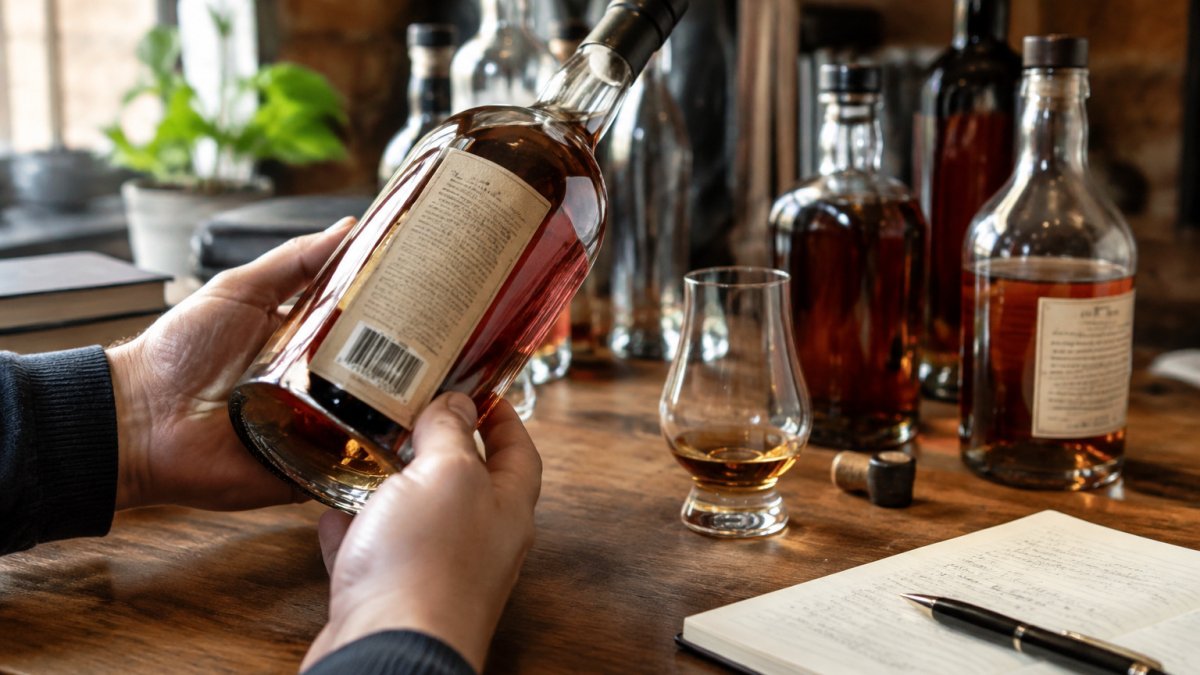
If you track your bottles, note the date you opened each one and roughly how full it is. A simple log makes it obvious which bottles are sitting in the danger zone, opened long ago, well below half full, before the flavor fades.
What to expect over time
Opened whiskey does not go bad in the food-safety sense. It changes: the brightest aromas fade first, the mouthfeel can thin, and the finish shortens. A bottle that has been open for a year at half full is usually still enjoyable, just less vivid.
The table below summarises how fill level affects how quickly an opened bottle changes, using the guidance from this section.
| Fill level | What to do | Expected change |
|---|---|---|
| Full to about two-thirds | Keep cap tight, store upright, check seal every few months | Slow oxidation; most hold a year or more |
| One-third to two-thirds | Keep out of heat and light; drink within a few months if valued | Transition zone; flavor starts to soften |
| Below one-third | Transfer to a smaller bottle or drink soon | Large headspace; flavor softens in weeks |
| Nearly empty | Finish it, cook with it, or move to small container | Tends to taste flat if left for months |
Can You Freeze Whiskey, and What Happens If a Bottle Gets Too Hot or Cold
Temperature extremes get more attention than they deserve in one direction and less than they deserve in another. A single hot afternoon or a cold snap rarely ruins a bottle, but knowing what actually happens, and what to do next, separates a calm collector from a panicked one.
What heat does to whiskey
Whiskey is roughly 40% alcohol by volume (80 proof) in most bottles, with the rest mostly water. Heat accelerates two things: oxidation of the aromatic compounds that give whiskey its character, and evaporation through the closure.
What heat can damage is the closure. Natural cork can dry and shrink when a bottle is stored upright in very dry, hot air for years, and a compromised cork lets in more air than it should.
What cold does to whiskey
Whiskey does not freeze in a home freezer. Ethanol freezes around -173°F and water at 32°F, and the mix in a typical bottle stays liquid well below 0°F. So a bottle left in a cold garage or a freezer will not turn to ice.
The real cold risk is the bottle itself. Glass contracts in the cold, and a cork or cap that fits tightly at room temperature can loosen slightly.
Recovery steps after a heat or cold event
If a bottle has been through a hot car, a freezing garage, or a brief temperature spike, work through this checklist:
- Let it return to room temperature slowly. Do not put a cold bottle in hot water or a hot bottle in the freezer. A gradual warm-up or cool-down over several hours is gentler on the glass and the closure.
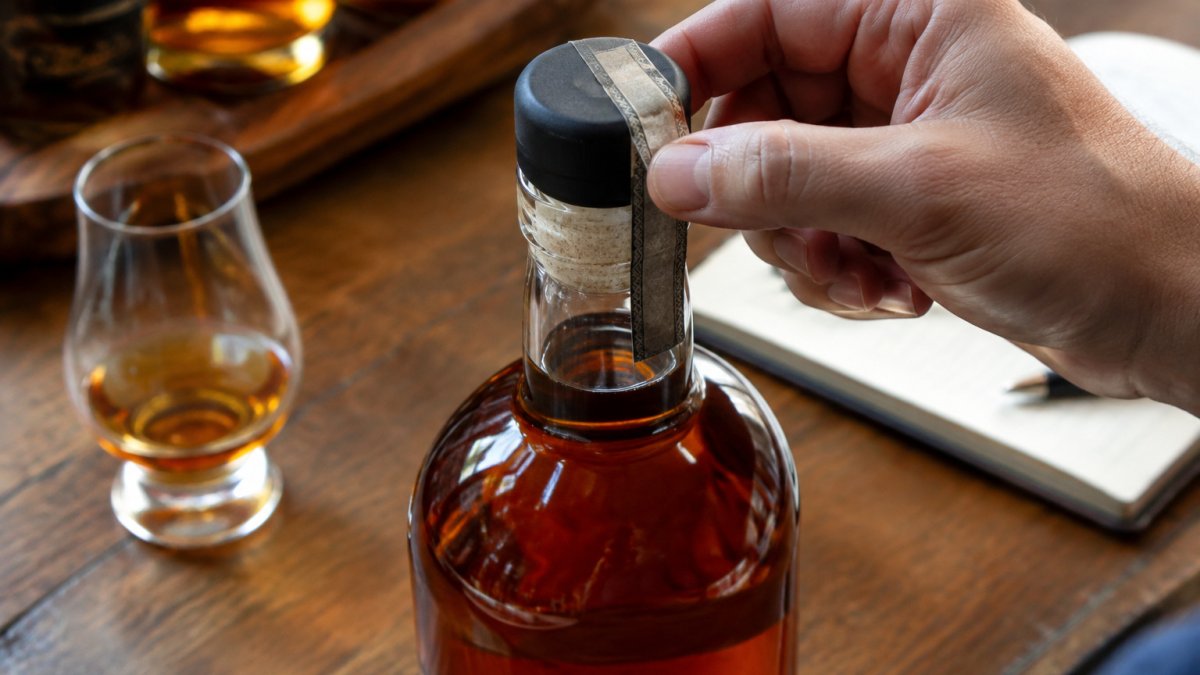
- Check the seal before you pour. Look for seepage at the cap, a cork that has pushed up or sunk, or crusty residue around the neck. A clean, tight seal is a good sign.
- Smell and taste a small pour. If the whiskey smells and tastes like it did before, the event was cosmetic. If it tastes flat or dull, that is a quality change, not a safety issue, it is still drinkable.
- Move the bottle to a stable spot. The recovery is not complete until the bottle is back in a cool, dark, steady location.
A leaking, crusted, or badly damaged seal is a different concern from a dull taste. If the closure has failed and the bottle has been open to air for a long time, inspect it closely before drinking. Quality changes and safety concerns are not the same thing.
The takeaway
Heat and cold mostly affect flavor and the closure, not whether the whiskey is safe to drink. A brief exposure is usually recoverable; a long, repeated exposure is what dulls a bottle. Treat the closure as the part most worth protecting, and give any bottle that has been through an extreme a slow return to room temperature before you judge it.
Setting Up Your Storage So Your Collection Stays Protected
Putting these rules together takes a little planning. Pick your spot, add a thermometer, keep bottles upright and log what you store where.
Bourbon Tracker™ helps with tracking your collection. You can log bottles, track tasting notes, and keep a wishlist in one place, free and without a download.
Frequently Asked Questions
How should unopened whiskey be stored?
Keep unopened bottles upright in a cool, dark place where the temperature stays fairly steady, ideally between 59 and 68 degrees Fahrenheit. Direct sunlight and heat sources such as windows, radiators, and appliances can degrade the spirit and the packaging over time. Upright storage keeps the liquid from touching the cork or closure for long stretches, which helps protect the seal. A closet, cabinet, or interior shelf away from exterior walls usually works well for most collectors.
Can you freeze whiskey?
You can freeze whiskey without it being ruined in the usual sense, because alcohol at typical bottling strength of 40 percent ABV does not freeze solid in a standard home freezer. However, freezing is not recommended for storage. Repeated expansion and contraction can stress the cork or closure, and the bottle may crack or leak. Cold does not add flavor or preserve the spirit better than a stable cool room does, so a steady cellar or cabinet is the safer choice.
How should an opened bottle of whiskey be stored?
Once opened, keep the bottle tightly sealed, upright, and in the same cool, dark, stable spot you use for unopened bottles. Air exposure is the main concern, because oxidation slowly changes flavor over weeks and months. A bottle that is more than half empty will age faster than one with little headspace. If you have a nearly empty bottle, consider transferring the remainder to a smaller container to reduce the air above the liquid, and finish it within a reasonable time for best flavor.
Does heat affect whiskey after it is bottled?
Yes. Heat can change the flavor and aroma of whiskey even after bottling, and sustained high temperatures speed up the process. Prolonged exposure can also stress closures and cause the liquid to expand and push against the seal. A bottle that has been briefly warm, such as during shipping, usually remains safe to drink, but a quality change may be noticeable. Signs of a serious problem include a leaking seal, visible residue, or an unusual smell, and any of these warrant caution before tasting.
Ready to organize your collection? Track My Collection with Bourbon Tracker™ and keep your bottles, notes and wishlist in one place.