 how-to
How to Curate a Diverse Whiskey Collection Step by Step
Quick Summary
To curate a diverse whiskey collection, first set clear goals for what it is for, your budget, and your bottle count. Then cover several categories such as bourbon, rye, Scotch, and Irish whiskey, and track each bottle with tasting notes. Balance a three-tier budget across everyday drinkers, step-up bottles, and keepers.
- Write down your goals, bottle count, and budget before buying any bottles.
- Build a three-tier budget: about 60% everyday drinkers, 30% step-up bottles, and 10% keepers.
- Cover four axes with early bottles: grain and style, flavor profile, proof, and price tier.
- Compare bottles side by side within the same category to judge real value.
- Record every pour with a consistent tasting notes template so you can spot patterns.
Table of Contents
- Start With Clear Goals for Your Whiskey Collection
- Choose Your Whiskey Categories: Bourbon, Rye, Scotch, Irish and Beyond
- A Sample Collection Plan by Bottle Count
- How to Organize a Whiskey Collection So You Can Find Anything
- Set a Budget and Balance Price Against Quality
- Track Every Pour With a Whiskey Tasting Notes Template
- Pick Your First Bottles With Best Whiskey for Beginners in Mind
- Frequently Asked Questions
How to Curate a Diverse Whiskey Collection Step by Step
Last Updated: November 6, 2026
Start With Clear Goals for Your Whiskey Collection
A clear goal makes every purchase easier. Before you buy a single bottle, decide what the collection is for. Do you want bottles to drink, to share, or to hold as keepers?
Start by answering three simple questions:
- What do you enjoy drinking? Note the styles you already like.
- How many bottles do you want? A small shelf of 10 needs different choices than a rack of 100.
- What is your budget? Decide on a monthly or yearly number before you shop.
Write your answers down. A short written goal keeps you from buying every limited release that catches your eye. It also gives your collection a shape you can build on over time.
Watch out: Buying rare bottles before you know your taste often leads to regret. Drink a few everyday bottles first.
Choose Your Whiskey Categories: Bourbon, Rye, Scotch, Irish and Beyond
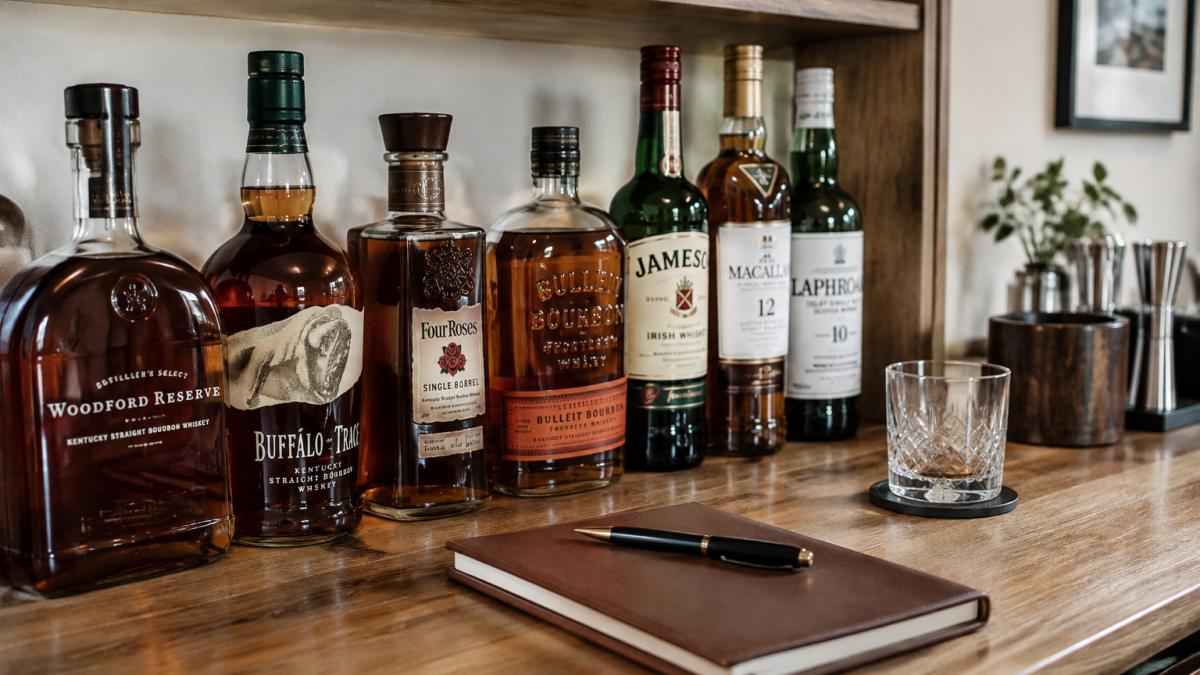
A diverse collection covers more than one style. Each category tastes different because of its grain mix, aging, and place of origin.
- Bourbon: Made mostly from corn, aged in new charred oak, and usually sweeter and rounder.
- Rye whiskey: Made with more rye grain, often spicier and drier.
- Scotch: Made in Scotland. Single malt is made from malted barley at one distillery, while blended Scotch mixes several.
- Irish whiskey: Often smooth and light, and commonly triple-distilled.
- Beyond: Japanese whisky, Canadian whisky, and other regional styles add new flavor profiles.
If you are new to rye, our guide on Bourbon vs Rye Whiskey for Beginners: Which to Try First explains the differences in plain terms. For Scotch, Single Malt vs Blended Scotch: Tasting Profiles Explained breaks down what to expect in the glass.
A Sample Collection Plan by Bottle Count
Use this table as a starting point. The exact split depends on your taste, so adjust as you go.
| Collection Size | Suggested Mix | Purpose |
|---|---|---|
| 5 bottles | 2 bourbon, 1 rye, 1 Scotch, 1 Irish | Learn the main styles |
| 10 bottles | 3 bourbon, 2 rye, 2 Scotch, 1 Irish, 2 wild cards | Add variety and one splurge |
| 20 bottles | 6 bourbon, 4 rye, 4 Scotch, 2 Irish, 2 Japanese, 2 open slots | Explore regions and finishes |
Leave one or two open slots. They give you room to chase a new flavor without breaking the plan.
How to Organize a Whiskey Collection So You Can Find Anything
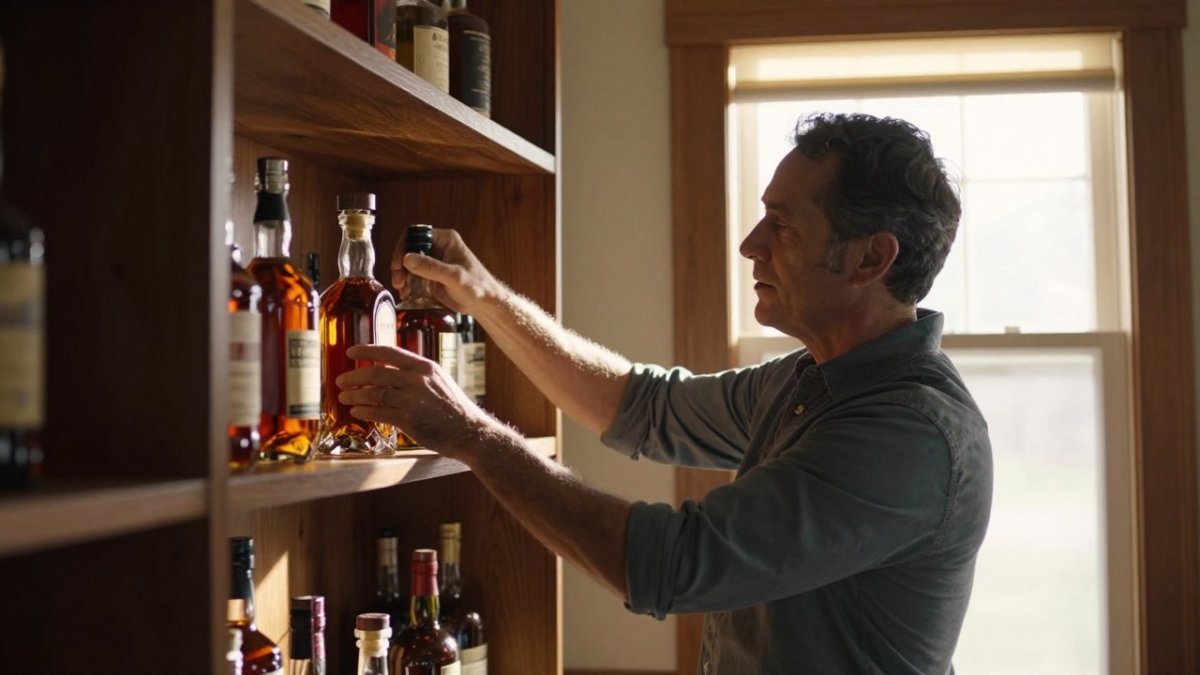
Good organization saves time and keeps bottles in good shape. Group bottles by style first, then by how often you drink them.
- Keep daily drinkers at eye level.
- Store keepers and older bottles in a cooler, darker spot.
- Label each shelf by category.
- Log every bottle in your digital inventory the day you buy it.
Bourbon Tracker™ lets you record each bottle, its category, and where it sits, so you can find any bottle in seconds. You can also use the platform to track how to organize a home whiskey collection with categories that match your shelves.
Store bottles upright, away from direct sunlight and heat, to protect the spirit and the label.
Set a Budget and Balance Price Against Quality
A whiskey collection is a recurring expense, not a one-time purchase, so the budget has to be a system rather than a number. A simple three-tier split can help keep spending honest and the collection diverse at the same time.
Build a three-tier budget. Divide your monthly whiskey money into three buckets:
- Everyday drinkers (about 60% of the budget): bottles you open without thinking twice. These are the backbone of the collection and the ones that teach you the most per dollar.
- Step-up bottles (about 30%): one category or proof point above your everyday picks, bought deliberately to compare against what you already own.
- Keepers and splurges (about 10%): a single bottle you save for, chosen after tasting, not before.
Adjust the percentages to your income and your goals, but keep all three buckets funded. A collection that spends everything on splurges has no baseline to compare against, and a collection that spends everything on everyday bottles never develops range.
Balance price against quality by comparing within a category, not across it. The useful question is not "is this bottle worth the money?" but "is this bottle worth the money compared with the other bottles in the same category at the same price?" Buy two bourbons at a similar price, taste them side by side, and record which one you would buy again. That comparison, repeated a few times, tells you more about value than any shelf talker.
Watch out: Be wary of hype and the secondary market. Some bottles sell for well above their suggested retail price, and inflated listings can appear online. Buy from reputable retailers and licensed sellers, ask about provenance on any bottle sold above retail, and treat any deal that seems too good as a reason to walk away. Counterfeit and refilled bottles do circulate, especially on secondary platforms, so verify the seller before you pay a premium.
Avoid the collecting-for-investment trap. Treat whiskey as a drink first. Most bottles do not appreciate reliably, storage and resale carry real costs and risks, and a collection bought for investment is usually a collection you are afraid to open. If a bottle is genuinely a keeper, buy it because you want to drink it on a meaningful occasion, not because you expect to sell it.
Review the budget quarterly. Add up what you spent, note which bottles you actually opened, and shift money toward the categories you keep reaching for. A budget you never review is just a wish.
Three-tier whiskey budget split by share of monthly spend
Track Every Pour With a Whiskey Tasting Notes Template
Tasting notes turn a bottle into a memory. Write them the same way each time so you can compare bottles later.
Use this simple template:
Bottle: ___________________ Style and proof: ___________________ Nose (aroma): ___________________ Palate (taste): ___________________ Finish (after taste): ___________________ Overall rating (1-10): ___________________ Would I buy again? Yes / No
Over time, your notes will show patterns, such as which bottles you consistently enjoy most.
Pick Your First Bottles With Best Whiskey for Beginners in Mind
Most guides tell you to start with approachable bottles. That advice is correct but incomplete, because "approachable" does not tell you how to make the first five purchases cover the range of whiskey rather than repeat the same flavor three times. Use a coverage framework instead of a shopping list.
Cover four axes with your first bottles. A collection is diverse when it varies along four axes, not just one:
- Grain and style: at least one corn-forward bourbon, one rye-forward whiskey, and one malt-forward Scotch or Irish whiskey.
- Flavor profile: one sweet and round bottle, one spicy and dry bottle, one smoky or peated bottle, and one light and fruity bottle. These four cover most of the flavor map a beginner will encounter.
- Proof: one bottle near 80-90 proof for easy sipping and one near 100 proof or higher to learn how proof changes the experience.
- Price tier: one everyday bottle, one step-up bottle, and one splurge, so you can taste whether the extra money buys you anything you actually enjoy.
A five-bottle starter that covers the axes. Choose one bottle from each line below, adjusting to what your local retailer stocks:
- A corn-forward bourbon at everyday price (sweet, round baseline).
- A rye whiskey or high-rye bourbon (spicy, dry contrast).
- A single malt Scotch, ideally one with a light or fruity profile (malt baseline).
- A peated Scotch or a smoky whiskey (the flavor most beginners either love or rule out early).
- A step-up bottle in whichever category you enjoyed most after tasting the first four.
That set gives you four distinct flavor profiles, at least three grain bases, two proof levels, and two price tiers for the price of five bottles. It is a coverage plan, not a checklist of popular names, so it adapts to whatever is actually on the shelf.
Taste side by side, then let your notes decide the next bottle. Pour small samples of two or three of your first bottles in one sitting, record notes in the same template each time, and note which style you reached for second. The next bottle should either deepen the category you enjoyed most or fill an axis you have not covered yet. That rule alone prevents the most common beginner mistake: buying five bourbons in a row and calling it a collection.
Watch out: Do not buy rare or allocated bottles before you know your taste. A hard-to-find bottle you do not enjoy is worse value than an easy-to-find bottle you finish, and early hype purchases are the most common source of collection regret.
Rebalance as your taste develops. Every few months, look at your notes and ask which axes are still thin. A collection that started as four flavor profiles and two price tiers should, over a year, become a personal map of what you actually drink, not a shelf of bottles bought because they were recommended.
Ready to build a collection you can actually manage? Track My Collection and start logging your bottles today. Bourbon Tracker™ keeps your inventory, tasting notes, and wishlist together in one free place, so every new bottle has a home.
Frequently Asked Questions
What are the essential categories to include in a diverse whiskey collection?
A well-rounded collection usually includes a bourbon, a rye, a single malt Scotch, a blended Scotch or another blend, an Irish whiskey and, if you want variety, a Japanese or other regional whisky. Start with one bottle from each category so you can compare grain bills, maturation styles and flavor profiles side by side. Once you know which categories you return to, you can expand within the ones you enjoy most. Think of the categories as a framework for variety rather than a fixed checklist you must complete before drinking.
How do you balance price and quality when building a whiskey collection?
Price and quality do not always move together, so set a monthly or per-purchase budget and spend it on bottles that do something specific for your palate. A mid-priced bottle that is well made often teaches you more than a rare release you cannot yet appreciate. Track what you actually finish and enjoy, then reserve higher spending for bottles that earn a place in your rotation. Prices vary widely by release, age statement and retailer, so compare current shelf prices in USD before buying.
How can I track my whiskey collection and tasting notes effectively?
Log each bottle when you add it, including its category, proof or ABV, purchase details and where it sits in storage. After each tasting, record aroma, palate, finish and an overall score in the same format every time so you can compare bottles later. A digital tool such as Bourbon Tracker can hold your inventory, tasting notes and wishlist in one place with no download required.