 how-to
How to Organize a Home Whiskey Collection
Table of Contents
- Assess Your Current Whiskey Collection and Set Goals
- Whiskey Storage Tips for Long-Term Preservation
- How to Display a Bourbon Collection
- Organize by Category: Bourbon, Scotch, and Beyond
- Use a Whiskey Collection Tracker for Inventory Management
- Create a Whiskey Inventory Spreadsheet or Digital Log
- Security, Insurance, and Collection Safety
- Maintain and Evolve Your Collection
- Frequently Asked Questions
Last Updated: October 8, 2026
Assess Your Current Whiskey Collection and Set Goals
Before you organize a home whiskey collection, take stock of what you actually have. Count your bottles. Note which ones are opened and which are sealed. Check the conditions they're stored in right now.
This inventory step matters because it shapes everything that follows. A collector with 30 bottles needs a different system than someone with 150. Your storage space, budget, and display goals all depend on knowing what you're working with.
Start by listing these basics for each bottle:
- Whiskey type (bourbon, Scotch, rye, Irish, etc.)
- Brand name
- Proof or alcohol by volume (ABV)
- Age statement if present
- Whether it's opened or unopened
- Current condition (label damage, fill level, etc.)
Next, set clear goals for your collection. Are you collecting for investment? For tasting exploration? For display purposes? For sharing with friends? Your answer changes how you organize. An investor prioritizes rare, aged bottles and batch numbers. A taster prioritizes flavor profiles and tasting notes. A display collector prioritizes visual appeal and lighting.
Many collectors have mixed goals. That's fine. Just be honest about your primary motivation. It guides decisions about storage location, temperature control, and how you track your bottles.
Whiskey Storage Tips for Long-Term Preservation
How you store whiskey determines whether your collection improves with age or deteriorates. Proper storage protects your investment and preserves the liquid inside.
Temperature and Light Control
Whiskey needs stable temperature and darkness. Heat and light are the two enemies of long-term storage.
Keep your collection in a cool place. The ideal temperature range is 55 to 65 degrees Fahrenheit. Avoid basements prone to flooding and attics that swing wildly between hot and cold. A climate-controlled closet works well. A wine fridge designed for spirits also works, though it's an extra cost.
Never store whiskey in direct sunlight. UV light breaks down the liquid and fades labels. Keep bottles away from windows and bright overhead lights. If you display your collection, use soft, warm lighting that doesn't emit heat.
Temperature swings are worse than consistent cool temperatures. A bottle stored at a steady 70 degrees is safer than one that fluctuates between 50 and 80. Consistency matters more than hitting the perfect number.
Opened vs. Unopened Bottles
Unopened bottles last indefinitely if stored properly. The seal keeps air out. The liquid inside doesn't oxidize.
Opened bottles are different. Once you uncork a whiskey, air enters the bottle. Oxidation begins. The flavor changes over time. For most whiskeys, this happens slowly. You have months or even years before an opened bottle noticeably degrades.
Store opened bottles upright, not on their side. Whiskey is high-proof alcohol. It can damage cork and seals if left horizontal. Keep the cap tight. Some collectors use vacuum stoppers or pour opened whiskey into smaller bottles to reduce air exposure.
Track which bottles you've opened. This affects how you prioritize tasting them. An opened bottle is worth drinking sooner than an unopened one of the same age statement.
How to Display a Bourbon Collection
Displaying your bourbon collection is about balance. You want bottles visible and accessible. You also want them protected and properly stored.
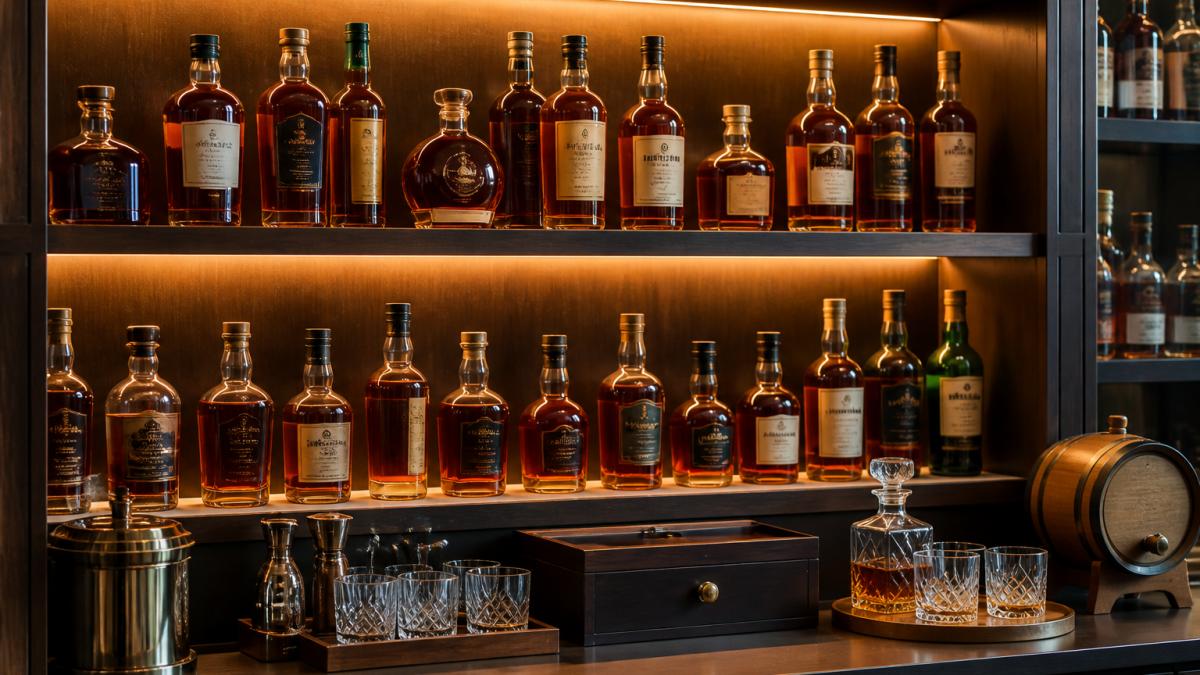
A dedicated shelf or cabinet works best. Shelving units made of dark wood or metal look professional. Avoid direct sunlight on the display.
Organize bottles by height if you're displaying them. Taller bottles in back, shorter ones in front. This creates sight lines and makes every bottle visible.
Leave space between bottles. Crowding them together makes the collection look cluttered. It also makes it harder to pull a bottle out without knocking others over. Aim for at least an inch or two between bottles.
For valuable or rare bottles, consider a glass cabinet with a lock. This protects your investment from accidents and theft. Climate-controlled cabinets designed for wine or spirits maintain temperature and humidity.
Many collectors use a combination approach. Keep everyday bottles on an open shelf for easy access. Store rare or valuable bottles in a locked cabinet. This splits your collection by use case.
Organize by Category: Bourbon, Scotch, and Beyond
Learning how to organize a home whiskey collection starts with grouping whiskeys by type to create a logical system. You can find what you want quickly. Visitors understand the organization at a glance.
Sorting by Whiskey Type and Proof
Start with the major categories. Bourbon, Scotch, and rye are the big three. Irish whiskey and Japanese whisky are growing categories. American whiskey blends fit somewhere between bourbon and rye.
Within each category, sort by proof. Higher proof whiskeys have more alcohol and often bolder flavors. Lower proof whiskeys are lighter and more approachable. Grouping by proof helps you find the right bottle for the moment. Want something smooth? Look at the lower proof section. Want something with bite? Check the high proof area.
Some collectors further subdivide. Wheated bourbons separate from rye bourbons. Single malt Scotches separate from blended Scotches. This level of detail works if you have 50+ bottles. For smaller collections, type and proof are enough.
Grouping by Age Statement and Barrel Aging
Age statements tell you how long whiskey aged in barrel. A 12-year-old bourbon spent at least 12 years in oak. Age affects flavor. Younger whiskeys taste bright and spicy. Older whiskeys develop deeper, richer notes of caramel and vanilla.
Group bottles by age statement within each type. No age statement together. Then 4-year, 6-year, 10-year, 12-year, and older bottles in separate groups. This organization helps you understand your collection's depth.
Special finishes also matter. Some distilleries finish whiskey in wine barrels or sherry casks. These special finishes change the flavor profile. Store them separately or note them clearly in your inventory. They're often premium priced and worth tracking separately.
Use a Whiskey Collection Tracker for Inventory Management
A whiskey collection tracker is a digital or physical record of every bottle you own. It's your single source of truth for your collection.
Why use a tracker? Because memory fails. You forget which bottles you have. You buy duplicates by accident. You lose track of opened bottles. A tracker prevents these mistakes.
Many collectors use spreadsheets. Others use dedicated apps. A good tracker lets you log bottles, add tasting notes, and track which ones you've opened. It also helps you plan future purchases and avoid redundancy.
The tracker serves another purpose. It's proof of what you own. If you ever need to insure your collection or prove ownership, the tracker is evidence. This matters for valuable collections.
Create a Whiskey Inventory Spreadsheet or Digital Log
A spreadsheet is the simplest starting point. You don't need special software. A basic spreadsheet works fine.
Essential Data to Record
Include these columns in your whiskey inventory spreadsheet:
- Bottle ID (a unique number for each bottle)
- Brand name
- Whiskey type (bourbon, Scotch, rye, etc.)
- Age statement
- Proof or ABV
- Batch number (if you can find it on the label)
- Barrel number (if available)
- Purchase date
- Purchase price
- Current location (shelf A, cabinet B, etc.)
- Status (unopened or opened)
- Opening date (if opened)
This gives you a complete picture of each bottle. You can sort by any column. You can search for specific bottles. You can track which bottles you've tasted.
Tracking Tasting Notes and Flavor Profiles
Once you open a bottle, add tasting notes. Record what you taste. Describe the flavor profile. Note the mouthfeel. Did you like it? Would you buy it again?
Tasting notes are personal. There's no right or wrong answer. "Tastes like caramel and oak" is as valid as "notes of vanilla with spice finish." Write what you actually taste, not what you think you're supposed to taste.
Over time, your tasting notes become a record of your palate. You see patterns. You discover which whiskeys you love. You learn which distilleries match your taste. This information guides future purchases.
Many digital platforms let you log tasting notes directly. This keeps everything in one place. You can review your notes anytime. You can share them with other collectors if you want.
Security, Insurance, and Collection Safety
A valuable whiskey collection needs protection. This means physical security and insurance coverage.
Start with physical security. Keep your collection in a locked room or cabinet if it's valuable. Don't advertise it to guests. Thieves target visible collections.
Document your collection with photos. Take clear pictures of each bottle's label. Include the batch number and any special markings. Store these photos separately, ideally in cloud storage. If something is stolen, you have proof of what you owned.
Insurance is the second layer. Standard homeowner's insurance may not cover a large spirits collection. You may need a rider or special policy. Contact your insurance company. Ask about coverage for a whiskey collection.
For valuable collections, get a professional appraisal. An appraiser values your bottles based on age, rarity, and condition. This appraisal supports your insurance claim if needed.
Keep your inventory updated. When you add new bottles, update your records and photos. When you open or drink a bottle, note that in your inventory. An accurate, current inventory is your best protection.
Maintain and Evolve Your Collection
A collection isn't static. It grows. Your tastes change. You discover new distilleries and flavor profiles.
Review your collection regularly. Every few months, look at what you have. Are there bottles you've owned for years but never opened? Are there gaps in your collection?
Set tasting goals. Pick one bottle per month to open and explore. Write detailed tasting notes. Share your thoughts with other collectors.
Track your purchases. How much are you spending? Is it sustainable? Many collectors set annual budgets. Others focus on quality over quantity. Know your own limits.
Join the bourbon community. Connect with other collectors. Share recommendations. Learn from their experiences. You can see what others are tasting.
As your collection grows, you may need to adjust your storage. What worked for 30 bottles may not work for 100.
The goal is to enjoy your collection. Organize it in a way that encourages you to explore. Track it so you know what you have.
A home whiskey collection reflects your taste and your journey as a collector. Organization isn't just about neat shelves.
Frequently Asked Questions
How should you sort whiskey bottles at home?
Sort by whiskey category first (bourbon, Scotch, single malt, straight whiskey, blends), then by proof level, age statement, or distillery. This system makes bottles easy to find and helps you understand your collection's composition. Many collectors also organize by mash bill or special finish to track flavor profiles. Use a whiskey collection tracker to record your sorting method so you can maintain consistency as your collection grows.
What's the best way to store whiskey bottles to preserve quality?
Store bottles upright in a cool, dark place away from direct sunlight and temperature fluctuations. Keep temperatures between 55-65°F and humidity around 50-65%. Opened bottles oxidize over time, so consume them within 1-2 years for best flavor. Unopened bottles can age indefinitely if stored properly. Avoid basements prone to dampness or attics with temperature swings. A dedicated liquor cabinet or climate-controlled closet works well for most home collections.
How do I keep track of a large whiskey collection?
Use a digital whiskey collection tracker or whiskey inventory spreadsheet to log bottle details: distillery, proof, age statement, batch number, purchase date, and tasting notes. Record the fill level for opened bottles to monitor oxidation. Include flavor profiles (caramel, vanilla, toasted oak, spice) and price paid. Digital tools let you search, filter, and update your collection from any device, making it easier to manage 50, 150, or 500+ bottles without losing track of what you own.
Should whiskey be stored in the refrigerator or freezer?
No. Freezing damages whiskey by altering flavor compounds and potentially cracking bottles. Refrigeration is also unnecessary and can dull tasting notes. Store whiskey at room temperature in a cool, dark place. If you chill whiskey before tasting, remove it from the fridge 15-20 minutes before serving to let flavors open up. Proper home bar storage at 55-65°F preserves barrel influence and flavor profiles far better than cold storage.