 how-to
How to Find New Bourbon Recommendations: A 2026 Guide
Table of Contents
- How to Find New Bourbon Recommendations That Match Your Palate
- Understanding Bourbon Flavor Profiles Explained
- How to Track Bourbon Tasting Notes Systematically
- How to Use Bourbon Tasting Apps for Discovery
- Conducting a Blind Taste Test to Refine Your Preferences
- Building a Recommendation Strategy: From Entry-Level to Premium
- Navigating the Secondary Market and Retail Reality
- Conclusion
Last Updated: August 22, 2026
How to Find New Bourbon Recommendations That Match Your Palate
Finding your next favorite bourbon starts with understanding what you actually like, then using that knowledge to discover bottles that will genuinely excite you. The real challenge isn't the lack of options, it's that bourbon recommendations often come from marketing hype or generic "top 10" lists that treat all palates the same. What works for someone chasing high-proof cask strength expressions might bore a drinker who prefers smooth, wheated bourbons.
This guide walks you through exactly how to find new bourbon recommendations by documenting what you've tasted, understanding flavor patterns, and using tools and communities that match your specific palate. Whether you're starting with entry-level bottles or hunting allocated premium releases, the framework stays the same: track systematically, taste deliberately, and let data guide your next purchase.
Understanding Bourbon Flavor Profiles Explained
Before you can find new bourbon recommendations, you need to understand what creates the flavors in your glass. Bourbon's flavor profile is determined by production variables you can learn to recognize and use as a compass when exploring new bottles.
Mash Bill and Proof: The Foundation of Flavor
The mash bill is the recipe of grains used to make bourbon, primarily corn (at least 51%), plus rye, wheat, or barley in varying percentages (ttb.gov). A high-rye bourbon typically delivers spice, pepper, and herbal notes. A wheated bourbon tends toward softness, sweetness, and vanilla-forward profiles. Understanding this means you can predict broad flavor patterns before you ever open a bottle.
Proof has a direct impact on how flavors express themselves. Higher proof bourbons (100 proof and above) tend to have more pronounced flavor intensity and a hotter finish (peer-reviewed research). Lower proof expressions (80-90 proof) often taste smoother and more approachable. Cask strength bourbons, bottled straight from the barrel without dilution, deliver maximum flavor extraction but require adjustment if you're accustomed to standard proof spirits (ttb.gov).
When learning how to find new bourbon recommendations, start by noticing these two factors in bottles you already own. After tasting five or six bourbons, patterns will emerge. You'll realize you prefer rye-forward heat or wheated smoothness, and whether higher proof excites you or overwhelms your palate.
Tasting Notes and Finish: What to Listen For
Tasting notes describe the specific flavors you encounter in three stages: the nose (aroma), the palate (what you taste on your tongue), and the finish (what lingers after you swallow). Common bourbon tasting notes cluster around vanilla and caramel (from charred oak aging), spice and pepper (from rye in the mash bill), fruit (often apple, cherry, or dried fruit from fermentation), and oak or wood tannins (from barrel interaction).
The finish is especially revealing. Does the bourbon fade quickly or linger for minutes? Is it smooth or does it have a sharp, peppery bite? A long, complex finish often signals a bourbon worth exploring further.
How to Track Bourbon Tasting Notes Systematically
The difference between casual bourbon drinking and intentional discovery is documentation. Tracking tasting notes creates a searchable record of what you've experienced and reveals patterns in your preferences.
Start with the essentials: bottle name, proof, mash bill (if available), and your tasting notes across nose, palate, and finish. Add context that matters to you: the price you paid, where you purchased it, whether it was a blind tasting, and your overall rating. This data becomes your personal recommendation engine.
Many enthusiasts use simple spreadsheets or note-taking apps. Digital platforms designed for bourbon tracking solve this problem by organizing your notes in searchable, filterable formats.
What to Record Beyond the Basics
Beyond standard tasting notes, capture details that influence how you'll find new bourbon recommendations later. Record the age statement if present, whether the bourbon was bottled in bond or cask strength, and if you tasted it blind. Also track context: Were you tasting this after a heavy meal or on an empty palate? Did you try it neat, with a splash of water, or on ice? These details matter because they affect how bourbon tastes.
Include a personal rating scale and be consistent with it. Whether you use a 1-10 scale, a 1-5 star system, or a simple "would buy again / pass" framework, consistency is what matters. This becomes your filter when searching for new recommendations.

How to Use Bourbon Tasting Apps for Discovery
Digital platforms designed for bourbon enthusiasts have shifted how people find new bourbon recommendations. The best ones combine personal tracking with community features and algorithmic suggestions, turning your tasting history into a recommendation system.
Bourbon Tracker™ is built specifically for this workflow. You log the bourbons you've tasted, record detailed tasting notes, and the platform learns your preferences. The AI-powered recommendation engine then suggests bottles that match your palate based on your history and ratings. After logging 20-30 bourbons, patterns emerge that the algorithm can recognize, surfacing new recommendations you'd likely enjoy.
AI-Powered Recommendations vs. Community Feedback
AI recommendations work by finding bourbons similar to ones you've already rated highly. Community feedback operates differently, when hundreds of bourbon enthusiasts with similar taste profiles to yours rated a specific bottle highly, that's social proof suggesting the bottle is worth trying.
The most effective discovery combines both. Use AI recommendations to stay within your established preferences while exploring variations. Use community ratings to occasionally venture into unfamiliar territory. Bourbon Tracker™ integrates both approaches: your personal AI recommendations plus visibility into what similar community members are discovering.
Conducting a Blind Taste Test to Refine Your Preferences
Blind tasting removes brand bias and forces you to evaluate bourbon purely on what's in the glass. It's one of the most reliable ways to refine what you actually prefer versus what you think you should prefer based on a bottle's reputation or price point.
The setup is simple: cover bourbon glasses with opaque covers (brown paper bags work perfectly), number them, and taste without knowing which bottle is which. Take notes on each one. Only after you've rated all of them do you reveal which was which. Blind tasting eliminates the psychological influence of brand prestige or price and trains your palate to notice details you might otherwise miss.
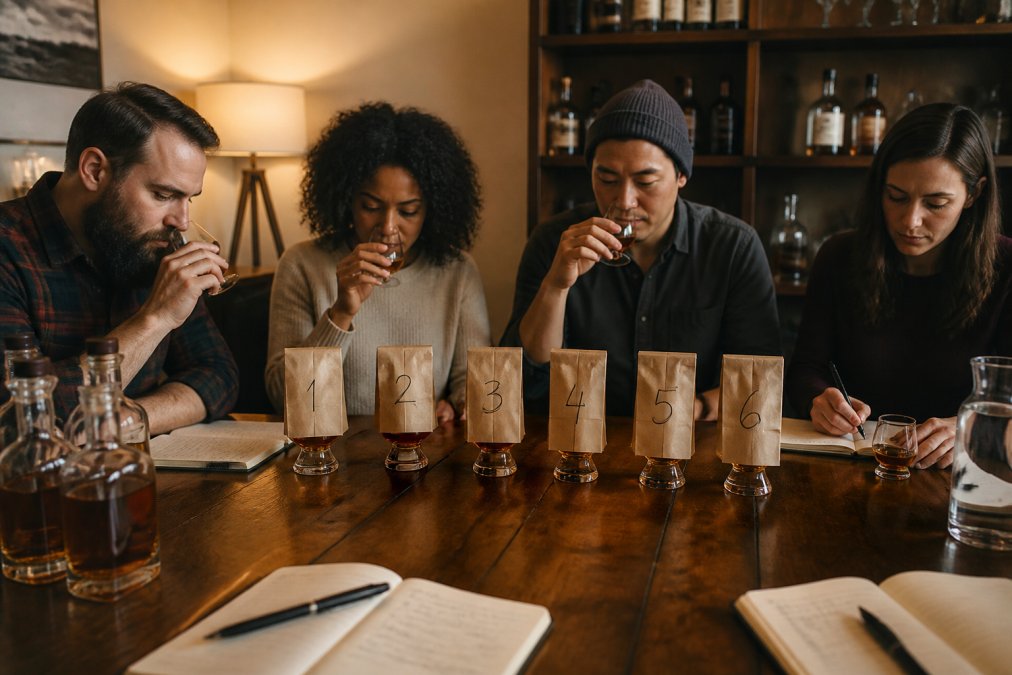
Run blind tastings quarterly or whenever you want to recalibrate your preferences. Over time, blind tasting data becomes part of your personal recommendation history and helps you find new bourbon recommendations with confidence.
Building a Recommendation Strategy: From Entry-Level to Premium
How to find new bourbon recommendations changes depending on where you are in your bourbon journey. A beginner's approach differs from a collector's approach, which differs from someone hunting allocated bottles.
Starter Bottles for Beginners
If you're new to bourbon, your goal is to establish baseline preferences without overspending. Start with a wheated bourbon (like Maker's Mark) to experience softness and vanilla-forward character. Try a standard rye-forward bourbon (Woodford Reserve or Buffalo Trace) to taste spice and complexity. Add a high-proof expression (Wild Turkey 101 or Four Roses Small Batch Select) to understand how proof affects flavor. This trio gives you a foundation for comparison.
The key at this stage is volume of experience, not volume of bottles. Taste these three thoroughly, document your reactions, and let your preferences crystallize.
Budget-Friendly Recommendations
Once you know your preferences, budget-friendly recommendations ($40-$75) let you explore variations without significant financial risk. At this price point, you can explore different proof levels within your preferred flavor family or begin experimenting with age statements. Budget-friendly bourbons also include solid non-age-statement (NAS) expressions from established distilleries that often represent excellent value.
High-End and Premium Selections
Premium bourbons ($75-$150+) are where you venture after establishing clear preferences. At this level, you're paying for rarity, age, or limited production runs. Premium recommendations should be guided by your documented preferences, not by allocation status or bottle aesthetics.
| Bourbon Category | Typical Price | Best For | Discovery Focus |
|---|---|---|---|
| Starter/Entry-Level | $25-$40 | New enthusiasts establishing preferences | Broad flavor families |
| Budget-Friendly | $40-$75 | Exploring variations within preferences | Proof levels, age statements, rye percentages |
| Premium/High-End | $75-$150+ | Confirmed preferences, limited releases | Rarity, production methods, special finishes |
Navigating the Secondary Market and Retail Reality
The retail bourbon market works differently than most spirits categories. Many sought-after bottles sell out at retail ($50-$70) and reappear on secondary markets at significantly higher prices ($150-$300+). Understanding this reality is essential when learning how to find new bourbon recommendations.
Retail allocation is real. Distilleries intentionally limit production of premium expressions to create scarcity and maintain brand prestige. Secondary market pricing reflects demand far more than quality or production cost. A bottle allocated at $65 retail might fetch $200 on secondary markets simply because demand exceeds supply.
Many enthusiasts make the mistake of chasing allocated bottles based on hype rather than personal preference. You find new bourbon recommendations far more effectively by identifying what matches your palate, then hunting for it at reasonable prices, rather than buying expensive secondary market bottles hoping they'll become favorites.
Use community platforms and local bourbon groups to stay informed about retail releases in your area. Bourbon Tracker™ integrates wishlist features so you can track bottles you want to find and get notified when they appear. This approach, systematic tracking combined with community intelligence, beats random luck or overpaying on secondary markets.
Finding new bourbon recommendations becomes straightforward once you stop relying on hype and start relying on data. Track what you taste, understand the variables that create flavor, and let your documented preferences guide your next purchase. Bourbon Tracker™ simplifies this entire process: you log your collection, record tasting notes, and the AI-powered recommendation engine suggests bottles tailored to your palate while connecting you with a community of enthusiasts discovering the same way. Get started with Bourbon Tracker™ and transform how you discover bourbon that actually matches what you love to drink.
Frequently Asked Questions
How do I know if a bourbon recommendation is actually suited to my palate?
Start by tracking your tasting notes on bottles you already enjoy. Record specific flavor profiles, mouthfeel, and finish characteristics. When you find patterns in what you like, say, you consistently prefer higher rye content and spice profiles, use those patterns to evaluate new recommendations. Digital tools like Bourbon Tracker™ analyze your notes to suggest bourbons that match your documented preferences rather than generic crowd favorites.
What's the difference between using a bourbon tasting app versus asking other collectors for recommendations?
Bourbon tasting apps use AI to match your documented palate preferences with bottles you haven't tried yet, scaling beyond what any single person knows. Community recommendations are valuable for discovering allocated or rare releases and understanding what's trending, but they can push you toward popular bottles rather than your specific taste. The best approach combines both: use apps to find candidates based on your flavor profile, then check community feedback on those selections.
How should I track bourbon tasting notes if I'm new to this?
Start simple: note the bourbon name, proof, and three to five dominant flavor notes (vanilla, oak, spice, caramel). Add how the finish feels, smooth, hot, lingering. After tasting five to ten bourbons, patterns emerge in what you prefer. Digital platforms make this easier by letting you log notes immediately after tasting, tag flavor profiles, and rate overall impression. Over time, your history becomes a recommendation engine.
What bourbon flavor profiles should a beginner focus on when starting a collection?
Beginners benefit from exploring entry-level bourbons with balanced profiles: moderate proof (80-90), approachable vanilla and caramel notes, and smooth finishes. Single barrel and small batch options at this level teach you the difference between standard and premium expressions without the allocated-bottle hunt. Try a few different mash bills, higher rye bourbons taste spicier, while wheated bourbons feel softer. This foundation helps you identify what direction your palate naturally leans.
This article was written using GrandRanker