 How-to
Bourbon Tasting Party Checklist for Hosts
Last Updated: November 19, 2026
Quick Summary
A bourbon tasting party works best with a clear checklist that covers guest count, bottle choice, tasting sheets, food and cleanup. Plan roughly one half-ounce pour per bottle per guest, and serve lighter bourbons before bolder ones.
- Start planning from your guest count, since it drives most other decisions.
- Order your flight from lighter wheated bourbons to bolder, higher-proof pours.
- Print one tasting sheet per guest with columns for nose, palate, finish and score.
- Offer water between every bottle and serve plain crackers as palate cleansers.
- Arrange transportation and a nonalcoholic station before guests arrive.
Table of Contents
- Choosing the Best Bourbons for Your Tasting Lineup
- Printing a Bourbon Tasting Sheet for Each Guest
- Bourbon Tasting Party Food and Palate Cleansers
- What to Bring to a Bourbon Tasting: Glassware, Water and Supplies
- Responsible Serving, Guest Transportation and Cleanup
- Start Your Next Tasting Night by Logging Your Bottles in Bourbon Tracker
- Frequently Asked Questions
Planning a bourbon tasting party takes more work than most hosts expect, but a clear checklist makes it manageable. This guide walks you through each step, from the first invitation to the final cleanup. Whether you host four friends or twelve, the same core steps apply.
Start with your guest count, since it drives almost every other decision. Plan for roughly four to six bottles for a tasting of this kind, then adjust based on how many guests you expect and how long the event will run.
Week before: Confirm your guest list, pick a date and send invitations that ask about dietary needs and transportation plans.
Three to four days before: Buy your bottles, snacks and water. Check your glassware count against your guest count.
Day of: Set up tables, print your tasting sheets, chill water and arrange pour stations.
Keep a simple spreadsheet with guest names, bottle names and pour counts. You will reuse it for future events.
Choosing the Best Bourbons for Your Tasting Lineup
Good bourbon tastings follow a simple idea: build a lineup that shows clear differences. A mix of styles keeps guests engaged, and the right choices make your party easier to run.
Most hosts choose between four and six bottles. That range gives guests variety without causing palate fatigue. If you're unsure which bottles to pick, a beginner-friendly guide to choosing the right bourbon can help you narrow the field. Our guide on how to build a bourbon tasting flight walks through the method step by step.
Mix different mash bills so guests can taste the effect of rye versus wheat. Include a range of proofs so the lineup doesn't feel uniform. Add one single barrel or small batch bottle for a noticeable contrast.
How Many Bottles to Open and Pours Per Guest
Plan about one half-ounce pour per bottle per guest, and open only the bottles you plan to serve. Opened bottles lose flavor over time, so avoid pre-pouring far in advance.
- Four bottles for up to six guests
- Five to six bottles for seven to twelve guests
- Keep a backup bottle of each style in the cabinet
Building a Flight From Lighter to Bolder Pours
Serve lighter bourbons first and bolder, higher-proof options last. This order helps guests taste subtle notes before their palates tire. Start with a wheated bourbon, move through a standard bourbon, then finish with a high-rye or cask-strength pour.
Label each glass with a number so guests can compare notes later.
Printing a Bourbon Tasting Sheet for Each Guest
A printed tasting sheet gives guests a place to record what they taste. It also keeps the conversation focused, especially when people are new to bourbon. Print one sheet per guest and place a pen beside each one.
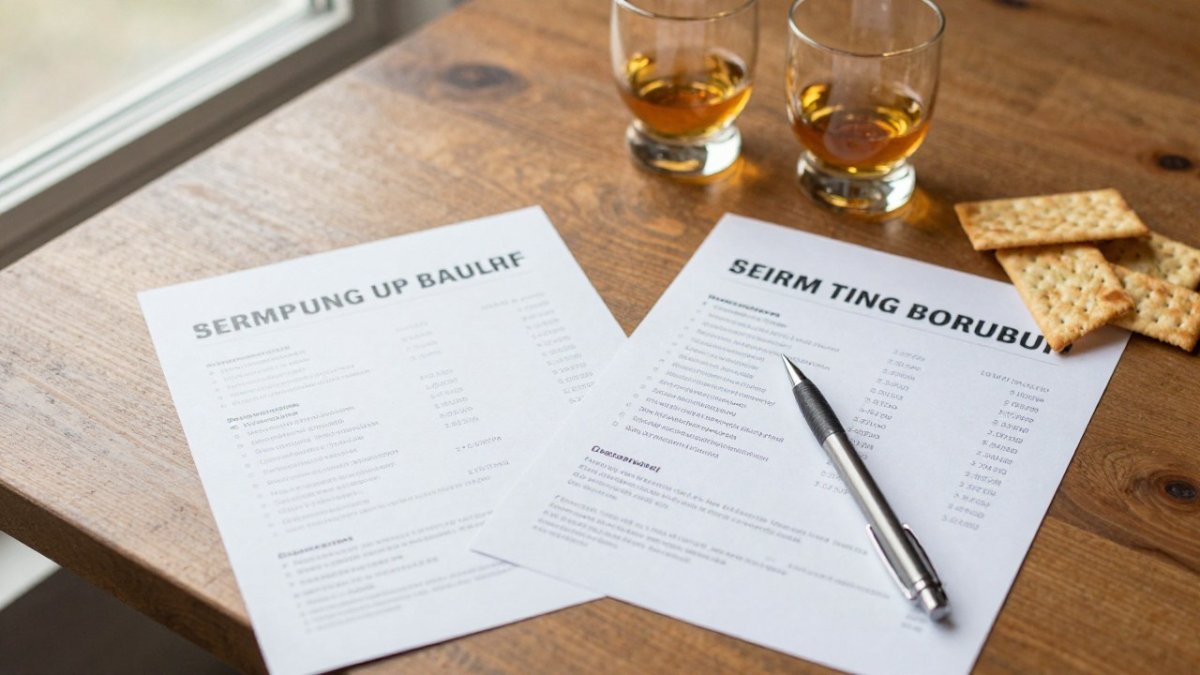
Include columns for nose, palate and finish, plus a quick score from one to ten. Add a few discussion prompts such as "Which bottle would you buy again?" to keep the room talking. Flavor wheels also help beginners name what they taste. Our guide to whiskey flavor wheels explains how to use one at your table.
!Overhead view of a wooden table with printed bourbon tasting sheets, a pen, small tasting glasses of amber whiskey and a few cracker snacks
Bourbon Tasting Party Food and Palate Cleansers
Food does two jobs at a bourbon tasting: it resets the palate between pours and it keeps guests from drinking on an empty stomach. The mistake most hosts make is treating the food as a party spread instead of a tasting tool. Build the menu around neutral, low-intensity bites and keep the bold flavors off the table until after the last pour.
Palate cleansers that work. Plain water crackers, oyster crackers, and saltines are the standard because they are bland, dry, and absorbent. Unsalted nuts, plain bread, and a slice of green apple also reset the palate without leaving a coating. Still water at room temperature is the most important cleanser of all, offer it between every bottle, not just at the start. A common pattern is one cracker and a few sips of water between pours, with a longer reset before moving from a wheated bourbon to a high-rye or cask-strength pour.
Foods that pair well. Mild cheese such as a young cheddar, gouda, or brie complements the caramel and vanilla notes in most bourbons. Dark chocolate in the 60-70% cacao range echoes the oak and toffee notes without overwhelming them. Smoked almonds, bacon-wrapped dates, and a simple charcuterie board work for heartier lineups. Keep portions small, a bite or two per guest per bottle is enough to reset the palate without turning the event into a dinner party.
Foods to avoid during the tasting. Strong spices, citrus, vinegar-based sauces, garlic, onions, and heavily smoked or pickled foods will mask tasting notes and carry over from one pour to the next. Save spicy or acidic dishes for after the tasting if you plan to serve a meal. Coffee and dark tea also coat the palate, so offer them after the last pour rather than between bottles.
Allergy-aware and nonalcoholic options. Ask about dietary needs on the invitation and label each snack so guests can serve themselves safely. Keep a separate, clearly marked nonalcoholic station with sparkling water, ginger ale, and a nonalcoholic bourbon-style spirit so guests who are not drinking can still participate in the tasting ritual. Nut-free and gluten-free alternatives, rice crackers, gluten-free bread, and seed-based snacks, cover the most common restrictions without changing the palate-reset function.
Setup. Place a small bowl of crackers and a water pitcher at each pour station rather than one central table, so guests do not have to cross the room between pours. A small trash bowl for cracker crumbs and used napkins keeps the tasting table clean. If you serve cheese or chocolate, cut it into small, uniform pieces so guests take a consistent amount each time.
Here is a quick reference for the palate cleansers and food pairings the article recommends.
| Item | Recommended use | Note |
|---|---|---|
| Water crackers, saltines | Palate cleanser | Plain, dry and absorbent |
| Still water | Palate cleanser | Offer between every bottle |
| Young cheddar, gouda, brie | Pairing | Complements caramel and vanilla notes |
| Dark chocolate (60-70% cacao) | Pairing | Echoes oak and toffee notes |
| Strong spices, citrus, garlic | Avoid during tasting | Masks tasting notes |
| Coffee, dark tea | Serve after last pour | Coats the palate |
What to Bring to a Bourbon Tasting: Glassware, Water and Supplies
Good glassware makes a real difference. A tulip-shaped tasting glass concentrates aroma, letting guests catch the nose before they sip. Our guide on the best whiskey glasses for nosing and tasting covers which shapes work best, and essential bourbon glassware for beginners lists what to buy for a first party.
Bring these supplies:
- One tasting glass per guest per bottle, or a rinse cup
- Still water and a pitcher of ice water
- Spit cups, if guests prefer to taste without swallowing
- Printed tasting sheets and pens
- Napkins, a trash bag and a small cutting board for snacks
Responsible Serving, Guest Transportation and Cleanup
A bourbon tasting can add up faster than guests expect. A half-ounce pour across six bottles is three ounces of whiskey, and higher-proof pours deliver more alcohol per sip than the same volume of a standard 80-proof bottle. Responsible hosting is not a disclaimer at the bottom of the invitation, it is a set of decisions you make before the first bottle opens.
Pacing. Serve no more than four to six pours per guest over a two- to three-hour event, with at least 15 minutes between pours and water available at every station. Offer a spit cup at each place setting so guests can taste without swallowing. Announce the pour order and the approximate proof of each bottle so guests can pace themselves. A common pattern is to schedule a 20-minute food break at the midpoint, which slows the pace and gives guests time to compare notes.
Nonalcoholic participation. Set up a separate station with sparkling water, ginger ale, and a nonalcoholic bourbon-style spirit so guests who are not drinking can still nose, taste, and score alongside the group. Mark the station clearly and mention it on the invitation so guests know they can participate without drinking.
Transportation. Ask about transportation plans on the invitation and follow up with anyone who has not answered. Arrange a designated driver for each car, or book rideshare in advance for guests who plan to drink. Keep a printed list of local taxi and rideshare numbers at the door. Watch out: guests often underestimate how much they have consumed at a tasting because the pours are small, confirm a ride home for every guest before the event starts rather than at the end of the night.
Cleanup. Set up a recycling bin and a rinse station before guests arrive so glasses do not pile up on the tasting table. Rinse tasting glasses in warm water without soap, then air-dry them upside down on a clean towel, soap residue will carry into the next pour. Store unopened bottles upright in a cool, dark place away from direct light. Close opened bottles tightly, label them with the date, and store them upright; most opened bourbons hold acceptable flavor for several months, though the peak is in the first few weeks. Wipe down the tasting table, bag the crackers and crumbs, and run the glasses through a final rinse before you put them away.
Start Your Next Tasting Night by Logging Your Bottles in Bourbon Tracker
After your party, the real value starts. Record each bottle's name, pour notes and guest scores while the impressions are fresh. Bourbon Tracker™ lets you log tasting notes, build a personal wishlist and get AI-powered recommendations, all without downloading anything. It's free to use.
Start logging your lineup now and see which bottles earned a spot on your next menu.
Frequently Asked Questions
What is the best bourbon to serve at a tasting party?
There is no single best bourbon, but a strong lineup mixes styles so guests can compare. Include one lighter, approachable bottle, one high-rye option for spice, and one richer wheated or barrel-proof bourbon at the end. Keeping the range varied gives guests clear contrasts in flavor and proof, which makes tasting notes easier to compare across the flight.
How many bourbons should you serve at a tasting party?
Four to six bottles works well for most home tastings. Fewer than four gives little to compare, and more than six tends to cause palate fatigue before the last pours. Plan roughly half an ounce to one ounce per guest per bottle, and adjust for guest count and whether you plan to serve cocktails or other drinks alongside the flight.
What food pairs well with bourbon at a tasting party?
Mild, salty and fatty foods work best. Good options include aged cheddar, dark chocolate, pecans, charcuterie and plain crackers. Keep bites small and unseasoned with heavy spice, since strong flavors can mask the whiskey. Offer plain crackers or bread between pours to act as palate cleansers and keep guests from getting worn out on sweetness.
How do you take bourbon tasting notes?
Record notes in a consistent order for each pour: appearance, nose, palate, and finish. Note the ABV or proof, then write a short description for each step, such as caramel or oak on the nose and a dry finish. Rate each bourbon on a simple scale, and leave space for discussion comments so guests can compare impressions after the flight.