 listicle
Essential Bourbon Glassware for Beginners
Table of Contents
- Essential Bourbon Glassware for Beginners: What You Actually Need
- The Bourbon Tasting Glass: Why Shape Changes What You Taste
- Glencairn vs Rocks Glass: Which One Fits Your Pour
- Bourbon Glass Size: Capacity, Pour, and Ice
- Building a Bourbon Glassware Set Without Overbuying
- How Many Glasses to Buy and What to Spend
- Care, Cleaning, and Storage for Everyday Glassware
- Conclusion
- Frequently Asked Questions
Last Updated: October 12, 2026
Essential Bourbon Glassware for Beginners: What You Actually Need
Essential bourbon glassware for beginners comes down to two shapes: a tulip-style tasting glass for focused nosing and a wide rocks glass for everyday sipping. This guide from Bourbon Tracker™ covers what to buy first, what each shape does to aroma and flavor, and how to build a small, useful set without overspending.
Most beginner guides list ten glasses with no way to choose. The real question is how you actually drink your bourbon: a neat sipper needs a different glass than someone building Old Fashioneds.
The Bourbon Tasting Glass: Why Shape Changes What You Taste
A bourbon tasting glass is a small, tulip-shaped vessel with a narrow rim, and its shape is the entire point. Bourbon's aroma compounds are volatile: they evaporate off the liquid surface, and a narrow rim funnels those vapors toward your nose.
That matters because most of what you call "taste" is smell. The Whisky flavor wheel reference from the Scotch Whisky Association is a useful reminder of how many of bourbon's described flavors are aromatic rather than gustatory.
How a Narrow Rim Concentrates Aroma
The narrow rim traps evaporating vapors in a small headspace above the liquid, so they reach your nose at higher concentration. A wide tumbler lets those compounds escape.
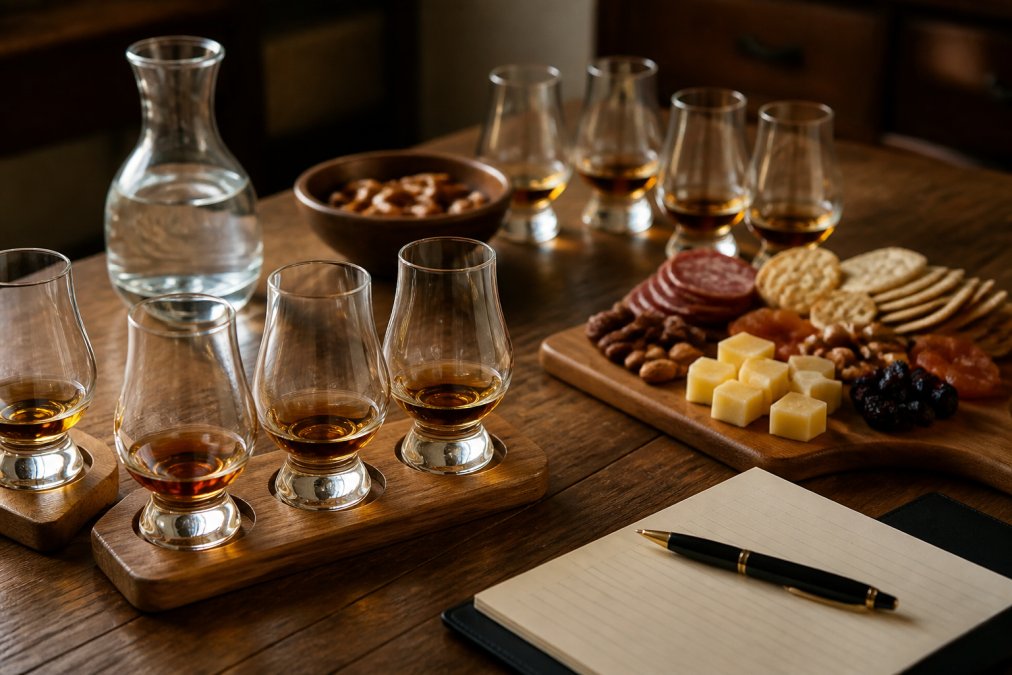
The Glencairn Whisky Glass is the standard example, with a sturdy base for swirling and a short profile that keeps your nose close to the liquid. The trade-off: the narrow rim is awkward for a large ice cube.
Glencairn vs Rocks Glass: Which One Fits Your Pour
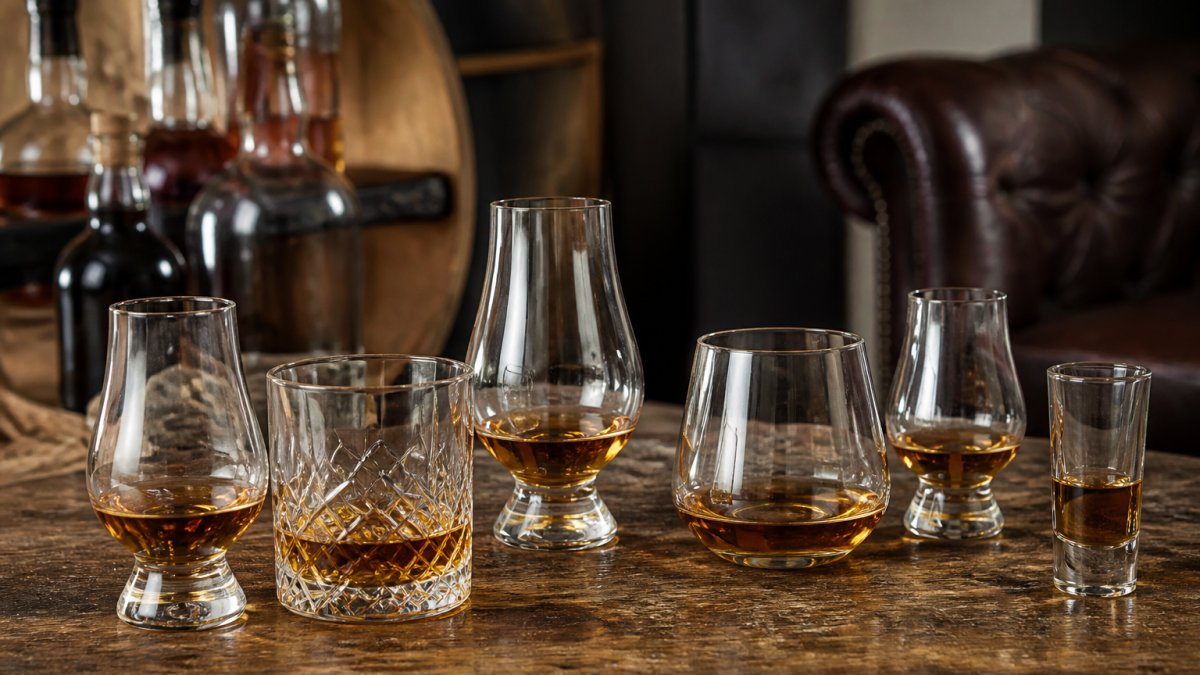
The choice between a Glencairn and a rocks glass comes down to one thing: are you tasting or drinking? A Glencairn concentrates aroma for nosing; a rocks glass gives you room for ice.
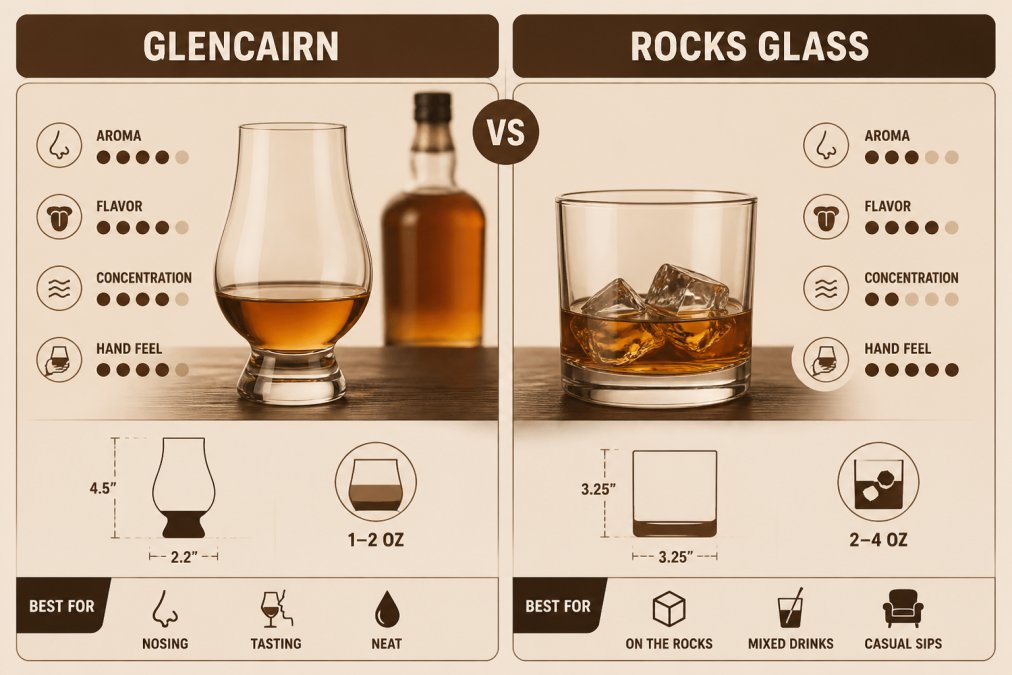
Here's the honest comparison:
| Glass Style | Shape | Best For | Trade-off |
|---|---|---|---|
| Tulip tasting glass | Narrow rim, bulbous bowl | Neat pours, nosing, tasting notes | Awkward with large ice |
| Rocks glass | Wide rim, straight sides | Ice, cocktails, casual sipping | Aromas escape quickly |
| Highball glass | Tall, narrow | Bourbon and mixers | Not built for neat sipping |
The Stolzle Lausitz whiskey glass sits between the two camps. A community reviewer on the r/bourbon glassware review thread compared it favorably with the Glencairn for both nosing and tasting, and liked how it felt in the hand.
When a Wide Rim Works Better
A wide rim is the right call when ice is involved: a wide opening fits a large cube without a fight. It also suits cocktails like an Old Fashioned, where you're building a drink rather than studying a pour.
Rocks glasses, also called Old Fashioned glasses or tumblers, are the workhorse of home bars: forgiving, easy to hold, and comfortable to drink from. The wide rim isn't a flaw, it's a design choice.
Match the Glass to How You Actually Drink
Find your usual pour below, and the glass picks itself.
- You pour it neat and want to study it. Reach for a tulip tasting glass. The narrow rim traps aroma compounds so they reach your nose at higher concentration, the glass for a slow pour where you notice vanilla, caramel, and oak.
- You pour it neat but just want to relax. A rocks glass works fine. You lose some aroma concentration but gain a comfortable glass you can hold in one hand.
- You add one large cube or a sphere. A rocks glass is the right tool. The wide mouth fits a big cube, and the extra surface area lets the ice chill the bourbon gradually instead of flash-diluting it.
- You build Old Fashioneds, whiskey sours, or other cocktails. A rocks glass for spirit-forward drinks, a highball for anything with a mixer. The tall highball keeps carbonation lively and holds ice plus several ounces of mixer.
- You drink bourbon and ginger ale or cola. A highball glass: plenty of ice, a generous pour of mixer, and a shape that's easy to refill.
- You want one glass that does most of it. A double rocks glass or a mid-size tumbler in the 10- to 12-ounce range splits the difference. You can nose from it, ice it, or build a simple cocktail in it. It won't excel at any single job, but it won't fail either.
The One-Glass Beginner Shortcut
If you don't know yet how you'll drink bourbon, buy a pair of tulip tasting glasses first. They're the most versatile shape for learning: you can nose from them, sip neat, and add a splash of water or a small ice chip.
Once you know whether you're a neat sipper, an ice drinker, or a cocktail builder, add the second shape that matches. You don't need a cabinet, just the glass that fits how you pour.
Bourbon Glass Size: Capacity, Pour, and Ice
Bourbon glass size should match your pour, and for beginners that usually means 8 to 10 ounces of total capacity. Too small crowds your ice; too large makes a standard serving look stingy.
A typical neat pour is 1.5 to 2 ounces.
Ice changes the math. A large cube or sphere melts slowly, chilling the drink without watering it down too fast.
Building a Bourbon Glassware Set Without Overbuying
A bourbon glassware set for a beginner needs two shapes, not ten.
The most common mistake is buying a large matching set before knowing how you drink. A dozen identical tumblers looks impressive on a shelf and gathers dust if you pour one drink at a time.
Start with this short list:
- Two tulip tasting glasses for neat pours and nosing
- Two to four rocks glasses for ice and cocktails
- One highball glass if you make bourbon and mixers
That covers the essentials. Add a shot glass only if you measure pours, and skip the cocktail-specific glassware until you actually make those drinks.
How Many Glasses to Buy and What to Spend
Buy four to six glasses total as a beginner, and expect a reasonable set to cost far less than a single bottle of good bourbon. Shape matters more than brand.
The Glencairn Whisky Glass is a widely available benchmark, cited at about $22 for a single glass. The Stolzle Lausitz whiskey glass was reported at about $20 for two on Amazon in the same community review.
For a beginner set, here's a sensible approach:
- Tasting glasses: two, one for you and one for a guest
- Rocks glasses: two to four, so you're not washing between pours
- Budget: spend on the shape you'll use most, save on the rest
Care, Cleaning, and Storage for Everyday Glassware
Wash whiskey glasses by hand in warm water with a mild soap, rinse well, and air dry upside down on a rack. Dishwashers can cloud crystal and leave a film that dulls the glass and skews what you smell.
Why Hand-Washing Actually Matters
Two things go wrong in a dishwasher. High heat and alkaline detergent can etch lead crystal and some fine glass over repeated cycles, leaving a permanent cloudy haze.
Hand-washing with a mild, unscented dish soap avoids both problems: warm water, a soft sponge or bottle brush, a thorough rinse, and air-drying upside down on a clean rack. If you towel dry, use a freshly laundered towel free of fabric softener, which leaves a waxy film.
Spotting Chips Before They Cost You
Run a fingertip slowly around the rim of each glass before you pour. A chip you can't see is still a chip, and it will cut your lip or shed a shard into your bourbon.
Retire a glass the moment you feel a rough spot on the rim, even if the chip is small. Glass is cheap relative to a cut lip, and a chipped rim only gets worse with each wash.
Storage That Doesn't Skew Your Nose
Glass picks up odors from its surroundings. A glass stored next to coffee beans, spices, or a scented candle can carry those smells into your next pour, and you'll blame the bourbon for a note that came from the cabinet.
Store glasses upright, not stacked. Stacking puts weight on the rim of the lower glass and is the most common way beginners chip a tumbler.
A few more habits that keep glassware in good shape:
- Rinse immediately after use so residue doesn't dry on the rim and become harder to remove
- Skip the dishwasher for anything thin, crystal, or hand-blown
- Keep a dedicated soft brush for tulip glasses, since a sponge won't reach the bottom of the bowl
- Let glasses air dry completely before putting them away, so no moisture gets trapped in the cabinet
When to Replace a Glass
Glassware isn't forever. Replace a glass when the rim is chipped, when the bowl has a crack that could spread with temperature change, or when the surface is so clouded you can't see the bourbon's color clearly.
Everyday rocks glasses last years with hand-washing and careful storage. Thin tulip glasses are more fragile and tend to go first, so buy them in pairs and you'll always have a spare when one chips.
Conclusion
The hard part of building bourbon glassware isn't buying, it's knowing when to stop.
Start with two shapes: a tulip tasting glass for the pours you want to study, and a rocks glass for everything else. Bourbon Tracker™ is built for the same idea of keeping things simple.
Get started with Bourbon Tracker™ and track every pour, note, and bottle in one place.
Frequently Asked Questions
How big should a bourbon glass be?
A tasting glass typically holds 6 to 8 ounces, which leaves room to swirl a 1-ounce pour without splashing. Rocks glasses usually run 8 to 12 ounces so a large ice cube and a 2-ounce pour both fit comfortably. Highball glasses go larger, around 10 to 14 ounces, for mixed drinks. For neat bourbon, the smaller tasting glass gives you better aroma concentration than a wide tumbler.
What is the difference between a rocks glass and a Glencairn glass?
A Glencairn-style tasting glass has a narrow rim and tulip bowl that traps aroma near your nose. A rocks glass has a wide, open rim that lets aromas escape and leaves room for ice. The Glencairn suits neat pours and side-by-side comparisons. The rocks glass suits on-the-rocks pours, Old Fashioneds, and casual sipping where you are not chasing every note.
How many glasses do you need to start a bourbon collection?
Two tasting glasses and two rocks glasses cover nearly everything a beginner does. The pair of tasting glasses lets you compare two pours side by side, which is how most people learn what they like. A two-glass starter set keeps costs low while you figure out your preferences, and you can add a highball or shot glass later if your drinking style calls for it.
Do you need a special glass to drink bourbon?
No, but the right glass helps. A regular tumbler works fine for everyday sipping, though its wide rim releases aroma quickly instead of concentrating it. A narrow-rimmed tasting glass gives you a clearer nose and a more focused first impression of the whiskey. If you only buy one piece of bourbon glassware, make it a tasting glass.