 listicle
Is Bourbon a Good Long-Term Investment?
Last Updated: November 1, 2026
Quick Summary
Allocated wheated and high-age bourbons hold value best for a bourbon investment, while award-winning budget bottles offer lower risk but slower upside. Treat resale value as a dated range backed by realized auction sales, not a fixed number, and always run the math on net proceeds after fees.
- Allocated bottles are released in limited quantities and distributed unevenly, which is the entire investment thesis.
- Old Bardstown Bottled-in-Bond reportedly sells around $25 and New Riff Bottled in Bond around $35.
- Log at least three realized auction results per bottle with sale date and auction house.
- Selling alcohol without a license is restricted, and private resale sits in a legal gray zone in many states.
- Store bottles upright, away from direct sunlight, in a space with stable temperature and keep the original box.
Table of Contents
- How We Picked These Bourbon Bottles
- Quick Comparison: Top Bourbon Bottles for Long-Term Investment
- Rare Bourbon Bottles to Collect: The Allocated Tier
- Bourbon Bottles That Increase in Value: Mid-Tier and Budget Picks
- Bourbon Resale Value: What the Secondary Market Actually Pays
- How to Store Bourbon Bottles So They Hold Their Value
- The Risks, Legal Rules, and Liquidity Traps Nobody Mentions
- Start Tracking Your Investment Bottles Before You Buy Another One
- Frequently Asked Questions
How We Picked These Bourbon Bottles
We built this list around a simple question: which bottles have actually shown staying power on the secondary market, not just hype on release day? Scarcity plus a long track record tends to hold value better than a flashy new label.
Provenance problems can hurt resale value, which is why documenting a bottle's history matters. Below, we'll show you exactly how each tier behaves, and where the real risks sit.
Quick Comparison: Top Bourbon Bottles for Long-Term Investment
The short answer: allocated wheated and high-age bourbons hold value best, while award-winning budget bottles offer lower risk but slower upside. Here's how the tiers stack up before we get into specifics.
| Bottle | Tier | Reported Price | Investment Case |
|---|---|---|---|
| Pappy Van Winkle 15 Year | Allocated | Not stated | Highest demand, hardest to source |
| William Larue Weller | Allocated | Not stated | Auction favorite, wheated profile |
| George T. Stagg | Allocated | Not stated | Barrel-proof, strong collector base |
| Eagle Rare 17 Year | Mid-tier | Not stated | Age statement drives interest |
| Weller 12 Year | Mid-tier | Not stated | Accessible wheated entry point |
| Blanton's | Mid-tier | Not stated | Iconic bottle, steady demand |
| Old Bardstown Bottled-in-Bond | Budget | $25 | Award recognition, low entry cost |
| New Riff Bottled in Bond | Budget | $35 | Award winner, widely findable |
Rare Bourbon Bottles to Collect: The Allocated Tier
Allocated bourbons are bottles a distillery releases in limited quantities and distributes unevenly across regions, which is why retail shelves rarely carry them. That scarcity is the entire investment thesis. If a bottle were easy to buy, it wouldn't appreciate.
Pappy Van Winkle Family Reserve 15 Year
Pappy 15 is a bottle many collectors follow closely. The real question for any bottle is what you can prove about its history when you sell.
William Larue Weller and George T. Stagg
Both are bottles collectors often discuss. Neither is a guaranteed winner. Buy them because you understand the category, not because someone promised a return.
Bourbon Bottles That Increase in Value: Mid-Tier and Budget Picks
Mid-tier and budget bottles are a practical place for many collectors to start.
Eagle Rare 17 Year, Weller 12 Year, and Blanton's
Eagle Rare 17 Year carries an age statement, Weller 12 Year offers a wheated profile at a more accessible point, and Blanton's has recognizable packaging. None of these are guaranteed to hold value.
Award Winners: Old Bardstown and New Riff Bottled-in-Bond
Award recognition moves bottles. Old Bardstown Bottled-in-Bond, a Willett Distillery release, earned recognition at the 2026 International Wine and Spirits Competition according to Food & Wine's competition coverage, and it reportedly sells around $25. New Riff Bottled in Bond was named a World's Best Bourbon by the World Whiskies Awards, with an approximate $35 price. These are drinking bottles with upside, not speculative plays.
Bourbon Resale Value: What the Secondary Market Actually Pays
Here's the part that separates real analysis from wishful thinking: secondary market prices are volatile, they depend heavily on provenance, and the gap between what a bottle lists for and what it actually nets can be wide. A bottle with a documented purchase history and an intact seal commands more than an identical bottle with a story. Auction houses and private groups set the pace, and prices swing with release cycles and collector sentiment.
Why we don't quote a single "market price"
A single price number rarely tells you what a bottle sells for today, after fees. Resale value is best understood as a range tied to a date and a source type.
A workable framework for reading any bourbon price you see:
- Retail MSRP, what a state-run or licensed store charges when the bottle is on the shelf. For allocated bottles this is almost never the price you can actually buy at.
- Secondary asking price, what sellers list at in private groups and forums. Asking prices run above realized prices and are the least reliable number in the category.
- Auction hammer price, the winning bid before buyer's premium. This is the closest thing to a public, dated, repeatable data point.
The fee stack that eats your upside
Specialty spirits auction houses typically charge a buyer's premium and a seller's commission, and these fees vary by house and consignment size. Add inbound and outbound shipping, insurance during transit, and the possibility that a lot fails to meet its reserve, and the difference between the headline price and your check can be substantial. Before you model any return, ask the auction house for its current buyer's premium, seller's commission schedule, minimum consignment, and reserve policy in writing.
How to build your own price history
Because no single public index covers the whole category, one practical approach is to assemble your own evidence file per bottle:
- Log at least three realized auction results for the same expression, same release year, and comparable condition, with the sale date and the auction house.
- Note the hammer price and the buyer's premium rate in effect on that date so you can compare net figures.
- Record condition notes, fill level, seal integrity, label condition, box and tags present, because condition drives the spread between two sales of the same bottle.
- Re-check quarterly. Release cycles, distillery announcements, and broader collector sentiment move prices in clusters, not smoothly.
That file is also your defense if you ever need to justify a valuation for insurance or a sale.
The honest take: treat resale value as a dated range backed by realized sales, not a fixed number. For a deeper guide to managing a whiskey collection for investment, see our full walkthrough. Anyone quoting you a guaranteed future price is guessing.
How to Store Bourbon Bottles So They Hold Their Value
Storage matters for any bottle you plan to keep. Bourbon is generally best kept upright, away from direct sunlight, and in a space with stable temperature. For specifics, see these whiskey storage temperature rules that protect your bottles.
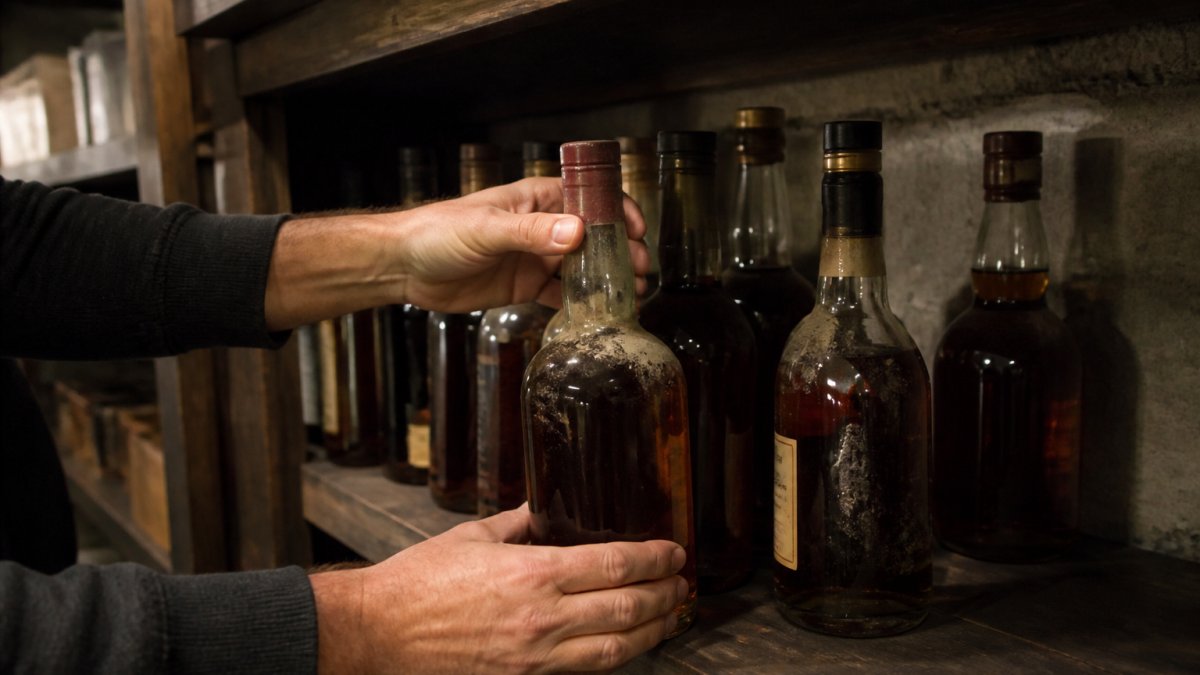
Keep the original box and any tags. Store bottles upright so the cork doesn't sit in high-proof liquid for years. Avoid storing a collection in a garage or attic where temperatures swing widely.
The Risks, Legal Rules, and Liquidity Traps Nobody Mentions
This is where most bourbon investment content goes quiet. Selling alcohol without a license is restricted under state and federal rules, and the Alcohol and Tobacco Tax and Trade Bureau governs how spirits are produced, labeled, and distributed. Private resale sits in a legal gray zone in many states. If you hold high-value bottles, learn how to insure a high value bourbon collection before anything goes wrong.
The legal picture, in plain terms
Alcohol sales are regulated, and the rules that decide whether you can legally resell a bottle are largely set at the state level and vary widely. Check your own state's alcohol control rules before you resell any bottle.
Two practical consequences follow:
- Platform risk. Private groups and forums that facilitate sales operate outside the licensed system in many places. A transaction that feels routine can still create legal exposure for both buyer and seller depending on where each party lives.
- Tax obligations. Proceeds from selling collectible bottles may be taxable. Keep purchase receipts and sale records, and talk to a tax professional before you assume resale gains are tax-free.
Liquidity: the risk nobody prices in
Liquidity is the other trap. A bottle is only worth what someone will pay on the day you need to sell, and allocated bottles can sit unsold for months. If you reach that point, our guide on how to liquidate a bourbon collection walks through the practical steps. Three scenarios worth stress-testing before you concentrate money in bottles:
- The slow exit. Demand for a given expression cools after a release cycle. Your bottle still has value, but the realistic buyer pool shrinks and you accept a lower net price to move it.
- The condition haircut. A compromised seal, a sun-faded label, or a missing box can knock a meaningful percentage off what a comparable bottle fetches. Buyers pay for condition because they cannot verify what is inside.
- The authenticity challenge. Counterfeits and refilled bottles are a real problem in the secondary market. A buyer who doubts provenance will either walk away or demand a discount, which is why documentation matters so much.
Authenticity and provenance: what to document
Provenance is the difference between a bottle that sells and a bottle that stalls. Build the file at purchase, not at sale:
- Photograph the bottle, seal, laser code or bottle code, label, and any tags or box at the moment you acquire it.
- Keep the original receipt showing date, retailer, and price.
- Record where and how it has been stored, and note any moves.
Start Tracking Your Investment Bottles Before You Buy Another One
The collectors who do well are the ones who know exactly what they own, what they paid, and what each bottle is worth today. That's a record-keeping problem before it's an investment problem. Bourbon Tracker™ is free to use, requires no download, and lets you log bottles with tasting notes.
The next bottle you buy deserves a system behind it. Start tracking your collection and keep your tasting notes and wishlist in one place.
Frequently Asked Questions
Does bourbon increase in value over time?
Some bottles do, but not because of age in the glass. Bourbon stops aging the moment it leaves the barrel, so a bottle sitting in your closet for a decade does not improve. Value comes from scarcity and demand: limited releases, allocated bottles, and award winners can command more on the secondary market than their retail price. Treat any appreciation as a possibility tied to specific bottles, not a guaranteed rule for the category.
Which rare bourbon bottles are most collectible?
Bottles often discussed by collectors include Pappy Van Winkle Family Reserve 15 Year, William Larue Weller, George T. Stagg, Eagle Rare 17 Year, Blanton's, and Weller 12 Year. Popularity is not proof of future returns. Check current secondary market listings before you pay a premium for any of them.
How do you sell collectible bourbon legally?
Resale rules vary by state, and in many places selling liquor without a license is restricted or prohibited. Licensed auction houses operate within those rules, and their results can be a useful price reference. Before you buy a bottle purely to flip, confirm what resale is allowed where you live and keep your original purchase receipts. Provenance and paperwork affect both legality and the price a buyer will pay.
Is bourbon a good investment compared with other collectibles?
Bourbon can be less liquid than stocks or funds and carries risks such as breakage, evaporation through a compromised seal, and shifting demand. Even if a bottle never appreciates, you can still drink it. Size any bourbon investment as a small slice of a diversified portfolio, buy at or near retail where you can, and log every purchase with its price and date so you can judge performance honestly instead of relying on memory.
Building a bourbon portfolio that holds up takes discipline, documentation, and a clear-eyed view of risk. Bourbon Tracker™ gives you the tools to do exactly that: free collection tracking, AI-powered bottle recommendations, and market value tracking in one place. Get started with Bourbon Tracker™ and know precisely what every bottle on your shelf is worth.