 how-to
Organize Whiskey Collection by Proof: A Step-by-Step Guide
Table of Contents
- Why Proof-Based Organization Matters for Your Collection
- Understanding Proof and ABV: The Foundation
- Step 1: Audit Your Current Whiskey Inventory
- Step 2: Create Your Proof-Based Hierarchy and Display Strategy
- Step 3: Set Up Temperature and Light Control
- Best Tools for Whiskey Collectors: Digital Inventory Management
- Whiskey Tasting Flight Order: Organizing by Proof for Tastings
- Common Mistakes to Avoid When Organizing by Proof
Last Updated: August 20, 2026
Why Proof-Based Organization Matters for Your Collection
Organizing your whiskey collection by proof creates a functional system that reflects how spirits behave in storage and taste in sequence. When you organize by proof, lower-proof bottles sit at eye level or lower shelves, while cask strength and high-proof spirits command prominent positions. This isn't just aesthetics, it's a practical framework that simplifies inventory management and tasting.
The real advantage emerges when building a tasting flight or selecting a bottle for a specific occasion. A proof-based system tells you immediately what you have at 80 proof, 90 proof, 100+ proof, and cask strength without hunting through bottles by region or distillery. Collectors using proof-based systems report spending less time managing inventory and more time enjoying their bottles.
Understanding Proof and ABV: The Foundation
Proof and ABV are different measurements of the same thing: ethanol content. In the United States, proof equals twice the alcohol by volume. A whiskey bottled at 100 proof contains 50% ABV. ABV (Alcohol by Volume) is the modern standard, a whiskey labeled 50% ABV contains exactly 50% ethanol by volume.
For organizing purposes, proof matters more than ABV because American whiskey bottles display proof prominently on the label. Using proof as your organizational framework means you're reading what's already on the bottle.
How Proof Affects Shelf Life and Storage
Proof directly impacts how long a whiskey remains stable once opened. Higher-proof spirits resist oxidation far more effectively than lower-proof ones. A sealed bottle of cask strength bourbon at 130 proof will remain virtually unchanged for decades. The same bottle at 80 proof, once opened, begins oxidizing immediately.
This is why cork degradation becomes a concern with lower-proof bottles stored vertically for years. Higher-proof spirits in sealed bottles can tolerate vertical storage longer because the ethanol slows oxidation. Temperature control matters more for lower-proof spirits too, fluctuations expand and contract the liquid, forcing it against the cork. A temperature-controlled environment at 55-65 degrees Fahrenheit is ideal for any whiskey, but lower-proof collections benefit most from stability.
Step 1: Audit Your Current Whiskey Inventory
Before reorganizing, remove every bottle from storage and lay them out where you can see them all at once. This physical inventory confirms what you own and reveals storage issues you might have missed. Look for signs of cork degradation, seepage, or label damage.
Record the essential information for each bottle: distillery name, specific expression, proof, age statement, and any distinguishing details. Use a digital platform like Bourbon Tracker™ to log each bottle as you go, building a searchable database of your collection in real time.
As you audit, note the proof of each bottle clearly. Group bottles by proof tier: 80-89 proof, 90-99 proof, 100-109 proof, 110-119 proof, 120+ proof (cask strength). This grouping reveals your collection's proof profile immediately. The accuracy of your initial audit determines how well your proof-based system works going forward.
Step 2: Create Your Proof-Based Hierarchy and Display Strategy
Once you know what you own and its proof, assign each proof tier a specific location in your display or storage space. The standard approach is to place lower-proof bottles at eye level or lower, and progressively move to higher-proof spirits as you go up or to the right. This creates a visual ascending line that makes sense intuitively.
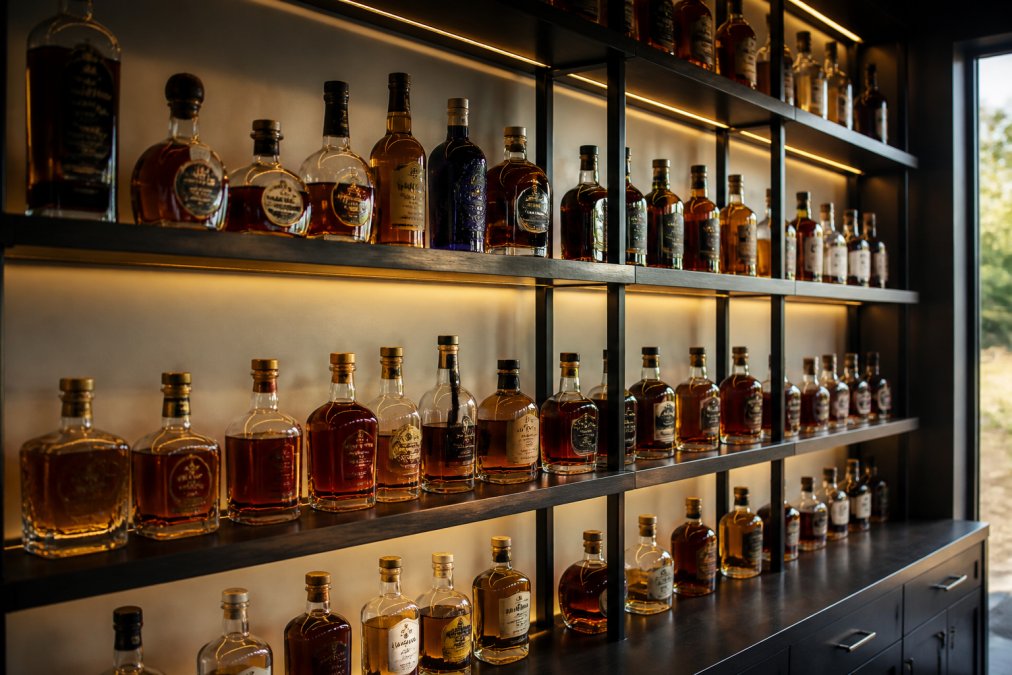
Visual Organization by Proof Tiers
Break your collection into clear proof tiers:
- Tier 1: 80-89 Proof, Entry-level and wheated bourbons for casual drinking
- Tier 2: 90-99 Proof, Standard bottlings from major distilleries
- Tier 3: 100-109 Proof, Bottled-in-bond and higher-proof standard releases
- Tier 4: 110-119 Proof, Small batch and barrel-proof releases
- Tier 5: 120+ Proof, Cask strength and high-proof releases
Within each tier, add secondary organization. Alphabetical by distillery works well, or chronological by release date. The key is consistency, your brain learns the pattern, and finding a specific bottle becomes automatic.
Vertical vs. Horizontal Storage Requirements
Sealed bottles with cork stoppers should be stored horizontally if they'll sit for years. The cork stays moist, maintaining its seal. High-proof sealed bottles tolerate vertical storage better than lower-proof ones. A sealed cask-strength bourbon at 140 proof can sit vertically for a decade with minimal risk.
Opened bottles should always be stored vertically. Once the seal is broken, vertical storage maximizes shelf space and keeps the liquid away from the cork, slowing air exposure.
Step 3: Set Up Temperature and Light Control
Your proof-based organization is only as good as your storage environment. Temperature fluctuations are your enemy, whiskey expands and contracts with heat and cold, forcing the liquid against the cork and accelerating oxidation.
Maintain a stable temperature between 55 and 65 degrees Fahrenheit. A basement or interior closet typically stays closer to this range than a kitchen cabinet or room near a window. Direct sunlight degrades whiskey color and flavor compounds. Store your collection away from windows or use UV-blocking glass if you want to display bottles near natural light.
Aim for 50-65% humidity. Most interior spaces naturally fall within this range. Your proof-based display should be positioned with these environmental factors in mind. If your best display space is near a window, consider relocating to an interior wall.
Best Tools for Whiskey Collectors: Digital Inventory Management
A proof-based physical organization system works well, but it's incomplete without digital tracking. You need to know what you have, where it is, and its condition without pulling bottles off the shelf.
Digital inventory management creates a searchable database of your collection, tracks opened versus sealed status, and provides a backup record. A dedicated whiskey collection tracker integrates your inventory with tasting notes, ratings, and wishlist management in one place.
Why Digital Tracking Complements Physical Organization
Your physical proof-based organization answers where bottle X is located. Your digital system answers broader questions: what's my collection worth, which bottles have I tasted, what should I buy next?
Bourbon Tracker™ bridges this gap. It's a free, no-download platform designed specifically for whiskey and bourbon enthusiasts. You log your bottles once, and the platform organizes them by proof, region, distillery, or any other criterion you choose. You can add tasting notes, rate bottles, and track which ones are opened versus sealed. The AI-powered recommendation engine suggests new bottles based on your tasting history and preferences.
Bourbon Tracker™ also connects you with the broader bourbon community. You can see what other collectors are tasting, compare notes, and build wishlists. This social element transforms collection management into a shared experience.
Whiskey Tasting Flight Order: Organizing by Proof for Tastings
A tasting flight is a structured experience of multiple whiskeys in a specific order. The cardinal rule of whiskey tasting is to progress from lower to higher proof. Starting with a low-proof whiskey and advancing to cask strength prevents alcohol burn from overwhelming your palate early.
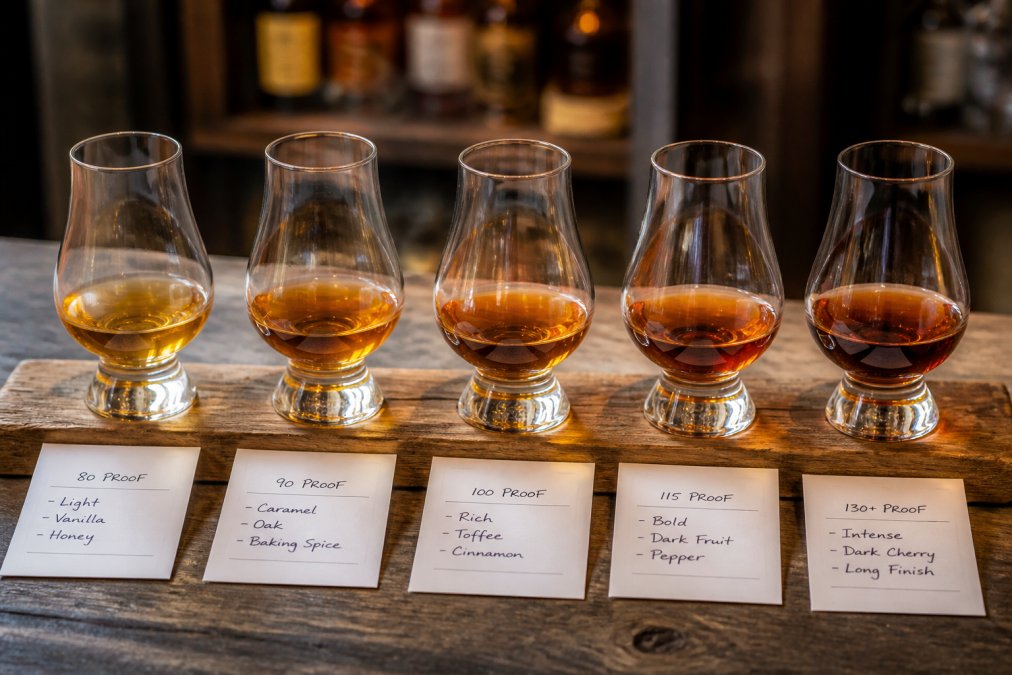
A typical flight progresses: start with an 80-90 proof bourbon, move to 100 proof, then 110 proof, then 120+ proof cask strength. This progression takes 30-45 minutes if you're tasting properly. Five or six whiskeys is the maximum, beyond that, your palate fatigues and you stop tasting accurately.
Your proof-based collection organization makes flight planning effortless. You open your cabinet, select one bottle from your 90-proof tier, one from 100-proof, one from 110-proof, and one from 120+. You're instantly ready to taste.
Common Mistakes to Avoid When Organizing by Proof
The first mistake is ignoring secondary organization within proof tiers. Without a secondary system like alphabetical or by region, you'll spend time hunting within the 100-proof tier.
The second mistake is not distinguishing opened from sealed bottles. An opened 100-proof bourbon oxidizes faster than a sealed one. Use visual markers, tape, labels, or separate shelves to distinguish them at a glance.
The third mistake is storing lower-proof bottles vertically long-term. A sealed 80-proof bourbon sitting upright for three years develops cork issues. If storing sealed lower-proof bottles, go horizontal.
The fourth mistake is not updating your digital inventory when you open a bottle. Update your system every time you open a bottle to keep your records accurate.
The fifth mistake is organizing only sealed bottles and ignoring opened ones. Your opened bottles need organization too, they oxidize faster and deserve prominent placement and first priority for tasting.
The sixth mistake is assuming proof-based organization means nothing else matters. A high-rye bourbon and a wheated bourbon at the same proof taste different. Your secondary organization should acknowledge this.
The seventh mistake is not revisiting your system after a year. Your collection grows and your preferences evolve. Review your organization annually and adjust if it's not serving you.
Organizing your whiskey collection by proof transforms it from a random assortment into a functional, beautiful system. You see your collection's proof profile at a glance, you can build a tasting flight in minutes, and you understand how to store each bottle for maximum longevity.
Start with a physical audit, establish your proof-based hierarchy, set up proper storage conditions, and digitally track your collection using Bourbon Tracker™. The combination of physical organization and digital management creates a system that scales with your collection as it grows. Whether you have 20 bottles or 200, proof-based organization keeps everything accessible and your inventory accurate.
| Organizing Step | Key Focus | Result |
|---|---|---|
| Audit inventory | Record proof of every bottle | Complete collection database |
| Create hierarchy | Assign proof tiers to shelf locations | Visual proof-based display |
| Set environment | Maintain 55-65°F, avoid direct light | Protected, stable collection |
| Digital tracking | Log bottles in Bourbon Tracker™ | Searchable, updateable inventory |
| Tasting flights | Progress from low to high proof | Optimized tasting experience |
Frequently Asked Questions
What's the best way to organize a whiskey collection?
Proof-based organization offers a practical system that combines storage efficiency with tasting logic. Group bottles by proof ranges (80-90, 90-100, 100+ proof), which aligns with how your palate experiences them during tastings. This method works alongside other systems, you can organize by region or distillery within each proof tier. The key is choosing a system you'll maintain consistently and tracking it digitally using tools designed for whiskey collectors, like Bourbon Tracker™, to avoid losing track of bottles as your collection grows.
Should whiskey be stored by proof or by distillery?
Proof-based organization offers distinct advantages over distillery-based systems, especially for tastings and collection growth. Organizing by proof helps you understand how different ABV levels affect flavor, oxidation rates, and shelf life. However, you can combine both approaches: arrange by proof as your primary system, then organize within each proof tier by region or distillery. This hybrid method gives you the tasting benefits of proof-based sorting while maintaining easy access to bottles from your favorite distilleries.
Does organizing whiskey by proof help with tasting flights?
Yes, tasting flights arranged by ascending proof create a natural progression that prevents palate fatigue and allows you to compare how ABV affects flavor profiles. Start with lower proof bottles (around 80 proof), progress through mid-range (90-100 proof), and finish with cask strength or high-proof selections. This whiskey tasting flight order lets your palate adjust gradually and makes it easier to identify subtle differences between bottles. Proof-based organization at home makes building these flights faster and more intuitive.
What's the benefit of using a digital tracker for my collection?
Digital inventory management solves the problem of losing track as your collection grows beyond 50-100 bottles. Tools like Bourbon Tracker™ let you log tasting notes, track bottle locations, and organize by proof without manually searching shelves. You can also manage your wishlist, receive AI-powered recommendations based on your palate preferences, and access your collection from your phone. For collectors with 150+ bottles, digital tracking prevents duplicate purchases and helps you remember which bottles you've opened, sealed status, and aging potential.
This article was written using GrandRanker