 How-to
Does Whiskey Get Better With Age?
Last Updated: November 21, 2026
Quick Summary
Whiskey aging changes flavor by storing clear spirit in oak barrels, where extraction, evaporation, and oxidation work together to add color, aroma, and flavor. The wood releases vanilla, caramel, oak, and spice notes while softening the raw distillate. Barrel size, char level, warehouse conditions, and time all shape the final result.
- American white oak is the most common barrel wood, and toasted and charred oak releases sugars and aromatics.
- Smaller barrels age whiskey faster because more wood surface contacts each gallon of spirit.
- Bourbon must be aged in new charred oak barrels, while Scotch and Irish whiskey often use used barrels.
- Aging whiskey in bottle does almost nothing to flavor because the glass is inert.
- Barrel aging cannot fix a flawed spirit; good whiskey starts with good distillate.
Table of Contents
- How Whiskey Aging Changes Flavor: The Basics
- How Oak Barrels Influence Whiskey Flavor
- Barrel Size, Surface Area, and Whiskey Aging Time
- New Versus Used Barrels: What Each One Does
- Temperature, Humidity, and Warehouse Conditions
- Aging Whiskey in Bottle: What Really Happens
- Aging Whiskey in Small Barrels at Home
- What Barrel Aging Cannot Fix
- Frequently Asked Questions
How Whiskey Aging Changes Flavor: The Basics
Whiskey aging is the process of storing clear spirit in oak barrels so the wood, air, and time work together to create color, aroma, and flavor. Fresh distillate starts sharp and raw. Barrel time softens it and adds the notes drinkers chase: vanilla, caramel, oak, and spice.
Understanding what happens inside the cask changes how you taste, buy, and store bottles.
Three things happen during aging:
- Extraction: The wood gives up flavor compounds into the spirit.
- Evaporation: Some alcohol and water escape through the barrel, often called the angel's share.
- Oxidation: Small amounts of oxygen seep in and mellow the spirit.
The barrel is not a passive container. It is an active ingredient.
How Oak Barrels Influence Whiskey Flavor
Oak is the standard barrel wood because it is strong, flexible, and full of flavor compounds. American white oak is the most common choice for bourbon. Toasted and charred oak releases sugars and aromatics that raw spirit cannot produce on its own.
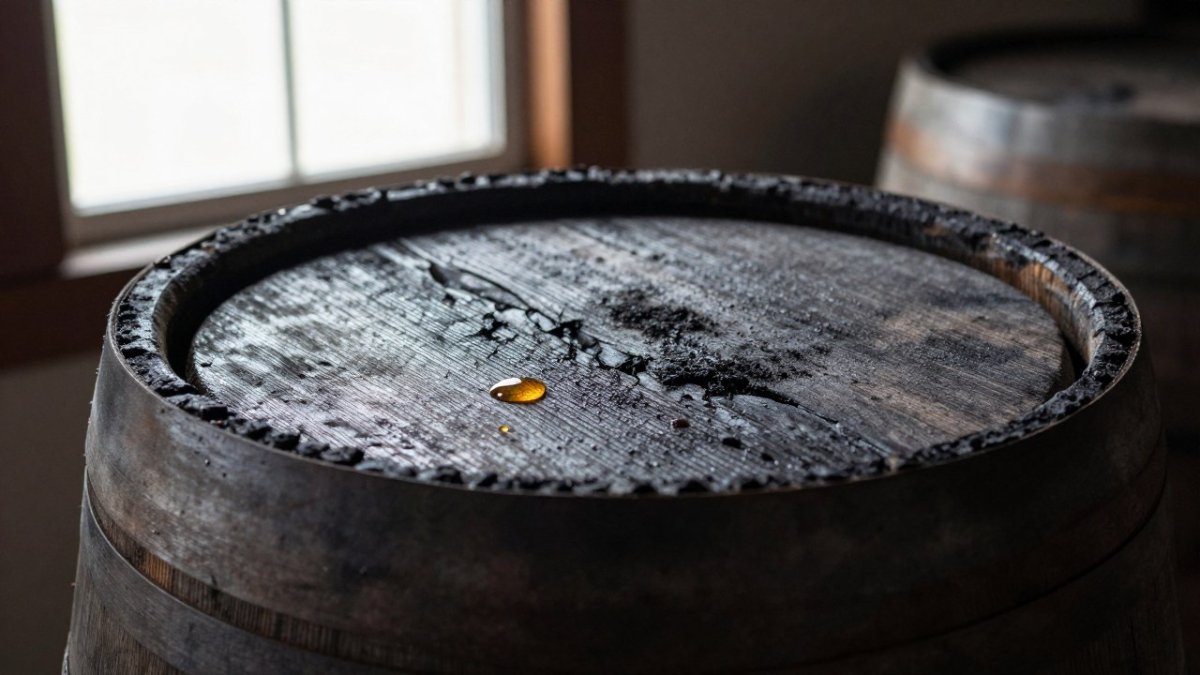
The inside of the barrel matters as much as the outside. A fresh char creates a thin layer of caramelized wood sugars. That layer is where a lot of the flavor comes from.
Flavor Extraction From Wood: Vanilla, Caramel, and Spice
The first flavors pulled from oak are usually sweet. Vanillin gives vanilla. Toasted wood sugars give caramel and toffee. As extraction continues, more spice and oak notes appear.
Common wood-derived notes include:
- Vanilla from vanillin in the oak
- Caramel and toffee from toasted wood sugars
- Coconut and cream soda from oak lactones
- Spice and clove from wood tannins
- Char and smoke from the barrel's burnt layer
If you want to train your palate, our guide to whiskey flavor profiles breaks down these note families. A flavor wheel helps you connect what you smell to what you taste.
Char Level and Its Effect on Flavor
Char level changes the flavor map. A light char leaves more wood sugars intact, so the whiskey leans sweet and creamy. A heavy char creates a deeper caramelized layer and adds more smoke and spice.
Barrel makers rate char by level, from a light toast up to a heavy alligator char. The heavier the char, the more filtering happens too. Char acts like a sponge that pulls out harsh sulfur compounds.
Barrel Size, Surface Area, and Whiskey Aging Time
Smaller barrels age whiskey faster. A small cask has more wood surface in contact with each gallon of spirit, so extraction happens quicker. That is why a quarter cask can taste mature in a fraction of the time a full barrel needs.
But speed comes with a tradeoff. Fast extraction can pull too much tannin and oak before the spirit has time to mellow. Big barrels are slower and gentler.
| Barrel Size | Surface Contact | Aging Speed | Flavor Result |
|---|---|---|---|
| Quarter cask | High | Fast | Bold oak, quick maturity |
| Standard 53-gallon | Medium | Moderate | Balanced, classic profile |
| Large cask | Low | Slow | Subtle wood, spirit-forward |
Most bourbon ages in standard 53-gallon barrels. That size has become the industry benchmark for a reason: it balances wood contact with time.
New Versus Used Barrels: What Each One Does
New charred oak barrels give the strongest wood influence. Bourbon is required to be aged in new charred oak barrels, which is why it tends to carry big vanilla and caramel notes. Used barrels give less wood flavor because much of the extractable compound is already gone.
Scotch and Irish whiskey often age in used barrels, including former bourbon casks. The result is a softer wood influence and more room for the spirit's own character.
A common mistake is assuming used barrels mean weaker whiskey. In practice, used casks let the distillate speak louder. The wood becomes a background note instead of the lead.
Temperature, Humidity, and Warehouse Conditions
Warehouse climate is the variable most drinkers underestimate. Two barrels filled on the same day from the same distillate can diverge sharply after five years because of where they sit and how the building breathes.
Heat accelerates the chemical work of maturation. Warmer temperatures speed extraction of wood compounds, drive esterification reactions that build fruity and floral notes, and increase evaporation. Cool conditions slow all of it. That is why a barrel on the top floor of a multi-story rickhouse, where heat collects, typically matures faster and loses more volume than one on the ground floor.
Humidity changes what evaporates. In a humid warehouse, alcohol vapor escapes through the wood more readily than water, so proof tends to fall over time. In a dry warehouse, water leaves faster than alcohol, so proof can rise. The same spirit can enter at 125 proof and leave years later either softer or hotter depending on the building.
Distillers use these mechanics deliberately. Traditional multi-story rickhouses rely on natural seasonal swings, with hot summers pushing spirit into the wood and cool winters pulling it back out, a bellows effect that cycles flavor compounds in and out of the staves. Some producers instead use single-story, climate-controlled warehouses to reduce barrel-to-barrel variation and produce a more consistent house style.
A practical way to see this in the glass: compare two bottles from the same producer and age statement but different warehouse locations, if the label discloses them. Look for differences in proof, color depth, and how much oak sits on the finish. Top-floor barrels often show darker color, higher oak extraction, and a drier finish; lower-floor barrels tend to be lighter and more spirit-forward.
Watch out: don't assume a hotter warehouse automatically means better whiskey. Faster maturation also means faster over-extraction.
Aging Conditions Beyond Barrel Size
Barrel size is only one lever. Warehouse placement, seasonal temperature swing, humidity, and airflow all shape the final flavor, and they interact. A small barrel in a cool, humid cellar may mature more slowly and gently than a standard barrel on a hot top floor. When you read a label or compare bottles, treat the age statement as one data point among several, the conditions behind it explain why two eight-year whiskeys can taste nothing alike.
Aging Whiskey in Bottle: What Really Happens
Aging whiskey in bottle does almost nothing to flavor. Once whiskey leaves the barrel, the wood interaction stops. The bottle is inert glass, so no extraction or meaningful oxidation occurs.
That surprises a lot of collectors. A bottle from 2010 does not taste like a bottle aged 16 years. The age statement counts barrel time only.
What does change is how long an opened bottle stays fresh. Oxygen slowly alters the spirit after the cork comes out. If you want to know how long an opened bottle lasts, read our guide on how long bourbon lasts after opening.
Proper storage protects flavor. Our tips on whiskey bottle storage cover light, heat, and upright storage. For the science of fill level and air exposure, see these oxidation facts.
Aging Whiskey in Small Barrels at Home
Home aging in small barrels is popular, and it works, with limits. A one- to five-liter charred oak barrel can add real wood flavor in weeks rather than years.
Here is how we would approach it:
- Season the barrel with water first, then discard it.
- Fill with spirit you already like. Aging improves whiskey, it does not rescue a bad one.
- Taste every week. Small barrels over-oak fast.
- Bottle when the balance feels right, usually within a few weeks to a few months.
- Rotate the barrel and keep it in a steady, cool spot.
Watch out: leaving spirit in a small barrel too long pulls harsh tannins and can make the whiskey bitter. Taste often and trust your palate over the calendar.
What Barrel Aging Cannot Fix
Barrel aging cannot fix a flawed spirit. If the distillate carries off notes from a stalled fermentation, a sloppy distillation cut, or contaminated equipment, time in oak will not remove them.
Aging also cannot add complexity that was never there. A thin, flat spirit stays thin, just with more wood on top. Good whiskey starts with good distillate, and the barrel amplifies what it is given.
This is the part most guides skip: the spirit before the barrel sets the ceiling for what aging can achieve. Four inputs matter most.
Grain bill. The mash bill determines the raw material the barrel has to work with.
Fermentation. Yeast choice and fermentation temperature produce the congener compounds, esters, higher alcohols, and acids, that later react with oak. A clean, healthy fermentation gives the barrel more to work with.
Distillation cuts. The distiller's cut between heads, hearts, and tails decides how much harshness enters the barrel. A tight heart cut leaves a cleaner spirit that ages gracefully.
Entry proof. The strength at which spirit enters the barrel changes what the wood gives up.
A practical way to test this: taste two whiskeys of similar age from the same producer but different mash bills, or the same mash bill at different entry proofs if the label discloses it. Note which flavors you can trace to the grain and which to the wood. Over time you start to separate what the barrel did from what the distillate brought.
Watch out: don't credit the barrel for everything you taste. When a whiskey tastes thin or harsh despite a long age statement, the problem usually started before the spirit ever touched oak.
That is also where a tasting log pays off. When you compare bottles at different ages, you start to see what time in the barrel actually did.
Great whiskey rewards attention. Track what you taste, compare ages side by side, and let your notes teach you what barrel time really does.
Frequently Asked Questions
Does whiskey get better with age in the bottle?
No. Once whiskey leaves the barrel and goes into glass, whiskey aging effectively stops. Glass is inert, so there is no wood contact, no extraction, and no meaningful oxidation. The flavors stay essentially the same for years if the bottle is sealed and stored upright away from heat and sunlight. A 12-year-old bourbon opened today tastes like it did when it was bottled, not older. What changes after opening is gradual oxidation, which softens some notes but also flattens others over months.
How long does whiskey need to age to develop flavor?
Most bourbon reaches bottling age between 4 and 8 years, though the legal minimum for straight bourbon is 2 years. Whiskey aging time depends on barrel size, climate, and char level more than a fixed calendar. A small 5-liter barrel can push a spirit toward heavy oak in weeks, while a 53-gallon barrel in a cool warehouse may need a decade for similar depth. Taste is the real measure: sample as you go and bottle when the balance suits you.
Can whiskey become over-aged in a barrel?
Yes. Leave whiskey in oak too long and the wood takes over. Over-oaked whiskey tastes tannic, bitter, and drying, with the vanilla and caramel buried under sawdust and astringency. Small barrels hit this point fast, sometimes within a few months. Larger barrels give you more runway, but even a 53-gallon cask can go past its peak in a hot warehouse. That is why distillers taste regularly and pull barrels when the balance is right.
How can I taste the difference between young and aged whiskey?
Pour a young expression and an older one from the same distillery side by side and compare three things: color, aroma, and finish. Young whiskey tends to run lighter in color with sharper grain and alcohol on the nose, and a shorter finish. Aged whiskey shows deeper amber, more vanilla and caramel on the nose, and a longer, rounder finish. Log both in Bourbon Tracker with tasting notes so you can track how your palate reads whiskey aging over time.