 ultimate-guide
Best Practices for Whiskey Bottle Storage That Protect Flavor
Quick Summary
Good whiskey bottle storage means keeping bottles upright in a cool, dark, stable place away from heat, sunlight and temperature swings. Upright storage protects the cork, and steady conditions keep the seal and the liquid intact. Once opened, reduce headspace and drink the bottle within a reasonable time.
- Store bottles upright so the liquid never touches and dries out the cork.
- Keep bottles away from direct sun, radiators, heating vents and sunny windows.
- Prioritize stable temperature, since repeated warm and cold swings stress seals.
- Do not stack bottles, because pressure can crack shoulders or push corks out of place.
- After opening, reseal tightly and drink partly filled bottles first to limit oxidation.
Table of Contents
- Why Whiskey Bottle Storage Matters for Flavor and Value
- Store Bottles Upright and Protect the Cork
- Whiskey Storage Temperature: Keeping It Cool and Stable
- Shielding Bottles From Light, Heat and Air
- How to Store Whiskey After Opening
- Choosing a Whiskey Storage Cabinet or Display Space
- Start Tracking Your Bottles and Their Storage Conditions
- Frequently Asked Questions
Whiskey bottle storage matters more than most collectors realize. Once a bottle is sealed, what happens to it over the next few years depends almost entirely on where it sits and how it is held.
Whiskey is a spirit that, unlike wine, does not age meaningfully once bottled, but it can still degrade. Heat accelerates evaporation and oxidation, light breaks down aromatic compounds, and dry or unstable conditions stress corks. The good news is that most of the protection comes from a handful of habits you can start today.
Why Whiskey Bottle Storage Matters for Flavor and Value
A sealed bottle of whiskey is a closed system, and that is exactly why storage conditions matter. The spirit inside is protected from air only as long as the seal holds, and the seal is usually a cork or synthetic closure that responds to its environment.
Value follows condition. A bottle with a clean fill level, an intact closure and an undamaged label is worth more to buyers than one that shows signs of heat or leakage. Careful storage costs almost nothing, while a damaged bottle can lose a meaningful share of its market price.
Store Bottles Upright and Protect the Cork
Standing bottles upright is the most common storage advice for a reason. Alcohol can slowly attack cork.
Upright storage protects the cork from contact with the liquid while still keeping the seal intact.
Check corks periodically. Look for shrinkage, staining, crumbling or a cork sitting higher or lower than it should. Any of these signs means the seal may be compromised, so plan to inspect the bottle and consider whether it needs attention.
Whiskey Storage Temperature: Keeping It Cool and Stable
Temperature is where most collectors make the biggest preventable mistakes. A cool, stable environment slows every process that changes whiskey over time. The exact target is less important than keeping conditions consistent.
Stability matters more than the precise number. Repeated swings between warm and cold cause the liquid to expand and contract, which pushes air past the closure and speeds up evaporation.
Avoid extreme heat above all. Kitchens, attics, garages and rooms with heavy sun exposure are poor choices.
Why Humidity and Radiators Matter
Humidity affects corks, and corks are the weak point of most bottles. Very dry air can dry corks out and cause them to shrink, while damp conditions can encourage mold on labels and capsules. Aim for a moderate, steady level rather than extremes.
Radiators, heating vents, fireplaces and sunny windows create the sharp local temperature swings that collectors should avoid. Keep bottles well away from direct heat sources, even if the room as a whole feels comfortable. A bottle sitting three feet from a radiator can run much hotter than the thermostat suggests.
Shielding Bottles From Light, Heat and Air
Light is a quiet threat. Direct sunlight, and even strong indoor lighting over long periods, can degrade the compounds that give whiskey its color and aroma.
Heat and light are often linked, since sunny spots tend to be warm. Choose a dark, enclosed location such as a closed cabinet, a cupboard or a basement shelf away from exterior walls.
Air is the third factor. A sealed, undamaged bottle has limited air contact, but partially filled bottles have more headspace, the empty area between the liquid and the closure. Larger headspace allows more oxidation over time.
How to Store Whiskey After Opening
Once a bottle is opened, the rules change. The seal is broken, so the whiskey now interacts with oxygen every time you pour and whenever air fills the space left behind.
Headspace is the empty area between the liquid and the closure. A full bottle has very little; a half-empty bottle has a lot.
Reseal the bottle tightly after every pour, and keep it upright in a cool, dark place.
Decanting is a personal choice rather than a universal rule. A decanter looks good on a shelf, but most decanters are not airtight, so they are better for whiskey you plan to finish within a few weeks. For longer storage, keep the original bottle with its original closure, which is designed to seal.
Keep opened bottles separate from your sealed collection so you do not confuse conditions or accidentally open the wrong one. To get set up, learn how to use Bourbon Tracker and its how-to resources.
How Long Does Whiskey Last After Opening?
Opened whiskey does not spoil in a dangerous way, but its flavor can fade gradually. The timeline depends on three things: how much air is in the bottle, how often the bottle is opened, and how warm the storage spot is.
A practical approach is to finish partly used bottles within a reasonable window, keep your notes on taste changes, and prioritize drinking the lowest-fill bottles first. If a bottle has been open for a long time and seems flat, that is usually oxidation at work rather than contamination.
Choosing a Whiskey Storage Cabinet or Display Space
Where you keep your bottles is a trade-off between protection and enjoyment.
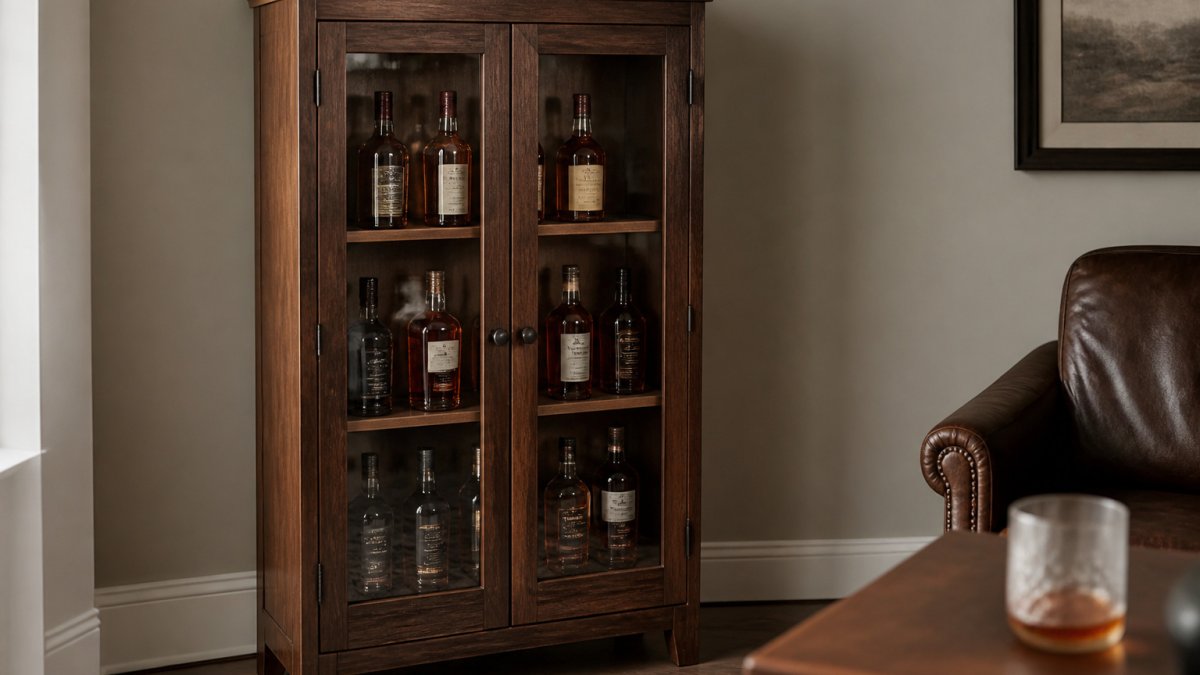
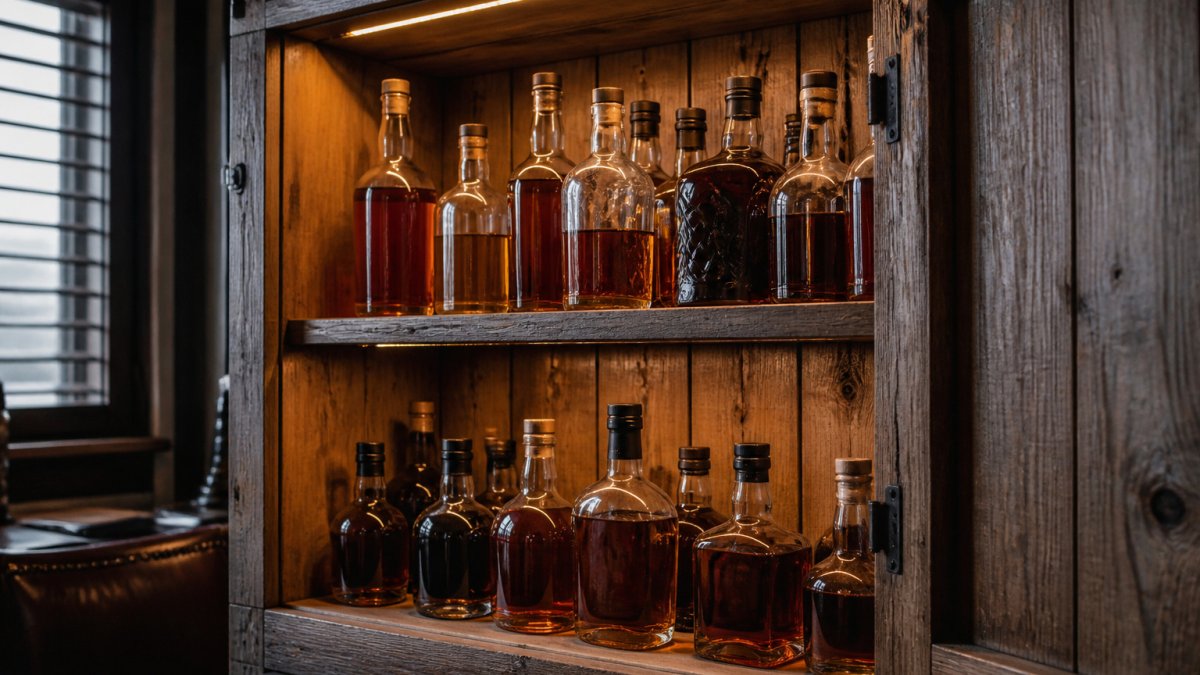
A closed cabinet is generally the best choice for long-term storage because it blocks light, buffers temperature changes, and keeps dust off the labels. Collectors planning a dedicated space can review our cellar management best practices. Our guide on display cabinets versus collection protection weighs both sides.
When comparing options, weigh these factors:
- UV protection. Direct sun and strong indoor light degrade the compounds that give whiskey its color and aroma. Solid doors, tinted glass, or a cabinet placed away from windows all help. If you use a glass display case, consider UV-filtering film on the glass and keep the case out of direct sun.
- Ventilation. A closed cabinet should not trap heat. Leave a little breathing room around the back and sides, and avoid pushing a cabinet tight against a radiator or heating vent. A cabinet in a cool interior room stays more stable than one against an exterior wall that swings hot and cold.
- Security. Collectible bottles attract attention. A locking cabinet or a closet with a lock adds a layer of protection, especially in homes with frequent guests or children. For high-value bottles, keep the original packaging and store it separately so the bottle and box stay together but the box is not damaged by handling.
- Accessibility. A cabinet you can reach easily encourages you to check corks, rotate stock, and log open dates. Deep shelves that require moving front bottles to reach back ones increase the chance of bumps and drops. Keep the bottles you drink most often at the front and the long-term bottles toward the back.
- Shelving stability. Make sure shelves are level and sturdy enough for the weight of full bottles. Avoid stacking bottles on top of each other, since pressure can crack shoulders or push corks out of position.
For bottles you intend to collect long-term, keep the original box, tube, or presentation case and store the bottle upright inside it. Packaging protects labels and closures from dust and light, and it preserves resale presentation. If the packaging is fragile, store it flat and separately, and keep a note in your tracker so you know which bottle belongs with which box.
Whatever you choose, make sure the shelving is stable and level so bottles stay upright and do not rattle against each other. A stable, dark, cool space with a locking door and easy access is the practical sweet spot for most collections.
The table below sums up the storage factors the article weighs when choosing a cabinet or display space.
| Factor | Why it matters | What to look for |
|---|---|---|
| UV protection | Light degrades color and aroma | Solid doors or tinted glass |
| Ventilation | Heat builds up in closed spaces | Room to breathe around the cabinet |
| Security | Collectible bottles attract attention | A locking cabinet or closet |
| Accessibility | Easy access encourages checking corks | Front-loaded stock, shallow shelves |
| Shelving stability | Pressure can crack shoulders | Level, sturdy shelves with no stacking |
Start Tracking Your Bottles and Their Storage Conditions
Good storage is easier to maintain when you know what you own and where each bottle sits. Keeping a record of your bottles, their open dates, tasting notes and storage locations helps you spot problems early and avoid losing track of partly finished bottles.
Bourbon Tracker™ is a free, no-download platform for logging your collection, keeping organized tasting notes and managing a personal wishlist. You can also get AI-powered recommendations based on your palate and connect with the wider bourbon community.
Track My Collection
Frequently Asked Questions
Should whiskey bottles be stored upright or on their side?
Store whiskey bottles upright. Unlike wine, whiskey's higher alcohol content can slowly break down a cork that stays in contact with liquid for long periods, which can make the cork crumble and let air in. Standing bottles upright keeps the liquid off the closure. Keep the bottles in a stable position so they do not tip or get knocked over, and check corks now and then for dryness or crumbling.
What is the best temperature for storing whiskey?
A cool, steady room temperature works best. Avoid places that get very hot or very cold, such as a sunny window, a kitchen near the stove or a garage. Frequent swings in temperature cause the liquid and air in the bottle to expand and contract, which can stress the closure over time.
Does whiskey go bad after it is opened?
Whiskey does not spoil in the way food does, but it changes after opening. Once the bottle is open, air fills the space above the liquid, and oxidation slowly dulls aromas and flavor. Sealed bottles kept well can stay good for many years, while opened bottles usually lose noticeable character over months. Keeping the bottle well sealed and the fill level high slows this change.
How long does an opened bottle of whiskey last?
The more air above the liquid, the faster it fades. Transferring the remainder to a smaller bottle can help preserve flavor. Taste the whiskey periodically; if it smells flat or sharp, it has probably declined, though it is still safe to drink.
Should whiskey be stored in a dark place?
Yes. Direct sunlight and strong UV light can degrade flavor compounds and, over time, affect the color and taste of the whiskey. Store bottles in a dark cabinet, closet or box, or at least away from windows. Dark glass offers some protection, but it does not replace keeping bottles out of direct light entirely.
Can whiskey be stored in the refrigerator or freezer?
Refrigerators and freezers are not recommended for storing whiskey. The cold is more extreme than a stable room environment, and repeated temperature changes when the door opens can stress the cork. Whiskey does not need chilling for storage, and freezing can make the closure brittle. Keep bottles at a steady cool room temperature instead.
Does whiskey need to be stored in a special cabinet?
No special cabinet is required, but a closed cabinet or cupboard protects bottles from light, dust and temperature swings. Choose a spot away from heating vents, radiators and appliances. If you display bottles openly, accept that they will receive more light and temperature variation, and rotate or limit how long they sit in direct sun.
How can you slow oxidation in an opened whiskey bottle?
Keep the bottle tightly sealed and stored upright in a cool, dark place. Reduce the amount of air in the bottle by moving leftovers into a smaller container, which shrinks the headspace. Avoid frequent opening, and pour only what you plan to drink.