 ultimate-guide
How to Buy Authentic Vintage Bourbon Bottles Safely
Quick Summary
The safest places to buy vintage bourbon bottles are specialty auction houses, collection-focused sites, and local bottle shops or private collectors. Before buying, check the label, closure, fill level, and glass against verified reference photos, and confirm the seller's return policy in writing.
- Ask for close-up photos of the neck, label, and any tax strip before buying.
- Compare the bottle against multiple verified reference photos, not just one.
- Check that the closure type matches the era the label suggests.
- Compare recent sales of the same brand, expression, and era before judging a price.
- Confirm the seller is licensed and that the bottle can legally ship to your state.
Table of Contents
- Where Vintage Bourbon Bottles Are Sold Today
- How to Identify Vintage Bourbon Bottles Before You Buy
- A Practical Authentication Checklist for Old Bottles
- Antique Whiskey Bottles Price Guide: What Affects Value
- Legal Rules for Buying and Shipping Vintage Spirits in the US
- Buyer Protection, Storage, and Condition Checks
- Start Tracking Your Vintage Bottle Purchases
- Frequently Asked Questions
Where Vintage Bourbon Bottles Are Sold Today
Vintage bourbon bottles move through a few distinct channels, and each one carries different risks for buyers. Knowing where a bottle came from is the first step toward buying one safely.
Specialty Auction Houses and Dedicated Collection Sites
Auction houses and collection-focused sites are where many serious buyers start. Before you bid or buy, check the label details, fill level, and closure condition in each listing, and confirm the seller's return policy in writing.
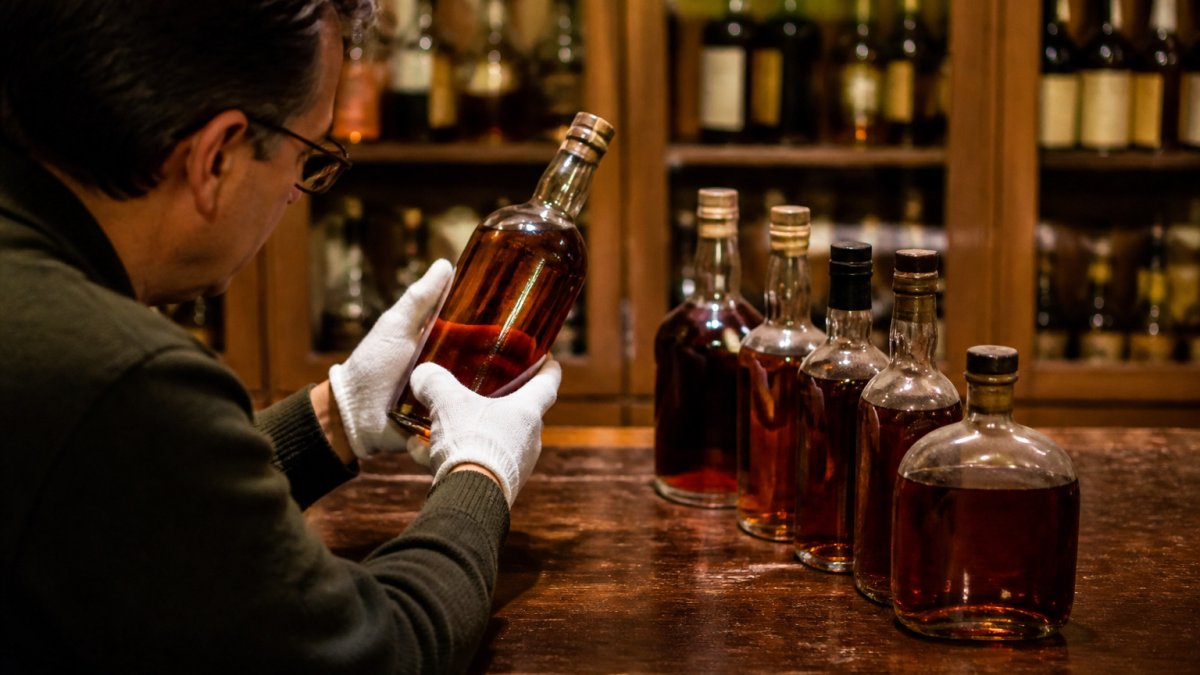
Read the listing closely. Look for photos of the actual bottle rather than stock images, and ask for close-ups of the neck, label, and any tax strip. A seller who is willing to provide those photos is usually more trustworthy than one who is not.
Local Bottle Shops and Private Collectors
Local shops and private collectors can offer access to bottles you will not find online. Buying in person lets you inspect the bottle, check the fill level against the glass, and ask questions about provenance.
Private sales carry more risk because there is rarely a formal return process. If you buy this way, ask for a written description of the bottle and keep a record of the transaction.
How to Identify Vintage Bourbon Bottles Before You Buy
Identifying an old bottle comes down to checking the label, the glass, the closure, and the liquid level against what is documented for that brand and era. For a step-by-step walkthrough, see how to identify authentic vintage bourbon labels. Start with the label, because labels are the easiest feature to compare against reference photos.
Look at the typography, the paper quality, and any printed dates or bottling codes. Compare the bottle against multiple verified photos from reliable collector resources rather than relying on a single reference.
Check the closure next. Older bottles used different caps, corks, and seals than modern ones, so a mismatch between the closure and the era the label suggests is a warning sign. The neck and glass can also reveal age through mold marks, seam lines, and wear.
A Practical Authentication Checklist for Old Bottles
Use this checklist before you commit to a purchase:
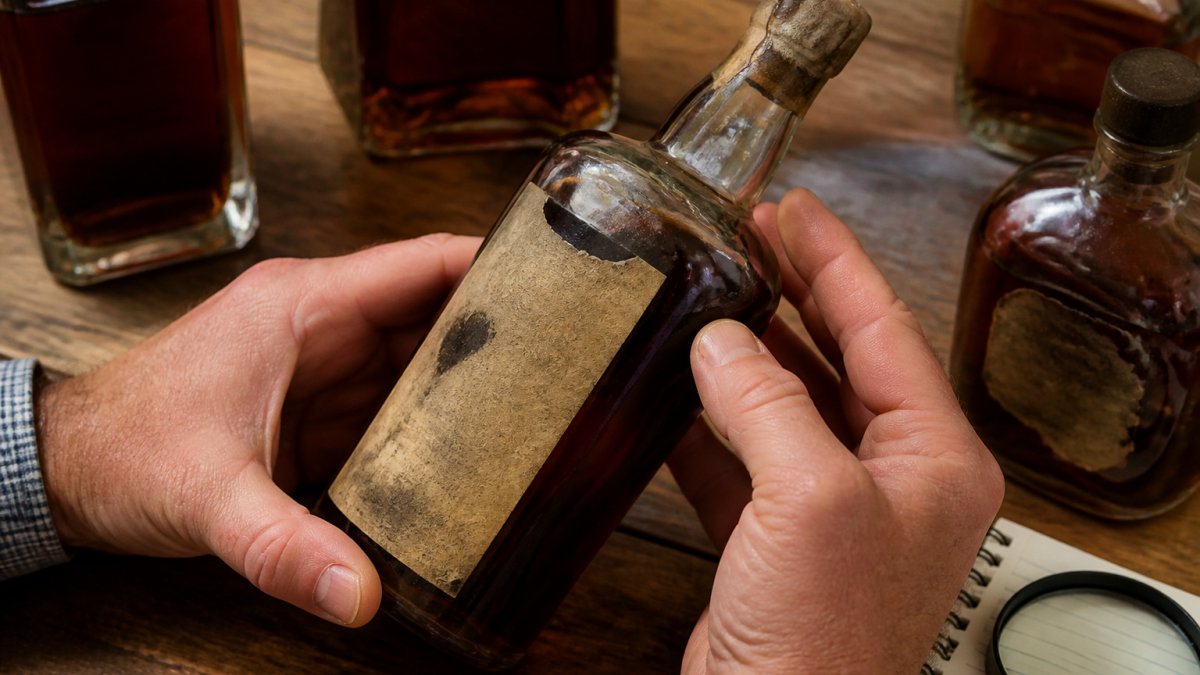
- Label matches verified reference photos for the brand and era
- Typography, spacing, and printed details look consistent throughout
- Closure type fits the period the label suggests
- Glass shows age-appropriate wear and seam lines
- Fill level sits at a plausible height for the bottle's age
- Tax strip or seal, if present, is intact and matches the era
- Seller provides close-up photos of the neck, label, and base
- Seller offers a written description and a clear return policy
No single item settles authenticity. A bottle that passes most checks but fails one important detail, like a closure that does not match the label, deserves a closer look or should be passed over.
Antique Whiskey Bottles Price Guide: What Affects Value
Asking prices are not values. Read whether vintage bourbon bottles hold up as a long-term investment to see how that plays out over time. A listing price is what one seller hopes to get; value is what comparable bottles have actually changed hands for, adjusted for condition, provenance, and the costs of completing the transaction.
Build a comparable-sales set before you judge a price
Start by finding three to five recent sales of the same brand, expression, and era as the bottle you are considering. Match on the details that move price: age statement, proof, bottle size, distillery, and the year range the label and tax strip point to. A 1970s bottling and a 1990s bottling of the same brand are not comparables, and a pint is not a comparable for a fifth. Note the sale date, the final price, the condition described, and whether buyer's premium or shipping was included. A sale that closed six months ago carries more weight than one from three years ago in a market that moves.
Adjust for condition, provenance, and completeness
Once you have a comparable set, adjust each sale for the differences between that bottle and yours. Condition often drives the widest spread: a bottle with a full fill level, an intact seal, and a clean label will sit at the top of the range, while a low fill, a torn label, or a replaced closure pulls the value down. Provenance that can be documented, an original receipt, a distillery letter, a known collection history, supports a premium; a story with no paperwork does not. Original packaging, hang tags, and tax strips add value when present and intact, and their absence is a discount, not a neutral.
Do the full landed-cost math
Compare bottles on total cost, not hammer price. Add any buyer's premium at auction, sales tax where applicable, insured shipping, and any signature or handling fees. A bottle that looks cheaper at auction can cost more than a retail listing once those are added. Learn which market trends shift collectible bottle values over time before you compare prices. Do the same math on the sell side if you might resell: fees and shipping come out of your proceeds, so the spread between buy and sell is narrower than the sticker prices suggest.
Grade the bottle on a simple scale
A workable shorthand is to sort bottles into tiers. Top tier: full or near-full fill, intact original seal and tax strip, clean label, documented provenance. Mid tier: minor label wear or a slightly low fill, seal intact, provenance thin. Entry tier: low fill, damaged label, replaced or missing closure, no documentation.
Watch out: a single high asking price on a rare bottle is not evidence that your bottle is worth that much, without matched recent sales, an asking price is just an opinion.
Bourbon Tracker™ can help you keep a record of the bottles you research and the prices you see, so you can compare value over time.
The article grades bottles into tiers, and each tier is priced against its own comparables.
| Tier | What it looks like | Pricing note |
|---|---|---|
| Top | Full or near-full fill, intact seal and tax strip, clean label, documented provenance | Price against top-tier comparables |
| Mid | Minor label wear or slightly low fill, seal intact, thin provenance | Price against mid-tier comparables |
| Entry | Low fill, damaged label, replaced or missing closure, no documentation | Price against entry-tier comparables |
Legal Rules for Buying and Shipping Vintage Spirits in the US
Alcohol law in the United States is layered: federal rules set the floor, and each state adds its own rules on top (Alcohol Beverage Authorities in United States, Canada, and Puerto Rico). For vintage spirits the practical questions are who is allowed to sell, whether the bottle can legally cross a state line to you, and who bears the risk if it cannot. Getting this wrong can mean a seized shipment, a voided sale, or a bottle you cannot legally receive.
Who can legally sell
The federal Alcohol and Tobacco Tax and Trade Bureau (TTB) oversees alcohol labeling and permits, and its guidance is a reasonable starting point for understanding what a licensed seller is. In practice, the seller you buy from should hold the licenses required for the transaction, a retailer, an auction house operating under appropriate licenses, or a licensed marketplace. Private sales carry both legal and financial risk, so confirm how the seller is licensed before you pay. Ask a seller how they are licensed before you pay.
Shipping across state lines
This is where most buyers get surprised. Many states restrict direct shipment of spirits from out-of-state sellers. The rules change over time, and a route that worked last year may not work now. Before you buy, check your state alcohol regulator's published shipping rules and confirm the seller ships to your state under those rules. Plan to be present to receive the package, since many shipments require an adult signature.
Private transfers and in-person pickup
Buying in person from a local shop or a licensed retailer avoids most shipping issues, because the transfer happens at the point of sale under that business's license. Private collector-to-collector transfers carry more risk: they rarely come with buyer protection, and they can be difficult to unwind if the bottle is misrepresented. If you buy privately, keep a written record of the transaction and understand that you may have little recourse.
Practical steps before you pay
Confirm the seller's licensing, confirm the bottle can legally ship to your state, choose insured shipping with signature on delivery, and keep the order confirmation and tracking. If a seller is vague about licensing or shipping, treat that as a reason to walk away rather than a detail to sort out later.
Watch out: rules differ by state and change over time, so verify current requirements with your state alcohol regulator before you commit, a seller's assurance is not a substitute for checking.
Buyer Protection, Storage, and Condition Checks
Protect your purchase from the moment it arrives. Our guide on how to insure a high-value bourbon collection covers coverage options for loss or damage. Request insured shipping for any bottle of meaningful value, and inspect the packaging as soon as the carrier delivers it.
Store bottles upright in a cool, dark place with stable temperature and humidity, since sunlight and temperature swings can affect labels and seals over time. Check your bottles periodically for leaks, seal changes, and label condition.
Seller due diligence matters too. Verify the seller's business details, read recent reviews, and confirm that the return policy covers misrepresented or damaged bottles. If a seller will not put terms in writing, consider walking away.
Start Tracking Your Vintage Bottle Purchases
Once you have bought a bottle, record it while the details are fresh. Note the seller, purchase date, price paid, label details, fill level, and any documentation you received. A consistent record makes it easier to compare value over time and to prove provenance if you ever sell or insure the bottle.
Bourbon Tracker™ lets you log your bottles, keep organized tasting notes, and manage a personal wishlist, all without downloading anything. It is free to use, so you can start tracking your collection as soon as you buy your first vintage bottle. Track My Collection.
Frequently Asked Questions
Where can I find old bourbon bottles for sale?
Old bourbon bottles are sold through specialty auction houses, dedicated collection marketplaces, licensed bottle shops, and reputable private collectors. Check that online sellers are licensed to ship spirits, and ask for clear photos of the label, fill level, closure, and tax strip. Compare several listings before committing, and ask for provenance details when a bottle is marketed as rare. Buyers who want to start with lower risk can begin with well-documented bottles from established sellers and move to rarer pieces once they understand how condition and labeling affect value.
How can I verify the authenticity of a vintage bourbon bottle?
Start by checking the label design, typography, and bottler information against published references for that brand and era. Examine the closure, capsule, and tax strip for signs of age-appropriate wear, and confirm that the glass, embossing, and fill level match the period. Ask the seller for provenance such as original receipts or prior auction records. Consider a professional appraisal for high-value purchases before payment is final.
What is the most sought after bottle of bourbon?
Demand is highest for limited releases, discontinued expressions, and bottles from closed or historic distilleries. Rarity alone does not guarantee value, since collectors also weigh condition, fill level, label completeness, and documented provenance. Researching recent comparable sales can help you judge whether a bottle's asking price reflects genuine collector demand or simply a seller's expectation.
Are bourbon bottles worth anything?
Many bourbon bottles are worth only their contents, but certain vintage, limited, or discontinued bottles can sell for significantly more than retail. Value depends on age, rarity, condition, label integrity, and whether the bottle is sealed. Check recent sold listings rather than asking prices to estimate what a bottle actually sells for in the current market.