 how-to
Is a Whiskey Display Cabinet Bad for Your Collection?
Last Updated: October 27, 2026
Quick Summary
Whiskey storage in a display cabinet is safe only when the glass filters UV light, the cabinet sits out of direct sun, and the doors lock. Glass alone is not the problem; unfiltered light and unstable temperature are what damage bottles.
- Store whiskey bottles upright, keep closures tight, and keep them away from direct sunlight.
- Long-term collectors often target the low-to-mid 60s Fahrenheit and avoid spots that swing more than a few degrees daily.
- Roughly 50 to 70 percent relative humidity is a reasonable target for sealed bottles and original packaging.
- Buy for the collection you will have in a year and add a buffer of roughly 20 to 30 percent for growth.
- Standard whiskey bottles run about 11 to 13 inches tall, so measure your tallest bottle before buying.
Table of Contents
- Why Whiskey Bottle Storage for Collectors Is a Buying Decision, Not a Shelf
- How to Store Whiskey Bottles: Upright, Sealed, and Out of the Sun
- Whiskey Storage Temperature and Light: The Two Variables That Ruin Bottles
- Is a Whiskey Display Cabinet Safe? Glass, UV, and Lockable Storage
- Matching Storage Capacity to Your Bottle Count and Collection Value
- Tracking a Whiskey Collection: Inventory, Provenance, and Insurance
- Log Your Bottles in Bourbon Tracker Before You Buy Another Cabinet
- Frequently Asked Questions
Why Whiskey Bottle Storage for Collectors Is a Buying Decision, Not a Shelf
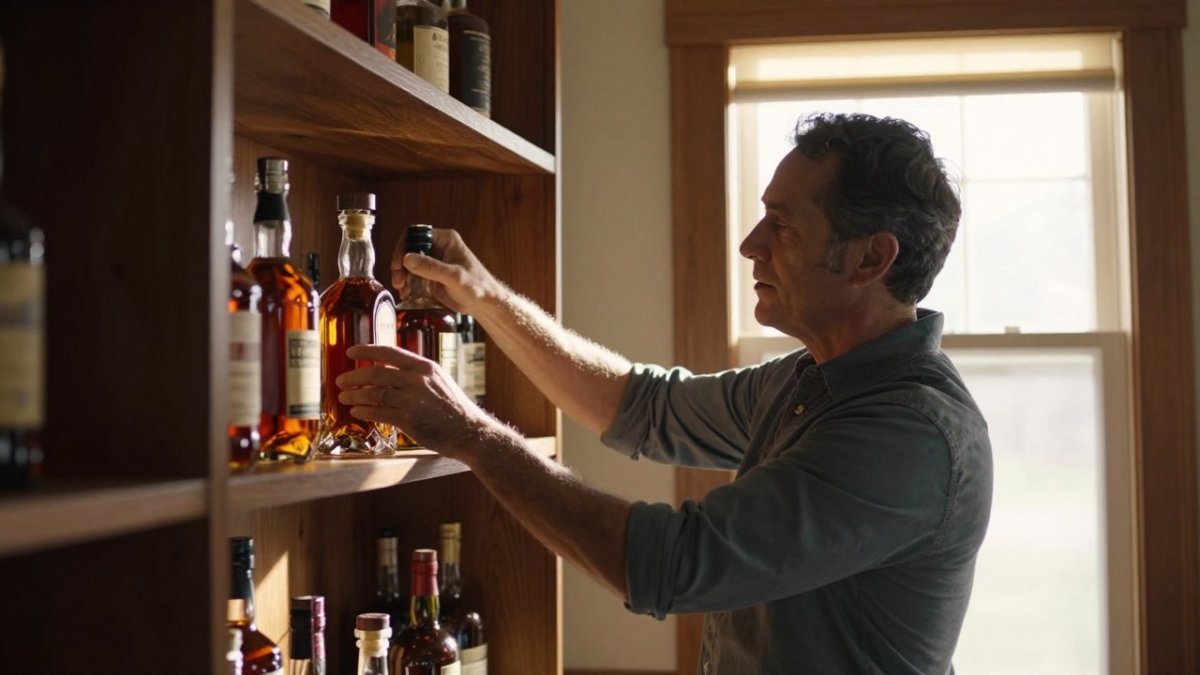
Whiskey storage for collectors is a preservation system, not a piece of furniture.
Whiskey does not age in the bottle. What it does in that bottle depends almost entirely on the conditions you store it in.
Below, we break down what matters when you choose storage, from bottle orientation to lockable doors, and how to size a cabinet to a growing collection.
How to Store Whiskey Bottles: Upright, Sealed, and Out of the Sun
Store whiskey bottles upright, keep the closure tight, and keep them away from direct sunlight. Those three habits protect more value than any cabinet upgrade. Upright storage keeps the liquid off the cork, a tight seal slows evaporation, and sunlight is the quiet killer, on brown glass and clear glass alike.
Bottle Orientation, Cork Care, and Evaporation
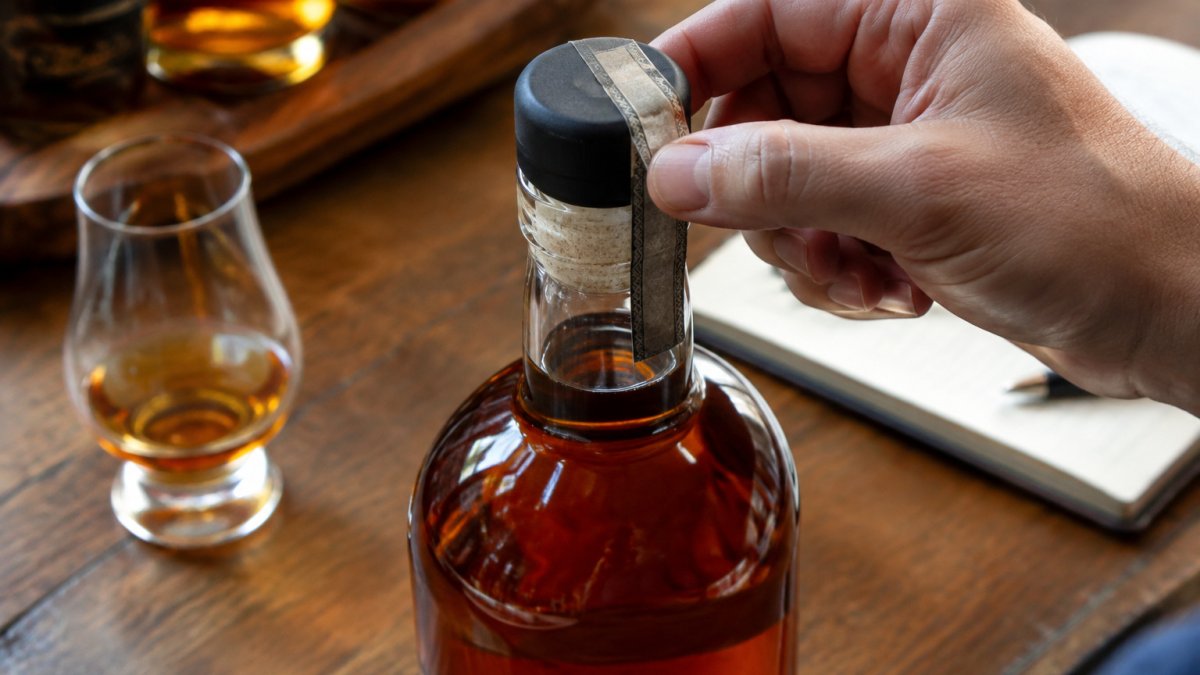
Lay a whiskey bottle on its side and the whiskey sits against the cork for months, weakening it and leaving a corky off-note.
Evaporation is the other slow leak.
guidance on storing open spirits bottles
If you want the full method, our guide on how to properly store open bourbon bottles walks through orientation, cork care, and what to do once a bottle is half empty.
Whiskey Storage Temperature and Light: The Two Variables That Ruin Bottles
Temperature swings and light exposure do more damage to stored whiskey than anything else in a room. Stable and cool beats cold and fluctuating every time. Light, especially sunlight through a window, breaks down the compounds that give whiskey its color and character, and display and preservation pull in opposite directions.
What light actually does to a bottle
Ultraviolet and visible blue light drive photo-oxidation in the liquid and fade the inks and foils on the label. Brown glass slows this down; clear glass barely resists it. A clear-glass bottle on a sunny shelf can lose color and pick up a flat, cardboard-like note long before an amber bottle in the same spot shows any change. A faded label or sun-bleached foil can also cut resale value on a sealed collectible even when the whiskey inside is fine.
Practical light controls, in order of effectiveness:
- Keep bottles out of direct sun entirely. No display shelf should face a window that gets daily sun.
- Use UV-filtering glass or film on any glass-front cabinet that receives ambient daylight. Standard clear glass blocks some UV but not enough for long-term storage.
- Store sealed collectibles in the dark, inside a closed cabinet, a box, or a sleeve, and reserve open shelving for bottles you plan to drink within a year or two.
Temperature: stable beats cold
Whiskey does not age in the bottle, but it does react to heat. Warm storage accelerates evaporation through the closure and speeds up the reactions that flatten flavor. The goal is not a refrigerator, it is a spot that stays roughly room temperature year-round and does not swing. A cabinet on an exterior wall that bakes in summer afternoons, the top of a refrigerator, or a shelf above a radiator all fail that test.
Long-term collectors often treat the low-to-mid 60s Fahrenheit as a comfortable target and avoid any spot that moves more than a few degrees over a day. You do not need a calibrated cellar, just avoid the worst spots:
- Exterior walls that heat up in summer
- Above or beside appliances that vent heat
- Attics, garages, and unconditioned closets
Humidity and the closure
Relative humidity matters less for sealed whiskey than for wine, but it still affects the closure. Very dry air can dry out a cork over years, and very damp air invites mold on labels and boxes. Roughly 50 to 70 percent relative humidity is a reasonable target for a collection that includes sealed bottles and original packaging; a simple hygrometer tells you whether a basement or closet is safe before you commit a collection to it.
A quick preservation checklist by bottle type
- Everyday open bottles: stable room temperature, out of direct sun, upright. Display is fine.
- Sealed collectibles: dark cabinet, stable temperature, moderate humidity, upright, label protected.
- High-value or allocated bottles: all of the above plus a lock, a record of condition, and photos of the label and fill level at purchase.
If you want the full method for open bottles, our guide on how to properly store open bourbon bottles walks through orientation, cork care, and what to do once a bottle is half empty.
Is a Whiskey Display Cabinet Safe? Glass, UV, and Lockable Storage
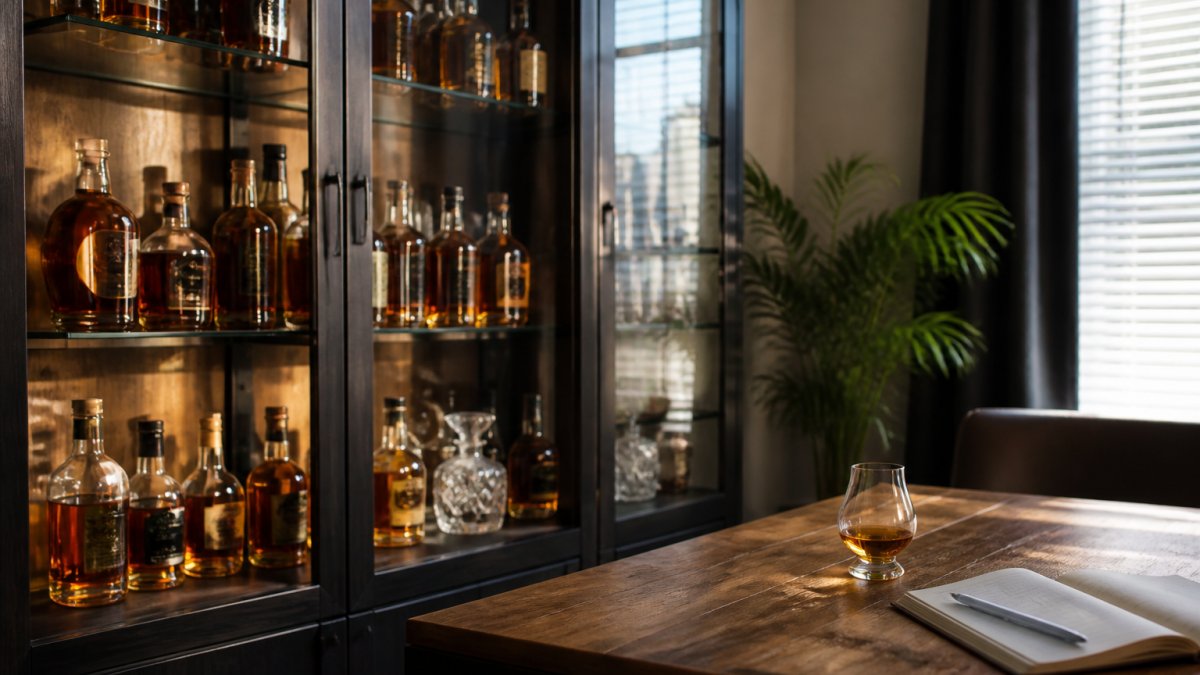
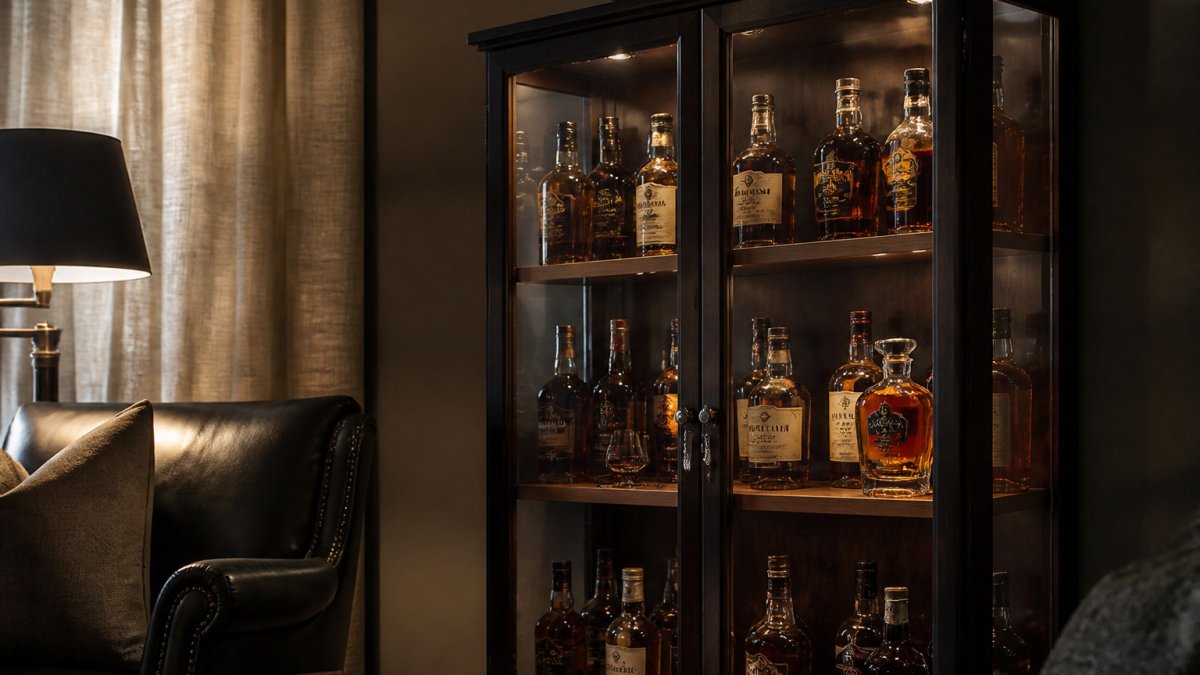
A whiskey display cabinet is safe for your collection when the glass filters UV light, the cabinet sits out of direct sun, and the doors lock. Glass alone is not the problem.
Matching Storage Capacity to Your Bottle Count and Collection Value
Buy for the collection you will have in a year, not the one you have today. Collectors almost always underestimate growth. Count your bottles, add a realistic buffer, and size the cabinet to that number. Then match the storage type to what the bottles are worth, a $30 everyday bottle and a sealed allocated release do not need the same protection.
Start with an accurate count and a value split
Before you shop, sort every bottle into three buckets:
- Everyday and open bottles, drinking stock you rotate through
- Sealed collectibles, bottles you intend to keep sealed for years
- High-value or allocated bottles, the ones that would be expensive or hard to replace
The split, not the total, drives the decision: 60 bottles that are 50 everyday and 10 sealed need very different storage than 60 sealed bottles.
Capacity planning by bottle count
Use these bands as a starting point, then add a buffer of roughly 20 to 30 percent for growth:
- Under 30 bottles: a bar cart or one small cabinet is enough. If most are everyday bottles, open shelving works; if any are sealed, choose an enclosed cabinet.
- 30 to 100 bottles: a full enclosed cabinet for sealed and high-value bottles, plus open shelving or a rack for everyday stock. This is the most common collector setup.
- Over 100 bottles: dedicated storage with room to expand, split between a protected cabinet and accessible shelving. At this scale, inventory tracking stops being optional.
Buying criteria that actually separate cabinets
When you compare options, check these in order:
- Interior height and shelf spacing. Standard whiskey bottles run about 11 to 13 inches tall, some taller. Measure your tallest bottle and confirm adjustable shelves clear it without tilting.
- Usable capacity vs. advertised capacity. A cabinet rated for 60 bottles may only fit 40 once you account for shelf spacing and bottle diameter. Compare interior dimensions, not marketing counts.
- Door type and glass. Solid doors protect best; glass doors need UV filtering if the cabinet sees daylight.
Cost framing
Storage cost scales with protection and capacity: a basic rack or cart sits at the low end, an enclosed cabinet with solid doors and a lock at the high end, and a glass display cabinet with UV-filtered glass in between. Spend on protection for the bottles that carry value and on access and display for the bottles you drink. Do not buy one showpiece cabinet and put everything in it.
If you are sizing a cabinet right now and are not sure of your exact count, our guide on managing whiskey bottle inventory shows how to get an accurate number and a rough value before you buy.
Tracking a Whiskey Collection: Inventory, Provenance, and Insurance
You cannot insure or protect a collection you have not documented. Inventory, provenance, and insurance work as one system. Inventory is what you own.
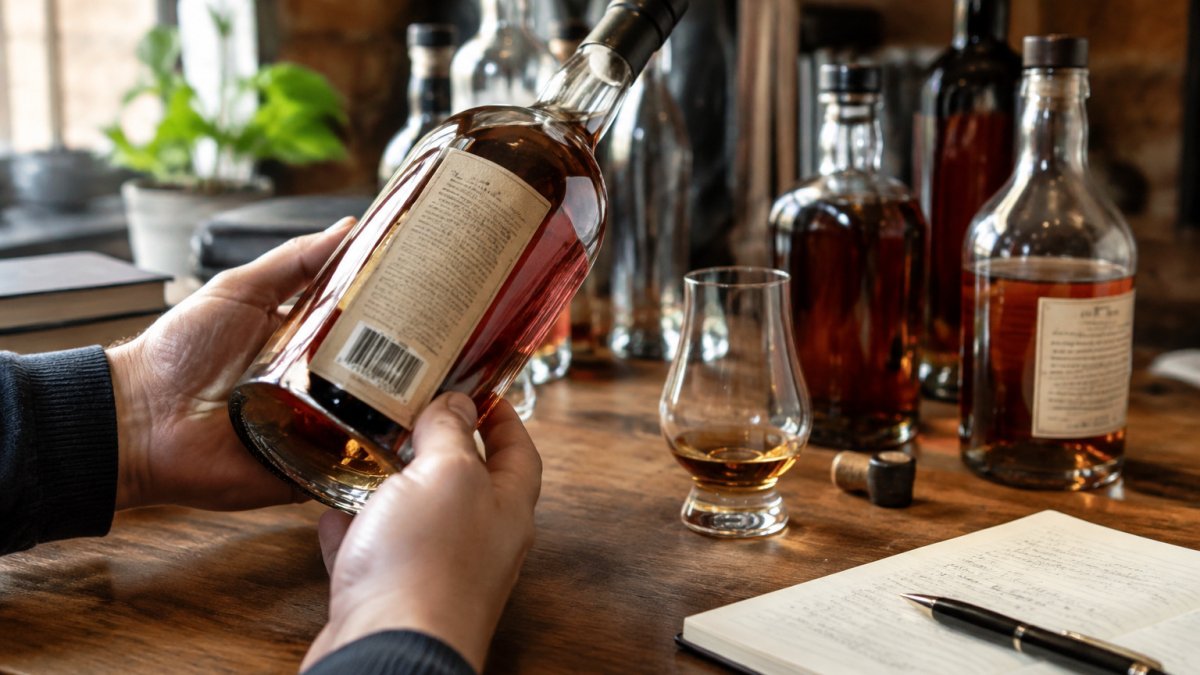
Keep a record for every bottle: name, release, purchase date, price paid, and storage location. Photograph labels and store receipts with the record.
This is where Bourbon Tracker™ earns its place. For the insurance side, our step-by-step guide on how to value whiskey for insurance covers appraisal and documentation.
Log Your Bottles in Bourbon Tracker Before You Buy Another Cabinet
The hardest part of whiskey bottle storage for collectors is not picking a cabinet. It is knowing what you actually own before you spend on furniture that may not fit it.
Bourbon Tracker™ helps you manage your collection. It is free to use and needs no download.
Track your bourbon collection and size your next cabinet to real numbers instead of a guess.
Frequently Asked Questions
Should whiskey bottles be stored upright or on their sides?
Store whiskey bottles upright. High-proof spirits slowly eat away at natural corks, and laying a bottle down keeps the liquid in constant contact with the closure, which speeds up breakdown and can leave cork particles in the whiskey. Upright storage also limits evaporation and keeps the label clean. The one exception is a bottle you plan to open within a few weeks and want to keep the cork moist, but for anything in a collection, standing the bottle up is the safer default.
Does light damage whiskey bottles?
Yes. Ultraviolet light breaks down the compounds that give whiskey its color and aroma, and clear glass offers almost no protection. A bottle left in direct sun for months can fade in color and pick up a flat, cardboard-like smell. Keep whiskey storage away from windows, and if you use a glass display cabinet, choose a spot out of direct sun or fit the glass with a UV film. Closed wood cabinets block light completely, which is why they suit long-term collectors.
What temperature is best for storing whiskey?
Aim for a steady 60 to 65 degrees Fahrenheit, away from heat sources like radiators, ovens, and garage walls that bake in summer. The exact number matters less than stability, because repeated swings push liquid in and out of the cork and speed up evaporation. Avoid storing bottles above a refrigerator or in an attic. A cool interior closet or a basement room with low humidity works well for whiskey storage.
How do I organize and track a whiskey collection?
Bourbon Tracker lets you log tasting notes and build a wishlist without downloading anything.
Storage decisions get easier once you can see your whole collection in one place. Bourbon Tracker™ helps you log every bottle, track value, and spot what you actually need to protect, all before you spend on a cabinet. Get started with Bourbon Tracker™ and build storage around the collection you really have.