 how-to
Managing Whiskey Bottle Inventory for Collectors
Table of Contents
- Why Managing Whiskey Bottle Inventory Matters for Collectors
- How to Catalog a Whiskey Collection: What to Record on Every Bottle
- Bourbon Bottle Inventory Spreadsheet: When a Simple Sheet Works
- Choosing a Whiskey Collection App That Fits How You Collect
- Whiskey Bottle Value Tracking: Keeping Your Numbers Honest
- Setting Up a Repeatable Inventory Routine
- Common Inventory Mistakes Collectors Make
- Conclusion
- Frequently Asked Questions
Last Updated: October 18, 2026
Why Managing Whiskey Bottle Inventory Matters for Collectors
A collection outgrows memory faster than most people expect. You buy a bottle, tuck it behind three others, and two years later you cannot tell whether you already own it. Managing whiskey bottle inventory for collectors fixes that problem before it costs you money.
At Bourbon Tracker™, we hear the same story from collectors constantly: the duplicate purchase, the forgotten open bottle, the bottle whose value nobody wrote down.
Whiskey bottle inventory is the practice of recording every bottle you own, along with the details that matter: what it is, where you got it, what you paid, and how it tastes.
Here is what most guides get wrong. They treat inventory as a spreadsheet task. It is really a memory system, and a good one pays off in three ways:
- You stop buying duplicates you forgot about
- You can find any bottle in seconds
- You know what your collection is actually worth
Below, we'll show you exactly what to track, which tools fit which collector, and how to build a routine that survives past the first month.
How to Catalog a Whiskey Collection: What to Record on Every Bottle
Cataloging a whiskey collection means capturing a fixed set of fields for every bottle, every time. Consistency matters more than detail here. A short list you always complete beats a long list you abandon.
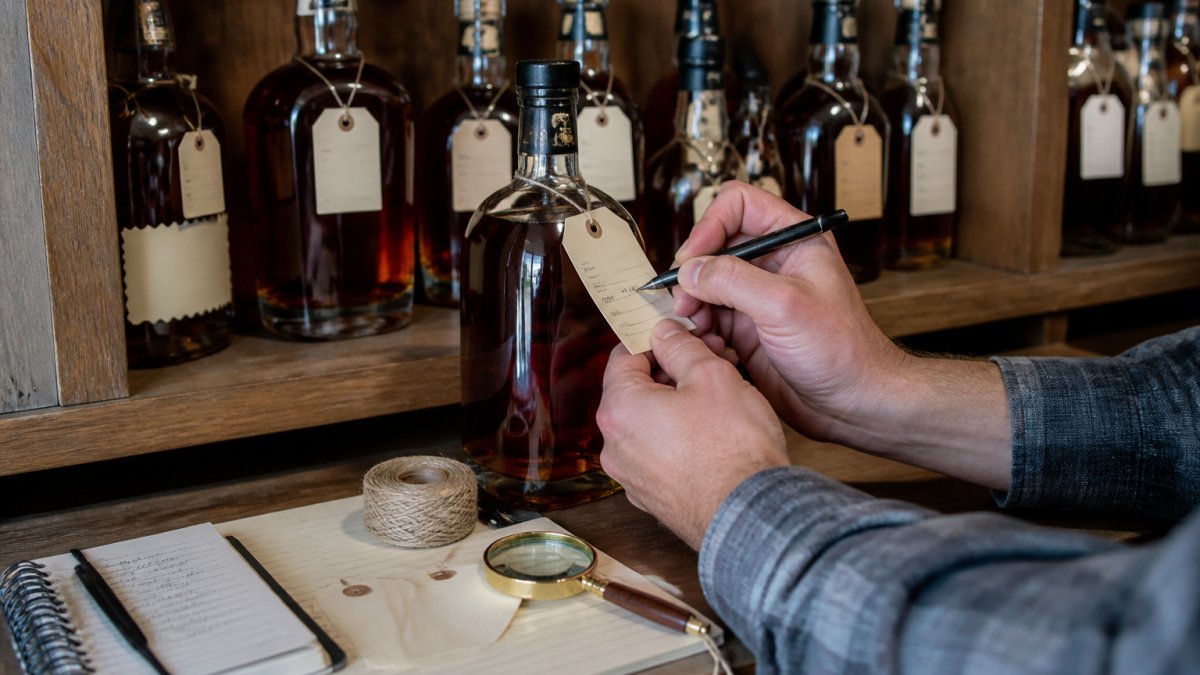
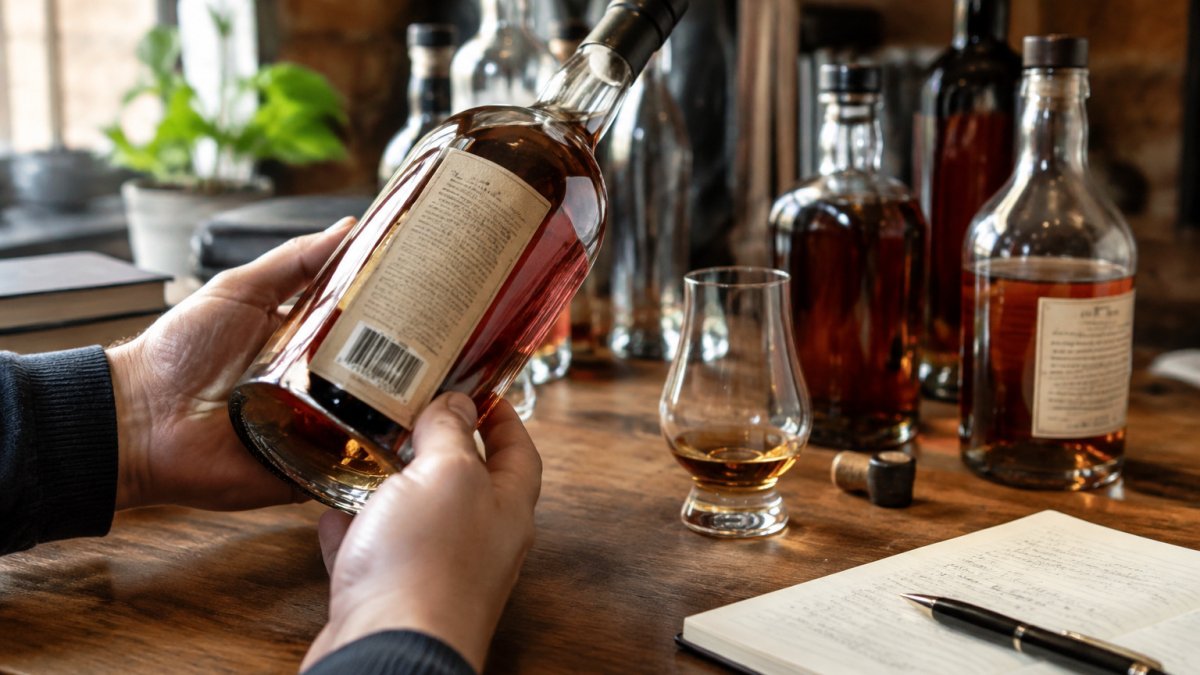
Record these fields for each bottle:
- Distillery and expression name
- Proof and age statement
- Bottle size
- Purchase date and price paid
- Where you bought it
- Open or sealed status
- Fill level if open
- Tasting notes while fresh
- Storage location (shelf, box, closet)
Two fields get skipped most often: fill level and storage location. Both matter. A half-empty bottle loses value fast, and a bottle you cannot find is a bottle you may buy twice.
Bourbon Bottle Inventory Spreadsheet: When a Simple Sheet Works
A bourbon bottle inventory spreadsheet is the right starting point for most collectors. It costs nothing, you control every field, and sorting works well.
A spreadsheet handles these jobs fine:
- Under roughly 100 bottles
- One collector, one device
- Simple tracking with no photos
- Basic value totals
The limits show up later. Sheets break down when you want tasting notes with photos, when you want to search from your phone at a store, or when two people need access. Manual entry also invites typos that quietly corrupt your totals.
Choosing a Whiskey Collection App That Fits How You Collect
A whiskey collection app should match how you actually collect, not how you wish you collected. Some collectors want a fast log. Others want tasting notes, photos, and a wishlist in one place.
Ask these questions before committing:
- Does it work in a browser without a download?
- Can it handle a large collection without lag?
- Does it keep tasting notes and wishlist separate from owned bottles?
- Can you export your data if you leave?
- Is your collection private by default?
That last question matters more than most people think. Your wishlist and notes reveal what you own and what you plan to buy.
Bourbon Tracker™ is free to use and runs in the browser with no download. It keeps tasting notes, a wishlist, and your collection in one place, and it suggests new bottles through AI recommendations tuned to your palate. Organizing your digital inventory provides the perfect foundation when you transition from tracking spirits to finding the right aesthetic to display vintage collections.
Whiskey Bottle Value Tracking: Keeping Your Numbers Honest
Whiskey bottle value tracking is where collectors fool themselves most. Secondary market prices swing hard, and a number you saw once is not a valuation.
Keep your figures honest with these rules:
- Record what you paid, not what you hope it is worth
- Date every value estimate
- Note the source of any estimate
- Separate insured value from resale value
- Update values once or twice a year, no more
A bottle's value depends on fill level, label condition, box condition, and whether it is sealed. An open bottle is a drinking bottle, not an investment.
Setting Up a Repeatable Inventory Routine
A routine beats a big one-time cataloging session. Most collectors start strong and quit by week three. The fix is small and frequent.
Use this schedule:
| Task | How Often | Time Needed |
|---|---|---|
| Log new bottles | Same day as purchase | 3-5 minutes |
| Update fill levels | Monthly | 10 minutes |
| Add tasting notes | Within a week of opening | 5 minutes per bottle |
| Review values | Twice a year | 30-60 minutes |
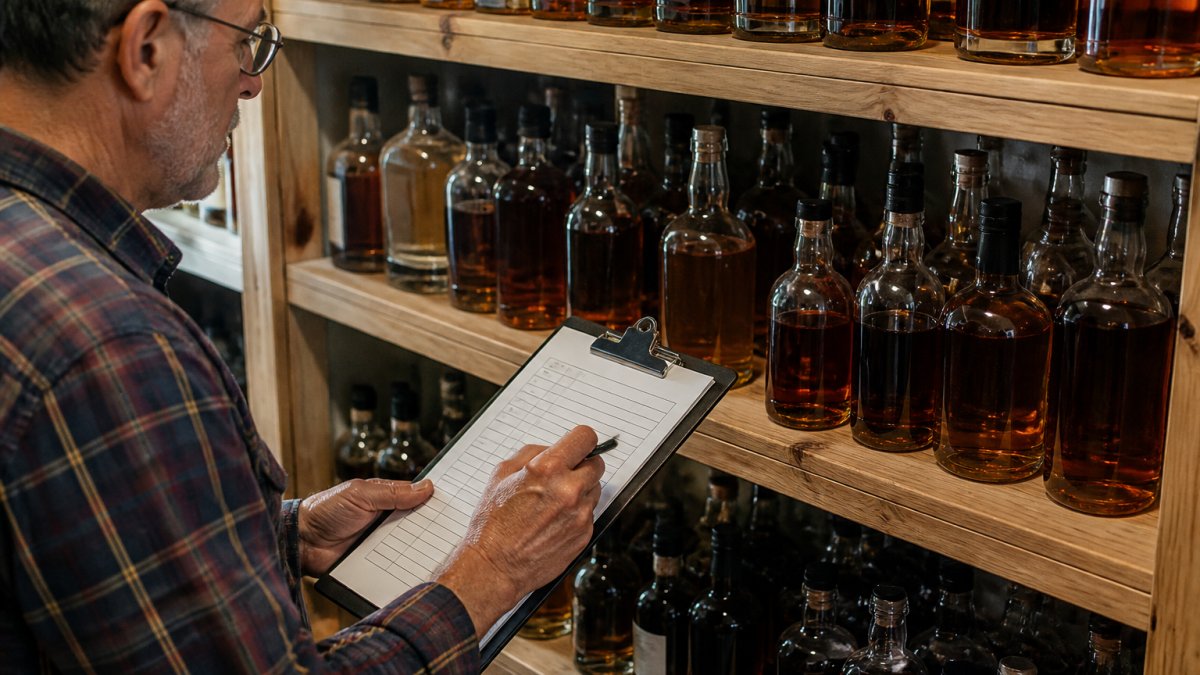
| Full audit against shelves | Once a year | 1-2 hours |
The same-day rule is the one that saves you. Log the bottle while the receipt is still in your pocket.
Common Inventory Mistakes Collectors Make
The biggest mistake is starting with too many fields. Collectors build an elaborate sheet, fill in half of it, and quit. Start with six fields and add more once the habit sticks.
Other mistakes we see often:
- No backup. A spreadsheet on one laptop is one crash from gone. Use cloud storage or an app.
- No photos. Labels and receipts fade from memory. Photos do not.
- Mixing wishlist with owned bottles. Keep them separate or your counts lie.
- Never updating values. A stale number is worse than no number.
- Skipping open bottles. Open bottles need fill-level tracking too.
Conclusion
The hard part of whiskey bottle inventory is not the software. It is building a habit that survives a busy month.
Bourbon Tracker™ makes that habit easier. It is free, needs no download, and keeps your bottles, tasting notes, and wishlist in one place. AI recommendations help you find the next bottle worth chasing, and community features let you share reviews and curate wishlists.
Ready to get organized? Track My Collection with Bourbon Tracker™ and stop guessing what is on your shelf.
Frequently Asked Questions
How do whiskey collectors keep track of their bottles?
Most collectors use one of two systems: a spreadsheet or a dedicated whiskey collection app. A spreadsheet works for small collections and gives you full control over columns and formatting. An app wins once you pass roughly 50 to 100 bottles, because it handles photos, tasting notes, and value history without you rebuilding rows. Whichever you pick, the habit matters more than the tool: log every bottle the day it arrives, before it goes on the shelf.
What information should you record in a whiskey inventory?
At minimum, record the distillery, expression name, proof, bottle size, and the date and price you paid. Add the store or source, barrel or batch number if printed, and a photo of the front and back label. For opened bottles, note the open date and fill level. For value tracking, log a dated estimate rather than a single number so you can see how the bottle's worth changes over time.
Is a spreadsheet or an app better for tracking whiskey bottles?
A bourbon bottle inventory spreadsheet is free, familiar, and easy to back up, which suits collectors with under 100 bottles and simple needs. Apps pull ahead when you want photos, searchable tasting notes, value history, and access from your phone at a store or bar. Many collectors start on a spreadsheet and move to an app once the sheet gets unwieldy or they want to share notes with other enthusiasts.
How often should you update your whiskey inventory?
Log new bottles the day you buy them, and update fill levels whenever you pour from an open bottle. Do a full reconciliation once or twice a year: walk the shelf, confirm every bottle is listed, and refresh value estimates. A quick monthly check of opened bottles catches the ones you finished without recording, which is the most common source of drift in any whiskey bottle inventory.