 listicle
Benefits of Tracking Whiskey Bottle Value
Table of Contents
- Why Track Whiskey Bottle Value
- Using a Bourbon Price Tracker to Monitor Market Movement
- How to Value a Whiskey Collection for Insurance and Resale
- Understanding Whiskey Investment Trends and Market Dynamics
- Key Factors That Influence Bottle Appreciation
- Tax Planning and Exit Strategy for Collectors
- Digital Tools for Collection Management and Privacy
- Conclusion
- Frequently Asked Questions
Last Updated: September 3, 2026
Why Track Whiskey Bottle Value
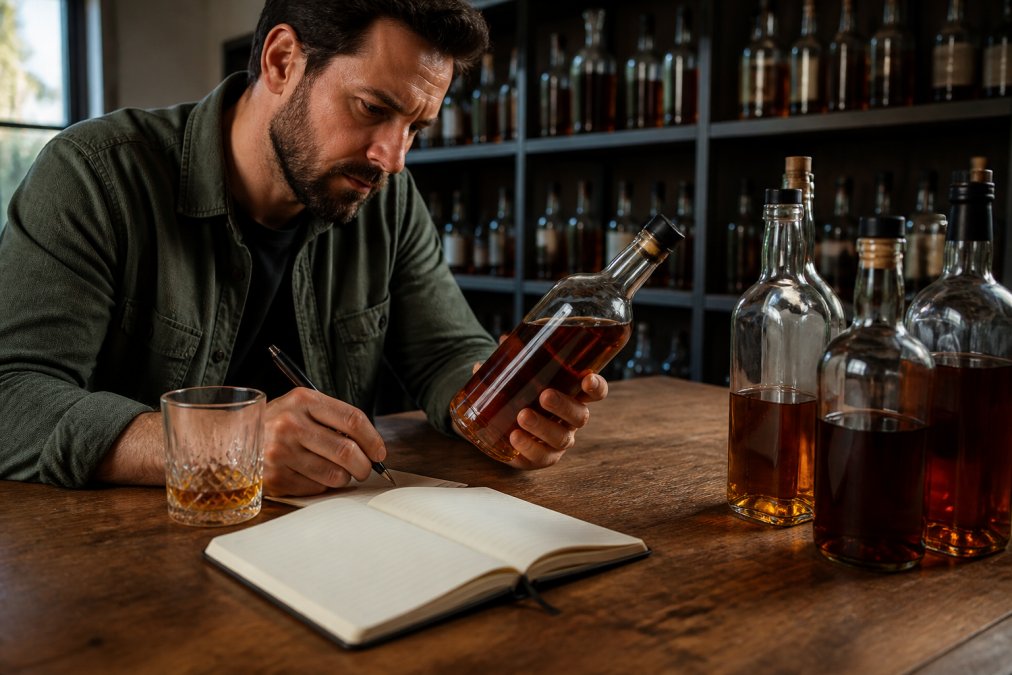
The most expensive whiskey bottles appreciate faster than most traditional investments. Tracking whiskey bottle value transforms a hobby into an asset management practice, giving you clarity on what you own, what it's worth, and whether it's gaining or losing value over time.
Many collectors accumulate 50, 100, or more bottles without a clear picture of their total collection value. When they eventually try to sell or insure their collection, they're shocked by how much work it takes to reconstruct pricing data and condition notes from memory.
A documented collection becomes insurable, allowing you to prove ownership and value to an insurance company. You gain clarity on which bottles are appreciating and which are stagnating, make better purchasing decisions based on patterns, and understand your exit options when life circumstances change. Collectors who track their collections tend to hold winners longer, sell losers faster, and avoid repurchasing bottles they already own.
Using a Bourbon Price Tracker to Monitor Market Movement
A bourbon price tracker gives you real-time visibility into how the secondary market is moving. Instead of guessing whether a bottle's value has changed, you see actual price trends from auction results, retailer listings, and user-reported sales.
The most useful trackers pull from multiple data sources: auction houses like Heritage Auctions and Sotheby's, retailers updating inventory pricing, and collector communities reporting private sales. A good tracker aggregates these signals so you can see whether a bottle is trending up or down over weeks and months.
Market movement reveals liquidity. A bottle with consistent price data and frequent sales is liquid; you can sell it quickly if needed. A bottle with sparse data and wide price swings is illiquid; you might struggle to find a buyer. Understanding these patterns helps you balance your collection between bottles you love and bottles you can actually convert to cash.
Bourbon Tracker™ integrates price tracking directly into your collection management. Log your bottles once, and the platform automatically monitors market movement for each one. You receive alerts when a bottle in your collection has moved significantly in price, either up or down, without manually checking prices across multiple websites.
How to Value a Whiskey Collection for Insurance and Resale
Valuing your collection accurately matters for two distinct reasons: insurance and exit planning. Insurance values protect you against loss, while resale values tell you what you could actually receive if you sold today.
For insurance purposes, you need replacement value, what it would cost to buy each bottle today if you lost it. Document the distillery, bottling, ABV, and special characteristics. A 2015 single malt cask strength bottle is worth more than a standard 80-proof release from the same year.
Resale value is what you'd actually receive if you sold. This is lower than replacement value because you're selling into the secondary market. Auction houses take a commission (typically 15-25% of the hammer price), and online platforms take a cut (sothebys.com).
Start by documenting every bottle. Photograph the label, note the distillery, bottling date, ABV, bottle size, and condition. Condition matters enormously, a bottle with a pristine label, full level, and original seal is worth significantly more than one with damage or low fill level.
Research comparable sales by looking at recent auction results for the same bottle, checking current retailer pricing, and searching collector forums for what people have paid. Average these data points to get a realistic baseline valuation. Update these valuations quarterly or whenever significant market movement occurs.
Understanding Whiskey Investment Trends and Market Dynamics
Whiskey as an alternative asset class has matured significantly. Institutional investors, hedge funds, and serious collectors now treat whiskey as a portfolio diversification tool.
Limited edition releases drive much of the short-term volatility. When a distillery announces a special bottling with truly limited supply, the secondary market price often spikes immediately after release. But this appreciation often doesn't last, as excitement fades and the market absorbs supply, prices stabilize or decline.
Vintage statements create different dynamics. Older bottles, particularly those from closed distilleries or discontinued expressions, tend to appreciate more steadily. A 1980s bottle from a now-defunct distillery is inherently scarce. As existing stock ages and bottles are consumed or lost, remaining bottles become more valuable.
Distillery bottling versus independent bottling also matters. Official distillery releases have consistent quality and documentation. Independent bottlers create their own bottlings from purchased casks and can offer exceptional value, but they're typically less liquid than official releases.
The market has become more transparent. Auction results are published online, retailer pricing is visible, and collector communities share what they've paid. This transparency has reduced information asymmetry but also means you can't stumble onto massive bargains as easily.
Market trends shift based on broader economic conditions. When interest rates rise, alternative assets sometimes see reduced demand. When inflation concerns rise, tangible assets become more attractive. Tracking these macro trends helps you understand whether price movement in your collection is driven by whiskey-specific factors or broader economic forces.
Key Factors That Influence Bottle Appreciation
Not all bottles appreciate equally. Understanding which factors drive value helps you make smarter purchasing decisions.
Rarity is foundational. A bottle of which only 200 were produced will always be scarcer than one where 50,000 were made. Track production numbers for bottles you're considering; distilleries sometimes publish this information, and collector communities often have documented figures.
Age statements matter, but not always as casual collectors assume. What matters is whether the age statement is still available. If a distillery discontinues a 25-year expression and releases a 30-year instead, the 25-year suddenly becomes harder to find. Discontinued age statements often appreciate because they're no longer in production.
Distillery reputation and brand strength drive demand. Bottles from Macallan, Highland Park, and Dalmore tend to appreciate faster than bottles from lesser-known distilleries. Collectors are willing to pay premiums for established names, creating a self-reinforcing cycle where prestige bottles appreciate.
Condition directly impacts value. A bottle with a pristine label, full level, and original seal is worth substantially more than one with damage or low fill. Store your bottles upright in cool, dark conditions away from temperature fluctuations to preserve condition and protect your investment.
Cask strength and special finishes create premiums. A cask strength release often commands higher prices than the standard expression. Bottles finished in special casks also appreciate faster because they're differentiated from the standard product.
Provenance matters for older bottles. Documentation of where a bottle came from, purchased from a specific retailer, inherited from a known collector, acquired at a particular auction, adds value by reducing uncertainty about authenticity and storage. Keep receipts and records.
Tax Planning and Exit Strategy for Collectors
Many collectors never think about taxes until they start selling. Capital gains taxes apply to whiskey collections just as they do to stocks or real estate.
When you sell a bottle for more than you paid, the difference is a capital gain. If you've held the bottle for more than one year, it's a long-term capital gain, taxed at preferential rates (0%, 15%, or 20% depending on income) (irs.gov). If you sell within one year, it's a short-term capital gain, taxed as ordinary income. This creates a tax incentive to hold bottles for at least a year before selling.
Losses also matter. You can use capital losses to offset capital gains. If you have more losses than gains, you can deduct up to $3,000 of losses against ordinary income in a single year (irs.gov).
Documentation is critical. Keep records of what you paid for each bottle, when you acquired it, and what you sold it for. Digital platforms like Bourbon Tracker™ make this easier by maintaining a transaction history automatically.
Estate planning is another consideration. If you have a significant collection and pass it to heirs, they inherit your cost basis at stepped-up value, which is actually beneficial, they avoid the capital gains tax you would have owed.
Your exit strategy should account for liquidity. Highly liquid bottles can be sold quickly through multiple channels. Illiquid bottles might take months to find a buyer. Having a collection weighted toward liquid bottles gives you options when you need to liquidate quickly.
Consider also the tax implications of how you sell. Selling through an auction house is convenient but expensive (15-25% commissions). Selling directly to collectors nets more but requires more work. Donating bottles to charity can generate a tax deduction equal to their fair market value.
Digital Tools for Collection Management and Privacy
Managing a large whiskey collection manually doesn't scale. Once you have 50+ bottles, you lose track of what you own and might buy duplicates.

Digital tools centralize your collection data. Log each bottle once with key information: distillery, expression, bottling details, purchase price, acquisition date, and storage location. The tool becomes your single source of truth for searching bottles, viewing total collection value, tracking appreciation, and identifying bottles to sell.
The best tools integrate tasting notes with financial tracking. You record not just what a bottle cost and what it's worth, but also what you thought of it when you tasted it. Over time, this creates a personalized database revealing your palate preferences and patterns in what you enjoy.
Community features let you share reviews, discover new bottles through recommendations, and see what other collectors are paying. This crowdsourced data is valuable beyond auction results alone.
Privacy is a legitimate concern for collectors with valuable collections. A good tool gives you granular privacy controls. Your collection can be private (only you see it), shared with specific people, or public. Your wishlist can be hidden from public view.
Data security matters. Your collection data is valuable both financially and personally. Look for tools that encrypt your data, don't sell it to third parties, and have a track record of security.
Bourbon Tracker™ is designed with collector privacy as a core principle. Your collection is private by default. You decide what to share with the community. The platform doesn't sell user data or use your collection information for advertising.
Backup and longevity are practical concerns. Look for tools that offer data export capabilities so you can extract your information if needed. Choose platforms from established teams with a track record of supporting their products long-term.
Conclusion
Tracking whiskey bottle value transforms a hobby into an informed investment practice. You gain clarity on what you own, what it's worth, and whether your collection is appreciating. You make better purchasing decisions based on data and understand your exit options when circumstances change.
Bourbon Tracker™ handles the mechanics of collection management so you can focus on enjoying your whiskey. Log your bottles once, and the platform tracks market movement, maintains your tasting notes, and connects you with a community of collectors. Get started with Bourbon Tracker™ and transform how you manage your collection.
Frequently Asked Questions
Will a bottle of whiskey go up in value?
Many whiskey bottles do appreciate over time, particularly limited editions, rare distillery bottlings, and bottles from closed distilleries. However, not every bottle gains value. Factors like rarity, age statement, cask strength, and provenance determine appreciation potential. Open bottles typically don't appreciate. Tracking whiskey bottle value helps you identify which bottles in your collection are likely to increase in worth and which are best enjoyed soon.
How do I determine the current market value of my whiskey?
Use a bourbon price tracker to monitor secondary market prices, auction results, and retailer listing data. Check recent sales on platforms that track collector transactions, compare distillery bottling information, and review historical price trends for similar bottles. Digital collection management tools help you log each bottle's details, ABV, vintage statement, condition, and automatically pull current valuations. Cross-reference multiple sources to get an accurate asset valuation for insurance and financial planning.
Does tracking whiskey value help with insurance claims?
Yes. Detailed tracking creates documented proof of ownership, condition, and value at the time of loss. Insurers require specific inventory details, distillery name, age statement, bottle condition, purchase date, and current market value, to process claims fairly. By maintaining organized tasting notes and digital records with timestamps, you build a credible asset inventory. This documentation is essential if you ever need to file a claim for theft, damage, or loss.
How does tracking whiskey collection value help with exit strategy planning?
Tracking bottle appreciation and market movement helps you plan when to sell or hold. By monitoring auction results and secondary market trends, you identify which bottles have peaked in value and which are still climbing. Understanding liquidity, how quickly you can sell bottles at fair prices, lets you plan exits strategically. Digital records also simplify the sale process by providing buyers with complete provenance and tasting notes, which increases buyer confidence and supports better pricing when you decide to liquidate portions of your collection.
This article was written using GrandRanker
Frequently Asked Questions
Will a bottle of whiskey go up in value?
Many whiskey bottles do appreciate over time, particularly limited editions, rare distillery bottlings, and bottles from closed distilleries. However, not every bottle gains value. Factors like rarity, age statement, cask strength, and provenance determine appreciation potential. Open bottles typically don't appreciate. Tracking whiskey bottle value helps you identify which bottles in your collection are likely to increase in worth and which are best enjoyed soon.
How do I determine the current market value of my whiskey?
Use a bourbon price tracker to monitor secondary market prices, auction results, and retailer listing data. Check recent sales on platforms that track collector transactions, compare distillery bottling information, and review historical price trends for similar bottles. Digital collection management tools help you log each bottle's details—ABV, vintage statement, condition—and automatically pull current valuations. Cross-reference multiple sources to get an accurate asset valuation for insurance and financial planning.
Does tracking whiskey value help with insurance claims?
Yes. Detailed tracking creates documented proof of ownership, condition, and value at the time of loss. Insurers require specific inventory details—distillery name, age statement, bottle condition, purchase date, and current market value—to process claims fairly. By maintaining organized tasting notes and digital records with timestamps, you build a credible asset inventory. This documentation is essential if you ever need to file a claim for theft, damage, or loss.
How does tracking whiskey collection value help with exit strategy planning?
Tracking bottle appreciation and market movement helps you plan when to sell or hold. By monitoring auction results and secondary market trends, you identify which bottles have peaked in value and which are still climbing. Understanding liquidity—how quickly you can sell bottles at fair prices—lets you plan exits strategically. Digital records also simplify the sale process by providing buyers with complete provenance and tasting notes, which increases buyer confidence and supports better pricing when you decide to liquidate portions of your collection.