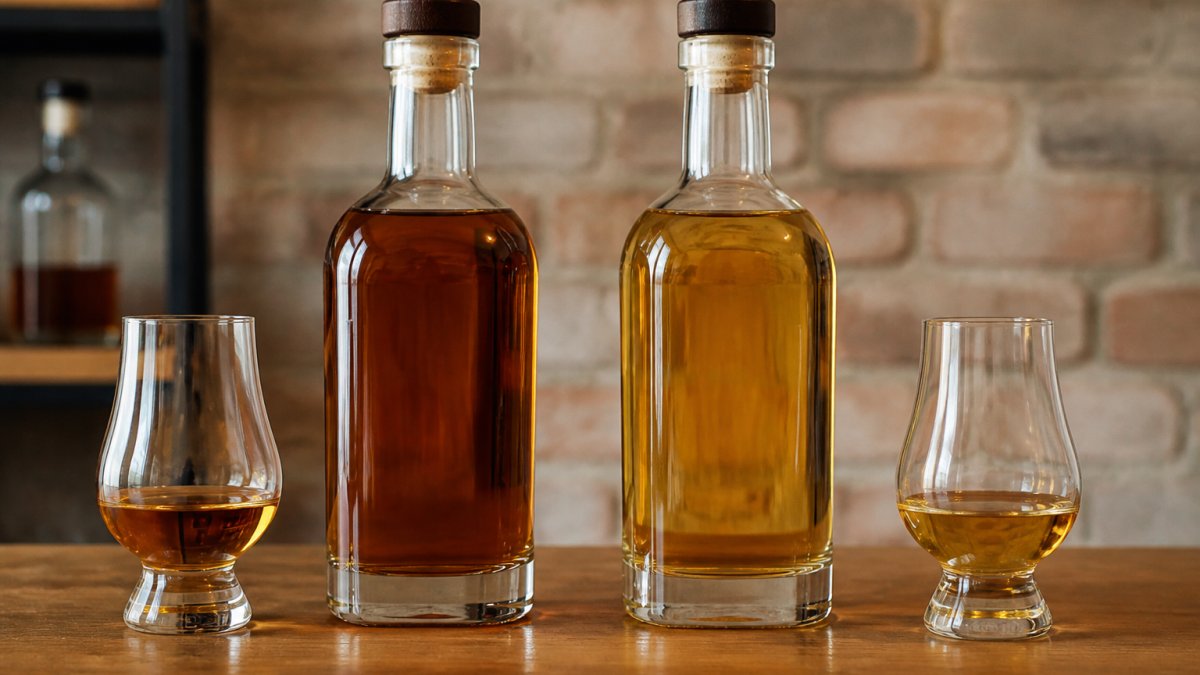
 comparison
Bourbon vs Rye Whiskey for Beginners: Which to Try First
Table of Contents
- Bourbon vs Rye: The Quick Comparison Table
- Bourbon Mash Bill Explained (and How Rye's Mash Bill Differs)
- Flavor Profile, Mouthfeel, and Finish: What Your Palate Notices
- How to Taste Whiskey for Beginners: A Simple Side-by-Side Method
- Best Rye Whiskey for Beginners: 4 Bottles to Start With
- Cocktails and Food Pairings: Where Bourbon and Rye Each Win
- Common Bourbon vs Rye Myths That Trip Up New Drinkers
- Conclusion: How to Pick Your First Bottle
- Frequently Asked Questions
Last Updated: September 29, 2026
Bourbon vs Rye: The Quick Comparison Table
Bourbon vs rye whiskey for beginners comes down to one core difference: bourbon is made from a mash bill of at least 51% corn, while rye whiskey must be made from at least 51% rye grain. That single grain shift changes everything, from sweetness to spice to how you'll want to drink it.
| Feature | Bourbon | Rye Whiskey |
|---|---|---|
| Primary grain | At least 51% corn | At least 51% rye |
| Flavor profile | Sweet, caramel, vanilla | Spicy, peppery, herbal |
| Mouthfeel | Rounder, fuller body | Leaner, sometimes oily |
| Best for beginners | Easy neat sipping | Cocktails, bold palates |
| Cocktail fit | Old Fashioned, Mint Julep | Manhattan, Sazerac |
Bourbon Mash Bill Explained (and How Rye's Mash Bill Differs)
A mash bill is the recipe of grains a distillery ferments to make whiskey, expressed as percentages of corn, rye, barley, and sometimes wheat. Bourbon's must be at least 51% corn, which is why it tastes sweet; rye's must be at least 51% rye grain, which is why it tastes spicy.
Legal Requirements: Corn Content and Rye Grain Minimums
For a whiskey to be labeled bourbon, federal rules require a mash bill of at least 51% corn, distillation at no more than 160 proof, entry into a new charred oak barrel at no more than 125 proof, and aging in that barrel. Rye whiskey follows the same proof and barrel rules but requires at least 51% rye.
Flavor Profile, Mouthfeel, and Finish: What Your Palate Notices
Bourbon tastes sweet because corn is a sweet grain: expect caramel, vanilla, and brown sugar notes with a warm, rounded mouthfeel. Rye brings peppery, herbal, and sometimes astringent notes, with a leaner body.
How to Taste Whiskey for Beginners: A Simple Side-by-Side Method
The fastest way to learn whiskey is to taste bourbon and rye side by side, in the same session, from the same type of glass. Comparing them directly trains your palate to notice the corn-versus-rye difference.
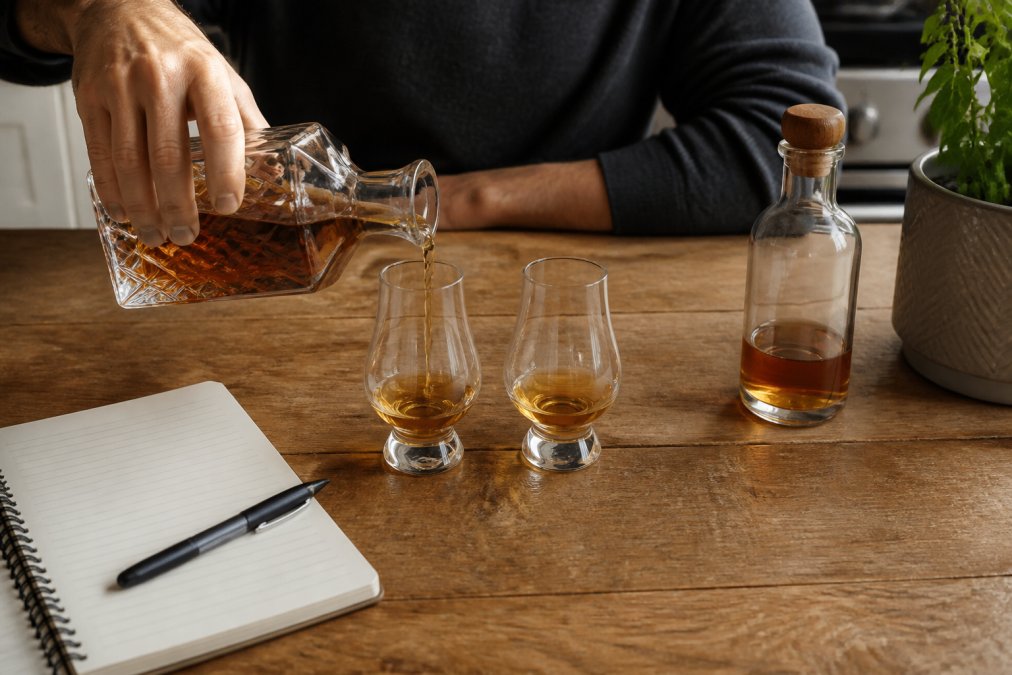
- Pour about a quarter ounce of each into two identical glasses.
- Let them sit for a minute so the alcohol settles.
- Nose each one, keeping your mouth slightly open, and note the first thing you smell.
- Take a small sip of bourbon, hold it for a few seconds, and swallow. Note the finish.
- Take a small sip of rye and do the same.
- Write down one word for each: sweet or spicy, smooth or sharp.
Building a Beginner Tasting Flight at Home
A tasting flight is just three small pours arranged from mild to bold: a lower-proof bourbon, then a lower-proof rye, then a higher-proof rye. That progression lets your palate adjust instead of getting hit with spice right away.
Best Rye Whiskey for Beginners: 4 Bottles to Start With
Most beginner guides hand you a list of bottles and leave you to guess which fits your budget and palate. Each pick below is sorted into a price-to-value tier, paired with the beginner it suits, and flagged for its trade-off. Prices are approximate shelf prices for a 750 mL bottle and vary by state and retailer.
Tier 1: The Budget Entry Point (Under $25)
Old Overholt Rye is the classic baseline. At 86 proof and roughly $20, it delivers a straightforward rye profile: peppery spice up front, a little vanilla and grain sweetness underneath, and a short, dry finish. Some releases are bottled in bond at 100 proof, noticeably bolder for a few dollars more. Best for: a beginner who wants to learn what "rye spice" means before spending real money.
Tier 2: The Balanced Mid-Range ($30-$45)
Wild Turkey 101 Rye is the intensity pick. At 101 proof and roughly $35, it's strong, peppery, and full-bodied, with the corn-rounded backbone Wild Turkey is known for. Best for: a beginner who already likes higher-proof bourbon and wants to see how rye changes the equation. Trade-off: it can overwhelm a first-time rye drinker, so sip slowly and add water.
Tier 3: The Step-Up Splurge ($50-$70)
High West Double Rye blends a young, high-rye whiskey with an older, lower-rye one, smoothing the edges while keeping the spice. At around $50-$60 and roughly 92 proof, it's a good graduation bottle once you know you like rye. Best for: a beginner who has tried a Tier 1 or Tier 2 bottle and wants more complexity.
How to Choose Among Them
If you're unsure, start at Tier 1 with Old Overholt or Rittenhouse and run the side-by-side tasting method above. If you already like bourbon and want the gentlest on-ramp to rye, jump to Sazerac. If you want to feel the spice difference immediately, go with Wild Turkey 101. The point isn't the "best" bottle, it's the bottle that matches where your palate is right now.
Cocktails and Food Pairings: Where Bourbon and Rye Each Win
Bourbon wins in sweeter, spirit-forward cocktails where its caramel notes shine. Rye wins in cocktails that need backbone and spice to cut through other ingredients.
Common Bourbon vs Rye Myths That Trip Up New Drinkers
Most beginner guides list a few myths and move on, but a myth without a mechanism is just a fact to memorize. Below, each myth gets the same treatment: what people believe, why, what's actually true, and what it means in a liquor store.
Myth 1: Rye Is Always Spicier Than Bourbon
Why people believe it: Rye grain does produce peppery, herbal notes, and the 51% legal minimum guarantees some of that character, so the shorthand "rye equals spicy" gets repeated until it sounds absolute.
Myth 2: Bourbon Must Be Made in Kentucky
Why people believe it: Kentucky produces the overwhelming majority of the world's bourbon, and the state's name is on some of the most famous labels, so the association hardens into a rule.
Myth 3: Older Whiskey Is Always Better
Why people believe it: Age statements are used as a quality signal, and price tags reinforce the idea that more years equals more value: a 12-year bottle costs more than a 4-year, so it must be better.
Myth 4: You Have to Drink It Neat to Taste It Properly
Why people believe it: Whiskey culture treats neat sipping as the mark of a serious drinker, and ice or mixers get framed as training wheels.
Myth 5: Bourbon Is Always Sweeter Than Rye
Why people believe it: Corn is a sweet grain, and bourbon's 51% corn minimum makes the sweetness association feel automatic.
Conclusion: How to Pick Your First Bottle
If you like sweet and smooth, start with bourbon. If you like bold and spicy, start with rye. If you're unsure, buy a lower-proof bottle of each and run the side-by-side tasting above. That single experiment will tell you more than any label.
Frequently Asked Questions
Is rye whiskey better for you than bourbon?
Neither is healthier. Both are distilled spirits with similar alcohol content, usually 40% to 50% ABV. Any differences come down to flavor, not health. Bourbon tends to taste sweet from its corn-heavy mash bill, while rye brings peppery, spicy notes from rye grain. If you are watching calories or alcohol intake, the pour size matters far more than whether you choose bourbon or rye.
Which bourbon is the most approachable for a beginner?
Look for a wheated bourbon or a lower-proof bottle in the 80 to 90 proof range. Wheated bourbons swap rye for wheat in the mash bill, which softens the spicy edge and pushes caramel and vanilla forward. A standard 86 to 90 proof bottle also keeps the alcohol heat manageable while you learn to pick out tasting notes. Start neat, then add a few drops of water if it feels sharp.
What are the legal mash bill requirements for bourbon vs rye?
Bourbon must be made from at least 51% corn, distilled to no more than 160 proof, and aged in new charred oak barrels. Rye whiskey must be made from at least 51% rye grain and also aged in new charred oak barrels for straight rye. The remaining percentage in either mash bill can include barley, wheat, or other grains. Those rules are why the two spirits taste so different despite similar production processes.
Is Jack Daniel's a bourbon or rye?
Jack Daniel's Old No. 7 is a Tennessee whiskey, which meets the legal requirements for bourbon but is filtered through sugar maple charcoal before aging, a step called the Lincoln County Process. The brand also makes a Tennessee rye. If you are comparing bourbon vs rye for beginners, Jack Daniel's standard bottle drinks closer to bourbon, with banana and caramel notes rather than heavy spice.
How do I keep track of which bourbons and ryes I've tried?
Log every pour with the bottle name, proof, mash bill if you know it, and three tasting notes while the flavor is still fresh. Bourbon Tracker™ is a free platform that stores your tasting notes, manages your wishlist, and suggests new bottles based on what you already enjoy. It runs in your browser with no download, so you can log a pour from the couch or a bar stool.
Picking your first bourbon or rye is easier when you have a system for remembering what you liked. Bourbon Tracker™ gives you free tools to log tasting notes, build a wishlist, and discover new bottles through AI suggestions tailored to your palate. Get started with Bourbon Tracker™ and turn every pour into a data point that sharpens your next pick.