 listicle
7 Ways to Track Bourbon Collection Value
Table of Contents
- 1. Build a Spreadsheet Template That Tracks Purchase Price vs. Current Value
- 2. Use the Best Tools for Whiskey Collectors to Log and Rate Every Bottle
- 3. Check Bourbon Secondary Market Pricing Before You Buy or Sell
- 4. Record Batch-Specific Details That Drive Market Valuation
- 5. Learn How to Organize a Whiskey Collection by Physical and Digital Location
- 6. Protect Your Collection Value With Insurance and Appraisals
- 7. Export, Back Up, and Secure Your Collection Data
- Frequently Asked Questions
Last Updated: September 15, 2026
1. Build a Spreadsheet Template That Tracks Purchase Price vs. Current Value
The cheapest way to track bourbon collection value is a spreadsheet you build yourself, and it works well until your shelf count outgrows your patience for manual entry. A spreadsheet template gives you full control over every field, from purchase price to current market value, with no subscription and no vendor lock-in.
What Columns Your Bourbon Spreadsheet Needs
Start with these fields: bottle name, distillery, proof, age statement, mash bill, purchase date, purchase price, current market value, warehouse location, and tasting notes. Add a running total formula so your portfolio performance updates automatically as you revise values.
Where Spreadsheets Fall Short
Manual entry gets old fast. Price fluctuations mean you're constantly chasing updates, and a spreadsheet won't alert you when a bottle's secondary market value moves. It also won't help with authentication or provenance records if you ever sell.
2. Use the Best Tools for Whiskey Collectors to Log and Rate Every Bottle
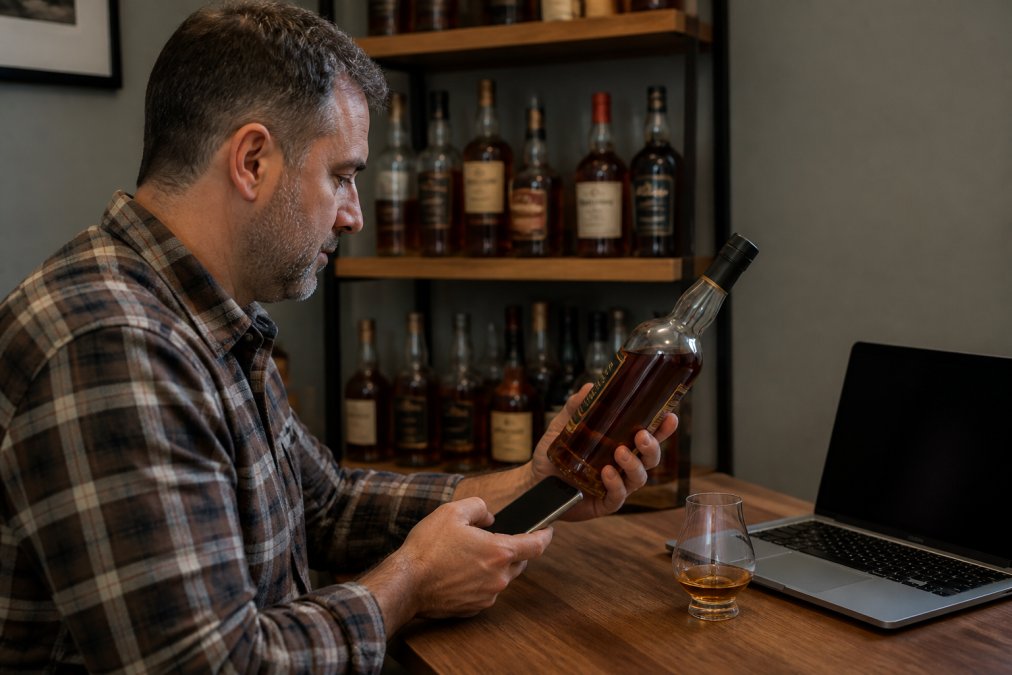
The best tools for whiskey collectors combine bottle logging, tasting notes, and market data in one place, so you stop juggling three apps to answer one question. Bourbon Tracker™ is free, requires no download, and lets you log every bottle, rate it, and build a wishlist from any browser.
Manual vs. App-Based Tracking: A Quick Comparison
| Method | Setup Effort | Price Data | Best For |
|---|---|---|---|
| Spreadsheet | High (manual entry) | You update it yourself | Full control, small collections |
| Bourbon Tracker™ | Low (log in and go) | AI-powered recommendations | Daily tracking, tasting notes |
| Price comparison sites | Low | Retail pricing only | Finding deals before you buy |
What most guides miss is that logging and rating are two different jobs. A tasting note captures what you tasted that night; a rating captures whether you'd buy it again. Bourbon Tracker™ keeps both attached to the same bottle record, which matters when you're deciding what to open next.
3. Check Bourbon Secondary Market Pricing Before You Buy or Sell
Secondary market pricing rarely matches what you paid at retail, and that gap is where collections gain or lose real value. Before any trade, pull recent comps on the exact bottle, batch, and proof you're holding.
Retail Price Alerts vs. Secondary Market Comps
Retail alerts tell you when a store restocks a bottle at MSRP. Secondary comps tell you what collectors are actually paying. The two numbers can diverge sharply for store picks and limited releases, so track both if you care about accurate market valuation.
4. Record Batch-Specific Details That Drive Market Valuation
Batch-specific details are what separate two identical-looking bottles on the secondary market. Barrel number, warehouse location, floor number, and bottling date all feed into how buyers judge a release.
Log these fields for every bottle:
- Distillery and release name
- Mash bill and proof
- Age statement
- Barrel or batch number
- Warehouse and floor number
- Bottle history (where and when you acquired it)
A bottle with documented provenance and a clear batch record sells faster and for more than the same pour with no paper trail. Authentication starts with your own records.
5. Learn How to Organize a Whiskey Collection by Physical and Digital Location
Knowing how to organize a whiskey collection means solving two problems at once: where the bottle physically sits and where its record lives. Physical organization keeps your shelf workable; digital organization keeps your data findable.
Group bottles by category on the shelf (daily drinkers, special releases, investment grade), then mirror that structure in your tracking system with tags or folders. When you add a new bottle, update both locations in the same sitting. That habit is the difference between a curated collection and a pile of boxes.
6. Protect Your Collection Value With Insurance and Appraisals
Most standard homeowners policies treat a bourbon collection as general personal property, which means sublimits, deductibles, and actual cash value settlement can leave you far short of replacement cost after a loss (Insurance for Your House and Personal Possessions). This is the part of collection tracking almost no guide covers, and it is the part that matters most when a shelf collapses, a pipe bursts, or a bottle walks out the door.
How Coverage Actually Works
Three structures show up most often in the market, and they behave very differently:
- Blanket coverage insures the collection as a group up to a stated limit. Simple, but you may hit the ceiling on a single rare bottle.
- Scheduled personal property lists each bottle by name, batch, and appraised value. Higher premiums, but no per-item sublimit surprises and typically broader peril coverage.
- Scheduled valuable items / collectibles riders are the closest fit for investment-grade bottles and usually require a recent appraisal or purchase documentation.
A common pattern is a base homeowners policy with a low sublimit for collectibles (often a few thousand dollars) plus a scheduled rider for anything above that (naic.org). Ask your insurer specifically whether settlement is on a replacement cost or actual cash value basis, the difference on a bottle that has appreciated is significant.
What Insurers Ask For
Underwriters rarely accept a photo of a shelf. A defensible claim file usually includes:
- A dated inventory with bottle name, distillery, batch or barrel number, proof, and purchase price
- Receipts or credit card statements for retail purchases
- Screenshots or records of secondary market comps for bottles with no retail trail
- Photographs that show the bottle, its label, and any batch markings clearly
- A written appraisal for high-value or investment-grade bottles
Keep this file current. A two-year-old inventory with no recent comps is the fastest way to have a claim reduced.
Appraisals
For a small collection, a self-prepared inventory with documentation is often enough. For investment-grade bottles, a written appraisal from a qualified appraiser gives you a defensible number for both insurance and resale.
Tax on Sales
7. Export, Back Up, and Secure Your Collection Data
Why Backup Is Non-Negotiable
A simple routine:
Privacy: What Your Inventory Reveals
Sharing Without Oversharing
A Portable Format Keeps You Free
Frequently Asked Questions
What is the best app to track my whiskey collection?
The right app depends on what you need. Bourbon Tracker™ works well for collectors who want to log tasting notes, manage a wishlist, and get AI-powered bottle suggestions without downloading anything. If you mainly want retail price comparisons, a dedicated price aggregator may suit you better. For serious sellers, a brokerage or appraisal service adds value. Many collectors use two tools: one for daily inventory and tasting notes, another for market pricing. Start with the free option and see whether it handles your bottle count comfortably.
Should I use a spreadsheet or a dedicated app for my bourbon collection?
Spreadsheets give you total control over fields and formulas, and they cost nothing. The trade-off is manual entry, no price alerts, and no community features. Dedicated apps like Bourbon Tracker™ handle inventory management, tasting notes, and wishlists automatically, and they update pricing data without you hunting for it. If your collection is under 50 bottles and you enjoy tinkering, a spreadsheet works. Past 100 bottles, most collectors find an app saves hours per month.
How do I determine the current market value of my bourbon bottles?
Start by checking secondary market pricing on aggregator sites that pull completed sale data. Compare that to retail listings for the same expression. Batch-specific details matter: mash bill, proof, age statement, warehouse location, and floor number all affect value. Rare bottles with documented provenance and authentication sell higher. For collections worth more than a few thousand dollars, a professional appraisal gives you a defensible number for insurance or liquidation purposes.
Is there a reliable way to track whiskey inventory and price appreciation?
Yes, but it takes two pieces: a system for logging what you own and a source for current pricing. Apps like Bourbon Tracker™ handle the inventory side, including bottle counts, purchase prices, and tasting notes. For appreciation, you need historical pricing data, which secondary market aggregators and brokerage services provide. Review your portfolio performance quarterly. Store picks and limited releases tend to appreciate fastest, while standard shelf bottles often hold steady or drop.
How private is my collection data if I use a tracking app?
Privacy varies by platform. Bourbon Tracker™ lets you control what you share with the community versus what stays private. Before committing to any app, check whether it offers granular visibility settings, whether your data is encrypted, and whether you can export everything if you leave. A cloud-based tool should let you back up your inventory and tasting notes in a standard format. If a platform will not tell you how your data is used, treat that as a red flag.
Tracking bourbon collection value comes down to one habit: record the details while they're fresh, then keep the record current. Bourbon Tracker™ makes that easy with free bottle logging, AI-powered recommendations tuned to your palate, and a wishlist you can manage from any browser without a download. Get started with Bourbon Tracker™ and turn a shelf of bottles into a collection you actually understand.