 Comparison
Whiskey Investment Returns Compared With Other Assets
Quick Summary
Whiskey investment returns compare favorably in some periods and poorly in others, depending on holding period, costs and the specific asset. Headline cask returns can look strong until storage, insurance and selling costs are subtracted, and casks pay no income while held.
- Compare net returns, not gross, after storage, insurance, commissions and taxes.
- Casks pay no dividends or interest, so returns come only from price growth.
- Cask sales often clear at a discount, and buyers can dictate the final price.
- Confirm the benchmark, time window and source before trusting any comparison.
- Keep whiskey a small part of a portfolio, and use a low-cost index fund as the baseline.
Table of Contents
- How Much Do Whiskey Investment Returns Compare With Other Assets?
- Whiskey Investment Returns Versus Stocks, Bonds, Gold and Property
- Net Returns After Storage, Insurance and Selling Costs
- Liquidity and How Long a Cask Takes to Sell
- The Main Risks of Whiskey Investment
- Diversification, Downside Cases and Who Should Consider Whiskey
- Tracking Your Own Collection Before You Commit Capital
- Frequently Asked Questions
How Much Do Whiskey Investment Returns Compare With Other Assets?
Last Updated: November 22, 2026
Whiskey investment returns compare favorably in some periods and poorly in others, and the honest answer depends on the holding period, the costs, and the specific asset. Headline cask returns can look strong until you subtract storage, insurance, and selling costs. Whiskey investment is the practice of buying spirits, usually bottles or maturing casks, with the expectation that their market value rises over time.
Most of the comparisons you will read come from sellers, so treat them carefully. Ask what period is being measured, whether the figures are net or gross, and whether the benchmark is a broad index or a cherry-picked one. Casks pay no dividends or interest while you own them, a point that matters a lot when you compare returns.
Here is the short version. Whiskey can outperform in strong collector markets, but it produces no income, it is hard to sell quickly, and its value is harder to verify than a share price. Our long-term hold analysis explains in depth whether bourbon has been a sound long-term investment. Judge it against those trade-offs, not against the best year on a brochure.
Whiskey Investment Returns Versus Stocks, Bonds, Gold and Property
Stocks, bonds, gold, and property each behave differently, so a fair comparison has to match the time frame and the way returns are paid. Stocks return through price growth and dividends. Bonds pay interest. Gold has no yield and moves with inflation expectations and currency moves. Property earns rent and can rise in value. Whiskey casks earn only through price growth, because nothing is paid out during the holding period.
That structural difference is why a simple year-by-year comparison can mislead. Whiskey is often framed as a diversifier rather than a replacement for core holdings, and collectors often argue the case is strongest when interest rates are low.
What to check before trusting any comparison:
- The benchmark: Is it a broad index like the S&P 500, or a narrow one?
- The window: Does it start and end at convenient points?
- The returns: Are dividends included for stocks, and are storage and fees subtracted for whisky?
- The source: Who gains if you believe the numbers?
Independent, like-for-like data is the exception rather than the rule. When you find it, weigh it heavily.
Net Returns After Storage, Insurance and Selling Costs
Gross returns are the number sellers like to quote. Our guide to the tax consequences of selling bottles shows how taxes reduce the real return. Net returns are the number you actually keep.
The honest way to compare whiskey with stocks, bonds, gold, or property is to build a net-return worksheet before you buy. Four cost layers matter, and each behaves differently.
Storage. A maturing cask sits in a bonded warehouse under a storage contract. Storage fees vary with the warehouse, the cask, and where the spirit is held. The fee recurs whether or not the cask gains value, so it is a fixed drag on a variable return.
Insurance. Rare whiskey must be insured against theft, damage, and loss. Premiums are usually quoted as a percentage of declared value per year, which means the premium rises as the collection appreciates, a cost that grows with success.
Selling costs. Auction houses, brokers, and marketplaces take commissions, often on both sides of a sale.
Tax. Tax treatment of whiskey gains differs from stock gains and varies by state and by how the interest is structured, so confirm the treatment with a tax professional before you model a return.
A repeatable worksheet looks like this:
- Start with the expected gross sale price at your planned exit.
- Subtract the seller-side commission and any lot or listing fee.
- Subtract cumulative storage fees for every year held.
- Subtract cumulative insurance premiums for every year held.
- Subtract any bottling, sampling, or re-gauging costs if the cask is bottled rather than sold in cask.
- Subtract the tax you expect to owe on the gain.
- Divide the remainder by your total cash outlay, including the purchase price and every cost paid along the way.
- Compare that net annualized figure with what the same money would have earned in a broad, low-cost index fund after its expense ratio.
Watch out: sellers often quote a gross annual appreciation figure and leave the buyer to discover storage, insurance, and exit fees later; if a pitch only shows gross numbers, ask for the seller-side net of a completed sale in the same cask type and holding period.
The comparison only becomes fair when both sides are net. A stock index fund's published return is already net of its expense ratio, and dividends are typically reinvested. A whiskey figure that ignores storage, insurance, commissions, and the collectibles tax rate is not comparable to that, it is a different, more optimistic number wearing the same label.
The gap between gross and net returns is easiest to see side by side:
| Cost layer | How it works | Why it matters |
|---|---|---|
| Storage | Recurring fee under a bonded warehouse contract | Fixed drag on a variable return |
| Insurance | Premium as a percentage of declared value per year | Rises as the collection appreciates |
| Selling costs | Seller commission plus lot or listing fees | Net is hammer price minus seller fees |
| Tax | Varies by state and interest structure | Confirm with a tax professional |
| Benchmark | Index fund published return is already net | Compare net with net only |
Liquidity and How Long a Cask Takes to Sell
Liquidity is where whiskey investments most often disappoint, and it is the dimension on which whiskey compares worst with stocks, bonds, gold, and even property. A listed share can be sold in seconds at a public price. Our practical guide to exiting a collection walks through how to actually sell one.
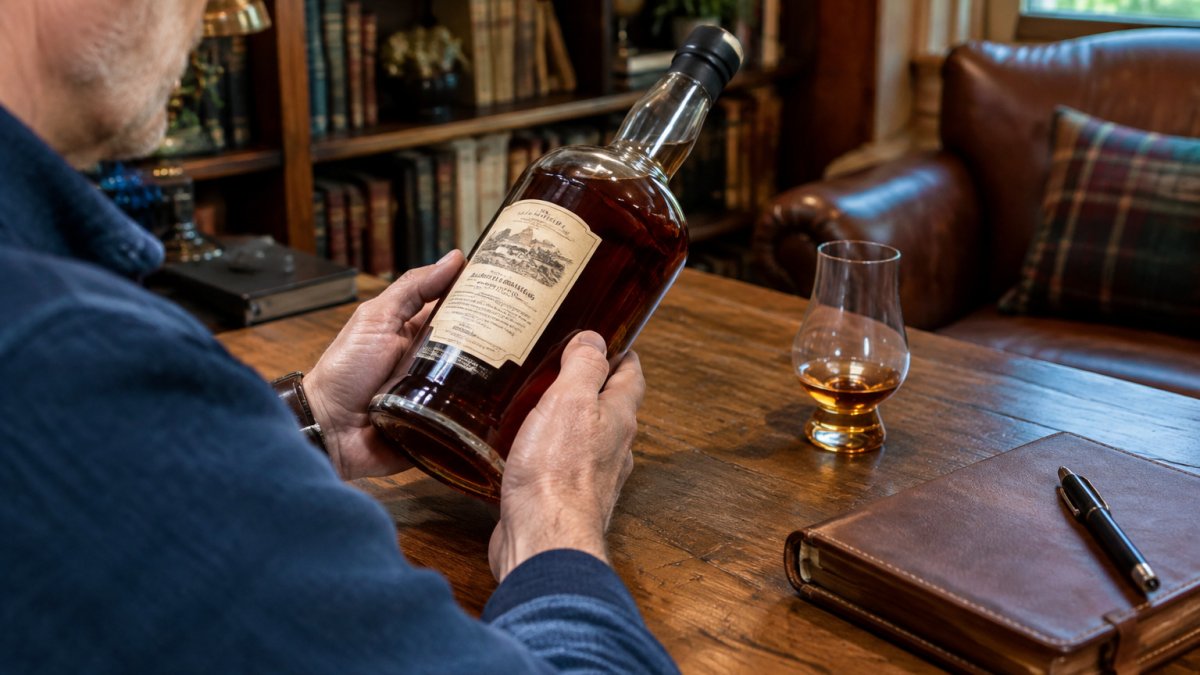
How a cask is valued. Unlike a listed security, a cask has no continuous public price.
What discounts apply on exit. Cask sales rarely clear at the retail value of the bottled equivalent.
How long a sale takes. Timelines vary by channel and by cask. A private sale to a known bottler or broker can close in weeks if the cask is in demand and the paperwork is clean. A marketplace listing may sit for months waiting for a buyer at the asking price.
What happens when there is no ready buyer. This is the scenario performance-led pages rarely discuss. If no buyer appears at your asking price, your options are to lower the price, hold and keep paying storage and insurance, or sell through a channel that takes a larger cut.
Practical checks before you buy. Ask the seller how each cask is valued, whether there is a verified secondary market with completed sales you can inspect, what the typical time to sell has been for comparable casks, and what discounts buyers have demanded on exit.
Watch out: a valuation that comes only from the party selling you the cask is not independent evidence of what a buyer will pay; seek at least one completed-sale data point from a source that does not profit from your purchase.
The honest comparison is this: stocks, bonds, and gold offer near-instant exit at a public price, and property offers a slow but well-understood sale process with established comparables.
The Main Risks of Whiskey Investment
Whiskey carries several risks that stocks and bonds do not share in the same form:
- Illiquidity: Holdings can be slow to sell, and buyers may dictate the price.
- Valuation uncertainty: Prices are hard to verify without a deep, transparent market.
- Fraud and ownership risk: Some offerings have been misrepresented, so confirm that the asset and its ownership documents exist.
- Damage and theft: Bottles can be stolen, counterfeited, or damaged, and casks depend on the storage provider. Read our guide to insuring a rare whiskey collection to see how to cover these losses.
- Regulation: Rules for alternative investments vary, and protections may be weaker than for regulated securities.
- Survivorship bias: Published performance often includes only the brands and funds that succeeded.
Downside cases matter as much as the best case. Ask what happens if prices fall for several years, if you must sell in a hurry, or if a storage provider fails. If you cannot answer those questions, the risk is larger than it looks.
Diversification, Downside Cases and Who Should Consider Whiskey
Whiskey works best as a small part of a diversified portfolio, not as a core holding. Its returns do not track stocks closely, which is the main diversification argument. That benefit only holds if the position is small enough that a poor outcome does not damage the rest of your savings.
Who might consider it:
- Collectors who already know the market and can judge quality and provenance
- Investors who can hold for many years without needing the money
- Those who can afford to lose the entire stake without hardship
Who should probably skip it:
- Anyone who needs liquidity within a few years
- Investors who cannot verify ownership or valuation
- People using borrowed money or money earmarked for near-term goals
Before committing capital, consider a broad, low-cost index fund as the baseline. Any alternative has to beat that baseline after costs, after taxes, and after accounting for the risks above.
Tracking Your Own Collection Before You Commit Capital
If you already own bottles, track them before you make new purchases. Knowing what you have, what each bottle cost, and what it would sell for helps you judge whether a new whiskey investment is worth the added risk.
Bourbon Tracker™ is a free platform for logging bottles, tasting notes, and wishlists, and it requires no download. Keeping a clear record of purchase prices, dates, and current bottle inventory can give you a baseline for measuring returns over time. It will not tell you what a bottle will sell for, so pair the record with independent sale data and the cost checks described above.
Start with a simple list: each bottle, purchase date, purchase price, storage location, and insurance status. Update it each year. When you do consider a new investment, you will know exactly how your existing collection has performed, net of costs, and whether the extra risk is justified.
Frequently Asked Questions
What is the average return on whiskey investment?
Published averages vary widely because they depend on the cask age, the distillery, the start and end dates, and whether figures are gross or net. Some indexes and marketing materials report headline annual returns, but these often exclude storage, insurance, duty, and selling costs, and they can suffer from survivorship bias when only sold or successful casks are counted. Before relying on any average, check whether the figure is net of costs, how many casks it covers, and over what holding period it was measured.
Are whiskey cask investment returns guaranteed?
No. Whiskey casks have no guaranteed return, no dividend, and no interest paid during ownership. Value is realized only when a cask is sold, and the sale price depends on market demand, the spirit's age and provenance, and the buyer's willingness to pay. A cask can lose value or fail to sell at the price you expect, so treat any projected return as an estimate rather than a promise.
How long does it take to sell a whiskey cask investment?
Selling a cask can take months rather than days. The process usually involves arranging a valuation, verifying ownership and storage paperwork, finding a buyer or broker, and transferring the cask. Timing depends on market conditions and on whether the cask is bottled or still in bond. Plan for a long holding period, and do not invest money you may need within a few years.
What are the main risks of investing in whiskey?
The main risks are illiquidity, valuation uncertainty, fees that erode returns, counterparty and storage risk, and fraud. Because prices are set by private transactions and dealers rather than open exchanges, it can be hard to confirm what a cask is worth. Verify ownership records, understand the storage and insurance terms, and ask for net return figures after all costs before committing capital.