 how-to
How to Insure a Rare Whiskey Collection: A Practical Guide
Last Updated: November 10, 2026
Quick Summary
To learn how to insure a rare whiskey collection, start by documenting every bottle with photos, receipts, and an inventory, then obtain a professional appraisal. Next, add a scheduled personal property endorsement to your policy, since standard homeowners coverage often pays only a fraction of a rare bottle's value.
- Standard homeowners policies often have low sub-limits that pay far less than a rare bottle's value.
- Record producer, expression, bottling year, batch number, proof, size, and condition for each bottle.
- Ask for a written appraisal listing each bottle's value, with comparable sales attached.
- A scheduled personal property endorsement lists each item at its appraised value.
- Review your scheduled values each year, since whiskey prices can move significantly over time.
Table of Contents
- Why Standard Homeowners Insurance Often Falls Short for Rare Whiskey
- Step 1: Inventory and Document Every Bottle
- Step 2: Get a Professional Appraisal for Your Whiskey Collection
- Step 3: Add a Scheduled Personal Property Endorsement
- Step 4: Cover Storage, Transit, and Off-Site Risks
- Step 5: Value Bottles That Lack Recent Sales Data
- Best Tools for Whiskey Collectors to Keep Records Current
- Your Next Step: Set Up Your Collection Record Before Your Next Policy Renewal
- Frequently Asked Questions
Keeping every bottle documented is the foundation of learning how to insure a rare whiskey collection. This guide walks through the steps that matter most for protecting a collection in the United States.
Many collectors assume their existing policy covers everything in the house. That assumption is often wrong. Limits on personal property, low caps on collectibles, and exclusions for damage or theft can leave a rare bottle paying out only a fraction of its value. Insuring a rare whiskey collection starts with knowing exactly what you own.
Why Standard Homeowners Insurance Often Falls Short for Rare Whiskey
Standard homeowners insurance is built for everyday household goods, not high-value collectibles. A collection of rare bottles can exceed the limit set for personal property, or fall under a sub-limit that pays far less than replacement value.
A common problem is the difference between replacement value and actual cash value. Some policies pay what a bottle cost to replace today, while others pay a depreciated amount. Read your declarations page and look for words like "sub-limit," "scheduled property," and "collectibles."
- Check the total personal property limit against your collection's value
- Look for sub-limits on collectibles or alcohol
- Confirm whether the policy pays replacement value or actual cash value
- Ask about exclusions for breakage, theft from storage, and damage in transit
Standard coverage is rarely built for a whiskey collection, which is why many collectors add a dedicated endorsement later in this guide.
Step 1: Inventory and Document Every Bottle
Start with a complete inventory. For each bottle, record the producer, expression, bottling year, batch or barrel number, proof, size, and condition. Note whether the seal and label are intact.
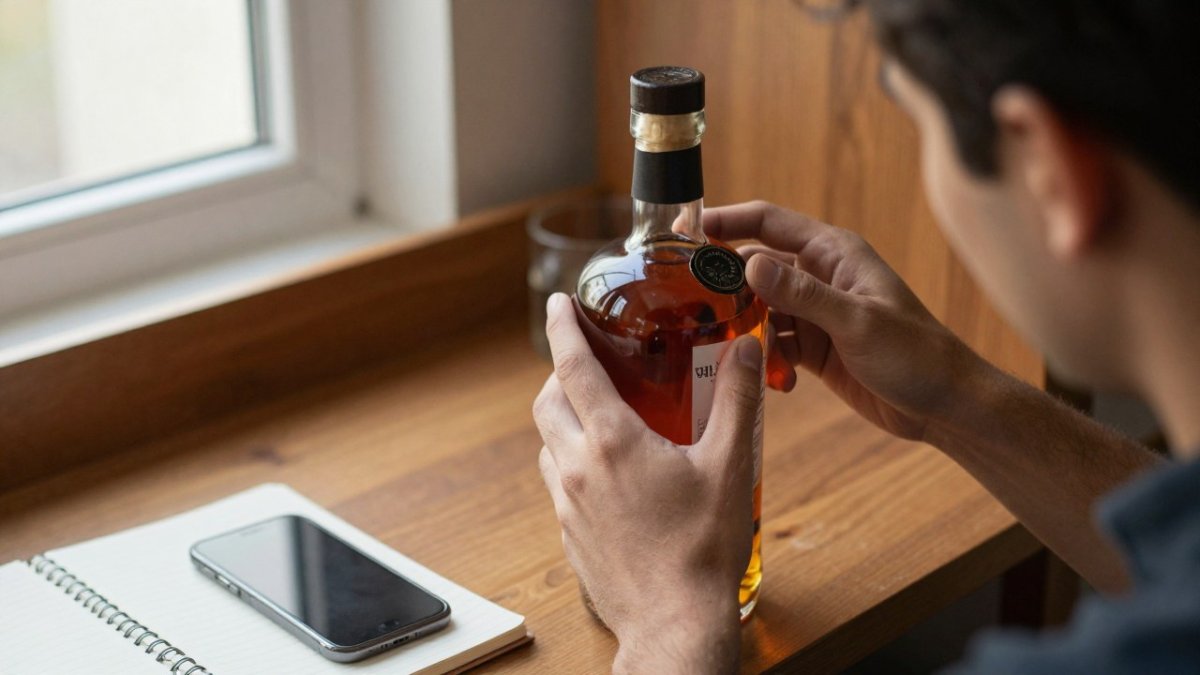
Photograph each bottle from the front, back, and neck, and keep the photos with the record. Save purchase receipts, auction invoices, and any proof of ownership in one folder.
Watch out: a spreadsheet with no photos or receipts is hard to defend in a claim, so keep the documentation with the bottle record when you learn how to insure a rare whiskey collection.
Step 2: Get a Professional Appraisal for Your Whiskey Collection
An appraisal gives your insurer a defensible value for the collection. Look for an appraiser with experience in spirits or fine collectibles, and ask whether they follow recognized appraisal standards.
Expect the appraiser to ask for your inventory, photos, and receipts. They will use recent sales records and auction results to estimate value. Ask for a written report that lists each bottle and its value.
Update the appraisal periodically, since whiskey prices can move a great deal over time.
Step 3: Add a Scheduled Personal Property Endorsement
A scheduled personal property endorsement lists specific items at specific values. It usually covers each bottle for its scheduled amount, with fewer of the sub-limits that apply to unscheduled property.
Ask your agent to schedule each bottle or the full collection with its appraised value. Provide the appraisal report, photos, and inventory so the insurer can verify each item.
- Confirm the scheduled amount matches the current appraisal
- Ask whether the endorsement covers theft, fire, and breakage
- Review the deductible for scheduled items
- Set a reminder to review the schedule each year
Step 4: Cover Storage, Transit, and Off-Site Risks
Most collections are damaged or lost outside the primary residence, and this is the area where standard endorsements are most likely to leave a gap. Before you move a bottle, confirm how the policy treats each of the following situations.
Second residence or vacation home. Many policies cover personal property at a secondary home only up to a percentage of the primary-residence limit, or only for a limited number of days per year. If bottles will spend time there, ask whether the scheduled items follow them or whether a separate schedule is needed.
Shipping by a carrier. Carrier liability is usually limited by the carrier's own terms, which often cap payout per package regardless of declared value, and may exclude breakage of glass or spirits. Your collection policy may cover the loss only after the carrier's liability is exhausted, so ask whether the insurer requires you to pursue the carrier first. Use signature-required, insured shipping, and keep packing photos showing the bottles were sealed and wrapped at dispatch.
Exhibitions, tastings, and events. Bottles displayed at events may be covered only while attended, or only under a specific event rider. Confirm the coverage start and end times and whether handling by staff or venue personnel is included.
Bonded or third-party storage. Commercial storage facilities and bonded warehouses carry their own insurance for the goods they hold, and that coverage is often written for the facility's liability rather than your collection's value. Ask the facility for its certificate of insurance and its limit per customer, then compare that to your scheduled values. Your policy may still be primary, or the facility's coverage may be primary, depending on the contract, so get the order of payment confirmed in writing.
Vehicle transport. Bottles carried in a car are often excluded under a homeowners policy's motor-vehicle provisions. If you transport bottles personally, ask whether the endorsement extends to temporary transit and whether a temperature or theft-in-vehicle exclusion applies.
Keep a short transit log for each movement: date, origin, destination, carrier or method, bottles moved, and condition on arrival with photos. A consistent log is the easiest way to show a loss occurred during a covered period and at a covered location.
The guide flags several off-site situations where standard endorsements often leave gaps, so check each one before moving a bottle.
| Situation | Common coverage issue | Action |
|---|---|---|
| Second residence or vacation home | Capped as a percentage of primary limit or limited days per year | Ask whether scheduled bottles follow them |
| Shipping by a carrier | Payout often capped per package; glass or spirits breakage may be excluded | Use signature-required, insured shipping and packing photos |
| Exhibitions and tastings | Coverage may apply only while attended or under a rider | Confirm coverage start and end times |
| Bonded or third-party storage | Facility coverage written for its own liability, not your collection's value | Get the facility's certificate and per-customer limit |
| Vehicle transport | Often excluded under motor-vehicle provisions | Ask whether temporary transit is extended |
| Keeping a transit log | Helps show loss occurred in a covered period and location | Record date, route, carrier, and condition on arrival |
Step 5: Value Bottles That Lack Recent Sales Data
Rare bottles are often thinly traded, so an auction result from several years ago, or none at all, may be the only evidence of value. A practical valuation approach works from the most reliable evidence available and states clearly where the evidence is weak.
Start with the strongest evidence. Recent completed sales of the same expression, bottle size, and bottling are the most defensible comparables. Auction houses publish hammer prices and their archives can be searched by lot. Retail resale and secondary-market sales show what buyers paid, though listed prices are not sale prices and should be discounted or ignored unless a completed sale is documented.
Adjust for differences. Comparable bottles rarely match exactly. Note differences in condition grade, label or capsule condition, fill level, batch or barrel number, and whether the bottle was sold with its box. A single adjustment for condition is more defensible than a vague overall discount.
Use replacement value where a true comparable exists, and agreed value where it does not. Replacement-cost settlement pays what it would cost to buy the same item today, which works only if the insurer can source a comparable. For bottles with no reliable market, an agreed-value endorsement, where the insurer and owner settle the value in advance from the appraisal, removes the dispute after a loss. Ask which basis your policy uses and whether a valuation clause applies.
Record the evidence trail. For each bottle, store the date and source of each comparable, the adjustment applied, and the final figure. If a bottle has no comparable, record that fact and the reason the appraiser set its value, such as expert opinion or a related release.
Set a review schedule based on volatility. Bottles with frequent completed sales can be reviewed annually. Thinly traded bottles may need review only when new sales data appears, but record a date for each review so the schedule is visible to the insurer.
Watch out: an appraisal that gives a single number without listing its comparables is hard to defend if the insurer disputes it. Ask the appraiser to attach the comparable sales list to the report.
Best Tools for Whiskey Collectors to Keep Records Current
A current record is the easiest way to support a claim. A digital log that stores tasting notes and purchase details in one place makes it simpler to keep documentation up to date.
Bourbon Tracker™ is a free, no-download platform for logging bottles, saving tasting notes, and managing a wishlist. Its AI-powered recommendations and community features can also help you discover new bottles. Use it as your running record, then add the appraisal report and policy documents to the same folder.
Your Next Step: Set Up Your Collection Record Before Your Next Policy Renewal
Before your next renewal, build a complete record of your collection. Log every bottle, add photos and receipts, and request an updated appraisal. Then ask your agent to review your scheduled endorsement against the new values.
Bourbon Tracker™ can help by keeping your bottles, notes, and wishlist in one free place. Start with your highest-value bottles, then work through the rest of the collection. Track My Collection
Frequently Asked Questions
Can you insure a bourbon collection under a standard homeowners policy?
Sometimes, but usually only up to a low sublimit for personal property, often a few thousand dollars total for all collectibles. Standard homeowners policies frequently treat collectible spirits as limited items and may not pay full replacement value for a rare bottle. Check your declarations page for a sublimit on collectibles. If your collection is worth more than that limit, add a scheduled personal property endorsement or a separate specialty policy so each bottle is covered at its appraised value.
What is the difference between a scheduled personal property endorsement and a standalone policy?
A scheduled personal property endorsement attaches to your existing homeowners or renters policy and lists specific items with their appraised values. A standalone policy is a separate contract built around your collection, often with broader coverage for transit, off-site storage, and agreed value. Endorsements are usually simpler and cheaper to add, while standalone policies suit larger or more valuable collections. Ask your insurer which option covers your bottles best.
What documentation is required to prove the value of rare whiskey?
Keep purchase receipts, auction records, and any written confirmation of a bottle's authenticity. Pair these with dated photographs showing each bottle's label, fill level, and condition, plus a written inventory with bottle name, distillery, year, and serial or batch number where available. A professional appraisal gives insurers an independent value estimate. Store copies in a cloud folder and a second location so records survive a fire or theft.
How do I determine the current market value of my whiskey collection?
Start with recent auction results and reputable secondary-market sales for identical bottles, then adjust for condition and fill level. A professional appraiser can provide a written valuation that insurers accept. Update your values at least once a year, because rare bottles can rise or fall sharply in price, and an outdated valuation can leave you underinsured when you file a claim.