 how-to
How to Set Up a Whiskey Flight for a Tasting at Home
Last Updated: November 9, 2026
Quick Summary
A whiskey flight is a small, ordered set of pours, usually three to five, tasted side by side so you can compare them. Setting one up takes about fifteen minutes: pick a theme, choose your bottles, order them light to bold, pour a half to one ounce of each, and set out water and glasses.
- Pick a narrow flight theme first, because it gives every pour a job.
- Pour light-bodied and low-proof whiskeys before full-bodied, high-proof ones.
- Three to five whiskies is the sweet spot; more than five tires your palate.
- The right pour size is ½ to 1 ounce per whiskey.
- A five-pour flight at ¾ ounce each totals 3.75 ounces, about 2.5 standard drinks.
Table of Contents
- How to Set Up a Whiskey Flight: The Short Version
- Pick a Flight Theme Before You Pick Bottles
- Easy Whiskey Flight Ideas for Any Shelf
- Choosing Three to Five Whiskies and Planning the Budget
- Whiskey Tasting Order: Light to Bold, Low to High Proof
- Whiskey Flight Pour Size and What Else Goes on the Board
- A Whiskey Tasting Notes Template That Actually Gets Used
- Log Your Flight in Bourbon Tracker and Plan the Next One
- Frequently Asked Questions
How to Set Up a Whiskey Flight: The Short Version
A whiskey flight is a small, ordered set of pours, usually three to five, tasted side by side so you can compare them. Setting one up takes about fifteen minutes: pick a theme, choose your bottles, order them light to bold, pour a half to one ounce of each, and set out water and glasses. For the full step-by-step build process, see how to build a bourbon tasting flight.
- Pick a theme first. It gives every pour a job.
- Choose three to five bottles. Fewer is easier on the palate and the wallet.
- Order them light to bold, low proof to high. Your palate dulls as you go.
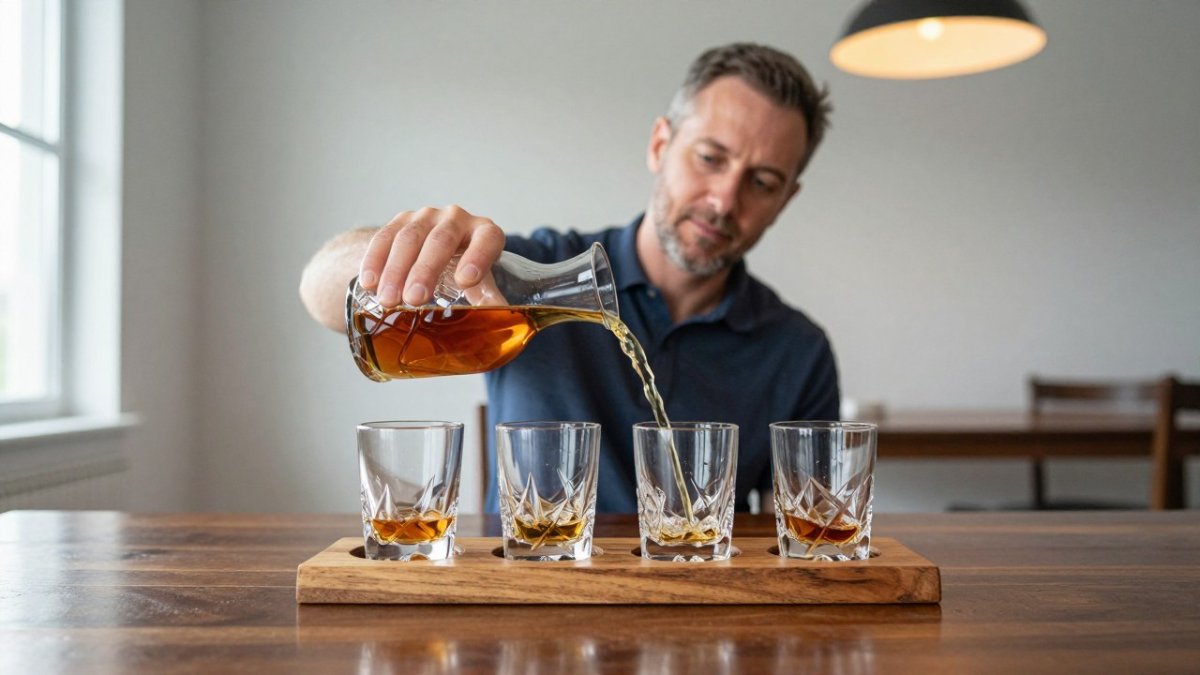
- Pour ½ to 1 ounce each. Small measures keep the tasting sharp.
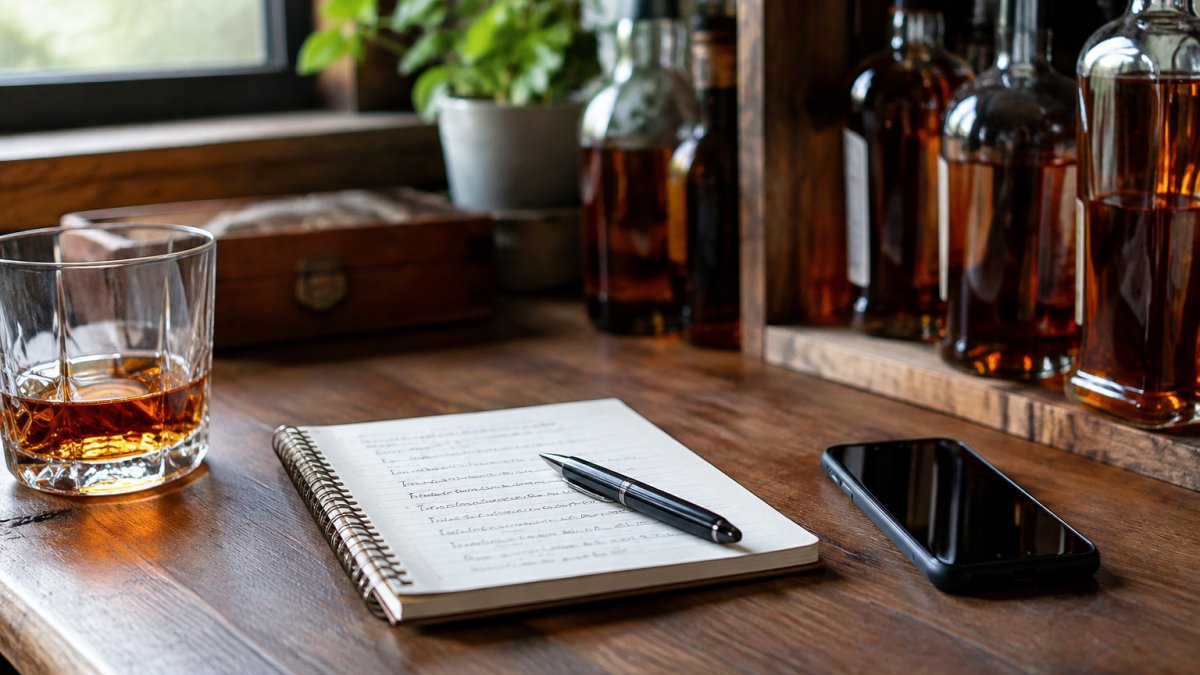
- Set out water, glasses, and a notepad. Keep it simple.
- Sip, compare, and write it down. The notes are the point.
Pick a Flight Theme Before You Pick Bottles
Most people do this backwards: they grab bottles they like, pour them, and hope a story appears.
A flight theme is the single idea that ties your pours together, answering one question: what am I trying to learn or show?
Good themes are narrow. "American whiskey" is too broad. "Bourbon at three different ages" is a theme you can actually taste.
A few themes that work well:
- One grain, three proofs. Same style, different strength.
- Region or style. Three Scotch whiskies, or three rye whiskeys.
- Age statement. A young bottle next to an older one.
Pick the theme that matches your curiosity.
Easy Whiskey Flight Ideas for Any Shelf
You do not need rare bottles to build a flight worth tasting. You need contrast.
Here are whiskey flight ideas that work with bottles most people already own:
- The beginner flight. A light Irish whiskey, a smooth bourbon, and a sweeter blended whiskey. Low proof, easy sipping.
- The bourbon ladder. Three bourbons at increasing proof. This shows how strength changes aroma and heat.
- The grain tour. A bourbon, a rye whiskey, and a single malt. Same country, different grain bills.
If you are building a beginner-friendly flight and want concrete bottle picks, our guide to the best whiskey for beginners covers top choices and tasting tips for newcomers.
The trick with any of these is contrast. Two bottles that taste almost the same teach you little; two that pull in different directions teach you a lot.
Choosing Three to Five Whiskies and Planning the Budget
Three to five whiskies is the sweet spot. Fewer than three and you have no real comparison; more than five and your palate gets tired and your notes get sloppy.
Here is how to pick the bottles and keep the cost sane:
- Set a budget before you shop. Decide what the whole flight can cost, then work backward.
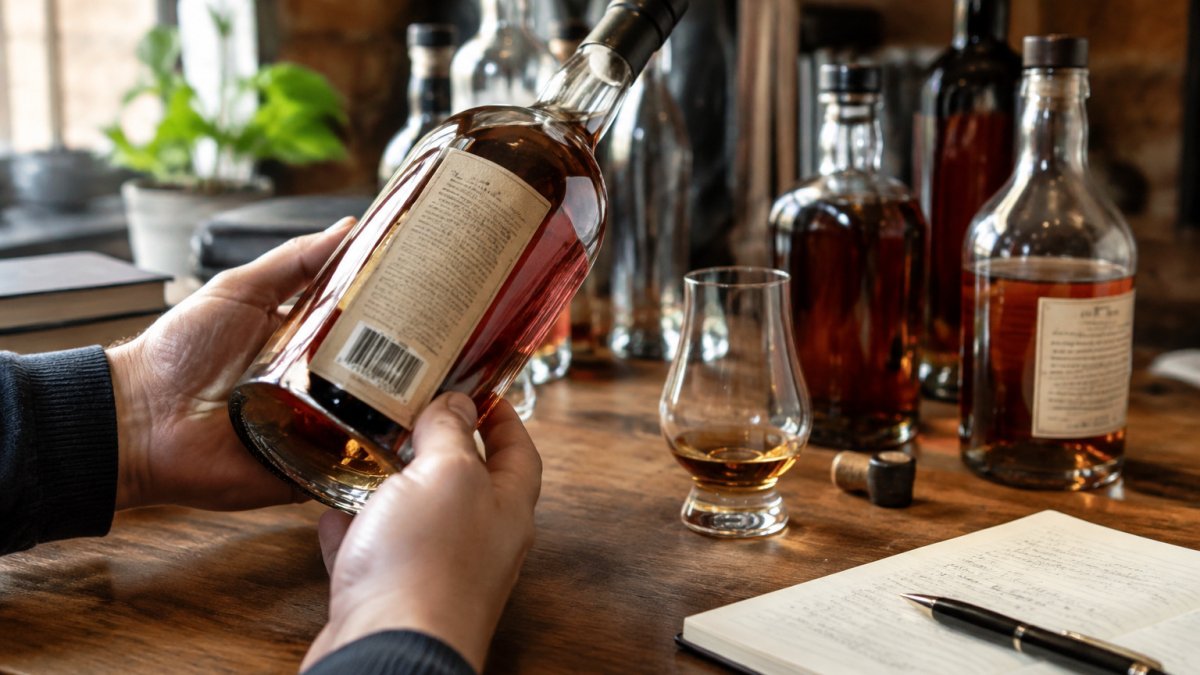
- Use what you own first. Check your shelf before buying anything new.
- Buy one bottle that stretches you. One new or nicer pour per flight is plenty.
A great flight is about contrast, not price. Three affordable, well-chosen pours will teach you more than one expensive bottle poured alone.
Watch out: do not build a flight entirely from your favorites. You will learn nothing, because you already know how it ends.
Whiskey Tasting Order: Light to Bold, Low to High Proof
The whiskey tasting order matters more than most people think. Always pour light-bodied and low-proof first, then move toward full-bodied and high-proof.
A practical order looks like this:
- Lowest proof, lightest body.
- Next step up in proof.
- A middle pour with more flavor weight.
- The boldest or highest-proof pour last.
High-proof whiskey coats the tongue and dulls your ability to pick up subtle notes. Save the heavy hitters for the end and the lighter pours stay readable.
If you are tasting blind, shuffle the order and hide the labels.
Responsible serving and pacing
A flight is a tasting, not a party, and the host sets the pace. A five-pour flight at ¾ ounce each is 3.75 ounces total, roughly 2.5 standard drinks if every pour is 80 proof, and more if the pours run higher.
- Pour small and refill on request. A ½-ounce pour lets a guest taste without committing to a full measure.
- Put water on the table and refill it. A full water glass slows the pace and keeps palates clean.
- Serve food. Crackers and bread are palate cleansers, but a real snack before or during the flight changes how the alcohol lands.
Watch out: a guest who arrives late and starts at the high-proof end of the flight has the order backward. Keep a spare set of the first two pours so latecomers can start where everyone else did.
Transportation and non-drinking guests
Plan the ride before the first pour. Designate drivers in advance, share a rideshare code with the group, or offer a spare room. Do not assume guests have figured it out.
Non-drinking guests are part of the table, not a problem to solve. Offer the same glassware and scorecard with a non-alcoholic pour: strong coffee, good tea, or a small pour of a non-alcoholic spirit.
A simple scorecard for mixed experience levels
Beginners freeze when asked to describe a whiskey. Give them fixed choices instead of a blank page:
- Nose: grain / fruit / vanilla / oak / smoke / spice
- Palate: sweet / dry / hot / smooth / oily / thin
- Finish: short / medium / long
That vocabulary is enough to compare pours across a table of mixed experience. The point of the flight is the comparison, not the poetry.
Whiskey Flight Pour Size and What Else Goes on the Board
The right whiskey flight pour size is ½ to 1 ounce per whiskey. Choosing the right glassware is part of setting up the board, and our guide to the best whiskey glasses for nosing and tasting covers the options.
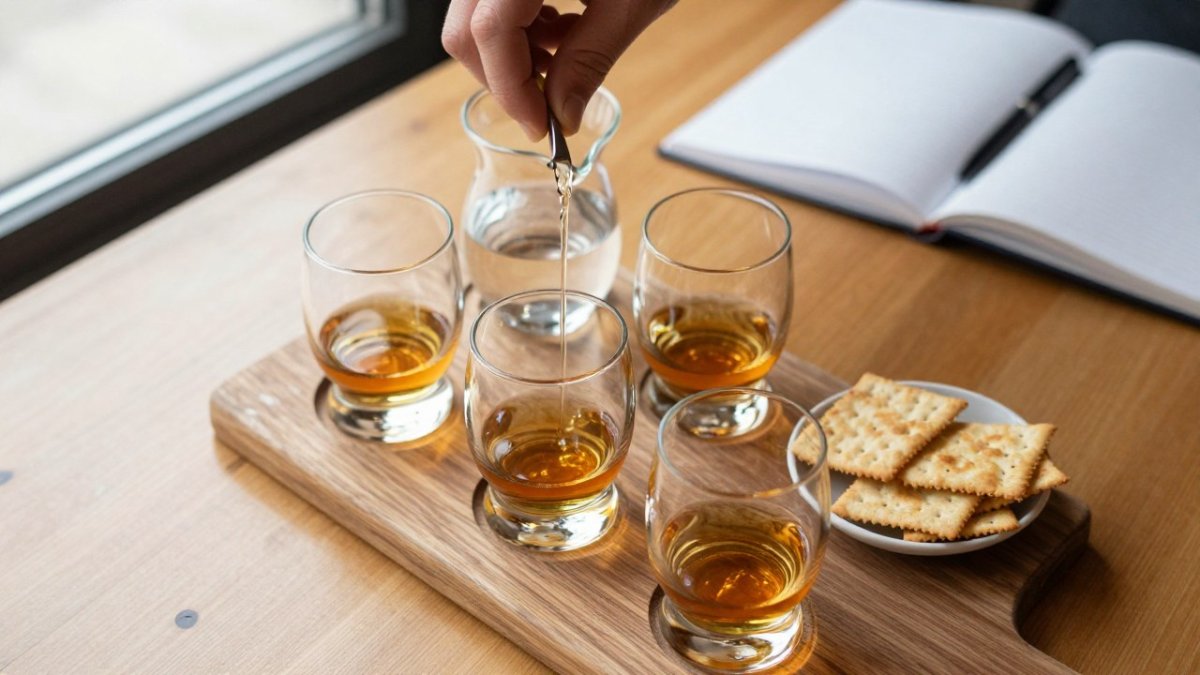
How much to pour for your group size
Scale the pour, not the number of whiskies. Use this as a starting point:
- 2 to 4 guests: ¾ to 1 ounce per whiskey. Total per person: 2.25 to 5 ounces across three to five pours.
- 5 to 8 guests: ½ to ¾ ounce per whiskey. Total per person: 1.5 to 3.75 ounces.
- 9 or more guests: ½ ounce per whiskey, and consider splitting into two tables so each group gets its own set of glasses.
For a five-whiskey flight at ½ ounce per person, eight guests need 20 ounces total, less than one full bottle of each whiskey. Check that number before you shop.
Glassware and serving-condition tradeoffs
You do not need specialty glass to run a good flight, but the shape changes what you smell.
- Tulip or copita nosing glass: narrows the rim and concentrates aroma. Best for subtle differences, but fragile and harder to wash in volume.
- Standard rocks glass: wide mouth lets ethanol escape, so high-proof pours smell hotter. Durable and cheap enough to own eight.
- Small wine glass: a reasonable middle ground if you already own a set; the tapered bowl does most of what a nosing glass does.
Temperature matters as much as shape. Serve neat at room temperature. Cold whiskey throws less aroma; a hot room makes it smell more alcoholic. Keep bottles off a sunny windowsill and out of a hot car before the tasting.
The setup checklist
Print this and work through it before guests arrive. It takes about fifteen minutes.
Glassware and pours
- One tasting glass per whiskey per guest, plus one spare per guest
- ½ to 1 ounce per whiskey per guest, measured with a jigger or a small kitchen scale
- A dump cup or empty pitcher at each seat
Palate and comfort
- Plain crackers, bread, or unsalted nuts, one small dish per two guests
- Water crackers rather than flavored ones, so they do not coat the palate
- Napkins and coasters
Notes and labels
- One notepad and pen per guest, or printed scorecards
- Labels or tent cards for each pour if the tasting is not blind
- A pen for marking glass bottoms if the tasting is blind
Room setup
- Enough table space for each guest to set down three to five glasses without crowding
- Good neutral light, avoid colored or dim bulbs, which hide the whiskey's color
- A trash bag or bin for crackers and napkins
Watch out: pouring a full 1.5-ounce measure "so people can really taste it" backfires.
A word on water: a few drops in the glass can open up aroma, especially on higher-proof pours. Add it a drop at a time and taste as you go.
Scale the pour to your group size rather than adding more whiskies.
| Group size | Pour per whiskey | Total per person |
|---|---|---|
| 2 to 4 guests | ¾ to 1 ounce | 2.25 to 5 ounces |
| 5 to 8 guests | ½ to ¾ ounce | 1.5 to 3.75 ounces |
| 9 or more guests | ½ ounce | Split into two tables |
A Whiskey Tasting Notes Template That Actually Gets Used
Most tasting notes die in a notebook nobody opens again.
Use this one. It takes about a minute per glass:
Whiskey: _______________ Proof / ABV: _______ Nose: _______ Palate: _______ Finish: short / medium / long Would I buy it? yes / no / maybe One word: _______
The four fields that matter most are nose, palate, finish, and that single word. Aroma, flavor, and mouthfeel separate one pour from another, and the "one word" field forces a real opinion instead of a paragraph of hedging.
If you want to get sharper at describing what you smell and taste, our step-by-step guide on how to identify whiskey tasting notes walks through the process.
A common mistake is writing too much. Long notes get skipped. Short, consistent notes get compared, and comparison is where the learning happens.
Log Your Flight in Bourbon Tracker and Plan the Next One
Bourbon Tracker™ is a free, no-download platform built for exactly this. After a flight, you can log each pour with your tasting notes, keep your bottles organized in one place, and build a wishlist from what you liked.
Here is how to run it after a tasting:
- Open Bourbon Tracker™ in your browser. No install required.
- Log each whiskey from the flight with your notes.
- Add the ones you loved to your wishlist.
- Check the recommendations before your next bottle run.
That last step is where the flight pays off: you tasted five pours, learned what you liked, and now have a shortlist for the next flight. For a closer look at the app side of note-taking, see our guide to the best bourbon app for tasting notes.
The next flight starts with better bottles, chosen from what you actually enjoyed.
Building a flight is easy. Building a habit of tasting, noting, and comparing is the part that turns a hobby into a real palate.
Frequently Asked Questions
How many whiskeys should be in a tasting flight?
Three to five is the sweet spot. Three lets you compare a clear progression, four gives room for a curveball, and five is about the limit before palates tire and notes start blurring together. Keep pours small so the total stays reasonable: five pours at 1/2 ounce each is 2.5 ounces of whiskey for the whole flight, which is a sensible amount for one sitting. If you want to feature more bottles, split them across two flights on different nights rather than pouring eight at once.
What is the best whiskey tasting order for a flight?
Go light to bold and low to high proof. Start with the lowest-ABV, lightest-bodied pour, then work up through richer grain bills and higher proof. A typical whiskey tasting order runs: an Irish or light American whiskey, a single malt Scotch, a wheated bourbon, a rye, and a barrel-proof bottle last. High-proof pours numb the palate, so putting one first flattens everything after it. If you want to test your own bias, pour blind and label the glasses only with numbers, then reveal the order at the end.
How much whiskey should you pour for each sample?
Pour 1/2 to 1 ounce per whiskey, which is roughly 15 to 25 ml. Half an ounce is enough for several sips and a proper nosing; a full ounce suits higher-proof pours you plan to add water to. For a five-whiskey flight that means 2.5 to 5 ounces total per person, so a single 750 ml bottle covers a group of four to six comfortably. Use a jigger or a small measuring pourer rather than eyeballing it, especially if you are hosting people who are driving home.
What should you serve with a whiskey flight?
Keep it simple: plain water, oyster crackers or bread, and maybe a piece of dark chocolate or a few nuts. Water is the most important item, both for adding a few drops to high-proof pours and for resetting your palate between glasses. Avoid strongly flavored snacks like aged cheese, spicy nuts, or anything smoked, since those coat the tongue and mask the next pour. Set out a small dump cup or water glass so guests can rinse between whiskeys, and keep food portions small so the whiskey stays the focus.