 blog
7 Whiskey Bottle Rotation Rules Collectors Get Wrong
Last Updated: October 30, 2026
Quick Summary
Whiskey bottle rotation is a drinking-order system: rank open bottles by fill level and pour from the lowest first, so nothing sits half-empty and fading. Run a monthly pass to check fill levels, seals, and labels, and decant or finish anything under a quarter full.
- Store bottles upright, away from direct sunlight, in a temperature-stable spot.
- Screw caps are usually the most reliable reseal for an open bottle.
- Check bottles at 25% to 50% fill every 14 days and plan to decant.
- Log bottle name, opening date, and current fill level to run first-in, first-out.
- Never store bottles upside down to keep the cork wet.
Table of Contents
- What Whiskey Bottle Rotation Actually Means for a Home Collection
- How to Store Whiskey Bottles So Rotation Stays Simple
- How Long Does Whiskey Last After Opening?
- Build a Whiskey Bottle Rotation Schedule by Fill Level
- Whiskey Bottle Inventory Tracking That Stays Current
- Common Rotation Mistakes and How to Avoid Them
- Start Tracking Your Collection in Bourbon Tracker
- Frequently Asked Questions
What Whiskey Bottle Rotation Actually Means for a Home Collection
Whiskey bottle rotation is the practice of managing which bottles you open, drink, and finish first so nothing sits half-empty and fading on your shelf. Collectors often treat rotation as a storage chore when it is really a drinking-order system.
Rotation is not about spinning bottles on a shelf. It is about deciding what gets opened next, what gets finished next, and what stays sealed.
Rotation Is About Drinking Order, Not Spinning Bottles
A collection of 40 bottles has a natural problem. You open a new one every few weeks. The old ones sit at half fill.
Rotation solves that by giving every open bottle a place in line. The bottle closest to empty gets poured first.
For a deeper method, our guide on how to manage bourbon bottle rotation walks through the full routine for a home collection.
How to Store Whiskey Bottles So Rotation Stays Simple
Storage and rotation are the same job. If bottles are hard to reach, you will not rotate them. If they are easy to see and grab, the routine runs itself.
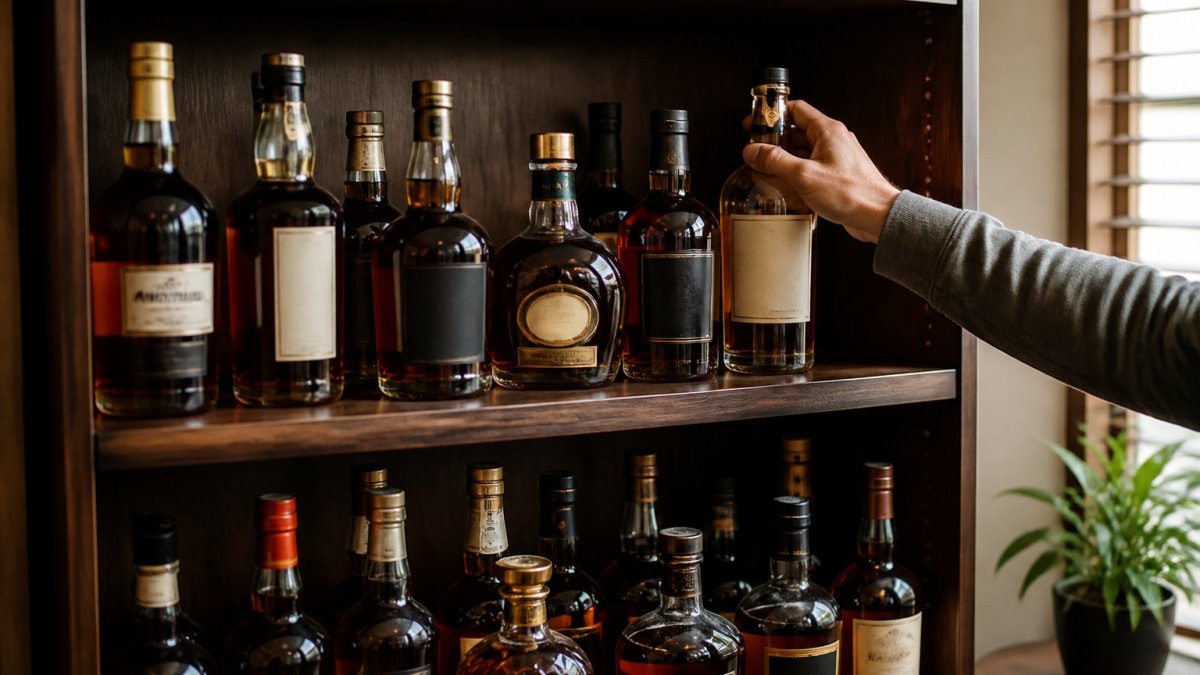
Upright, Dark, and Temperature-Stable
Three storage rules do most of the work:
- Keep bottles upright. Lying a bottle down puts high-proof spirit against the cork for months. Ethanol is a solvent, and prolonged contact can degrade natural cork, soften its seal, and leave the whiskey tasting of cork or cardboard. The exception is a bottle you plan to finish within a few days, and even then, upright is safer.
- Block direct sunlight. Clear glass lets light through, and ultraviolet and visible light break down the wood-derived compounds that give whiskey its color and flavor. A closed cabinet beats a windowsill every time. Brown or tinted glass slows the process but does not stop it; treat tinted bottles as delayed, not protected.
- Hold temperature steady. Big swings push liquid in and out of the cork and accelerate oxidation. A cool, dark closet is better than a kitchen shelf above the stove. Aim for a stable spot rather than chasing a specific number.
Clear glass offers no light protection, so those bottles need the darkest spot you have. Opaque packaging, ceramic, metal tin, or a heavy cardboard tube, is the best light barrier, but only if you store the bottle inside it rather than leaving the tube on a shelf. The TTB labeling rules for distilled spirits also explain why label details matter when you are identifying bottles in a large collection; a legible label facing out is part of the rotation system, not decoration.
Match Storage to Closure Type
Closure type changes how fast a bottle fades, and treating every bottle the same is a common storage mistake. Here is how the main closure types behave:
- Natural cork. A sound cork seals well, but cork is porous and can dry out or crumble over years. Check every cork before long-term storage; one that crumbles, smells musty, or no longer grips is a warning sign. Store corked bottles upright so spirit does not sit against the cork.
- Screw cap. Usually the most reliable reseal for an open bottle. The metal cap and liner create a tight barrier with no cork to degrade, so screw-cap bottles are the easiest to rotate.
- Synthetic closure. A plastic or composite stopper that resists crumbling and holds a seal well, but fit varies by brand, some loosen after repeated opening. If a synthetic stopper feels loose, replace it with an airtight cap.
Decanting and Fill-Level Management
Two moves keep partly empty bottles in good shape:
- Decant into a smaller bottle. Moving whiskey into a smaller glass bottle reduces headspace and air exposure. A clean glass bottle with a tight cap works fine for short-term use; avoid plastic, which can impart flavor over time. Fill it as close to the top as practical.
- **
Bottle Materials and Light Exposure
The bottle itself is part of the storage system. Clear glass shows the whiskey and fill level, useful for rotation, but offers zero light protection, so clear-glass bottles belong in the darkest part of your cabinet. Brown and green glass slow light damage but do not eliminate it. Opaque or ceramic bottles protect best but hide the fill level, so you must check weight or open them to know where they stand.
Handling Fragile and Wax-Sealed Bottles
Wax-sealed bottles, common on limited releases, can crack or flake when handled roughly, and the wax can hide a loose cork underneath. Inspect the seal before storing, and if the wax is cracked, treat the bottle as suspect and check the closure. Very old or fragile bottles should be handled by the base, not the neck, and kept out of the active rotation unless you plan to drink them.
How Long Does Whiskey Last After Opening?
An opened bottle of whiskey stays drinkable for years, but it does not stay the same. Oxidation slowly softens the flavors, and the drop is fastest when a bottle is nearly empty.
The practical timeline depends on fill level:
| Fill Level | Typical Flavor Life | What to Do |
|---|---|---|
| Full to 75% | Several months to years | Store upright, away from light |
| 50% to 75% | A few months | Keep sealed tight, rotate to front |
| 25% to 50% | Weeks to a few months | Move to a smaller bottle |
| Under 25% | Days to weeks | Finish it or decant now |
Higher-proof whiskey generally holds up longer than low-proof bottles. For a full breakdown of open-bottle storage, see our guide to storing open bourbon bottles.
Build a Whiskey Bottle Rotation Schedule by Fill Level
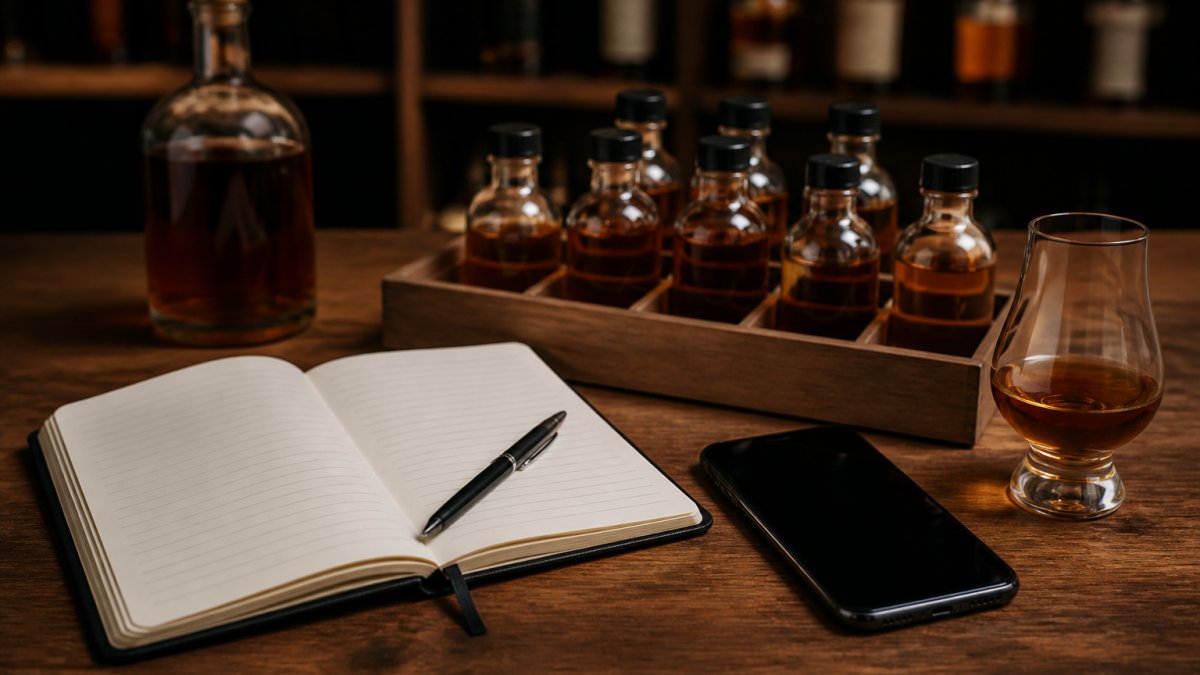
A rotation schedule is a simple ranking system: sort your open bottles by fill level, then drink from the lowest first, first-in, first-out applied to whiskey. But a ranking only works if you know when to check, how to prioritize, and where to record what you find.
A Practical First-In, First-Out Routine
Run this once a month, and again any time you open more than two new bottles in a week:
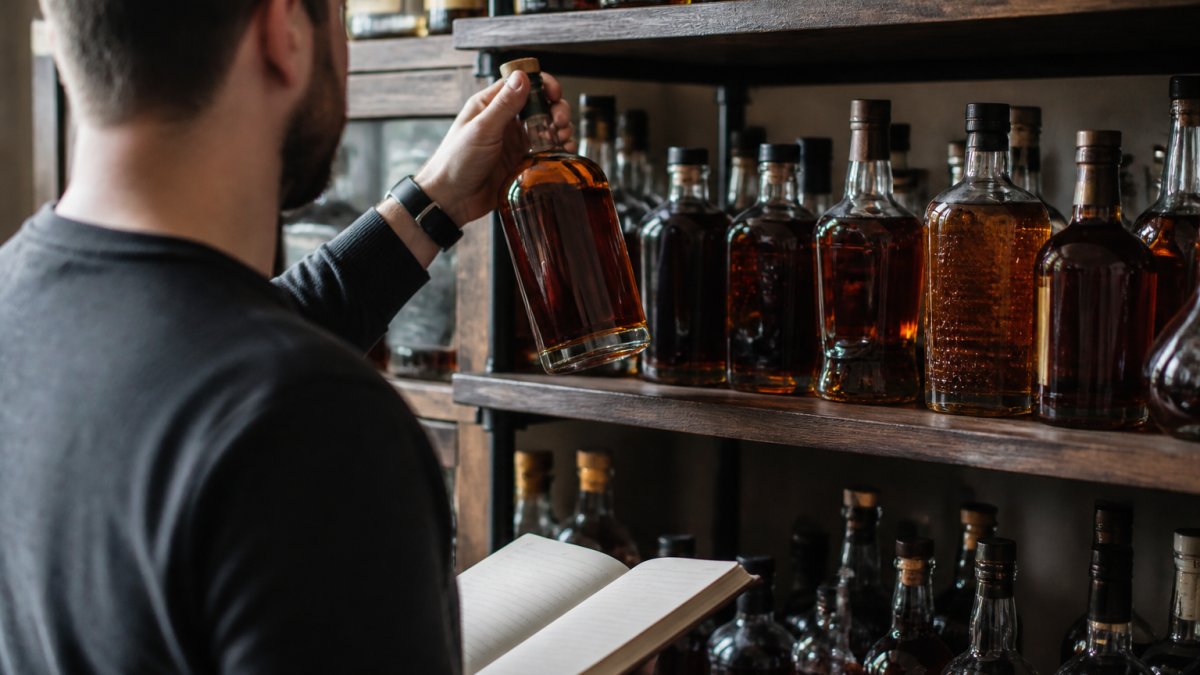
- Pull every open bottle and check the fill level by eye against the label or up to a light.
- Rank them lowest to highest. The lowest is your next pour.
- Flag anything under a quarter full for decanting or finishing this week.
- Check each cork and cap for a secure seal; replace loose closures with airtight caps.
- Face labels outward so you can identify bottles at a glance.
- Log the date and fill level in your tracking system.
This FIFO approach means no bottle sits at 20% for a year, and your shelf does not fill up with half-dead bottles you forget about.
A Rotation Schedule by Fill Level
Not every bottle needs the same attention. Use fill level to set the check interval and the priority:
| Fill Level | Check Interval | Priority | Action |
|---|---|---|---|
| Full to 75% | Every 60 days | Low | Store upright, away from light; no action needed |
| 50% to 75% | Every 30 days | Medium | Keep sealed tight, move toward the front of the shelf |
| 25% to 50% | Every 14 days | High | Plan to decant into a smaller bottle within the month |
| Under 25% | Weekly | Urgent | Finish it or decant now; do not leave it at this level |
A bottle at 50% is not in trouble, but it is on the clock. A bottle at 20% is losing flavor every week it sits. The schedule above turns a vague "check your bottles sometimes" into a concrete cadence you can put on a calendar.
Prioritizing Bottles at Different Fill Levels
Fill level is the primary ranking, but three secondary factors should move a bottle up the list:
- Low-proof bottles first. Whiskey bottled at lower proof generally fades faster than higher-proof whiskey, so a 40% ABV bottle at half fill is more urgent than a barrel-proof bottle at the same level.
- Older open dates first. If two bottles are at the same fill level, the one opened longer ago gets poured first. This is where an opening date in your log earns its keep.
- Everyday pours before special bottles. A bottle you drink regularly will rotate naturally; a bottle you save for occasions needs to be decanted earlier so it does not sit at low fill for months.
A Simple Collection Tracking Workflow
Inventory tracking is what separates a rotation system from a guess. A bottle you cannot find in your notes is a bottle you will not rotate.
At minimum, log these fields for every bottle:
- Bottle name and batch or proof
- Purchase date
- Opening date
A spreadsheet with those columns lets you sort by fill level and opening date in seconds. Our article on managing whiskey bottle inventory covers the full method, and digital whiskey inventory tips helps you move off paper.
Common Rotation Mistakes and Safety
The biggest rotation mistake is treating storage as solved once bottles are on a shelf. Most problems come from small habits that add up over months.
Watch out: leaving a bottle at a quarter full "for a special occasion" is the fastest way to lose the whiskey you were saving.
Other mistakes we see:
- Laying bottles down and letting spirit sit against the cork.
- Storing near a window where light exposure does the damage.
- Ignoring loose corks until the whiskey tastes flat.
A five-minute monthly pass fixes most of these. Sort by fill level, check seals, and update your log.
Whiskey Bottle Inventory Tracking That Stays Current
Inventory tracking is what separates a rotation system from a guess. A bottle you cannot find in your notes is a bottle you will not rotate.
Common Rotation Mistakes and How to Avoid Them
The biggest rotation mistake is treating storage as solved once bottles are on a shelf. Most problems come from small habits that add up over months.
Watch out: leaving a bottle at a quarter full "for a special occasion" is the fastest way to lose the whiskey you were saving. Decant it or finish it.
Other mistakes we see:
Start Tracking Your Collection in Bourbon Tracker
Rotation only works when you know what you have.
Bourbon Tracker™ is free to use and needs no download. Log tasting notes, build a wishlist, and let AI-powered recommendations point you toward bottles that fit your palate. Community features let you share reviews and see what other collectors are drinking.
Track your bourbon collection and let the app handle the inventory side so you can focus on the pour.
Frequently Asked Questions
How often should you rotate whiskey bottles?
Rotate based on fill level rather than a fixed calendar. Bottles below about a quarter full should move to the front of your drinking queue and be finished within a few months, while fuller bottles can sit longer. A simple habit is to check your shelf once a month, update fill levels, and pull the lowest bottles forward. Pairing that check with whiskey bottle inventory tracking keeps the order accurate without guesswork.
Should whiskey bottles be stored upright or on their sides?
Store whiskey bottles upright. High-proof spirits can degrade natural cork over long contact, and lying a bottle down keeps liquid against the closure, which raises the risk of leaks and cork taint. Upright storage also keeps the label readable and makes it easier to spot a loose cap. Keep bottles in a dark, temperature-stable spot, and check corks periodically for cracks or shrinkage.
Does rotating a whiskey bottle keep the cork moist?
No. Whiskey bottle rotation is about drinking order, not cork care. Cork moisture matters for wine stored on its side, but whiskey is stored upright and the cork stays exposed to vapor rather than liquid. What actually protects the seal is a snug closure, minimal headspace, and stable temperature. If a cork feels loose or crumbly, replace it with an airtight polycone cap before the bottle sits any longer.
How long does whiskey last after opening?
An opened bottle stays enjoyable for years if it is mostly full, but quality fades faster as the fill level drops. Once a bottle is below roughly a quarter full, plan to finish it within a few months, and consider decanting into a smaller glass bottle to reduce air exposure. Keeping bottles out of direct sunlight and away from temperature swings slows oxidation, and a rotation schedule makes sure low bottles get finished first.
Your shelf is only as good as your records. If you have ever stared at a half-empty bottle and wondered when you opened it, you already know the problem. Bourbon Tracker™ gives you bottle tracking, tasting notes, a personal wishlist, and AI-powered suggestions in one free platform with no download. Get started with Bourbon Tracker™ and keep every bottle in your rotation accounted for.