 blog
blog
Bourboneur vs Distiller for Collectors
Table of Contents
- What Collectors Actually Need From a Bourbon Collection Tracker
- Bourboneur: Community-First Collection Management
- Distiller: Data-Driven Portfolio and Market Tracking
- Best Bourbon Collection Tracker for Your Collecting Style
- How to Track Whiskey Tasting Notes Across Both Platforms
- Data Accuracy, Privacy, and Long-Term Viability
- Making Your Choice: Decision Framework for Collectors
- Frequently Asked Questions
Last Updated: September 1, 2026
What Collectors Actually Need From a Bourbon Collection Tracker
When you're managing a serious bourbon collection, spreadsheets and mental notes stop working around bottle number 30 (peer-reviewed research). The real challenge isn't just logging what you own, it's tracking tasting notes, managing your wishlist, and staying connected to a community of people who actually understand why you spent $150 on a bottle you haven't opened yet. This guide from Bourbon Tracker™ breaks down what separates a useful collection tracker from one you'll abandon after two weeks.
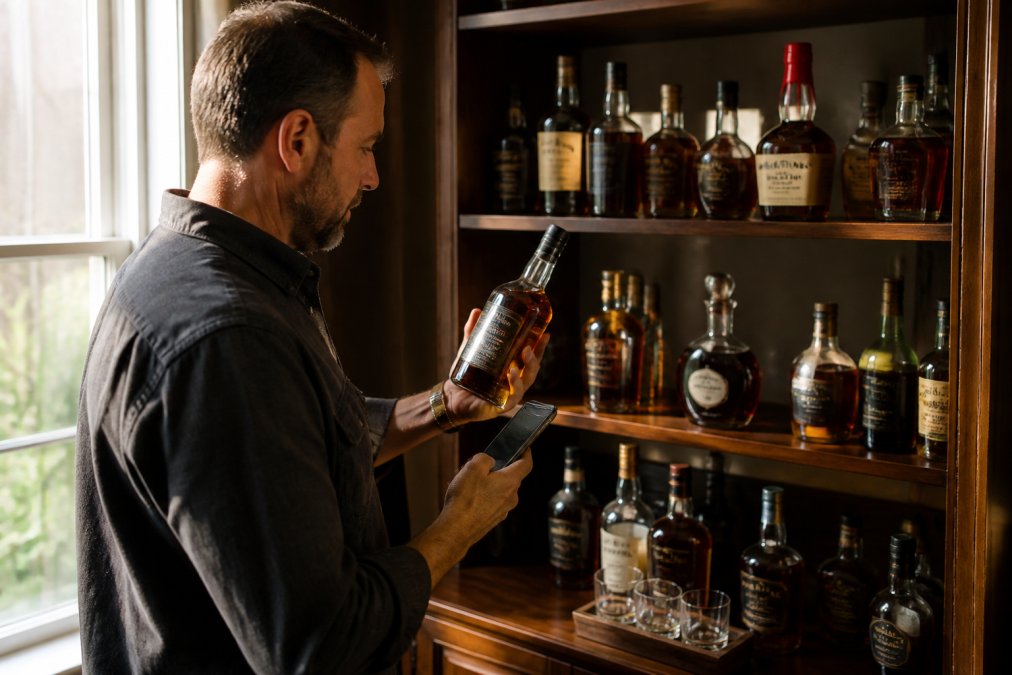
The best bourbon collection tracker does four things exceptionally well: captures tasting notes without friction, integrates with your community, and stays reliable. You should be able to log impressions immediately after a pour, not hours later when you've forgotten the specifics. A platform that dies in 18 months teaches you nothing except frustration.
Most collectors start by asking whether they need Bourboneur or Distiller. The real question is whether you want a community-first platform that prioritizes social features and peer discovery, or a data-driven system built around market tracking and portfolio management.
Bourboneur: Community-First Collection Management
Bourboneur positions itself as the social network for bourbon enthusiasts, emphasizing peer discovery, shared tasting notes, and a vibrant community of collectors. If your collecting style revolves around finding new bottles through recommendations from people whose palates you trust, Bourboneur's approach makes sense.
The core strength lies in community integration. You log your bottles, write tasting notes, and immediately see what other collectors with similar tastes are drinking. You can follow collectors, comment on their reviews, and discover allocated bottles through peer recommendations. For collectors who thrive on community engagement, this creates genuine value.
Setup is straightforward and the interface prioritizes simplicity, so you can add a bottle and write tasting notes without navigating complex menus. The platform handles collections of all sizes reasonably well, though collectors with 150+ bottles report that search and filtering become less intuitive.
The weakness emerges when you care deeply about portfolio value and secondary market data. Bourboneur includes basic pricing information but doesn't track market volatility, auction benchmarks, or allocated bottle values with the precision serious collectors need. The platform also doesn't integrate with external portfolio management tools.
Distiller: Data-Driven Portfolio and Market Tracking
Distiller takes the opposite approach, built around data accuracy, market pricing, and portfolio management. If you view your bourbon collection as an investment, Distiller's architecture aligns with that mindset.
The platform's core strength is its data infrastructure. Distiller maintains comprehensive pricing databases that track secondary market values, auction benchmarks, and retailer listings across thousands of bottles (the FTC). When you add a bottle, you're connecting to real market data that updates as prices shift. For collectors who want to understand their portfolio's actual value, this matters significantly.
Distiller also excels at portfolio analytics. You can see your collection's total value, track how individual bottles appreciate or depreciate, and identify which bottles represent the best value. The platform integrates distillation data, proof, mash bill, aging process, cask type, which appeals to collectors who care deeply about technical specifications.
The tradeoff is community presence. Distiller includes social features, but they're secondary to the data infrastructure. The experience feels more like using a financial tracking tool than joining a club.
Setup requires more intentionality. While Distiller's interface is logical, you need to spend time understanding how to configure your portfolio view, set up price alerts, and use filtering options effectively. Collectors with large, complex collections find this depth valuable.
Best Bourbon Collection Tracker for Your Collecting Style
The choice between Bourboneur and Distiller comes down to what you prioritize. Neither platform is objectively "better", they're built for different collector archetypes.
Choose Bourboneur if you collect primarily for discovery and enjoyment, want recommendations from people whose palates align with yours, enjoy sharing tasting notes, don't obsess over what your collection is worth in dollars, and prefer simplicity over feature depth.
Choose Distiller if you collect with an investment mindset, track portfolio value as seriously as tasting notes, want to understand market trends and allocated bottle values, and care about data accuracy and historical pricing more than peer recommendations.
Bourbon Tracker™ offers a third path: a free, no-download platform that combines collection management with AI-powered recommendations tailored to your palate and integrated community features. You log your bottles, track tasting notes, and receive suggestions based on your actual preferences. The platform handles collections of any size without performance degradation and stays free because it's designed for enthusiasts first. If you want the community engagement of Bourboneur without sacrificing data accuracy, or the portfolio tracking of Distiller without the complexity, Bourbon Tracker™ bridges that gap.
The decision isn't about which platform has more features. It's about which philosophy matches your collecting approach. Spend 10 minutes on each platform, log a bottle you know well, write tasting notes, and see which interface feels like an extension of how you actually collect.
How to Track Whiskey Tasting Notes Across Both Platforms
If you're using both platforms, you need a system to avoid duplicating effort. The goal is logging tasting notes once and maintaining consistency across both systems without turning note-taking into a chore.
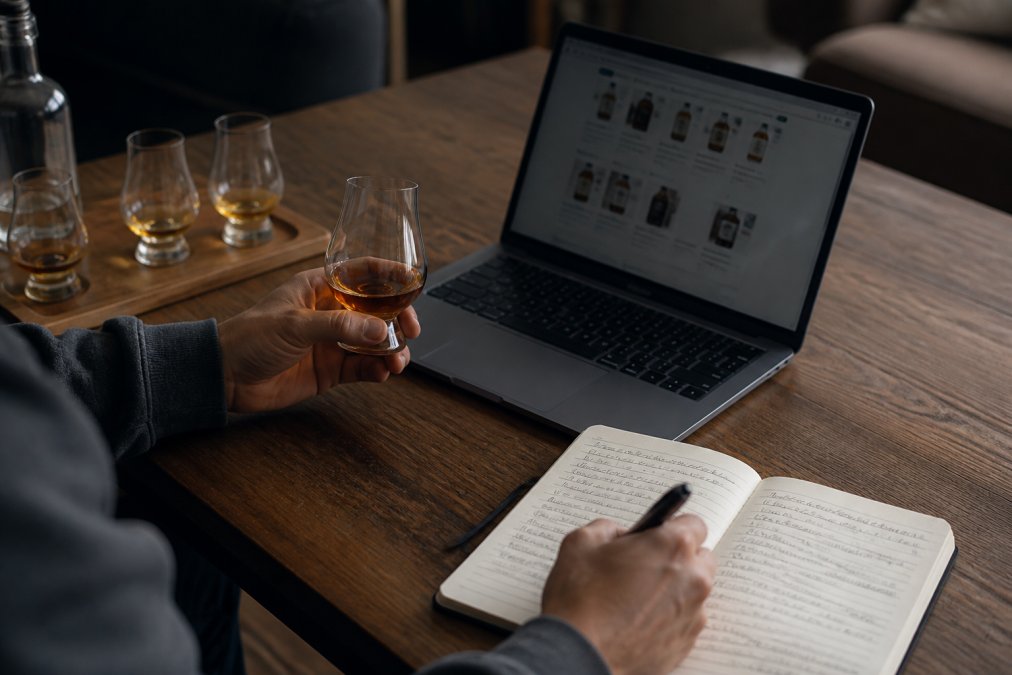
Start with a consistent note structure. Define what you'll capture: nose, palate, finish, proof, price paid, date tasted, and context. Write these notes in a single location first before transferring anywhere else.
Most collectors find it efficient to log tasting notes in their primary platform first, then copy the structured notes to the secondary platform. If Distiller is primary because you care about portfolio tracking, write there first, then add to Bourboneur if you want community feedback. If Bourboneur is primary because you value peer interaction, write there first, then transfer technical details to Distiller.
Log tasting notes immediately after you taste, while impressions are fresh. Don't wait until you have time to update both platforms. Capture the experience once, then distribute the notes later.
Use consistent terminology across platforms. If you describe a nose as "caramel and oak" in one system, use the same language in the other. This consistency helps you spot patterns in your preferences.
Data Accuracy, Privacy, and Long-Term Viability
Two concerns separate serious collectors from casual ones: data accuracy and privacy. You're trusting a platform with detailed information about your collection, what you own, what you paid, and what you want to buy next.
Data accuracy on pricing is where Distiller and Bourboneur diverge most. Distiller maintains its own database of secondary market prices, auction results, and retailer listings, updated regularly so your portfolio values reflect current market conditions. Bourboneur relies more heavily on user-contributed pricing, so accuracy depends on community participation. For allocated bottles and rare expressions, Distiller's centralized data is more reliable.
Privacy concerns are often overstated. Both platforms keep your detailed collection data private by default (the FTC). You control what's visible to other users. Neither sells your collection data to third parties. However, both use your data internally, Bourboneur uses your tasting notes and preferences to power recommendations, while Distiller uses your portfolio data to improve its market tracking algorithms. This is normal and expected.
Long-term viability is harder to predict. Bourboneur and Distiller have both operated for several years with active user bases. The safer approach is using a platform that's genuinely free and designed to stay that way. Bourbon Tracker™ operates as a completely free platform with no premium tier planned. You're not a free user waiting to become a paying customer, you're the actual customer.
Making Your Choice: Decision Framework for Collectors
Here's a structured way to decide between Bourboneur and Distiller, or to evaluate whether Bourbon Tracker™ fits your needs better.
Start by answering three questions honestly:
Question 1: Do you view your collection primarily as a source of discovery and enjoyment, or as a portfolio asset?
If discovery and enjoyment dominate, Bourboneur's community features will feel more valuable than Distiller's portfolio analytics. If you track your collection's value and monitor allocated bottle prices, Distiller's data infrastructure becomes essential.
Question 2: How large is your collection, and how quickly is it growing?
Both platforms handle collections of 50-100 bottles smoothly. At 150+ bottles, search and filtering become noticeably easier in Distiller. Bourbon Tracker™ handles large collections without performance degradation.
Question 3: How much time are you willing to spend configuring and maintaining your system?
Bourboneur rewards simplicity. Distiller rewards depth. Bourbon Tracker™ sits in the middle.
| Collector Priority | Best Choice | Why |
|---|---|---|
| Community engagement and peer discovery | Bourboneur | Strong social features and recommendation engine |
| Portfolio value tracking and market data | Distiller | Comprehensive pricing and analytics |
| Free, scalable, AI-powered recommendations | Bourbon Tracker™ | No premium tier, handles large collections, community features |
| Simplicity and speed | Bourboneur | Minimal configuration required |
| Technical depth and portfolio integration | Distiller | Advanced filtering and data infrastructure |
The decision framework isn't about which platform is objectively best. It's about which platform's philosophy matches how you actually collect. The best collection tracker is the one you'll use consistently.
Start with a trial period. Spend two weeks logging bottles in your top choice. Write real tasting notes. See if the interface feels natural or forced. That experience matters more than any feature comparison.
Choosing the right collection tracker shapes how you engage with bourbon over years. Whether you prioritize community, data, or simplicity, the platform should disappear into your workflow rather than creating friction. Test the tools, trust your workflow instincts, and remember that the best tracker is the one you'll actually use. Get started with Bourbon Tracker™ and manage your collection with AI-powered recommendations, integrated community features, and the simplicity of a platform built for enthusiasts who collect seriously.
Frequently Asked Questions
What's the key difference between Bourboneur and Distiller for tracking a bourbon collection?
Bourboneur emphasizes community engagement and user-generated reviews, making it ideal for collectors who want to share tasting experiences and see what others own. Distiller focuses on data accuracy, secondary market pricing, and portfolio valuation, appealing to collectors tracking bottle worth and auction benchmarks. Your choice depends on whether you prioritize social features or investment-grade data.
Is there a completely free app for tracking bourbon collections without hidden premium tiers?
Yes. Bourbon Tracker™ is entirely free with no download required. It offers collection tracking, tasting notes, AI-powered recommendations, and community features at no cost.
How do I know which platform will actually handle a large collection without slowing down?
Both Bourboneur and Distiller are designed to scale to hundreds of bottles. Performance depends on your device and internet connection rather than collection size. Test each platform by adding 20-30 bottles to your inventory and checking responsiveness. Cloud-based platforms like these rarely experience slowdowns from collection size alone, though interface complexity can vary.
How accurate is the pricing data on these platforms for secondary market bottles?
Distiller pulls auction benchmarks and retailer listings to track secondary market value and price history, making it more reliable for rare bottles and allocated bourbon tracking. Bourboneur relies partly on user input and community contributions, which can be less precise for rare or limited releases. For investment-grade collecting, Distiller's data-driven approach is generally more trustworthy.
This article was written using GrandRanker
Frequently Asked Questions
What's the key difference between Bourboneur and Distiller for tracking a bourbon collection?
Bourboneur emphasizes community engagement and user-generated reviews, making it ideal for collectors who want to share tasting experiences and see what others own. Distiller focuses on data accuracy, secondary market pricing, and portfolio valuation, appealing to collectors tracking bottle worth and auction benchmarks. Your choice depends on whether you prioritize social features or investment-grade data.
Is there a completely free app for tracking bourbon collections without hidden premium tiers?
Yes. Bourbon Tracker™ is entirely free with no download required. It offers collection tracking, tasting notes, AI-powered recommendations, and community features at no cost.
How do I know which platform will actually handle a large collection without slowing down?
Both Bourboneur and Distiller are designed to scale to hundreds of bottles. Performance depends on your device and internet connection rather than collection size. Test each platform by adding 20–30 bottles to your inventory and checking responsiveness. Cloud-based platforms like these rarely experience slowdowns from collection size alone, though interface complexity can vary.
How accurate is the pricing data on these platforms for secondary market bottles?
Distiller pulls auction benchmarks and retailer listings to track secondary market value and price history, making it more reliable for rare bottles and allocated bourbon tracking. Bourboneur relies partly on user input and community contributions, which can be less precise for rare or limited releases. For investment-grade collecting, Distiller's data-driven approach is generally more trustworthy.