 blog
Secure Whiskey Portfolio Management Software: 2026 Guide
Table of Contents
- What Whiskey Portfolio Management Software Does
- Why Security Matters for Your Whiskey Collection Data
- Whiskey Collection Tracking Apps: Core Features to Evaluate
- Bourbon Inventory App Essentials: Tracking Bottles and Casks
- Whiskey Bottle Inventory Spreadsheet vs. Dedicated Software
- Whiskey Tasting Notes App: Logging Reviews and Palate Preferences
- Making Your Choice: Deployment, Pricing, and Long-Term Viability
- Frequently Asked Questions
Last Updated: October 16, 2026
What Whiskey Portfolio Management Software Does
Whiskey portfolio management software helps collectors organize, track, and value their spirits collections.
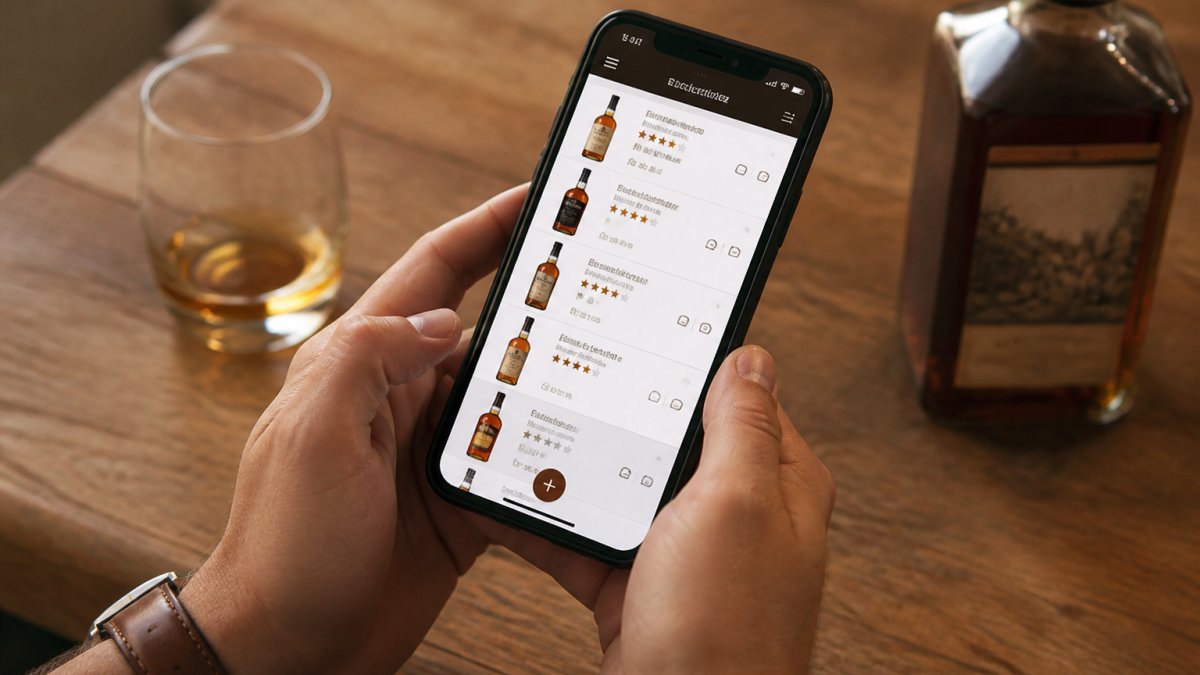
Core tasks: logging bottles with distillery, age, proof, and purchase price; recording tasting notes and ratings; tracking locations and storage conditions; and monitoring market values to gauge appreciation.
The best whiskey portfolio management software adds community features, shared reviews, palate comparisons, tailored recommendations, plus security, since collection data carries real financial value.
Evaluate whiskey portfolio management software for ease of use and data management that handles 20 to 500-plus bottles without slowdown.
Why Security Matters for Your Whiskey Collection Data
Your whiskey collection data maps valuable physical assets: what you own, what you paid, where each bottle and cask sits, who had custody, and what you plan to buy. That is exactly what a thief, fraudulent buyer, or claims adjuster wants. A platform that secures your login but leaks storage locations has not secured your collection.
The four data classes that need separate protection
Most marketing collapses everything into "bank-grade security." Evaluate protection per data class, because exposure consequences differ:
- Identity and account data, name, email, payment method. Standard controls apply: strong password hashing, multi-factor authentication (MFA), and session management.
- Ownership and valuation data, purchase prices, current estimated values, total portfolio worth. Exposure here invites targeted theft and undermines your negotiating position with buyers and insurers.
- Location and custody data, home address, locker number, bonded warehouse, who currently holds a cask. This is the highest-risk class. A breach here is a physical-security event, not just a privacy event.
- Provenance and authenticity records, receipts, certificates, fill dates, transfer history. If these are altered or lost, resale value and insurance claims are jeopardized.
A secure platform should let you restrict each class independently: tasting notes public, valuations spouse-only, location data visible only to you.
Controls to verify, not just read about
Ask vendors concrete questions:
- Encryption in transit and at rest. Look for TLS in transit and AES-256 or equivalent at rest, including backups.
- Role-based access control (RBAC). Can you create roles, owner, family member, advisor, read-only appraiser, with different permissions? Whether a read-only user sees location data should be configurable, not fixed.
- Audit trails. Every change to a bottle record, valuation, or custody entry should be logged with a timestamp and user, so you can reconstruct what happened if a bottle goes missing or a valuation is disputed.
- Account recovery. MFA is only as strong as its recovery path. Ask how recovery works, whether support can bypass MFA, and what identity proof is required. A vendor that resets your account over email has effectively removed your second factor.
- Backups and restoration testing. Automatic backups matter only if restoration is tested. Ask for backup frequency and whether the vendor has a documented recovery time objective.
Data ownership, export, and deletion
Most collectors overlook this: if the company shuts down, is acquired, or changes terms, can you get your data out in a usable format? Several whiskey tracking apps have closed in recent years, locking users out of their own records.
Before committing, confirm in writing:
- Export. Can you download a complete, structured export (CSV or JSON) of every bottle, cask, tasting note, valuation, and provenance record at any time, without a support ticket?
- Deletion and retention. When you delete your account, is data actually deleted, or retained indefinitely? What is the retention period, and does it apply to backups?
- Vendor access. Do employees or contractors have access to your identifiable collection data? Under what conditions, and is that access logged?
- Sharing terms. If the platform has community features, what is the default visibility of new records? Secure defaults should be private, with sharing an explicit opt-in per record or collection.
Provenance and custody: the security layer unique to whiskey
For collectible whiskey, the record of authenticity is part of the asset. A bottle with documented provenance, receipt, fill date, warehouse records, transfer history, is worth more and easier to insure.
At minimum, record acquisition source and date, certificate or receipt reference, storage location history, and any custody change (loan, auction transfer, warehouse return). A platform that cannot represent custody changes cannot help you prove ownership at resale, insurance claim time, or in a dispute.
A practical security checklist
Use this as a vendor questionnaire, not a feature wish list:
- Is data encrypted in transit and at rest, including backups?
- Is MFA available, and how is account recovery handled?
- Can permissions be set per data class (ownership, valuation, location)?
- Are changes to records logged in an audit trail you can view and export?
- Can you export all data at any time in a structured format?
- What are the deletion and retention terms, including backups?
- Are community-sharing defaults private?
If a vendor cannot answer questions 3, 4, and 5 with specifics, the platform is not built for a collection with real financial and physical-asset risk.
Whiskey Collection Tracking Apps: Core Features to Evaluate
The foundation of any whiskey collection tracking app is fast, accurate bottle logging: distillery, age statement, proof, batch or release number, tasting notes, purchase date, and price.
Search and filtering determine whether the app stays useful as your collection grows.
Real-time updates matter: a bottle you buy today should appear immediately, and market price shifts should update portfolio value without manual entry. Bourbon Tracker™ updates recommendations continuously.
Community features add value beyond personal tracking: see what others are drinking, compare tasting notes, and get suggestions from collectors with similar palates.
Bourbon Inventory App Essentials: Tracking Bottles and Casks
A bourbon inventory app must distinguish bottles you own from spirits tracked in casks or barrels.
Bottle-level tracking includes marking bottles "opened," "unopened," or "finished," and recording tasting dates to prevent duplicate purchases.
Location tracking prevents loss and theft. Log where each bottle is stored, home, climate-controlled locker, bonded warehouse, or collector's vault.
Proof and age verification ensures accuracy. Some bottles carry age statements; others are non-age-statement (NAS).
Whiskey Bottle Inventory Spreadsheet vs. Dedicated Software
A spreadsheet offers flexibility with no learning curve, you control the structure and can add any columns. For collectors with fewer than 50 bottles, a well-organized spreadsheet works fine.
Spreadsheets become unwieldy at scale: 200 bottles across tabs is error-prone, value formulas break when rows change, sharing means version-control nightmares, and market prices require manual entry or fragile imports.
Spreadsheets also create security risks: a compromised computer exposes everything.
Whiskey Tasting Notes App: Logging Reviews and Palate Preferences
A whiskey tasting notes app should make recording frictionless: log a tasting in under two minutes with bottle name, date, location, and notes.
The best apps rate dimensions separately, a 7 for nose complexity, a 9 for finish smoothness.
Flavor tagging creates searchable memories.
Community sharing turns tasting notes into social currency: publish selected notes without exposing your collection or private ratings, contributing to the community while keeping purchase prices private.
Making Your Choice: Deployment, Pricing, and Long-Term Viability
Deployment, pricing, and vendor viability are one decision viewed three ways: where your data lives, what you pay, and whether you can get it back if the vendor disappears. Evaluate them together.
Deployment: what each model actually means for your data
Cloud-based (multi-tenant SaaS). The vendor hosts the software and your data, accessed via browser or app.
Self-hosted or on-premises. You run the software yourself, controlling the data but owning backups, updates, patching, and security.
Hybrid and local-first apps. Some mobile apps store data locally and sync to the cloud, improving offline access and reducing location-data exposure, but introducing sync conflicts and making backup your responsibility.
Pricing: what you are actually paying for
Pricing falls into four patterns, each signaling different vendor incentives:
- Free with optional premium tiers. Common for community-oriented apps. Free tiers typically cap bottle count, history, or export features. The risk is that free users are sometimes the product, check the privacy terms before assuming otherwise.
- Flat monthly or annual subscription. Typically in the low tens of dollars per month for individual collectors, with higher tiers for advisors or institutions managing multiple collections. Subscriptions align the vendor's revenue with retention, which is generally good for long-term viability.
- Per-bottle or per-record pricing. Rare but appears in professional appraisal and inventory tools. This model penalizes large collections and can make costs unpredictable as a collection grows.
- One-time license plus optional support. More common in self-hosted and desktop tools. You pay once, but you also absorb update and security-patching responsibility.
Normalize prices to an annual cost for your collection size and needs. A free tier capping you at 100 bottles is not free if you own 300, and a subscription with automatic valuation updates may replace hours of manual spreadsheet work.
Long-term viability: the questions that protect your data
A whiskey tracking app that shuts down in two years leaves inaccessible records unless you planned for it. Viability is a security property, not just a business consideration.
Ask these questions before committing:
- Business model. How does the vendor make money? A platform with no visible revenue path is a platform at risk of abrupt closure or acquisition.
- Development activity. Is there a public changelog or release history? Regular updates suggest active maintenance; a stale release log is a warning sign.
- Data portability. Can you export everything at any time, in a structured format, without a support ticket? Vendors confident in their product make export easy; vendors that trap data signal the opposite.
- Shutdown and acquisition terms. What happens to your data if the company is acquired or winds down? Look for a stated notice period and export window in the terms of service.
- Support responsiveness. Test support before you commit significant data. A slow or unresponsive support channel is a problem when you need an account recovered or a record corrected.
A side-by-side view
| Consideration | Cloud-Based | Self-Hosted | Spreadsheet |
|---|---|---|---|
| Ease of use | High | Low | Medium |
| Who manages security patches | Vendor | You | You |
| Backup and recovery | Vendor-managed (verify terms) | Manual | Manual |
| Market-price updates | Automatic (verify source and date) | Manual | Manual |
| Community and discovery features | Yes | Rarely | No |
| Access from anywhere | Yes | VPN required | File sync only |
| Data export | Vendor-dependent, verify | Full control | Full control |
| Cost pattern | Subscription or free tier | Infrastructure plus time | Free plus time |
| Long-term viability risk | Vendor-dependent | Software abandonment | File corruption, no audit trail |
Matching the choice to your collection
A collector with 30 bottles and no insurance requirement can start on a free cloud tier if export works and sharing defaults are private. A collector with 300 bottles and insurance should prioritize a contractual export guarantee.
Choose the deployment and pricing model that keeps your data portable and your security controls exercisable. A cheaper platform you cannot leave is more expensive than a subscription you can.
Frequently Asked Questions
What should I look for in whiskey portfolio management software?
Prioritize security (encryption, access controls, audit trails), collection management (bottle and cask tracking), valuation features, backup and recovery, ease of use, and integration capabilities. For larger collections over 150 bottles, verify the platform handles scale without performance issues. Check whether the software supports tasting notes, wishlists, and community features if those matter to your workflow. Finally, confirm the vendor's long-term viability and whether data export is available.
How can I tell whether a whiskey tracking app is secure?
Look for multi-factor authentication. Verify the platform complies with data privacy standards and offers regular security updates. Ask whether data backups are encrypted and whether you retain ownership of your collection data. Read the privacy policy to confirm your tasting notes and wishlists aren't shared without consent or sold to third parties.
Can I track tasting notes and wishlists in a whiskey tasting notes app?
Yes. Dedicated whiskey tasting notes apps allow you to log detailed reviews, palate preferences, flavor profiles, and ratings for each bottle. Most platforms also support wishlists so you can curate bottles you want to acquire. The best tools let you organize notes by tasting date, compare notes across bottles, and share reviews with your community. Some apps use your tasting data to power AI-driven recommendations tailored to your palate.
Are free whiskey tracker apps safe to use?
Free apps can be secure if they implement strong encryption, multi-factor authentication, and transparent privacy policies. The key is verifying the vendor's security practices and data ownership terms, not the price. Check whether they clearly state they won't sell your data, and whether you can export or delete your collection at any time. Avoid free platforms with vague privacy policies or no backup options.