 ultimate-guide
How to Organize a Large Whiskey Collection
Table of Contents
- Assess Your Collection and Set Organization Goals
- Choose Your Storage Method: Vertical vs. Horizontal Orientation
- How to Store Bourbon Long Term
- Categorize Your Bottles by Region, Style, and Age
- Whiskey Display Cabinet Ideas and Shelving Selection
- Best Tools for Whiskey Collectors: Digital Inventory Management
- Maintain Your Collection Over Time
- Conclusion
Last Updated: August 29, 2026
Assess Your Collection and Set Organization Goals
Before rearranging bottles, understand what you're managing. Count your bottles, note their condition, and identify what you actually own. Many collectors discover gaps during this phase, 150 bottles but no idea which are opened, how long they've been sitting, or whether that rare 2015 find is still worth keeping.
Document three things: total bottle count, percentage of opened versus sealed bottles, and rough categories (bourbon, rye, scotch, other). This baseline becomes your foundation. Set a realistic goal for your system. Are you organizing for preservation, display, or both? A collection meant to be enjoyed requires different shelving than one focused on long-term investment. Your goal shapes every decision that follows.
Choose Your Storage Method: Vertical vs. Horizontal Orientation
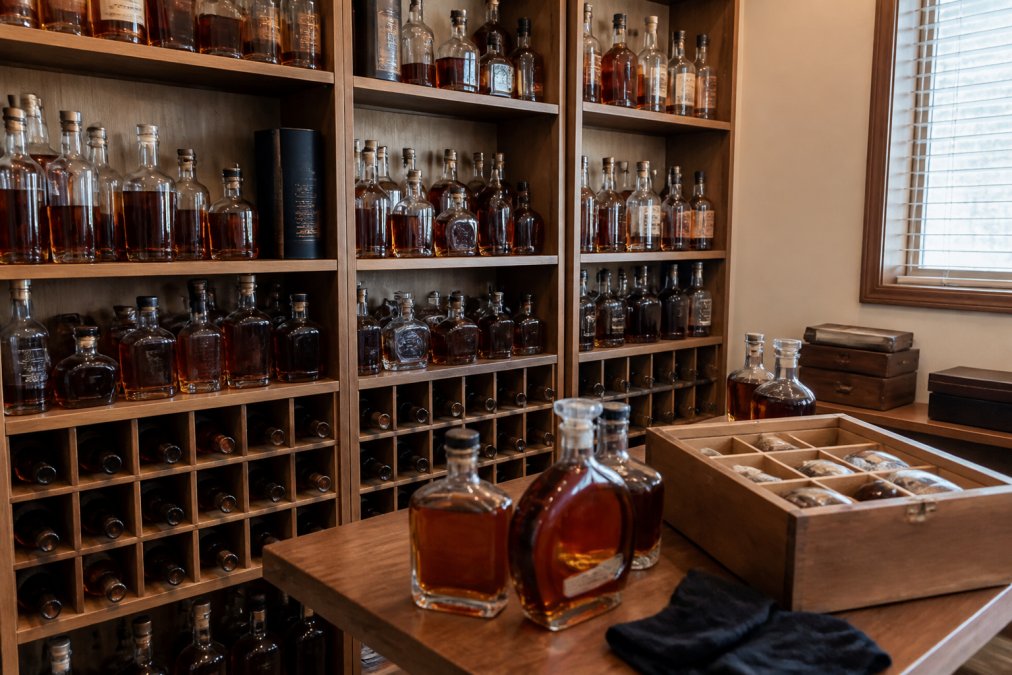
Vertical storage (bottles standing upright) maximizes visual impact and saves floor space but allows air to contact the cork, risking degradation over extended periods. For bottles you plan to open within 2-3 years, this is fine. For rare, sealed bottles meant to age decades, vertical storage introduces unnecessary risk.
Horizontal storage (bottles on their side) keeps liquid in contact with the cork, preventing it from drying out. This is standard for long-term preservation but requires racking systems or wine fridges and makes labels harder to read.
The choice depends on your collection's purpose. If 80% of your bottles will be opened within five years, vertical display cabinets work fine. If you're holding rare bottles as investments, horizontal storage in a climate-controlled environment is worth the space trade-off. Many serious collectors use both: vertical display for current drinking stock and horizontal storage for sealed bottles meant to age.
How to Store Bourbon Long Term
Long-term bourbon storage requires attention to three variables: temperature, light exposure, and humidity.
Temperature and Light Control
Temperature stability is non-negotiable. Bourbon stored at fluctuating temperatures expands and contracts inside the bottle, weakening the cork seal and accelerating oxidation. A stable 55-65°F is ideal; consistency matters more than exact temperature (peer-reviewed research). Basements work better than attics because they naturally buffer temperature swings.
Direct sunlight damages whiskey through UV exposure, breaking down color compounds and accelerating oxidation. Keep your collection away from windows entirely. Use LED accent lighting instead of natural light, it produces minimal heat and no UV radiation.
Many collectors invest in wine fridges or dedicated whiskey storage cabinets with temperature and humidity controls. For collections over 100 bottles, this investment pays for itself in preservation value alone.
Managing Opened vs. Sealed Bottles
Opened bottles present a different challenge than sealed ones. An opened bottle stored upright will last 6-12 months before noticeably declining in quality, depending on headspace (peer-reviewed research). Less liquid means more air contact and faster oxidation.
Store opened bottles upright in a cool, dark place. What matters is minimizing headspace. If you've opened a bottle and drank half, consider consolidating it into a smaller bottle with less air gap.
Sealed bottles can remain upright or horizontal depending on your long-term plans. If you're keeping a sealed bottle for 5+ years, horizontal storage in a temperature-controlled environment is worth the effort. For bottles you plan to open within 2-3 years, upright storage in a cool, dark cabinet is sufficient.
Track which bottles are opened in your inventory system to prevent pulling a "new" bottle only to discover it was opened months ago.
Categorize Your Bottles by Region, Style, and Age
Organization only works if you can find what you want. Choose categorization methods that match how you actually search for whiskey.
Region-based organization groups bourbon, rye, scotch, Irish whiskey, and other spirits separately. Style-based organization groups by flavor profile or mash bill characteristics. Age-based organization separates by stated age or vintage year.
The best approach combines these methods. Primary organization by region or style, secondary organization by age or proof. For example: "Kentucky Bourbon" section divided into "High-Rye, Under 10 Years" and "High-Rye, 10+ Years." Label your shelves or cabinet sections clearly to prevent confusion and keep you accountable to your system.
Whiskey Display Cabinet Ideas and Shelving Selection
Your display method communicates something about your collection. A locked glass cabinet signals serious investment and preservation focus. Open shelving emphasizes accessibility and pride in the collection.
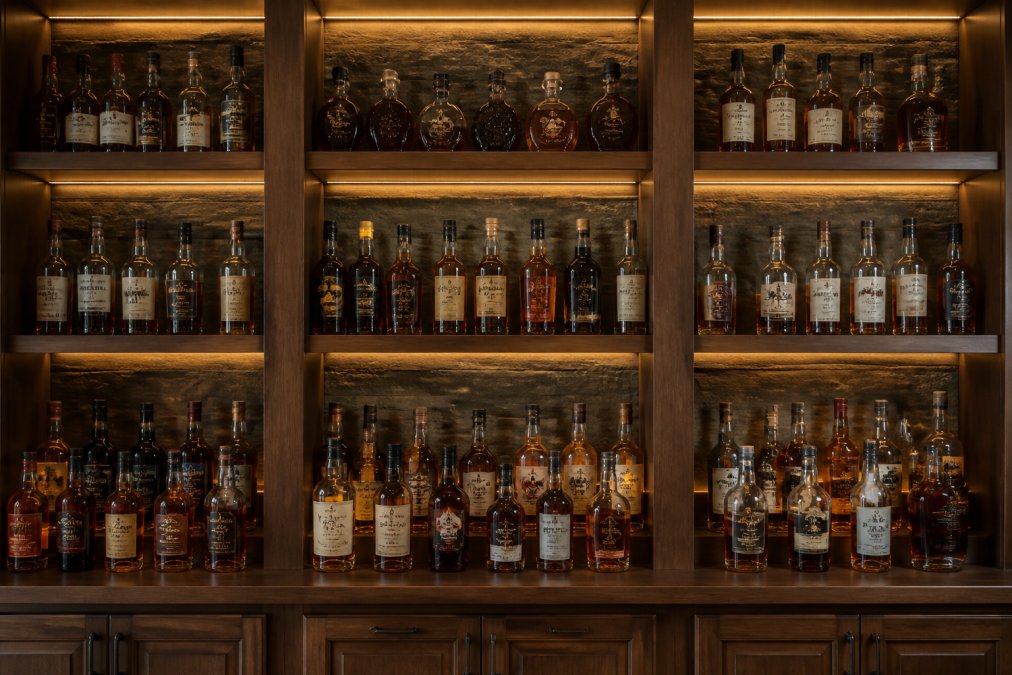
Glass-front cabinets with solid wood shelving offer the best balance for large collections. They protect bottles from dust and accidental damage while allowing visual inspection. Look for cabinets with adjustable shelving to accommodate different bottle heights. Ensure shelves are rated for the weight you're storing; a full shelf of whiskey bottles weighs 50-80 pounds.
LED strip lights mounted under each shelf illuminate bottles below without generating heat. Avoid incandescent bulbs, which produce heat that can affect temperature stability. If your cabinet has a glass front, ensure it's UV-protective.
Open shelving works for smaller collections (under 50 bottles) or bottles you rotate through regularly. Wall-mounted wooden shelves with proper support brackets can handle the weight if installed correctly. The trade-off: open shelves expose bottles to dust, temperature fluctuations, and accidental damage.
For collections over 100 bottles, consider a combination approach. A locked display cabinet holds your most valuable or visually striking bottles. A separate climate-controlled storage unit holds sealed bottles meant for long-term aging.
Solid wood shelves (oak, walnut, cherry) support weight well and develop character over time. Metal shelving is more industrial but allows better airflow. Avoid particle board or MDF for anything beyond temporary storage.
Best Tools for Whiskey Collectors: Digital Inventory Management
Physical organization only gets you halfway there. A large collection demands digital tracking. You need to know what you own, where it is, what it cost, and what you thought of it when you opened it.
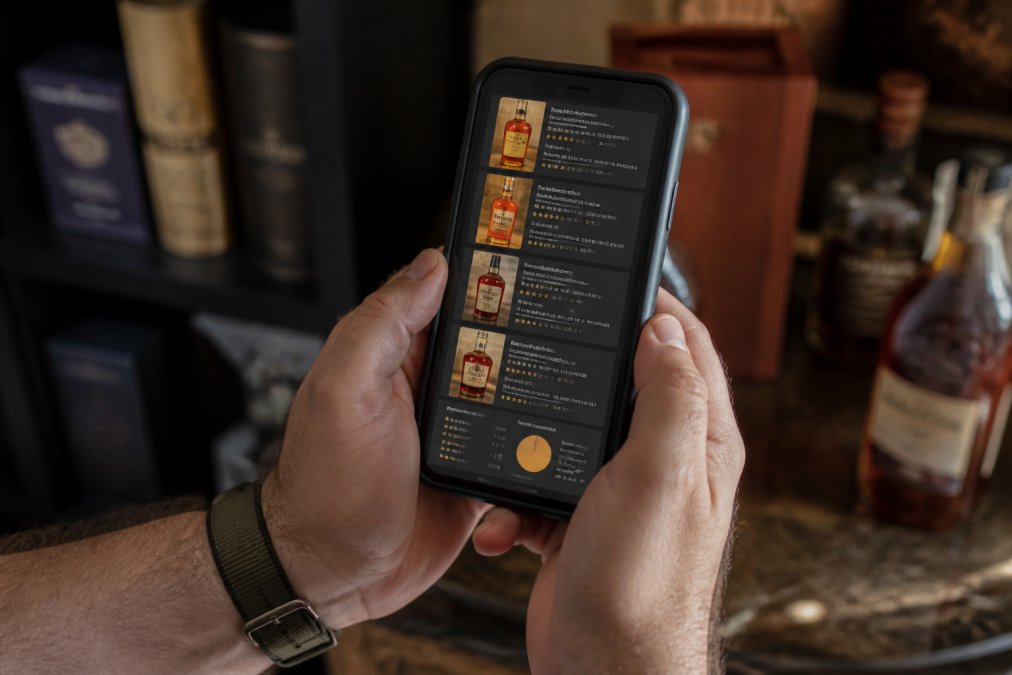
Digital inventory tools solve three problems. First, they create a searchable database so you can find a specific bottle in seconds. Second, they track bottle history, purchase price, tasting notes, opening date, and remaining quantity. Third, they integrate with community features so you can share reviews and get recommendations.
Bourbon Tracker™ is designed specifically for this use case. It's a free, no-download platform built for collectors managing large inventories. You log each bottle with basic details (distillery, proof, age statement), add photos for quick visual reference, and record tasting notes when you open it. The platform's AI-powered recommendation engine learns your preferences from your tasting notes and suggests bottles you're likely to enjoy.
Tracking Tasting Notes and Bottle Rotation
Tasting notes become valuable only if you can reference them later. Digital platforms let you attach detailed notes to each bottle: nose characteristics, palate impressions, finish length, and overall rating.
Structured note-taking works better than free-form. Create a template: "Nose: [descriptors], Palate: [descriptors], Finish: [length and characteristics], Overall: [rating and context]." This consistency makes it easier to compare bottles later and spot patterns in what you actually enjoy.
Bottle rotation prevents waste. Many collectors buy faster than they drink, ending up with dozens of partially-empty bottles that oxidize before they're finished. Track opening dates in your digital system and prioritize finishing bottles that have been open longest.
Insurance and Valuation
A large collection represents real value. Your homeowners insurance typically covers whiskey as personal property, but with limits that may not reflect your collection's actual value. If you own rare bottles worth $500-1,000 each, standard coverage is inadequate.
Document your collection's value using your digital inventory. Record purchase prices for each bottle. For older bottles or rare expressions, research current market value using platforms like Whiskey pricing databases or auction results from specialty retailers.
Review your collection's value annually. Whiskey prices fluctuate based on availability, distillery reputation, and market demand. Understanding your collection's actual value helps you make informed decisions about which bottles to drink and which to hold.
Maintain Your Collection Over Time
Organization isn't a one-time project; it's an ongoing system. Maintenance means physical checks, inventory updates, and environmental monitoring.
Physical checks happen quarterly. Verify that bottles are in their designated locations, that seals remain intact on unopened bottles, and that no leakage has occurred. Catching issues early prevents loss.
Inventory updates happen whenever you open or acquire a bottle. This takes 60 seconds per bottle using a digital platform like Bourbon Tracker™. Photograph the bottle, note the date opened, and add initial tasting impressions.
Environmental monitoring matters if you're using climate-controlled storage. Check temperature and humidity readings monthly, especially during seasonal transitions. If you notice fluctuations, investigate the cause.
Reorganize annually if your collection is actively growing. A quick annual review keeps your system functional without major overhaul.
Organizing a large whiskey collection transforms chaos into a system that works. You know what you own, where to find it, and how to preserve it for years of enjoyment. The physical setup matters, but the real power comes from combining thoughtful storage with digital tracking. Bourbon Tracker™ handles the digital side, letting you log bottles, track tasting notes, and receive personalized recommendations based on your palate. Start with honest inventory assessment, choose a storage method that matches your collection's purpose, and commit to quarterly maintenance. A well-organized collection isn't just easier to manage, it's a collection you'll actually enjoy.
| Organization Method | Best For | Setup Time | Maintenance |
|---|---|---|---|
| Vertical display cabinet | Active drinking collection, visual appeal | 2-4 hours | Monthly checks |
| Horizontal wine fridge | Long-term sealed bottles, investment focus | 1-2 hours | Quarterly temperature checks |
| Open shelving | Small collections under 50 bottles | 3-6 hours | Monthly dust and condition checks |
| Hybrid (display + storage) | Large collections over 100 bottles | 8-12 hours | Quarterly rotation and inventory updates |
Frequently Asked Questions
Q: How do I organize a large whiskey collection without spending hours categorizing bottles?
A: Start by sorting bottles into broad groups: by region (bourbon, Scotch, rye), proof level, or age statement. Then assign each bottle a location in your cabinet or storage area. Use a digital inventory tool to log each bottle once, include the distillery, mash bill, proof, and tasting notes. This upfront effort saves time later when you're searching for a specific bottle or tracking inventory. Most collectors find the initial setup takes 2-4 hours for 100+ bottles, but maintenance is minimal afterward.
Q: What's the best way to store opened bottles to prevent oxidation?
A: Keep opened bottles upright in a cool, dark place away from direct sunlight and heat sources. Cork degradation and oxidation happen faster in opened bottles due to headspace exposure. Minimize air contact by storing bottles with caps tightly sealed. Temperature stability is critical, aim for 55-65°F. Opened bottles last longest when kept in a climate-controlled home cellar or cabinet. For bottles you're actively tasting, consume them within 6-12 months for optimal flavor preservation. Track opening dates using your digital inventory tool so you know which bottles to prioritize.
Q: Should I display my whiskey collection or store it for longevity?
A: The choice depends on your goals. Display cabinets with UV-filtered lighting showcase your collection without causing significant damage, but storage in a dark cabinet preserves bottles longer. If you plan to age bottles or hold them as an investment, prioritize a climate-controlled storage space away from direct sunlight. If you enjoy displaying your collection and regularly taste from it, a display cabinet with proper temperature control and UV protection works well. Many collectors use both: a display cabinet for current favorites and a dark storage area for sealed vintage bottles and long-term holdings.
Q: Can digital tools really handle tracking 150+ bottles without slowing down?
A: Yes, modern inventory platforms designed for whiskey collectors handle large collections efficiently. Cloud-based tools store unlimited bottle records without performance issues. Features like search, filtering by region or proof, and sorting by tasting notes make managing 150+ bottles easier than spreadsheets. Look for platforms that sync across devices, allow batch uploads, and include AI-powered recommendations based on your collection. These tools eliminate the need to manually flip through a physical inventory list every time you want to find a specific bottle or plan your next purchase.
This article was written using GrandRanker
Frequently Asked Questions
Q: How do I organize a large whiskey collection without spending hours categorizing bottles?
A: Start by sorting bottles into broad groups: by region (bourbon, Scotch, rye), proof level, or age statement. Then assign each bottle a location in your cabinet or storage area. Use a digital inventory tool to log each bottle once—include the distillery, mash bill, proof, and tasting notes. This upfront effort saves time later when you're searching for a specific bottle or tracking inventory. Most collectors find the initial setup takes 2-4 hours for 100+ bottles, but maintenance is minimal afterward.
Q: What's the best way to store opened bottles to prevent oxidation?
A: Keep opened bottles upright in a cool, dark place away from direct sunlight and heat sources. Cork degradation and oxidation happen faster in opened bottles due to headspace exposure. Minimize air contact by storing bottles with caps tightly sealed. Temperature stability is critical—aim for 55-65°F. Opened bottles last longest when kept in a climate-controlled home cellar or cabinet. For bottles you're actively tasting, consume them within 6-12 months for optimal flavor preservation. Track opening dates using your digital inventory tool so you know which bottles to prioritize.
Q: Should I display my whiskey collection or store it for longevity?
A: The choice depends on your goals. Display cabinets with UV-filtered lighting showcase your collection without causing significant damage, but storage in a dark cabinet preserves bottles longer. If you plan to age bottles or hold them as an investment, prioritize a climate-controlled storage space away from direct sunlight. If you enjoy displaying your collection and regularly taste from it, a display cabinet with proper temperature control and UV protection works well. Many collectors use both: a display cabinet for current favorites and a dark storage area for sealed vintage bottles and long-term holdings.
Q: Can digital tools really handle tracking 150+ bottles without slowing down?
A: Yes, modern inventory platforms designed for whiskey collectors handle large collections efficiently. Cloud-based tools store unlimited bottle records without performance issues. Features like search, filtering by region or proof, and sorting by tasting notes make managing 150+ bottles easier than spreadsheets. Look for platforms that sync across devices, allow batch uploads, and include AI-powered recommendations based on your collection. These tools eliminate the need to manually flip through a physical inventory list every time you want to find a specific bottle or plan your next purchase.