 how-to
How to Properly Taste Rare Bourbon Whiskey
Table of Contents
- Preparing Your Palate and Setting Up for Success
- Selecting the Right Bourbon Tasting Glass
- How to Nose Bourbon: The Critical First Step
- Taking Your First Sip and Assessing Mouthfeel
- Identifying Flavor Notes and Building Your Palate
- Adding Water to Bourbon: Proof-Aware Tasting
- Recording Bourbon Tasting Notes for Your Collection
- Frequently Asked Questions
Last Updated: October 10, 2026
Preparing Your Palate and Setting Up for Success
To taste rare bourbon properly requires more than just opening a bottle and taking a sip. The technique matters because rare bottles deserve respect, and your palate needs preparation to detect the subtle flavors that make these expressions special.
Start by choosing a quiet environment free from strong odors. Cooking smells, perfume, and cigarette smoke will interfere with your ability to nose the bourbon properly. Room temperature should be comfortable, around 70 degrees Fahrenheit works best. Avoid tasting when you're tired or hungry, as both conditions dull your palate's sensitivity.
Before your tasting session, cleanse your palate with plain water and avoid eating strong foods like garlic, spicy dishes, or anything with intense flavors. Your mouth should be neutral and ready to detect subtle notes. If you're tasting multiple bourbons in one session, start with lighter proof expressions and work your way up to higher proof bottles.
Selecting the Right Bourbon Tasting Glass
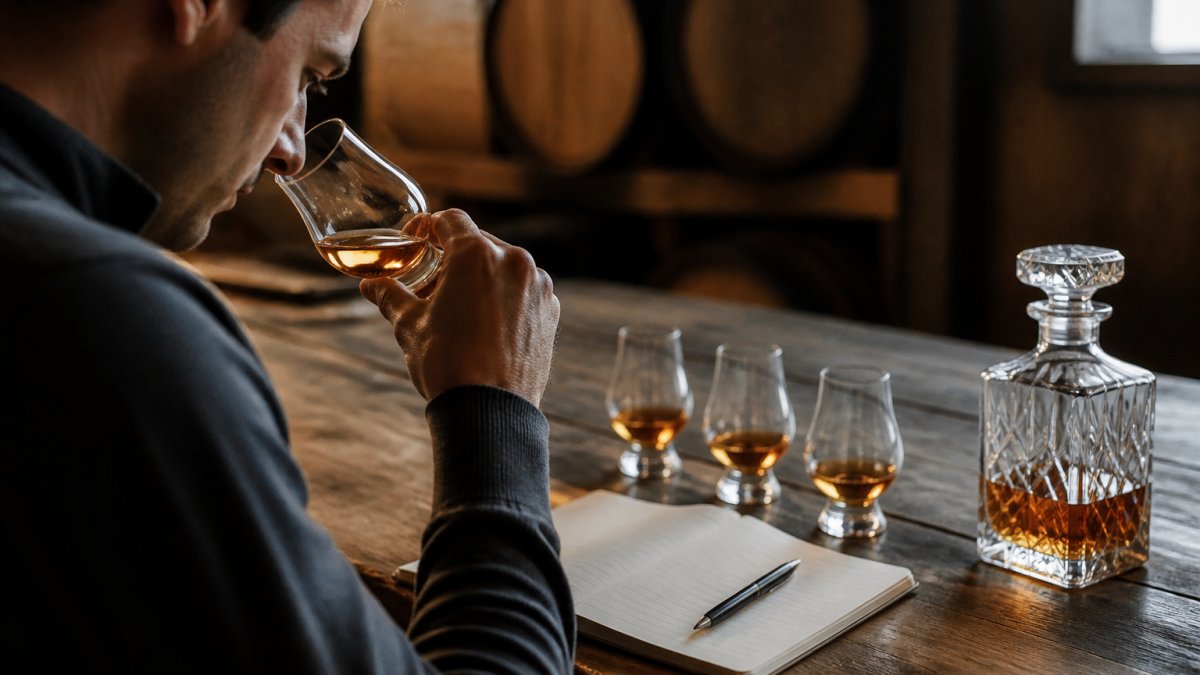
The glass you choose directly impacts what you can smell and taste. A snifter or Glencairn glass is ideal for serious bourbon tasting because both concentrate aromas toward your nose while allowing you to see the color clearly. These glasses have a narrow opening that traps volatile compounds, making it easier to detect subtle scent notes.
Avoid using regular drinking glasses or shot glasses when you taste rare bourbon. They're too wide and don't concentrate the aromas. A standard wine glass works in a pinch, but it won't give you the full sensory experience. The bowl of your tasting glass should be large enough to swirl the bourbon gently without spilling.
Pour about one ounce into your glass. This amount gives you enough bourbon to nose, sip, and assess without overwhelming your palate. The smaller pour also makes it easier to control the tasting experience, especially when working with expensive or rare bottles.
How to Nose Bourbon: The Critical First Step
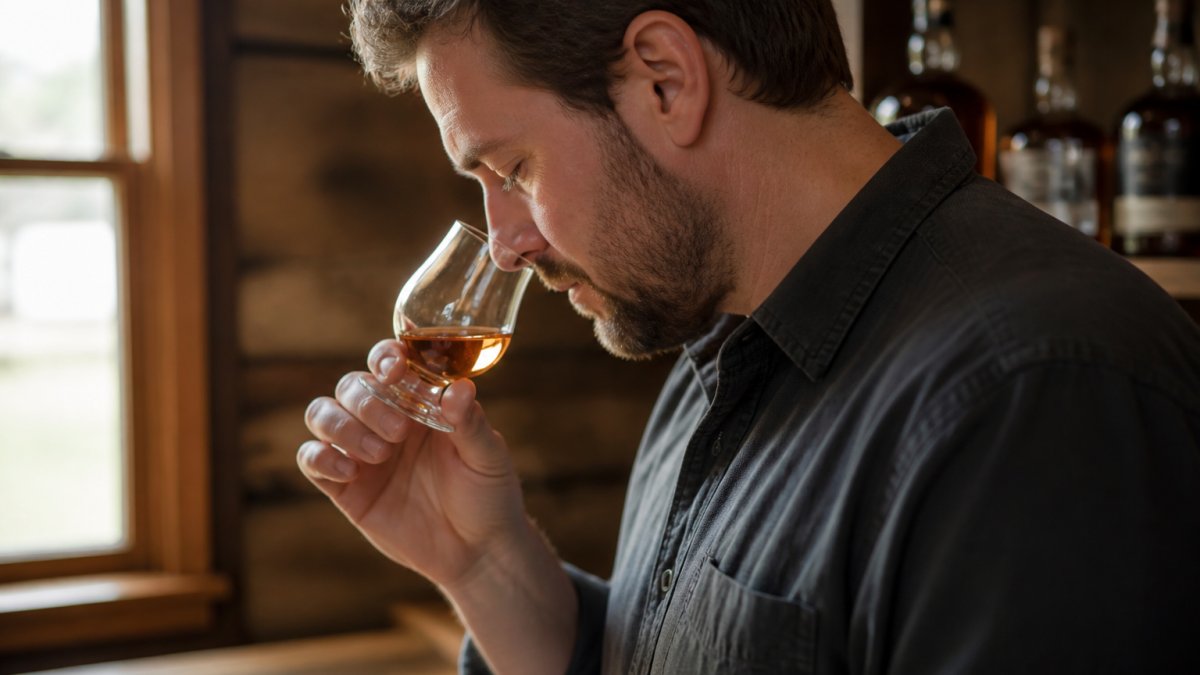
Nosing bourbon is where most of the flavor experience happens. Your sense of smell detects far more nuance than your taste buds can. Hold the glass at eye level first and observe the color, this tells you about the bourbon's age and barrel interaction. Darker color usually indicates longer maturation or higher proof.
Bring the glass to your nose and take a gentle sniff. Don't inhale deeply on your first nose. Strong alcohol vapors can numb your olfactory receptors and actually reduce your ability to smell subsequent notes. A light sniff is enough to detect the primary aromas. Wait a few seconds and nose again, secondary aromas will emerge.
Identify what you smell without overthinking it. Common bourbon aromas include vanilla, caramel, oak, spice, fruit, and leather. Don't worry if you can't name every scent immediately. Your palate develops with practice.
Taking Your First Sip and Assessing Mouthfeel
After nosing, take a small sip, roughly the size of a grape. Let it coat your mouth before swallowing. This is where you assess mouthfeel and texture. Does the bourbon feel smooth, oily, or thin on your palate? High-proof bourbons often have a bolder, warmer sensation, while lower proofs may feel lighter.
Hold the bourbon in your mouth for a few seconds. This allows your taste receptors to register the flavors. You'll notice the initial taste, the mid-palate development, and the finish. The finish is what lingers after you swallow, some bourbons have short, sharp finishes, while others fade slowly and smoothly.
Swallow and note the warmth. This is the alcohol heat, and it's normal. The intensity tells you something about the proof and the bourbon's character. A well-balanced rare bourbon should have warmth without harshness.
Identifying Flavor Notes and Building Your Palate
Flavor notes in bourbon typically fall into a few categories: sweet (vanilla, caramel, toffee, creme brulee), spicy (cinnamon, pepper, clove), fruity (orange peel, apple, cherry), and woody (oak, leather, tobacco). You don't need to identify every note, focus on what stands out to you.
Your palate improves when you taste actively and compare expressions. Try tasting two bourbons side by side to spot differences more easily. Notice which notes appear in one bourbon but not the other. This comparative approach trains your palate faster than tasting single bottles.
Write down what you taste immediately after your session. Your memory of flavors fades quickly, so recording notes while they're fresh is essential. Over time, these notes become a personal reference library that helps you understand your preferences.
Adding Water to Bourbon: Proof-Aware Tasting
Adding water to bourbon is not cheating, it's a legitimate and essential tasting technique, especially for rare, high-proof expressions. Water opens up the bourbon's flavors by diluting the alcohol slightly and allowing more aromatic compounds to volatilize.
The Proof-Aware Protocol
Start by tasting your bourbon neat at full proof. This baseline is critical: you need to know what the whiskey tastes like undiluted before you alter it.
For bourbons 100 proof and above, water addition is especially valuable. High-proof spirits can numb your palate and mask subtle aromas behind alcohol heat. For lower-proof expressions (80-90 proof), water is optional but still useful for revealing secondary notes.
Measured Water Addition
Use distilled or filtered water at room temperature, tap water can introduce chlorine or mineral notes that interfere with tasting. Keep a small dropper bottle or pipette nearby for precise control.
Add water in measured increments:
- First addition: 3-5 drops per 1 ounce of bourbon (roughly 0.5 teaspoon per ounce). This is a conservative first step.
- Wait 30 seconds. Allow the water to integrate and new aromas to emerge.
- Nose the glass again. You'll often detect aromas that were masked by alcohol vapor in the neat pour, citrus, floral notes, or subtle fruit that weren't apparent before.
- Sip and compare. Note how the palate has changed. Does the finish feel smoother? Are spice notes more defined? Is the sweetness more pronounced?
- Second addition (optional): If you want to explore further, add another 3-5 drops and repeat the nosing and sipping cycle.
Do not add more than 0.5 teaspoon (about 2.5 milliliters) per ounce of bourbon total. Beyond that ratio, you risk over-diluting the whiskey and losing its character entirely. For a rare bottle, restraint is key.
Recording Water Effects
In your tasting notes, document the changes water produces. For example: "Neat: alcohol heat dominates, oak forward.
Many collectors find that the "sweet spot" for a particular bourbon becomes clear after one or two water additions. Once you've identified it, you can return to that dilution level on future tastings for consistency and comparison.
Recording Bourbon Tasting Notes for Your Collection
Structured tasting notes transform casual impressions into a searchable, repeatable record that builds your palate over time. For rare bottles, a consistent format and a bias-control method ensure your notes reflect what you actually taste, not what you expect to taste based on price, age, or reputation.
The Tasting Worksheet Framework
Use a standardized template for every bottle. This consistency makes it easier to compare notes later and spot patterns in your preferences. A basic framework includes:
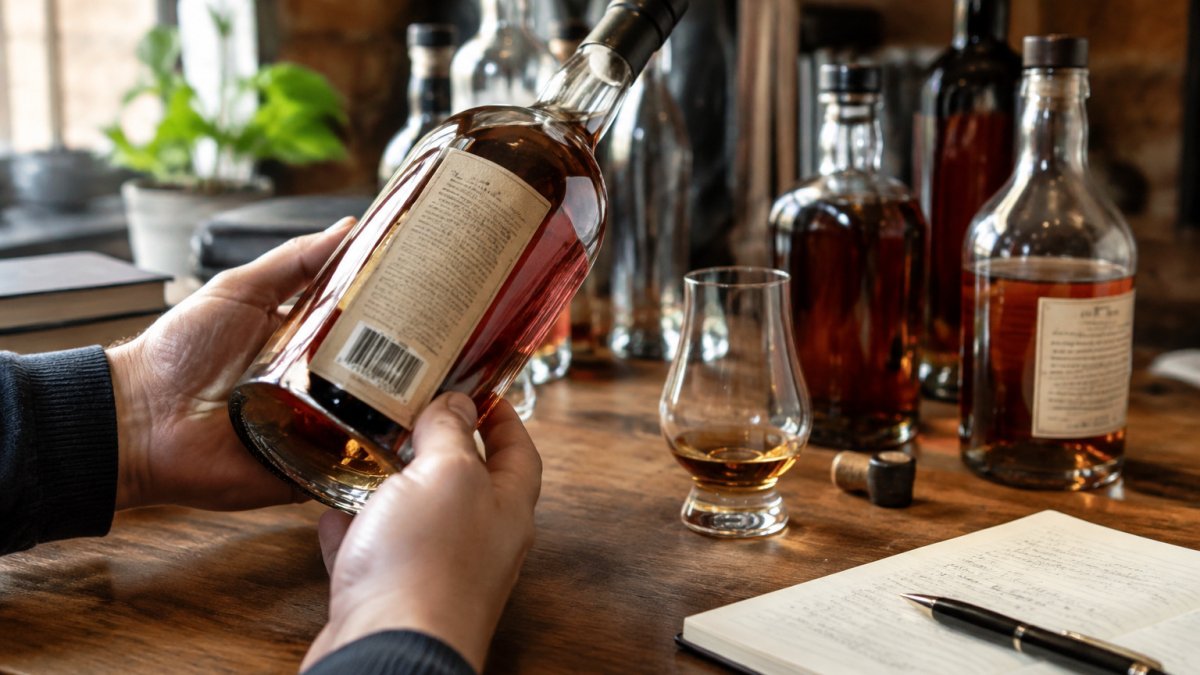
- Bottle details: Distillery, brand, age statement (if any), proof, bottling date, bottle number (if applicable)
- Tasting date and conditions: Date, room temperature, time of day, whether you tasted on an empty or full stomach
- Appearance: Color (pale gold, amber, deep mahogany), clarity, viscosity on the glass (legs or tears)
- Nose (undiluted): Primary aromas (first 10 seconds), secondary aromas (after 30 seconds), any alcohol burn or heat
- Palate (neat): Initial taste, mid-palate development, finish character and duration, mouthfeel (smooth, oily, thin, warming)
- Nose and palate (after water): Changes observed after adding water, new aromas or flavors that emerged
- Overall impression: Balance, complexity, standout characteristics
- Personal rating: A 1-10 scale or a simple "would buy again / would not buy again" judgment
- Price paid (optional): Useful for tracking value over time
Controlling for Expectation Bias
Rare bottles carry price tags and reputations that can bias your palate. You may unconsciously taste what you expect to taste rather than what's actually there. To minimize this bias:
- Blind or semi-blind tasting: If possible, have a friend pour the bourbon into an unmarked glass without telling you the brand or age. Taste and take notes before revealing the identity. This forces you to rely on sensory data, not hype.
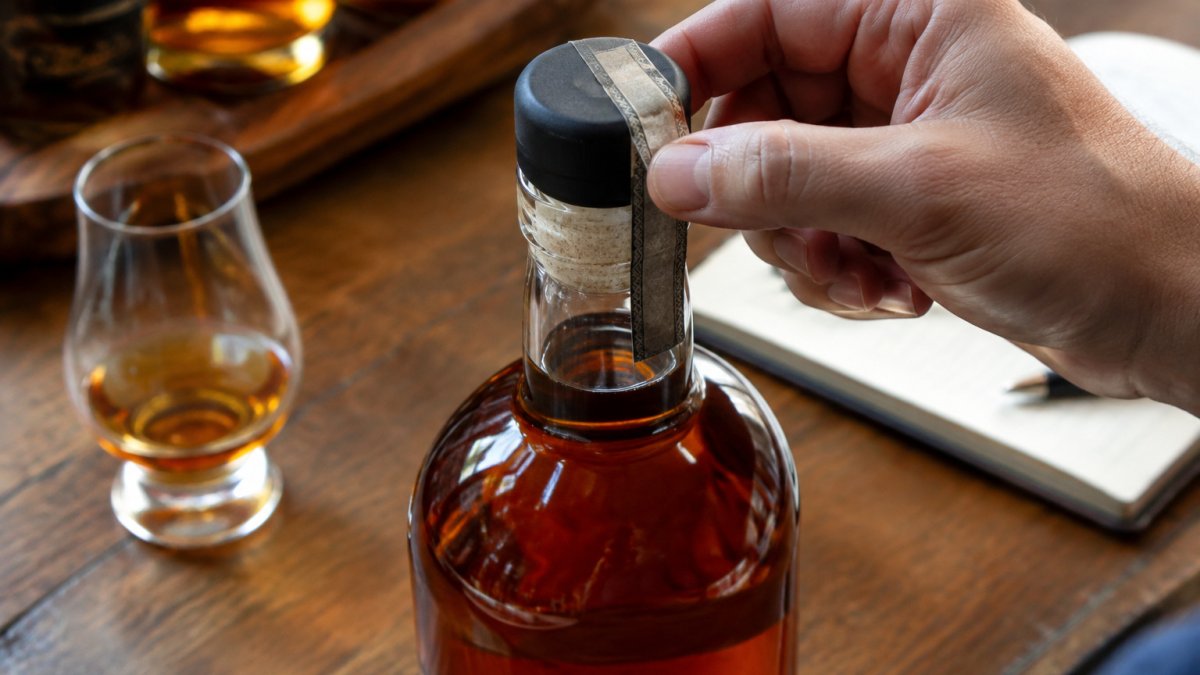
- Delay the reveal: If you can't do a fully blind tasting, cover the bottle label with tape or a paper bag until after you've completed your tasting notes. This simple step reduces the influence of marketing and reputation.
- Compare side-by-side: Taste a rare bottle alongside a well-known, less expensive bourbon of similar proof and age range. The comparison often reveals that the rare bottle's advantages are real, or that the price premium reflects rarity, not flavor superiority.
Palate Calibration Exercise
Build a more reliable palate by training on reference aromas. Bourbon flavor notes fall into predictable families. Before tasting a new rare bottle, spend 10 minutes nosing familiar reference scents:
- Vanilla: Vanilla extract, a vanilla bean, or a bourbon you've tasted before that is clearly vanilla-forward
- Caramel: Actual caramel candy or caramel sauce
- Oak: A piece of oak wood or a heavily oaked wine
- Spice: Cinnamon stick, black pepper, or clove
- Fruit: Orange peel, apple, or cherry (fresh or dried)
After nosing each reference, take a short break (30 seconds) and move to the next. This primes your olfactory memory. When you then nose your rare bourbon, you'll recognize these families more easily and name them with confidence. Over time, your palate becomes more precise.
Building Your Tasting Library
Store your notes in a consistent format, a notebook, a spreadsheet, or a dedicated tasting app. The goal is to create a personal reference library. After 10-15 tastings, patterns emerge: you'll notice which flavor families you prefer, which proof ranges suit your palate, and which distilleries consistently deliver what you enjoy.
When you're considering opening another rare bottle or making a purchase, review your past notes. You'll make faster, more confident decisions based on your own sensory history rather than critic scores or marketing claims. For rare, expensive bottles, this discipline pays dividends.
Frequently Asked Questions
How should you nose bourbon before tasting it?
Start by holding the glass at a 45-degree angle and bring it slowly to your nose. Take short, gentle sniffs rather than one deep breath, this prevents alcohol burn and lets you identify aroma layers. Pause between sniffs to reset your olfactory receptors. Notice the initial nose (bright, fresh notes), then the mid-nose (developing complexity), and finally the finish nose (deeper, lingering scents). This multi-stage approach reveals the full aromatic profile before you taste.
Should you add water to rare bourbon?
Adding a few drops of water to rare bourbon can open up flavors and reduce alcohol burn, especially for bottles above 100 proof. Water dilutes the ethanol slightly, allowing your palate to detect subtle notes that high proof can mask. Start with just a few drops and taste between additions, you control the intensity. For truly rare bottles, consider tasting neat first to experience the distillery's intended profile, then add water to explore different dimensions. This approach respects the rarity while maximizing what you learn.
What should you look for when tasting bourbon?
Focus on four elements: color (amber to deep mahogany indicates age and oak exposure), aroma (vanilla, caramel, spice, leather, citrus), flavor (sweetness, oak, warmth, complexity), and finish (how long flavors linger and evolve). Notice the mouthfeel, is it thin, medium, or full-bodied? Pay attention to alcohol heat and how it changes with water or time in the glass. Compare what you expect based on age and proof against what you actually experience. This structured approach helps you build a repeatable tasting protocol.
How do you write bourbon tasting notes that are actually useful?
Record the bottle name, proof, age (if stated), and date tasted. Describe the nose in layers, then note the palate, specific flavors (vanilla, cinnamon, orange peel) rather than vague terms like 'nice.' Comment on mouthfeel and finish length. Include your personal reaction and how the bourbon compares to others you've tasted. Use a platform like Bourbon Tracker™ to organize these notes with your collection, making it easy to spot patterns in your preferences and track how your palate develops over time.
Tasting rare bourbon whiskey properly takes practice, but the technique itself is straightforward: prepare your palate, choose the right glass, nose carefully, sip mindfully, and record your impressions. Each bottle in your collection deserves this level of attention. Use Bourbon Tracker™ to organize your tasting notes, track your preferences, and discover new expressions tailored to your palate, all without needing to download anything.