 How-to
Best Way to Track Whiskey Bottle Provenance
Last Updated: November 11, 2026
Quick Summary
The best way to track whiskey bottle provenance is to keep one dated record per bottle, starting the day you buy it. Include photos of the labels and seal, batch and bottle numbers, the receipt, and every ownership transfer with its supporting evidence. Store copies in more than one place.
- Create one provenance record per bottle, not per batch, since bottles from the same release can differ.
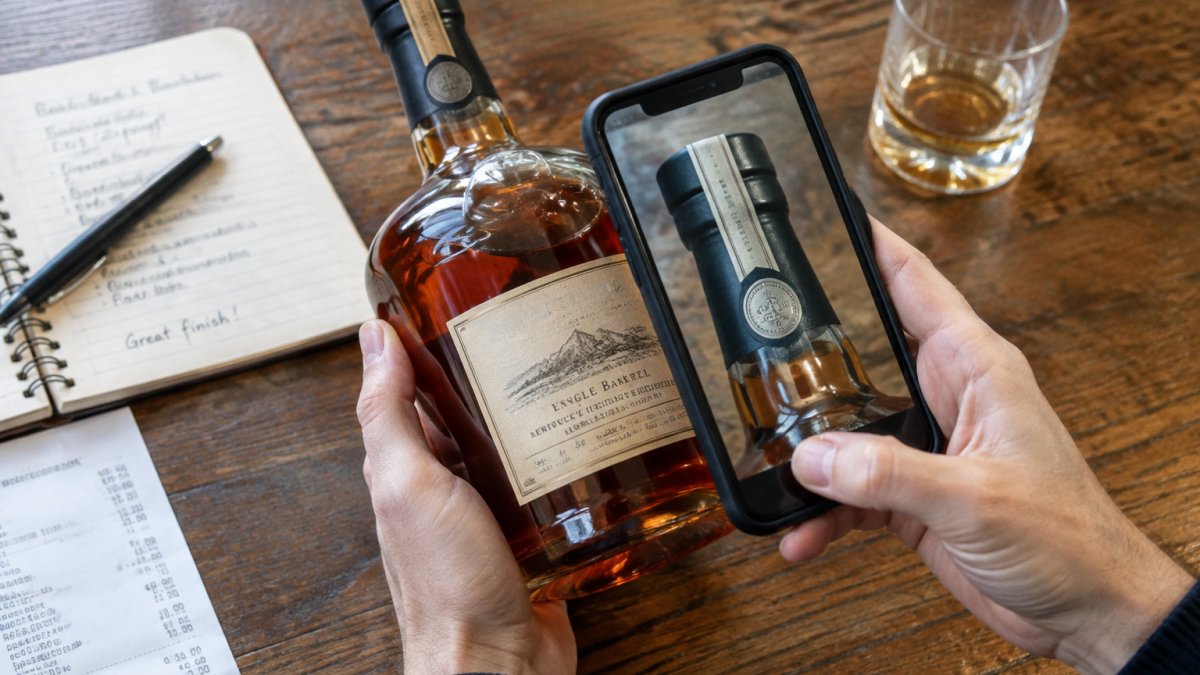
- Photograph the front label, back label, neck seal, and bottom stamp in daylight on the day you acquire it.
- Transcribe batch numbers, bottle numbers, and laser codes exactly as printed, including leading zeros.
- Log each ownership transfer with date, parties, method, price, and attached evidence like a receipt.
- Keep backups in three places and export your full record at least once a year.
Table of Contents
- What Whiskey Bottle Provenance Actually Covers
- Build a Provenance Record for Each Bottle
- Document Purchase History in a Simple Template
- Check Authenticity and Watch for Counterfeit Signs
- Track Ownership Transfers and Chain of Custody
- Choose an Inventory App or Spreadsheet That Holds Your Records
- Start Your Provenance Record With Your Next Bottle
- Frequently Asked Questions
Most whiskey collectors can tell you what they paid for a bottle. Far fewer can tell you where it came from, who owned it before them, or whether the seal is original. That gap is what provenance tracking closes, and it is the core of the best way to track whiskey bottle provenance: a written, dated record that follows each bottle from store shelf to your cabinet.
What Whiskey Bottle Provenance Actually Covers
Provenance is the documented history of a bottle. It answers three questions: where the bottle came from, who has owned it, and whether its details can be confirmed.
A complete record usually includes:
- Bottle identity: distillery, expression, bottling date, batch and bottle numbers
- Acquisition: retailer or seller, date, price paid, and receipt
- Condition: seal status, fill level, label condition, and any damage
- Ownership: every transfer, trade, or gift, with dates
- Storage: where and how the bottle has been kept
Think of provenance as a file, not a single fact. One receipt proves a purchase. A full record proves the bottle's story.
Build a Provenance Record for Each Bottle
Start with one record per bottle, not per batch. Two bottles from the same release can have different histories, and that difference is what matters for value and authenticity.
For each bottle, capture these details the day you acquire it:
- Take clear photos of the front label, back label, neck seal, and bottom stamp.
- Write down the batch and bottle numbers exactly as printed.
- Save the receipt or order confirmation as a digital file.
- Note the date you received the bottle and the source.
A common mistake is waiting. Labels get separated from boxes, and receipts get lost. Record it the same day.
Watch out: photos taken in poor light can hide small label differences that matter later. Shoot in daylight and include a ruler or coin for scale.
Document Purchase History in a Simple Template
You do not need a complicated system. A single template works for most collectors. Use these fields for every bottle:
| Field | Example |
|---|---|
| Bottle name | Example Single Barrel, 2019 release |
| Batch / bottle number | B-1142 / 0387 |
| Seller | Local shop or auction house |
| Purchase date | March 3, 2025 |
| Price paid | $89.99 |
| Receipt saved | Yes, filename attached |
| Current status | Sealed, fill level full |
Keep the template in a spreadsheet or notes app so you can search and sort it. Consistent entries matter more than fancy formatting. Use the same date format and the same seller names every time.
Check Authenticity and Watch for Counterfeit Signs
Provenance proves history, but authenticity proves the bottle is what it claims to be. The two work together: a receipt with no authenticity check is just a story, and an authenticity check with no receipt is just an opinion. Build both into the same bottle record.
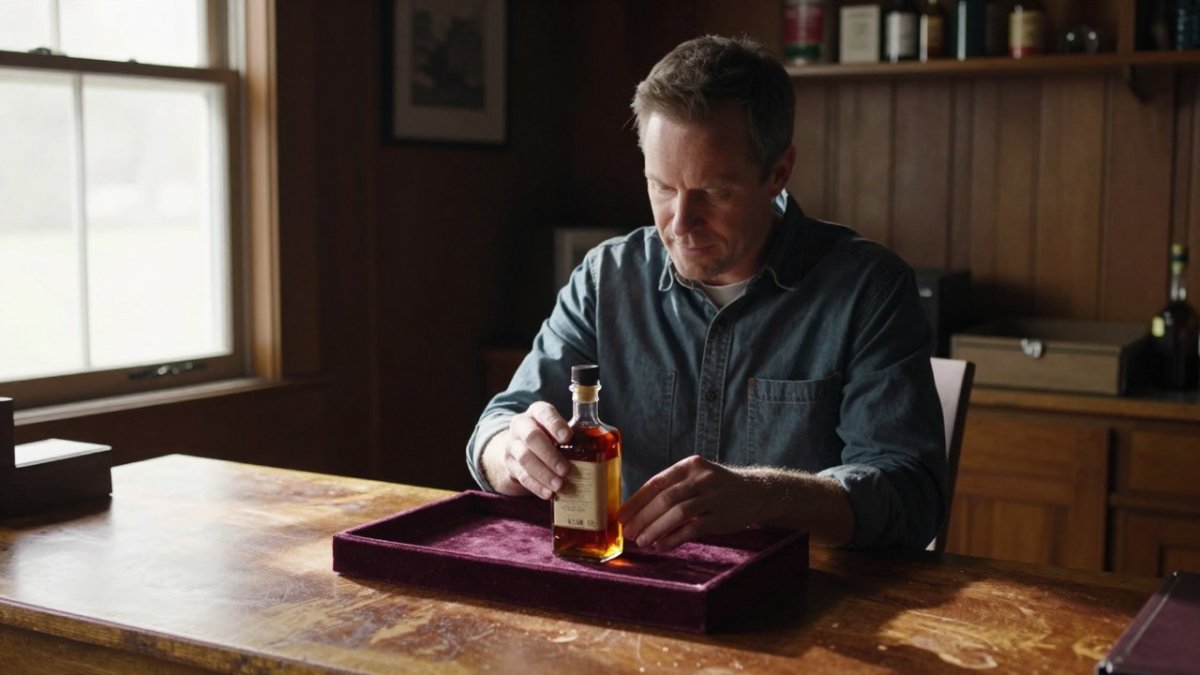
Start by documenting the physical bottle the day it arrives, before you open or move it. Photograph these four areas in daylight, with the bottle upright and the camera square to the surface:
- Front label: full frame, then a close-up of the distillery name, expression, and any age statement.
- Back label: the government warning, net contents, and any importer strip. Importer strips are a common tell on bottles sold outside their original market.
- Neck seal and closure: the capsule, tax strip, or cork, including any shrink wrap and its seams.
- Bottom stamp and laser codes: the glass mold numbers and any etched or laser-printed codes on the base or lower heel.
Then transcribe, do not just photograph. Write the batch number, bottle number, laser code, and any barrel or rickhouse identifiers exactly as printed, including leading zeros and letter prefixes. A photo can be blurry or lost; a typed string can be searched and compared later.
What to compare against. Most producers publish release details for limited bottlings, and distillery customer service will confirm a batch or bottle number if you ask with the code in hand. Distillery official product and batch information is the best starting point.
Warning signs worth logging, not just noticing. When something looks off, record it in the bottle file with a photo and a one-line note. Patterns that commonly indicate a problem:
- Label text that is blurry, misaligned, or uses a font that does not match known releases of the same expression.
- Neck seals that look glued, sit crooked, or do not match the capsule style used in that bottling year.
- Batch or laser codes that do not match the bottling year, or that are missing where the producer is known to stamp them.
- Packaging that feels too new, too clean, or too generic for a bottle claimed to be decades old.
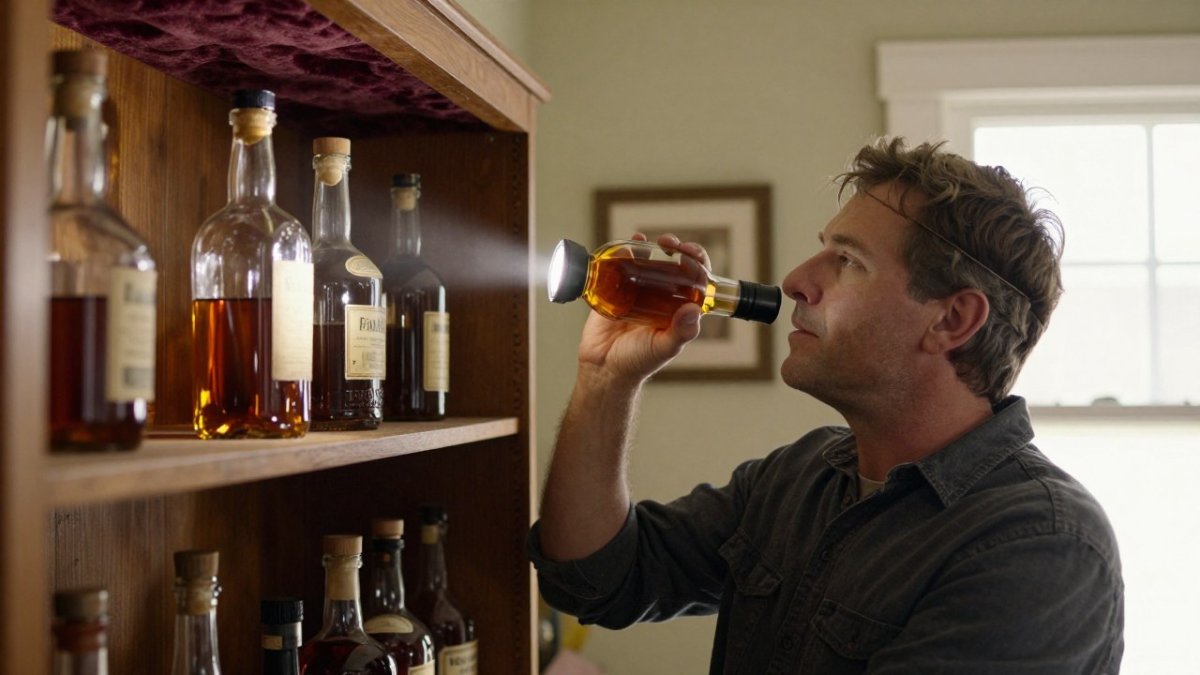
- Fill level that is inconsistent with the stated storage history, a bottle described as cellar-kept for 30 years should not show fresh evaporation patterns.
Watch out: a single warning sign is not proof of a fake, and a clean photo set is not proof of authenticity. Treat the record as evidence to weigh, not a verdict, and note your confidence level (confirmed, likely, unverified) next to each authenticity entry.
For detailed guidance on spotting fakes, read our guide on how to buy authentic vintage bourbon bottles safely. It covers red flags at the point of sale, which is often where fakes enter a collection.
Labels are a frequent point of failure. Our walkthrough on how to identify authentic vintage bourbon labels shows what to compare under good light.
If you are unsure whether a seal has been opened or replaced, is your whiskey bottle seal actually intact? explains the signs to check.
Finally, link every authenticity artifact, photos, code transcriptions, producer replies, and reference screenshots, to the same bottle ID you use for purchase and transfer records. That link is what turns a folder of images into a provenance file someone else can audit.
Track Ownership Transfers and Chain of Custody
Every time a bottle changes hands, its record should change too. Chain of custody is what separates a documented collection from a pile of bottles with unclear histories, and it is the part of provenance that buyers, insurers, and heirs actually rely on.
Log each transfer with five fields. Keep them identical for every event so the record stays sortable:
- Date of transfer
- Previous owner and new owner (name or consistent handle)
- Method: sale, trade, gift, auction, inheritance
- Consideration: price paid or "gift" / "trade" with the item exchanged
- Evidence: receipt, payment confirmation, auction invoice, signed note, or message thread
Preserve the evidence, not just the fact. A transfer log with no supporting file is a claim. Attach at least one artifact per transfer and name it with the bottle ID and date so it can be matched later, for example, a receipt PDF, a screenshot of a payment confirmation, or a photo of a hand-written gift note.
Store records in three places. A common pattern among collectors is primary storage in a cloud folder, a local export on a computer, and an offline copy on an external drive or printed binder. The point is redundancy: a lost phone or a closed account should not erase a bottle's history. Export your full record at least once a year, and after any significant acquisition, so the data is portable and not locked into one app.
Write the record for a stranger. Assume the person reading it later, a buyer, an adjuster, an heir, has never seen the bottle. That means each entry should stand alone: what the bottle is, where it came from, what was paid, what evidence exists, and where that evidence is stored.
Watch out: informal transfers are where provenance most often breaks down. A trade with a friend or a bottle inherited from family still needs a dated entry and, ideally, a short signed or messaged note from the previous owner. Without it, the next owner has to rebuild the history from memory.
Privacy and resale. Your collection data can reveal what you own, what you paid, and where you keep it. Before sharing a public collection or profile, decide which fields stay private, purchase prices, storage locations, and seller identities are common ones to hide. If you plan to resell, expect buyers to ask for the acquisition record, authenticity photos, and transfer history; having them already organized shortens the conversation and supports the price.
This matters when you sell, insure, or pass a collection to family. Without a transfer log and its evidence, the next owner has to rebuild the history from memory, and a bottle with no documented chain of custody is valued as an unknown, not as a proven one.
Choose an Inventory App or Spreadsheet That Holds Your Records
The best tool is the one you will actually use. Bourbon Tracker™ is a free platform for logging tasting notes, managing a wishlist, and tracking bottles without any download.
When you compare options, check for:
- Fields for batch numbers, receipts, and transfer history
- Photo attachments per bottle
- Easy export, so your data is never locked in
- Clear privacy controls for your collection data
A spreadsheet is a solid, free choice if you want full control. The downside is manual entry and no barcode scanning. Whichever you choose, export a backup at least once a year. For a direct comparison, see Distiller vs WhiskeyShelf: which app is better for collectors?
Start Your Provenance Record With Your Next Bottle
You do not need to fix your whole collection in one weekend. Start with the next bottle you buy. Photograph it, log the batch number, save the receipt, and create its record that day.
Then add older bottles one at a time, starting with the most valuable or hardest to verify. Over time, you will build a provenance file you can rely on.
Start tracking your collection for free and build your provenance history from your next pour.
Bourbon Tracker™ is free to use and requires no download.
Frequently Asked Questions
Is there an app that can track whiskey bottles?
Yes. Several apps let you log bottles, purchase details, and tasting notes. Bourbon Tracker is free, needs no download, and works from a browser. Before committing, check whether the app stores receipts, photos, and batch numbers, since those fields matter most for provenance. Export your data regularly so a shutdown does not strand your records.
What information should I record to track a whiskey bottle's provenance?
Record the distillery, bottling date, batch or lot number, bottle number if it is numbered, and the label and packaging details. Add the acquisition date, the seller or retailer, the price paid, and a copy of the receipt. Photograph the front label, back label, neck seal, and any box or tube. If you later sell or gift the bottle, log the transfer date and the recipient. Checking batch numbers and packaging against known production runs is a good habit, so note these details at purchase time.
How can I verify a whiskey bottle's authenticity?
Start with the documents: compare the batch number, bottling date, and packaging against the distillery's published information or known production runs. Inspect the label for consistent printing, spelling, and alignment, and check that the seal and cap match the brand's standard. Compare the bottle with recent auction results for similar releases. Buy high-value bottles from established retailers or auction houses that give written authenticity guarantees, and keep every receipt and listing, since these form your evidence if a question arises later.
Does a bottle's provenance affect its value?
Often, yes. Collectors and buyers pay more for bottles with a clear, documented history, including purchase receipts, original packaging, and proof of storage conditions. Unclear origins make a bottle harder to sell and can lower the price, especially for limited or rare releases. Provenance records do not guarantee a price, since market demand, condition, and fill level also matter, but a well-documented bottle is easier to appraise and sell with confidence.