 how-to
How Do You Read a Whiskey Mash Bill Label?
Quick Summary
To read whiskey mash bill labels, first find the grain recipe on the back label or the producer's website. Then read the percentages, since corn must be at least 51% of a bourbon mash bill, and use the grain order to spot high rye or wheated styles.
- Check the front and back labels first, then the producer's website, for the mash bill.
- Percentages are shares of the total grain bill by weight and should add up to 100%.
- Corn must make up at least 51% of a bourbon mash bill under United States federal standards.
- Rye listed second after corn suggests a high rye bourbon; wheat in that spot suggests a wheated bourbon.
- Grain percentages are a useful clue, but barrel char, aging, and proof also shape the flavor.
Table of Contents
- What Is a Whiskey Mash Bill?
- Step 1: Find the Mash Bill on the Label or Producer Site
- Step 2: Read the Grain Percentages Correctly
- Step 3: Identify High Rye and Wheated Bourbons
- Step 4: Compare Grains to Flavor (With Caveats)
- Bourbon, Rye, Scotch: How Grain Rules Differ
- Tracking Mash Bills and Tasting Notes in Bourbon Tracker™
- Frequently Asked Questions
Last Updated: October 29, 2026
This guide shows you how to read whiskey mash bill labels step by step, so you can tell what's in the bottle before you pour it. The mash bill is the recipe of grains a distillery uses, and it shapes the flavor more than most people expect. Knowing how to read it helps you compare bottles and choose what to add to your collection next.
A mash bill is the grain recipe used to make a whiskey. Most labels don't print it, so you often need to look at the producer's site or the bottle's back label to find it.
What Is a Whiskey Mash Bill?
A whiskey mash bill is the mix of grains that goes into the fermentation mash. Corn, rye, wheat, and malted barley are the usual grains. The percentages tell you how much of each grain the distiller used by weight.
A bourbon must use at least 51% corn under United States federal standards. The rest of the mix is up to the producer. That leaves room for very different flavors from one bottle to the next.
Step 1: Find the Mash Bill on the Label or Producer Site
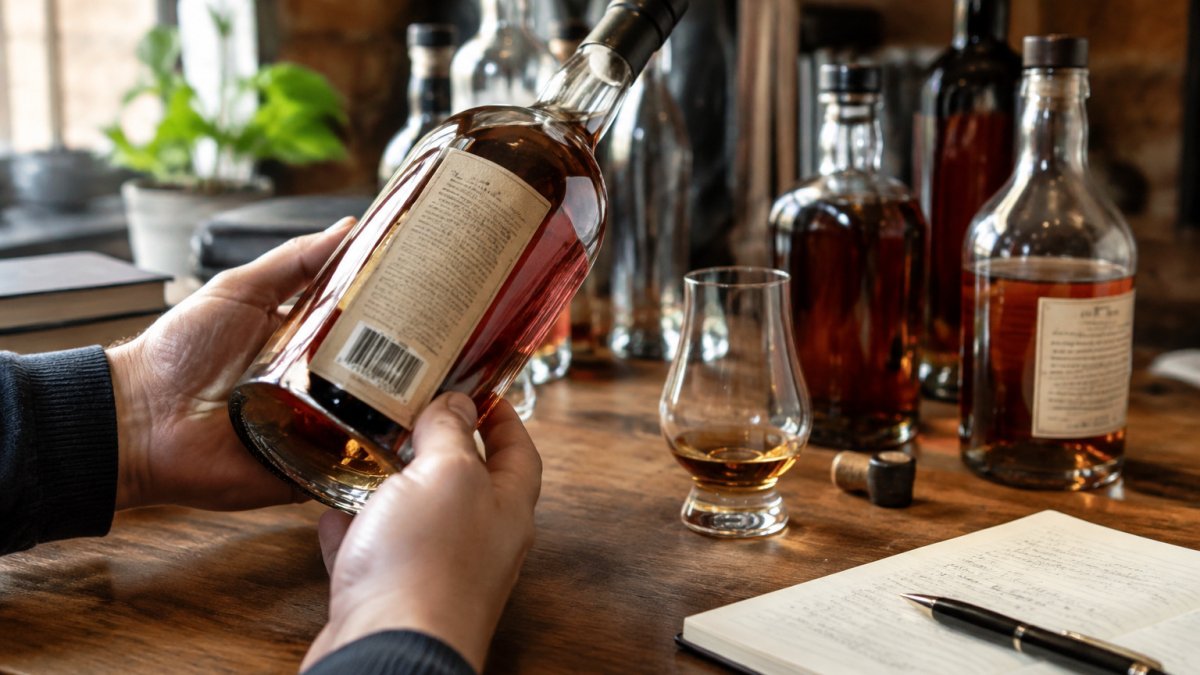
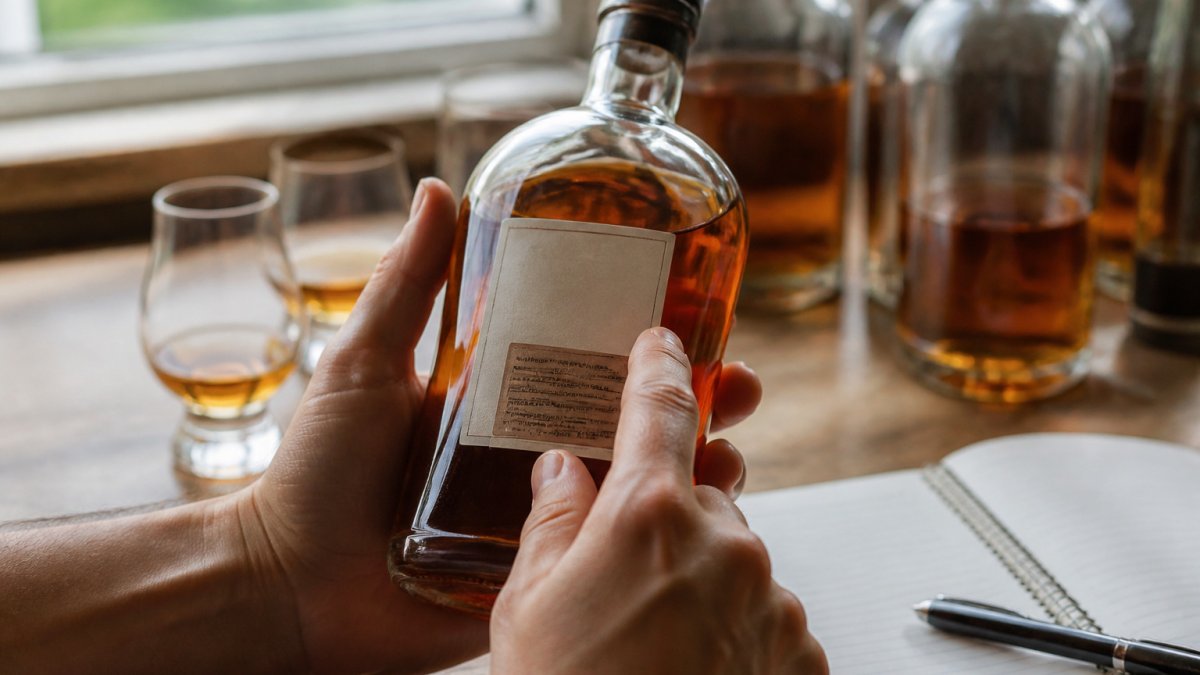
Start with the front and back labels. Some bottles list the mash bill outright, often as a line like "Mash Bill: 75% corn, 15% rye, 10% malted barley." Others say nothing about it, so use these mash bill labels as your first clue before you look elsewhere.
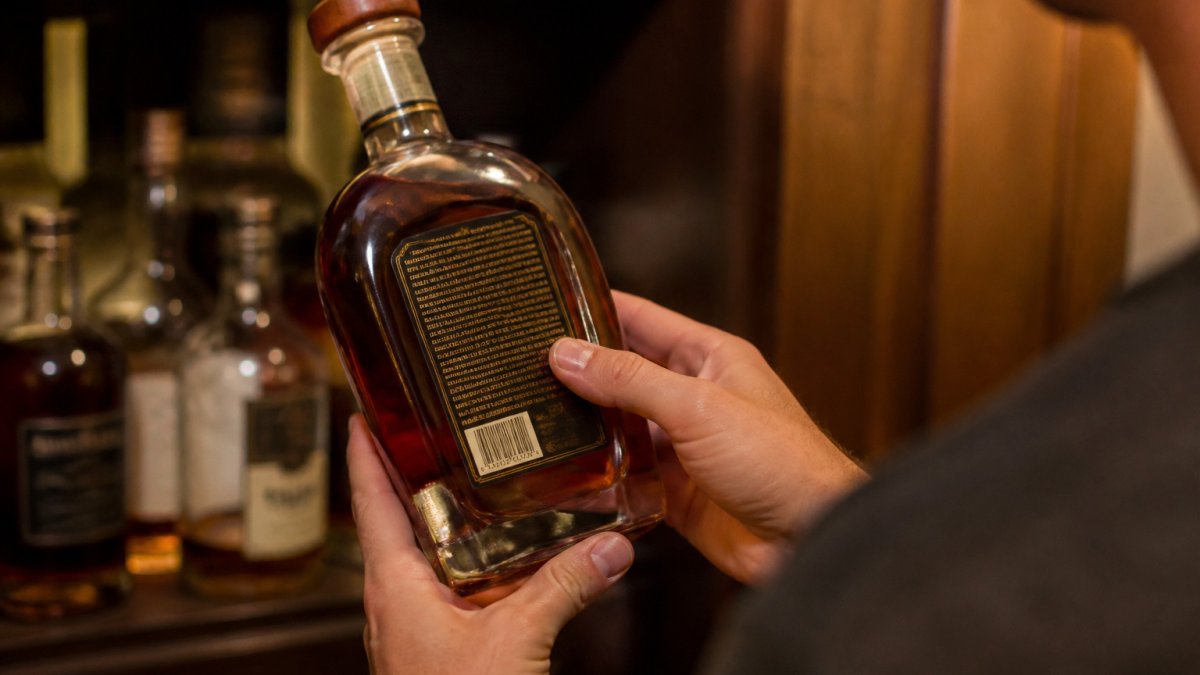
If the label is silent, check the producer's website. Many distilleries publish their recipes on product pages or in fact sheets. If you can't find it there, a quick search of the brand name plus "mash bill" usually turns up enthusiast forums and reviews that dig into the details.
Keep in mind that some brands don't disclose their grain recipe at all. That's a fact about the label, not a sign of poor quality.
Step 2: Read the Grain Percentages Correctly
Percentages on a mash bill are shares of the total grain bill by weight, and they should add up to 100%. That sounds simple, but labels present grain information in several different formats, and each format tells you something different. Before you compare bottles, identify which of these you are looking at:
- A full disclosed recipe. The label or producer page lists every grain with a percentage, such as "75% corn, 15% rye, 10% malted barley." This is the most useful format because you can compare exact shares across bottles.
- A partial disclosure. The label names the grains and gives one or two percentages but leaves others unstated, or lists grains in descending order without numbers. You can still infer relative prominence from order, but you cannot calculate exact shares.
- A general grain list. The label says something like "made from corn, rye, and malted barley" with no proportions. This confirms which grains are present but tells you nothing about how much of each is used.
- No grain information at all. Some producers treat the recipe as proprietary. That is a disclosure choice, not a quality signal, and it means you have to rely on other label details and your own tasting.
A common pattern is that the first grain listed is the largest share, especially in bourbon, where corn must be at least 51% of the mash bill. If a label lists corn first and rye second, you can reasonably read that as a corn-forward recipe with rye as a secondary grain, even if the exact percentages are missing.
Here is what the main grains tend to contribute:
- Corn adds sweetness and a round, full body. In bourbon it is the majority grain by law.
- Rye adds spice, pepper, and a drier finish. Higher shares tend to push the whiskey in a spicier direction.
- Wheat adds a softer, gentler profile and is often used in place of rye.
- Malted barley supplies enzymes that help convert starch to sugar during fermentation and adds a little maltiness. It is usually a small share, often in the 5% to 15% range, though some recipes use more.
Watch for percentages that do not add up to 100%, or that are rounded so heavily that the shares are approximate. A label that says "70% corn, 20% rye, 10% malted barley" is a clean, complete recipe. A label that says "high rye" without numbers is a marketing claim, not a recipe, and you should treat it as a hint rather than a measurement.
Worked Example: Reading a Typical Bourbon Label
Say a label reads: "Mash bill: 70% corn, 20% rye, 10% malted barley." Here is how to break it down:
- Corn is 70%, so the base is sweet and full-bodied.
- Rye is 20%, a fairly high share, so expect some spice and a drier edge.
- Malted barley is 10%, which supports fermentation and adds a little malt character.
Now compare it to a bottle with 68% corn, 16% wheat, and 16% malted barley. That second bottle has no rye at all, so it is likely to taste softer and rounder. You can read that difference straight off the label, even before you pour.
A third bottle might list only "corn, rye, malted barley" with no percentages. In that case, you know rye is present but not how prominent it is. You can use the order of the grains as a rough guide, then confirm with a taste. This is exactly the situation where a tasting log pays off: over several bottles, you can compare your impressions against whatever grain information each label provides.
The article lays out the grain roles and the four formats labels use, which a quick reference can sum up.
| Grain | Typical effect on flavor | Typical share noted in article |
|---|---|---|
| Corn | Sweetness, full body | Must be at least 51% in bourbon |
| Rye | Spice, drier finish | Higher share pushes spicier |
| Wheat | Softer, gentler profile | Often replaces rye |
| Malted barley | Fermentation enzymes, some maltiness | Often 5% to 15% |
Step 3: Identify High Rye and Wheated Bourbons
Two common bourbon styles are worth recognizing. A high rye bourbon uses more rye than most, often 20% or above. It tends to taste spicier and drier. A wheated bourbon swaps rye for wheat, which tends to taste softer and sweeter.
To spot them, look for a grain line where rye or wheat takes the second spot after corn. You can also learn to identify high rye and wheated bourbons step by step. If rye is listed as the second grain, you're likely looking at a high rye bourbon. If wheat takes that spot and no rye appears, it's a wheated bourbon.
Step 4: Compare Grains to Flavor (With Caveats)
Grain percentages give useful clues about flavor, but they don't tell the whole story. Barrel char, aging time, proof, and the distiller's yeast all affect what ends up in your glass. Two bourbons with identical mash bills can taste quite different.
Use the mash bill as a starting point. If you like spicy whiskeys, a higher rye share is a good sign. If you prefer smooth, mellow pours, look for higher corn or a wheated recipe. Then taste to confirm.
Bourbon, Rye, Scotch: How Grain Rules Differ
Each whiskey category follows its own grain rules, and those rules determine what a mash bill label can and cannot tell you. Applying one category's conventions to another is one of the most common reading mistakes, so it helps to compare them side by side.
Bourbon must be made from a mash bill of at least 51% corn and aged in new charred oak containers. The remaining 49% is up to the producer, which is why bourbon mash bills vary so widely: a high rye bourbon might use 20% or more rye, while a wheated bourbon swaps rye for wheat.
Rye whiskey in the United States must be made from at least 51% rye. That flips the bourbon pattern: rye is the majority grain, and corn and malted barley play supporting roles.
Scotch whisky is made in Scotland and follows Scottish regulations rather than American ones. Single malt Scotch is made from malted barley at a single distillery, while blended Scotch combines malt and grain whiskies (The Scotch Whisky Regulations 2009).
Other American categories have their own thresholds, which vary by style. Each category's majority grain shapes what the mash bill label is likely to disclose and how you should read it.
When you compare bottles across categories, check which rules apply before you judge the grain numbers. A 51% rye whiskey and a 20% rye bourbon are not describing the same thing, even though both labels mention rye. The category tells you what the percentages mean; the percentages alone do not.
Tracking Mash Bills and Tasting Notes in Bourbon Tracker™
Once you start reading mash bills, it helps to keep a record. Bourbon Tracker™ lets you log tasting notes and organize your bottles in one place, so you can see patterns across grain recipes over time.
You can also use Your Bourbon Collection, Perfectly Tracked to keep your whole collection organized as it grows. The app is free to use, so you can try it with the bottles you already own.
Reading a mash bill label takes practice, but the steps are simple: find the recipe, read the percentages, spot the style, and check the flavor yourself. Over time you'll be able to pick a bottle by its label alone.
Frequently Asked Questions
What is a mash bill in whiskey?
A mash bill is the grain recipe used to make a whiskey, listed as the proportion of each grain in the fermented mash. Corn, rye, wheat and malted barley are the usual grains. Bourbon must be made from at least 51% corn under U.S. federal standards. The mash bill shapes sweetness, spice and body, but it is one factor among several, alongside fermentation, barrel aging and proof.
Do whiskey labels have to list mash bill percentages?
No. In the United States, most labels do not have to list the exact mash bill percentages. Bourbon's 51% corn minimum and the rules for straight whiskey are required, but the precise split between other grains is often left off. Some producers publish their mash bill on their website or in marketing materials. When it is missing, check the producer's site or a reputable database before assuming a recipe.
How can you tell whether a bourbon is high-rye or wheated?
Look for rye or wheat in the grain description or on the producer's site. A high-rye bourbon uses a larger share of rye than standard bourbon and is typically spicier. A wheated bourbon swaps rye for wheat, which tends to produce a softer, sweeter profile. If the mash bill is undisclosed, tasting notes from reviewers can offer clues, but they are not proof of the recipe.
Does a mash bill tell you exactly how a whiskey will taste?
No. The mash bill is only one influence on flavor. Yeast strain, fermentation time, distillation method, barrel char and level, aging climate and proof all shape the final taste. Use the mash bill as a starting point for choosing bottles, then confirm with tasting notes. Logging your own impressions in Bourbon Tracker™ helps you see which grain profiles you actually enjoy.