 how-to
How to Track Bourbon Tasting Notes
Table of Contents
- Why Tracking Bourbon Tasting Notes Matters
- How to Describe Bourbon Flavors: Building Your Vocabulary
- Step-by-Step: Conducting a Formal Whiskey Tasting
- Creating a Bourbon Tasting Journal Template
- Best Whiskey Tracking Apps and Digital Methods
- Building Your Bottle Inventory and Collection Management
- Developing Your Palate Over Time
- Common Mistakes to Avoid When Tracking Tasting Notes
Last Updated: August 16, 2026
Why Tracking Bourbon Tasting Notes Matters
Tracking bourbon tasting notes prevents tasting experiences from blurring together and creates a personal flavor map that evolves with your palate. Without a system, you can't distinguish last month's vanilla note from this week's discovery.
When you track consistently, you build a dataset of your own preferences and spot patterns: maybe you gravitate toward wheated bourbons with caramel notes, or high-rye expressions with spice appeal to you most. This self-knowledge accelerates collection decisions and helps you avoid expensive mistakes on bottles that don't match your actual taste profile.
Many enthusiasts start casual and quickly realize the gaps. Six months in, you can't remember whether you preferred the 2024 or 2025 release. A year in, you've bought similar bottles twice without realizing it. A proper system pays for itself in smarter purchasing alone.
How to Describe Bourbon Flavors: Building Your Vocabulary
Describing bourbon accurately requires a working vocabulary of flavor descriptors. Many newcomers struggle because they lack the language to articulate what they're tasting. Building this vocabulary is the foundation for meaningful tasting notes and for communicating your preferences to others in the bourbon community.
Move beyond generic adjectives like "good" or "smooth" into specific flavor families. Instead of "it tastes like fruit," identify whether it's stone fruit (peach, apricot), citrus (orange, lemon), or dried fruit (raisin, fig). This specificity trains your palate and creates notes that remain useful months later when comparing bottles.
The Aroma Profile and Nose
The nose reveals the most volatile compounds and sets expectations for what follows. When you first open a bottle, identify the aroma profile without forcing it. What hits you first? Is it grain-forward, oak-dominant, or fruity?
Start broad, then narrow. Many bourbons show vanilla and oak immediately because those are the most obvious barrel influences. But beneath that, you might detect caramel, butterscotch, toffee, or leather. Some expressions reveal grain character: corn sweetness, rye spice, or wheat smoothness.
Common aroma descriptors include vanilla, oak, caramel, spice, fruit (citrus, stone fruit, dried), nuts (almond, walnut, pecan), baking spices (cinnamon, nutmeg), leather, tobacco, and grain notes. Write what you actually smell, not what you think you should smell.
Palate and Mouthfeel
The palate is where the bourbon touches your tongue and spreads across your mouth. The mouthfeel describes how the bourbon feels: thin or viscous, smooth or slightly burning, oily or dry.
Pay attention to the entry (first impression), the mid-palate (what develops as you hold it), and the build (how intensity changes). A bourbon might enter soft and fruity, develop spice and oak in the middle, and build toward a warming finish.
Mouthfeel varies widely. High-proof bourbons often feel hot or peppery; lower proofs feel smoother. Wheated bourbons typically feel softer and creamier. High-rye expressions often feel drier and more spicy. These sensations are real data points that influence how much you enjoy a bourbon.
Common palate descriptors include smooth, creamy, spicy, peppery, hot, dry, oily, and fruity. You might taste chocolate, coffee, leather, tobacco, nuts, or caramel. Combining these gives you a complete picture of what the bourbon is delivering.
Finish and Aftertaste
The finish is what lingers after you swallow. Some bourbons disappear quickly; others hang around for minutes. The length and character of the finish reveal a lot about the bourbon's quality and construction.
Note the finish length: does it fade in seconds, or persist for 30 seconds, a minute, or longer? Record finish length and character separately. "Long, warming finish with oak and spice" is more useful than "nice finish." This detail becomes crucial when comparing bottles and deciding whether to buy again.
Step-by-Step: Conducting a Formal Whiskey Tasting
A formal tasting doesn't require special equipment, but structure matters. When you approach bourbon tasting methodically, you notice details you'd miss in casual sipping.
Preparation and Setup
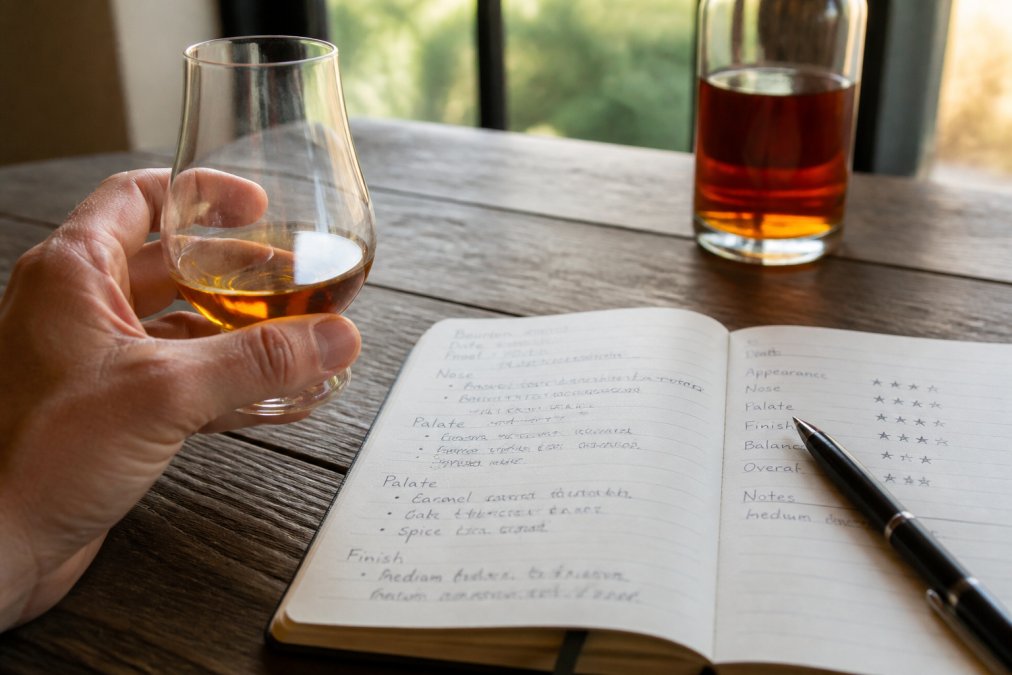
Gather your materials before you start: bourbon, a proper tasting glass (a Glencairn glass is standard), water for palate cleansing, and your tasting journal or tracking app. Pour about one ounce of bourbon into your glass and let it sit for a minute; bourbon opens up as it reaches room temperature.
Eliminate distractions. Strong smells, food, candles, or cologne interfere with your ability to detect the bourbon's aromas. Taste when you're alert, not tired or hungry.
The Tasting Process
Start with appearance. Note the color and clarity. Is it pale gold, amber, or deep brown? Does it coat the glass when you swirl it?
Move to the nose. Bring the glass close and inhale gently. What's the first thing you smell? Spend 30-45 seconds here, letting your nose adjust and revealing layers.
Take a small sip, about a teaspoon. Let it coat your mouth for a few seconds before swallowing. What's the texture? What flavors emerge? How does it evolve as you hold it?
After swallowing, pay attention to the finish. What lingers? How long does it last?
Add a few drops of water to your glass. This opens up the bourbon further and often reveals new aromas and flavors. Retaste and note what changes.
The entire process takes 10-15 minutes per bourbon. Record your observations while they're fresh.
Creating a Bourbon Tasting Journal Template
A tasting journal is your record of every bourbon you've assessed. It becomes your personal flavor encyclopedia, the reference you check when deciding whether to buy a bottle you've tasted before.
Essential Fields to Record
Your journal needs consistent fields so you can compare notes across tastings. Start with the basics: bourbon name, distillery, proof, age statement (if any), and date tasted.
Next, add your sensory observations: aroma profile, palate notes, mouthfeel, and finish. Use the vocabulary you've developed. Be specific: "vanilla and caramel" is better than "sweet"; "notes of oak and spice" is better than "complex."
Include a rating or score. Many tasters use a 10-point scale or a simpler system (like or dislike). The scale matters less than consistency; pick one and stick with it.
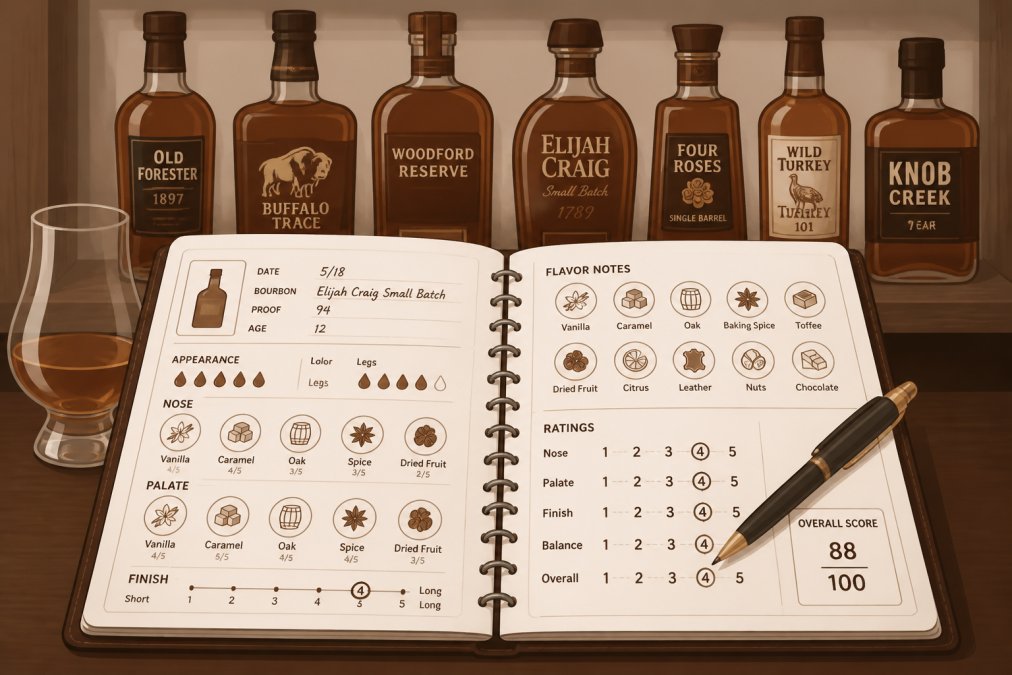
Add a section for context: price paid, where purchased, bottle number (if tracking inventory), and whether you'd buy again. Many tasters add a personal notes field: "Similar to [other bourbon]," "Better than the previous release," or "Excellent with food."
Rating Systems and Scoring Methodologies
A simple 10-point scale works well: 10 is exceptional (buy again immediately), 9 is excellent (highly recommended), 8 is very good (worth seeking out), 7 is good (worth trying), 6 is decent (acceptable), 5 is average (unremarkable), and anything below 5 is not worth your time or money.
Some tasters prefer category scoring: rate aroma, palate, finish, and overall impression separately on a 5-point scale. This gives you more granular data.
Rate based on your preferences, not abstract standards. You're assessing whether the bourbon appeals to you, not whether it's objectively "good." Review your ratings periodically to calibrate consistency.
Best Whiskey Tracking Apps and Digital Methods
Digital tracking offers advantages over physical journals: searchability, cloud backup, and the ability to compare notes across years. The right app or system makes tracking bourbon tasting notes seamless rather than burdensome.
Digital vs. Physical Tracking Methods
Physical journals offer tactile satisfaction and freedom from screen time. However, physical journals are hard to search, vulnerable to loss, and don't sync across devices.
Digital tracking solves these problems. You can search your notes by flavor profile, distillery, or proof. You can access your collection from your phone at a liquor store to avoid duplicate purchases. Cloud backup protects your data. Digital systems also enable community features, sharing notes, comparing ratings with other enthusiasts, and discovering recommendations.
Many tasters use both: a physical journal for the tasting experience itself, then transfer notes to a digital system for long-term reference and searching.
Mobile Applications for Whiskey Enthusiasts
A good whiskey tracking app should be intuitive, reliable, and offer features that match how you actually taste and collect.
Bourbon Tracker™ is a free digital platform built specifically for bourbon and whiskey enthusiasts. It lets you log tasting notes for every bottle, organize your collection, and receive AI-powered recommendations tailored to your palate. Because it's free with no download required, you can start tracking immediately without friction. The platform connects you with the broader bourbon community, so you can see what other enthusiasts are tasting and get ideas for your next purchase.
Look for apps that let you photograph bottle labels, track inventory, and organize by distillery or flavor profile.
Building Your Bottle Inventory and Collection Management
As your collection grows, inventory management becomes essential. Tracking what you own, what you've tasted, and what you want prevents duplicate purchases and helps you navigate your collection strategically.
Recording Bottle Details
Create a record for each bottle you own: name, distillery, proof, age, price paid, date acquired, and current location. If you're collecting limited releases or special editions, note the bottle number and release year.
Link your inventory record to your tasting notes. When you taste a bourbon for the first time, create a tasting entry. If you own multiple bottles of the same expression, one tasting entry can reference multiple inventory records.
For valuable or rare bottles, photograph the label and store the image in your system. Update your inventory as you consume bottles, noting the date you opened it and when you finished it. Over time, this data shows you which bourbons you reach for most.
Organizing Your Tasting Log
Organize your tasting log by date tasted, distillery, flavor profile, or rating, whatever makes sense for how you browse your collection. Create filters or categories: bourbons you own versus bourbons you've tasted at bars, limited releases versus standard offerings, bourbons under $50 versus premium expressions.
Review your tasting log regularly. Which bourbons did you rate highest? Which distilleries consistently deliver? Do you notice flavor preferences you weren't consciously aware of? This analysis refines your collecting strategy.
Developing Your Palate Over Time
Your palate changes as you taste more bourbon. Early on, you might be overwhelmed by alcohol heat or unable to distinguish subtle flavors. Over months and years, your palate becomes more sensitive to nuance, and your vocabulary expands to capture complexity you couldn't perceive before.
Track this evolution by reviewing your early notes against recent ones. You'll likely notice you're identifying more flavors and using more precise language. Your preferences may evolve; you might discover you prefer high-proof bourbons over lower-proof ones, or shift toward wheated expressions.
The key to accelerated palate development is consistent, deliberate tasting. Casual sipping teaches you less than structured tastings with focused attention. Tasting with others and hearing how experienced tasters describe flavors accelerates your learning significantly.
Revisit bourbons you've tasted before every 6-12 months. Your perception may have shifted, and you'll notice details you missed initially.
Common Mistakes to Avoid When Tracking Tasting Notes
Inconsistent vocabulary is the most common mistake. You describe one bourbon as "fruity" and another as "citrus notes" when they're similar. Build a personal flavor vocabulary and use it consistently.
Tasting too many bourbons in one session exhausts your palate and produces unreliable notes. Your palate fatigues after 3-4 serious tastings. Spread tastings across multiple days.
Skipping the water step is another mistake. Adding water to bourbon opens up aromas and flavors that alcohol heat masks. Always add a few drops of water and retaste.
Not recording context creates notes that feel empty later. Always capture enough context that your future self understands what you tasted and why it mattered.
Waiting too long to record notes leads to forgotten details. Write immediately after tasting, not hours later. Your memory of subtle flavors fades quickly.
Finally, rate bourbons against your own preferences rather than an imaginary objective standard. You're assessing whether you enjoy it, not whether it's "good." Rate honestly based on your palate.
Tracking bourbon tasting notes transforms your collection from a list of bottles into a curated archive of your palate's evolution. Whether you prefer a physical journal or a digital system, consistency and honest assessment matter most. Bourbon Tracker™ makes digital tracking frictionless, no download, free forever, and AI recommendations that learn from your actual tasting notes. Start with a simple template, develop your vocabulary, and let your notes guide smarter purchasing decisions. Your future self will thank you when you can instantly reference whether you loved that wheated expression or preferred the high-rye alternative.
Frequently Asked Questions
Should I use a physical notebook or a digital app for bourbon tracking?
Both work, depending on your habits. Physical notebooks feel personal and require no tech learning curve, but digital apps let you search past notes, access your collection anywhere, and sync across devices. Many enthusiasts start with a notebook and switch to an app once their collection grows beyond 20-30 bottles. Digital tracking also makes it easier to compare notes over time and spot patterns in your palate preferences.
How do I improve my palate for identifying bourbon notes?
Consistent tasting with focused attention builds palate recognition. Taste slowly, noting what you smell before you taste. Compare multiple bourbons in one session to sharpen your ability to spot differences. Keep a standardized vocabulary list handy, this trains your brain to link flavors to words. Retaste bottles you've tracked before to see how your perception has evolved. Most palate development happens over months and years, not weeks.
What should I record in a bourbon tasting journal to make my notes actually useful?
Log the bottle name, proof, age, and purchase price. Then record aroma profile, palate notes, finish length, and mouthfeel using specific descriptors (not just 'good' or 'bad'). Add a numeric rating if you like comparisons later. Note the date, tasting conditions, and whether you tasted it neat, with water, or in a flight. These details help you spot patterns, you might discover you prefer higher-proof bourbons or certain mash bills. Useful notes become a reference guide for future purchases.
How do I describe the finish of a bourbon accurately?
Finish is the flavor that lingers after you swallow. Pay attention to how long it lasts (short, medium, or long), what flavors persist, and whether it feels warm, spicy, or smooth. Use descriptors like 'notes of vanilla and oak' or 'dry and peppery.' Compare it to the palate, sometimes the finish introduces new flavors. Write it down immediately while you still taste it. Over time, your finish descriptions will become more detailed and consistent, making your tasting notes more valuable for tracking your preferences.
This article was written using GrandRanker