 how-to
How to Start a Bourbon Collection on a Budget
Table of Contents
- Set Your Budget and Collection Goals First
- Best Budget Bourbon for Beginners to Buy First
- Bourbon Tasting Notes for Beginners: Build Your Palate
- How to Track Bourbon Collection Progress and Spending
- Where to Buy: Retail vs. Secondary Market
- Store and Preserve Your Bottles the Right Way
- Flipping vs. Drinking: The Real Economics
- Frequently Asked Questions
Last Updated: September 12, 2026
Set Your Budget and Collection Goals First
The biggest mistake new collectors make is buying bottles before defining what "a budget" actually means. A bourbon collection is a curated set of bottles you've chosen with intent, not a shelf that fills up because a label looked interesting. Many enthusiasts build collections they're proud of, and nearly all of them started with two decisions: a monthly number and a purpose.
Pick a Monthly Number You Can Stick To
Choose a monthly figure you can spend without guilt, then treat it as a ceiling, not a target. Many collectors find that a modest, consistent amount beats occasional splurges because it keeps the hobby sustainable and the palate developing steadily. If you skip a month, roll that amount forward instead of doubling up.
Decide What Kind of Collection You Want
A vertical collection traces one distillery across releases, ages, or proof points. A horizontal collection explores a style, region, or mash bill across many producers. Vertical collections tend to be easier to budget for because you're tracking a single brand's lineup rather than chasing everything at once. Pick one direction for your first year.
Best Budget Bourbon for Beginners to Buy First
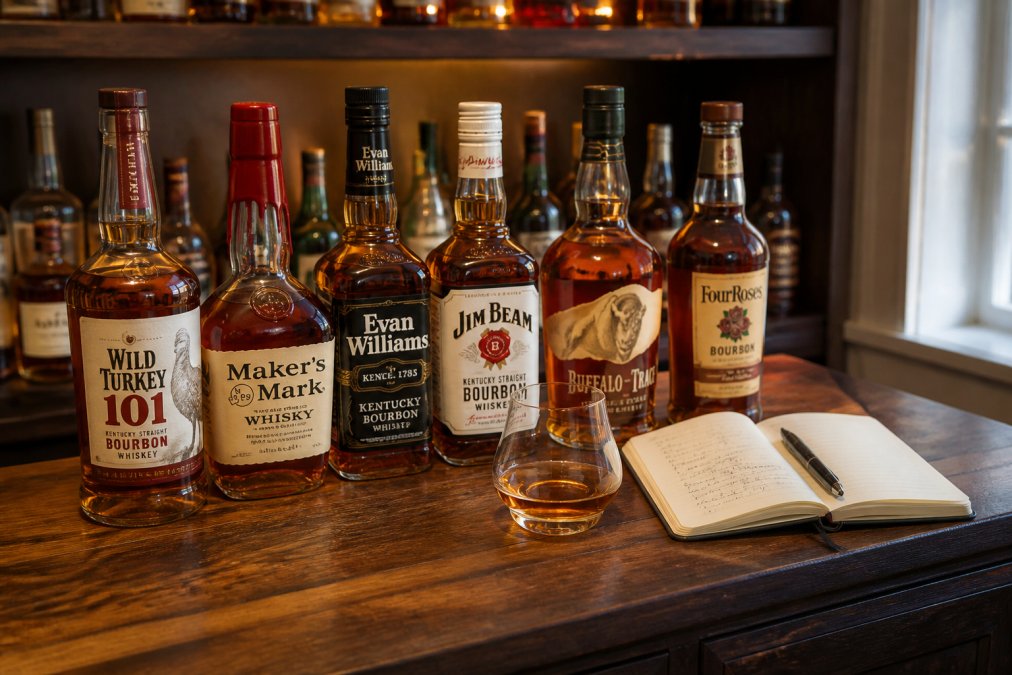
The best budget bourbon for beginners is the bottle that teaches you something about your own palate without costing much. Start with widely available, entry-level expressions from established distilleries, then branch out once you know what you like. The goal for your first year is coverage, not rarity: you want a wheated mash bill, a high-rye mash bill, a low-proof sipper, and a higher-proof bottle so your palate has something to compare against.
Entry-Level Bottles Worth the Shelf Space
You do not need allocated bottles to learn bourbon. The following categories are widely distributed and typically sit in the sub-$40 range at most liquor stores, though prices vary by state and retailer:
- Wheated, low-proof: A wheated bourbon in the 80-90 proof range is the gentlest entry point. It shows you what a soft, sweet, bread-forward profile tastes like without ethanol heat masking the flavors.
- High-rye, mid-proof: A high-rye bourbon in the 90-100 proof range introduces the spice and mint notes that separate rye-forward mash bills from wheated ones.
- Standard mash bill, bottled-in-bond: A bottled-in-bond expression (at least 4 years old, exactly 100 proof, one distillery, one season) gives you a consistent reference point you can re-buy year after year (ecfr.gov).
- Barrel-proof or cask-strength: One higher-proof bottle lets you practice adding water and watching how dilution changes the nose and finish.
A handful of entry-level bottles covering different mash bills, proof points, and age statements will teach you more than one expensive bottle ever will. Buy two at a time, taste them side by side, and write down which one you reached for second.
Budget 'Dupe' Picks for Unicorn Bottles
This is the angle most beginner guides skip. Instead of chasing an allocated bottle at a markup, learn which widely available bottles share a similar mash bill, proof, or flavor family. You are not looking for an identical twin; you are looking for a bottle that scratches the same itch at a fraction of the price.
- If you like a wheated, low-proof unicorn, look for another wheated bourbon in the same proof band from a large distillery. The soft, sweet profile is the point, not the label.
- If you like a high-rye, high-proof allocated bottle, look for a bottled-in-bond or barrel-proof high-rye release from a distillery that actually makes its own whiskey.
- If you like an oaky, aged expression, look for a bottle with a clear age statement (8 years or more) rather than a NAS bottle with a fancy name.
The trade-off is real: a dupe will not match the exact barrel, the exact age, or the secondary-market prestige. But for a budget collector, the dupe teaches you the flavor family for a tenth of the cost, and it keeps your monthly number intact.
How to Read a Label Without Getting Fooled
Age statement means the youngest whiskey in the bottle, not the oldest. Proof tells you the alcohol strength, and cask strength means it's bottled without added water. Bottled-in-bond is a legal designation, not marketing: at least 4 years old, exactly 100 proof, one distillery, one distilling season, aged in a federally bonded warehouse. Straight bourbon means at least 2 years old (or 4 years if no age statement appears) (ecfr.gov). Learn to read mash bill, entry proof, and distillation process notes so marketing language doesn't do the deciding for you.
Bourbon Tasting Notes for Beginners: Build Your Palate
Bourbon tasting notes for beginners start simple: sweet, spicy, oaky, or grainy. Write down what you actually taste, not what the label claims, and revisit the same bottle weeks later to see if your notes change. A tasting flight of three small pours side by side is the fastest way to learn.
Keep a running log of flavor profile, proof, and how the whiskey changed after a few minutes in the glass. Over time, patterns emerge: you'll notice you consistently reach for higher-proof pours or wheated mash bills. That's your palate talking.
How to Track Bourbon Collection Progress and Spending
Tracking a bourbon collection means recording what you bought, what you paid, what you tasted, and what you'd buy again. The easiest way to do this is a single log that combines purchase price, tasting notes, and a wishlist, so you can see spending and preferences in one place.
Why Inventory Management Tools Save You Money
Inventory management software prevents duplicate purchases, surfaces bottles you forgot you owned, and reveals spending patterns you'd never spot in a shoebox of receipts. Bourbon Tracker™ is a free, no-download platform that lets you log bottles, track tasting notes, and manage a wishlist from any device. Its AI-powered recommendations suggest new bottles based on your actual palate, not generic top-ten lists, and the built-in community features let you compare notes with other collectors. If your shelf has grown past a dozen bottles, a tracking tool pays for itself in avoided mistakes.
Where to Buy: Retail vs. Secondary Market
Retail is where you build a collection; the secondary market is where you chase specific bottles. Retail price at a good liquor store beats almost any online listing, and building relationships with staff at a few local shops gets you first word on allocated bottles before they hit the shelf.
The secondary market offers access to bottles you can't find locally, but expect markups and more risk. For a budget-focused collector, retail should be your default and the secondary market a rare exception.
| Source | Typical Pricing | Best For | Watch Out For |
|---|---|---|---|
| Local liquor store | At or near retail | Everyday bottles, allocated finds | Limited selection |
| Large retailer | At or near retail | Widely available labels | No personal recommendations |
| Secondary market | Above retail | Rare and discontinued bottles | Markups, authenticity risk |
Store and Preserve Your Bottles the Right Way
Storage conditions decide whether your collection improves or fades. This is the section most beginner guides rush through, and it is where budget collectors lose the most value over time. The three variables that matter are light, temperature, and oxygen, and each one acts on a different timescale.
Light: The Fastest Killer
Ultraviolet light breaks down the wood-derived compounds that give bourbon its color and much of its flavor (PubMed). A bottle left on a sunny windowsill can visibly fade in weeks. The fix is simple: store bottles in their original cardboard tubes or boxes when you have them, keep shelves away from windows, and avoid display lighting that runs hot or emits UV. LED strip lighting is the safer choice for a backlit shelf because it produces far less UV and heat than halogen or incandescent bulbs.
Temperature: Stability Beats Coolness
Bourbon does not need to be refrigerated, but it does need to be stable. Repeated swings in temperature cause the liquid to expand and contract, which pushes it against the cork and accelerates both evaporation and oxidation. A closet or interior cabinet that stays within a narrow range is better than a garage shelf that hits 90°F in summer and 40°F in winter. A common pattern among long-term collectors is to pick one interior location and never move the collection from it.
Oxygen: The Slow Clock on Opened Bottles
Oxidation starts the moment you break the seal. The headspace in the bottle fills with air, and over months the oxygen reacts with the whiskey, softening the nose and flattening the finish. The more empty the bottle, the faster this happens, because there is more air in contact with less liquid.
- Full, unopened bottles: oxidation is minimal. The cork is the only real risk.
- Bottles above half full: flavor drift is slow. Revisit every few months.
- Bottles below one-quarter full: drift accelerates noticeably. This is the point to either finish the bottle, decant it into a smaller container, or accept that the last pours will taste different from the first.
A practical trick is to keep a few clean 200ml or 375ml glass bottles on hand and decant the last quarter of a special bottle into a smaller vessel. Less headspace means less oxygen exposure. Do not use plastic; glass is inert and will not leach into high-proof spirits.
Cork Maintenance: The Seal You Never Think About
Bourbon corks fail in two ways: they dry out and crumble, or they absorb liquid and swell. Both are avoidable.
- Store upright. Unlike wine, high-proof spirits degrade corks faster when the liquid sits against them. Upright storage keeps the cork dry and intact.
- Check periodically. Pull the cork every few months, look for cracking or a strong whiskey smell on the bottom, and replace any cork that looks compromised with a clean spare or a silicone stopper.
- Do not store on its side. This is the single most common beginner mistake, and it is the one that ruins bottles.
A Simple Preservation Checklist
- Keep bottles upright, in their tubes or boxes when possible.
- Store in a stable, interior location away from windows and heat sources.
- Use LED lighting only if you light your shelf.
- Track open dates so you know which bottles are past the six-month mark.
- Decant the last quarter of special bottles into smaller glass.
- Inspect corks every few months and replace any that look dry or cracked.
Flipping vs. Drinking: The Real Economics
Flipping sounds profitable until you account for the time, risk, and the fact that most "flips" are bottles you actually wanted to drink. The real economics are simple: retail markup on a rare bottle can look attractive, but secondary-market fees, shipping, and the chance of a damaged bottle eat into the margin. For most collectors, drinking what you buy is the better long-term value.
Frequently Asked Questions
What is the best bourbon collection for a beginner on a budget?
Start with three to five bottles that cover different flavor profiles: a wheated bourbon, a high-rye bourbon, a small batch, and a bottled-in-bond option. Look for entry-level bottles from established distilleries rather than allocated releases. This gives you range without spending big. Log tasting notes for each so you learn what you actually enjoy before buying more.
How do you store bourbon to maintain its value?
Keep bottles upright in a cool, dark space away from direct sunlight and temperature swings. Heat and light break down compounds in the whiskey over time. Store corked bottles upright so the cork does not dry out, and check corks periodically for wear. Once a bottle drops below a quarter full, oxidation speeds up, so drink or transfer it to a smaller container.
Is it worth collecting bourbon for investment?
Most budget collectors should treat bourbon as a hobby, not an investment. The bottles that appreciate significantly are typically allocated or limited releases that are hard to find at retail price. For a beginner on a budget, the smarter play is buying bottles you will actually drink and enjoy. The economics of flipping rarely work in your favor once you factor in secondary market fees and shipping.
How do you track a bourbon collection without spending money on software?
Use a free digital tool that lets you log bottles, tasting notes, and wishlists in one place. Bourbon Tracker™ is free to use, requires no download, and includes AI-powered recommendations based on your palate. You can also track spending by logging purchase prices and comparing them against your monthly budget. A simple system beats a spreadsheet you never update.
Building a bourbon collection on a budget comes down to discipline: a fixed monthly number, a clear direction, and a system that shows you exactly what you own and what you've spent. Bourbon Tracker™ makes that system effortless with free bottle logging, organized tasting notes, a personal wishlist, and AI-powered recommendations tuned to your palate. Get started with Bourbon Tracker™ and turn a shelf of bottles into a collection you actually understand.