 how-to
How to Share Bourbon Tasting Notes With Friends
Table of Contents
- Why Sharing Bourbon Tasting Notes Matters
- Selecting the Right Bourbon Lineup for Your Group
- Essential Glassware and Tools for Tasting
- How to Describe Bourbon Flavors and Build Your Vocabulary
- Using Bourbon Tasting Note Templates to Capture Your Experience
- Bourbon Tasting Scorecards and Rating Systems
- Digital Tools and Blind Tasting Methods
- Creating the Right Atmosphere and Managing Your Tasting Event
- Frequently Asked Questions
Last Updated: September 17, 2026
Why Sharing Bourbon Tasting Notes Matters
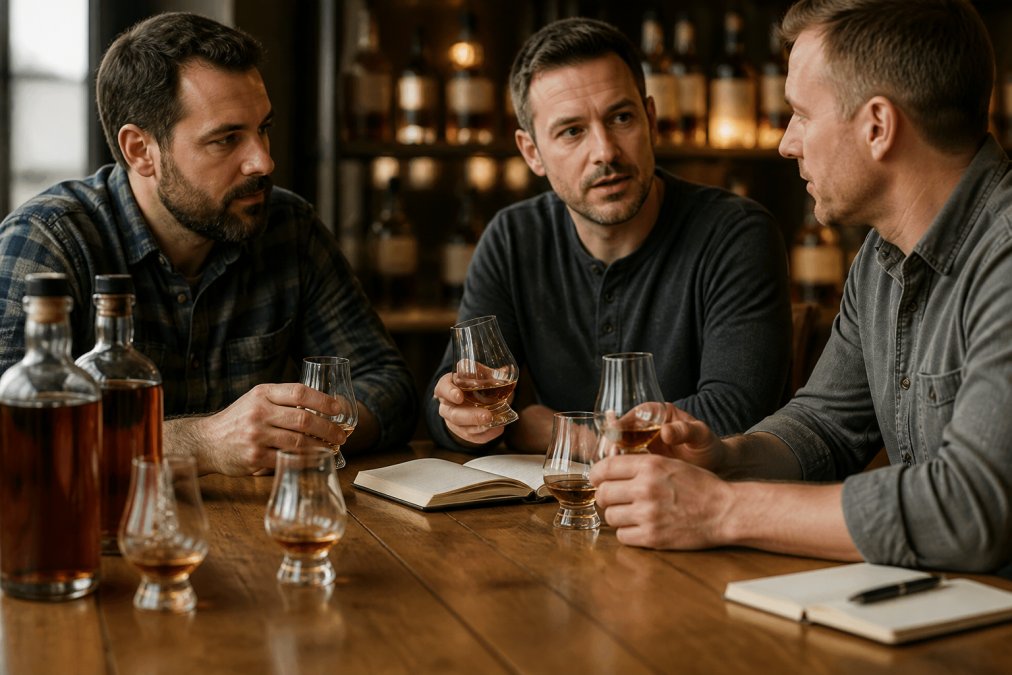
Sharing bourbon tasting notes with friends transforms a casual drink into a meaningful experience. When you articulate what you taste, you deepen your own palate awareness. Your friends learn from your observations. The conversation becomes richer.
Most people skip this step. They pour, they sip, they move on. But the ones who pause to describe flavors, the vanilla, caramel, oak, tobacco notes, they remember the bottle. They build a vocabulary. They spot patterns across different bourbons.
This is where tools like Bourbon Tracker™ come in. The platform lets you log your observations instantly, share them with your group, and build a digital record of every tasting. No download required. You can capture your impressions in real time and revisit them later.
The real benefit? You stop relying on memory. You create a shared language with your friends. Next time someone mentions a particular bourbon, you can pull up your old notes and reference exactly what you thought about its finish or mouthfeel.
Selecting the Right Bourbon Lineup for Your Group
Choose bourbons that tell a story together. Don't just grab whatever's on the shelf.
Think about mash bill variety. A high-rye bourbon tastes sharp and spicy. A wheated bourbon feels softer, smoother. A traditional high-corn mash bill sits somewhere in between. When you taste them back-to-back, the differences become obvious.
Consider proof levels too. Lower-proof bourbons (80-90 proof) are approachable for newer tasters. Higher-proof options (100+ proof) reveal more complexity but demand respect. Mix them. Let people experience the range.
A solid lineup might include:
- One wheated bourbon (smooth entry point)
- One high-rye bourbon (spice and structure)
- One cask strength option (full intensity)
- One familiar favorite (comfort baseline)
Group size matters here. For four people, four bourbons works. For eight people, six bourbons keeps things manageable. More than that and people lose focus.
Budget matters too. You don't need expensive bottles. Mid-range bourbons often deliver better tasting experiences than premium-priced options. The goal is variety and drinkability, not showing off.
Essential Glassware and Tools for Tasting
The Glencairn glass is the standard. Its shape concentrates aromas at the top while keeping your nose safe from the alcohol burn. Other whiskey glasses work, but Glencairns are cheap and purpose-built.
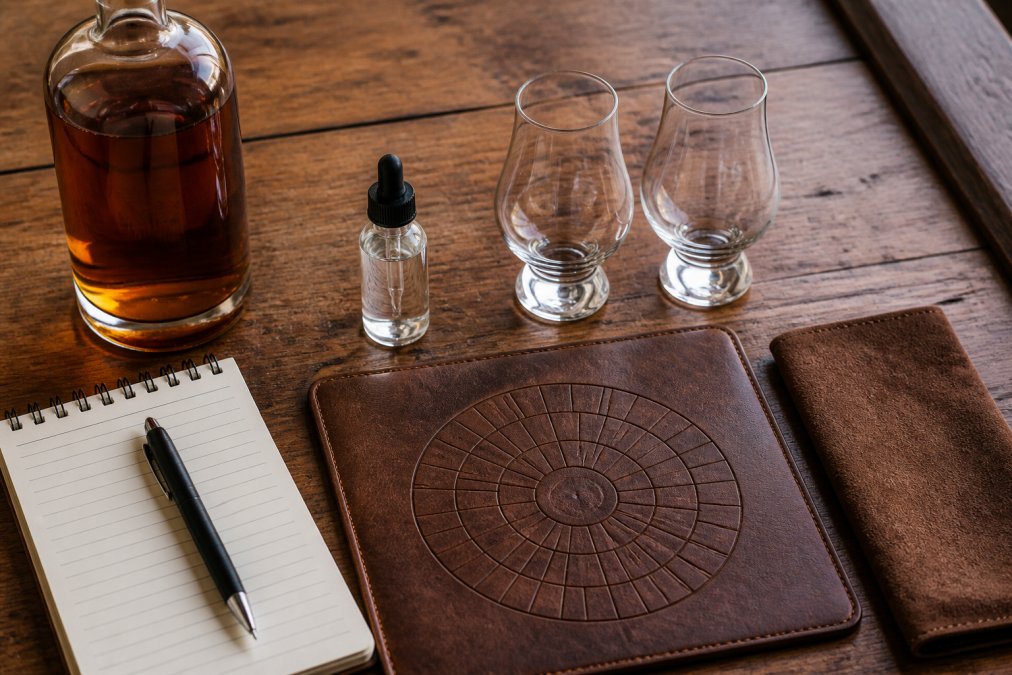
Beyond glassware, you need a few simple tools:
Water dropper. A few drops of water open up the bourbon. They reduce the alcohol's bite and release new aromas. Don't skip this.
Palate cleansers. Water crackers, bread, or plain water between pours. They reset your palate so each bourbon tastes fresh.
Tasting mat. A white or light-colored surface helps you see the bourbon's color and clarity. You can print one or use plain paper.
Notebook or digital tool. Write down your observations immediately. Memory fades fast.
Pen. Use something that won't smudge. Pencil works too.
How to Describe Bourbon Flavors and Build Your Vocabulary
Most people freeze when asked to describe flavor. They say "it tastes good" and stop there. The trick is having a framework, and a vocabulary reference you can actually use during the tasting.
The Bourbon Flavor Wheel Framework
Think of bourbon flavors arranged in concentric circles, from broad categories to specific descriptors. Start at the outer ring with the main families: Fruit, Spice, Grain, Oak, Vanilla, Caramel, Tobacco, and Floral. These are the anchors.
Practical Descriptor Cheat Sheet
Print this list and keep it at your tasting. Reference it when you're stuck.
Tobacco and leather notes: Leather, pipe tobacco, smoke, tobacco
The Three-Part Tasting Structure
Organize your observations using the same sequence professionals use. This consistency makes notes comparable across your group.
Building Confidence Over Time
Your first tasting will feel awkward. You'll second-guess yourself. That's normal. The vocabulary grows with repetition.
Using Bourbon Tasting Note Templates to Capture Your Experience
A template keeps you consistent. It ensures you capture the same information for every bourbon.
What to Include in Your Notes
Bourbon name and proof. Start here. You need to know what you're tasting.
Finish. What lingers? How long? Warm or sharp?
Nose, Palate, and Finish: The Tasting Structure
The three-part structure mirrors how professionals taste bourbon.
Nose first. Your sense of smell dominates flavor perception. Spend 30 seconds nosing. Let the aromas develop. Don't shove your nose into the glass, hold it an inch away.
Bourbon Tasting Scorecards and Rating Systems
A scorecard gives structure to your opinions. It lets you compare bourbons objectively.
What to rate:
- Aroma complexity (does it have multiple layers?)
- Flavor profile (how interesting is the taste?)
- Finish quality (how long and pleasant is it?)
- Value (does the price match the experience?)
- Overall impression (would you buy it again?)
Digital Tools and Blind Tasting Methods
Blind tasting is one of the most revealing exercises you can do with friends. It removes bias, surfaces honest palate preferences, and often surprises everyone in the room. Yet most guides skip it entirely or mention it as an afterthought. It deserves its own section.
Why Blind Tasting Matters
When you know the bourbon's name, price, age, and reputation, those facts influence your perception. A $150 bottle feels more complex because you expect it to be. A well-known distillery's product tastes better because you've heard good things. This is cognitive bias, and it's powerful.
How to Structure a Blind Tasting
Before the tasting:
- Select your bourbons and assign each a number (1, 2, 3, 4, etc.).
- Write down the master key on a piece of paper: "1 = Maker's Mark, 2 = Buffalo Trace, 3 = Four Roses Small Batch," etc. Seal this in an envelope or keep it on your phone, locked away from view.
- Cover each bottle completely. Use brown paper bags, aluminum foil, or even socks pulled over the bottle. Make sure no label, color, or shape gives away the identity. This is critical.
- Arrange the covered bottles in order on a table.
During the tasting:
- Taste in numerical order. Pour from bottle 1 first, then 2, then 3.
- Take your tasting notes using the structure from the previous section: nose, palate, finish. Write down your observations and your rating (on a 1-5 scale or 100-point scale, your choice).
- Encourage your group to take notes independently. Don't influence each other yet.
- Spend 10-15 minutes per bourbon. That's enough time to nose, taste, discuss, and write without rushing.
After the tasting:
- Once everyone has tasted all bourbons and recorded their notes, reveal the master key.
- Go through each bourbon and discuss. Did anyone guess correctly? Were there surprises? Why did a particular bourbon score higher or lower than expected?
- Compare notes. Where did your palates align? Where did they diverge? These differences are the most interesting part of the conversation.
What Blind Tasting Reveals
Blind tastings often expose patterns you wouldn't notice otherwise.
Price bias. You might discover that you consistently prefer mid-range bourbons over premium ones. That's valuable data. It means you can save money and still enjoy excellent bourbon.
Managing the Logistics
Blind tasting requires a bit of coordination, but it's worth it.
Digital Note-Sharing Platforms
When choosing a platform, look for these features:
Ease of entry. You should be able to log a tasting note in under two minutes. Complex forms kill momentum.
Combining Blind Tasting with Structured Notes
The power emerges when you combine blind tasting with the vocabulary framework and tasting structure from the previous section. You're not just guessing which bourbon is which; you're building a detailed sensory record of each one, then comparing your impressions against the actual identity.
Creating the Right Atmosphere and Managing Your Tasting Event
Atmosphere matters more than most people think. The right setting makes tasting more enjoyable and helps people focus.
Pour Volume and Palate Cleansers
Pour small amounts. A standard tasting pour is one ounce or slightly less. That's enough to nose, taste, and discuss without getting too much alcohol in anyone's system.
Palate cleansers matter. Between each bourbon, have people:
- Drink water
- Eat a cracker
- Take a break
Group Size and Discussion
Four to six people is ideal. Everyone can taste, take notes, and discuss. Larger groups get chaotic. People talk over each other. The tasting becomes a party instead of an experience.
Frequently Asked Questions
What are the key components of bourbon tasting notes?
Bourbon tasting notes capture three main elements: nose (aroma), palate (taste), and finish (aftertaste). Start by nosing the whiskey to identify aromas like vanilla, caramel, oak, tobacco, and rye. Next, take a small sip and let it coat your palate, noting the mouthfeel and flavor profile. Finally, observe the finish as the flavors fade. Recording these observations helps you and your friends communicate your sensory experiences consistently.
What's the best way to describe bourbon flavors when sharing notes?
Use descriptive vocabulary that references common flavor families: sweet (vanilla, caramel, honey), spicy (rye, pepper, cinnamon), woody (oak, tobacco, leather), and fruity notes. Avoid vague terms like 'good' or 'smooth.' Instead, be specific: 'buttery vanilla with a peppery rye finish' tells your friends exactly what to expect. Tasting vocabulary cheat sheets help standardize how your group describes flavors, making it easier to compare notes across tastings.
How do bourbon tasting scorecards help organize group tastings?
Scorecards provide a structured format for rating whiskey across consistent criteria: nose intensity, palate complexity, finish length, and overall impression. Each person scores on a scale (1-10 or 1-100), then you compare results to spark discussion. This method removes personal bias and gives your group a shared vocabulary for evaluating cask strength, mash bill, and proof. Digital tools like Bourbon Tracker™ automate this process and let friends share their scorecards instantly.
What's the difference between blind tasting and regular bourbon tastings?
Blind tasting hides the bottle's label so you evaluate the whiskey on sensory merit alone, without brand reputation or price influencing your judgment. This reveals whether you truly prefer a bourbon's flavor profile or if marketing and cost affect your perception. For group tastings, blind tasting often produces more honest, varied feedback. After scoring blindly, you reveal the bottles and discuss how expectations changed your notes and observations.