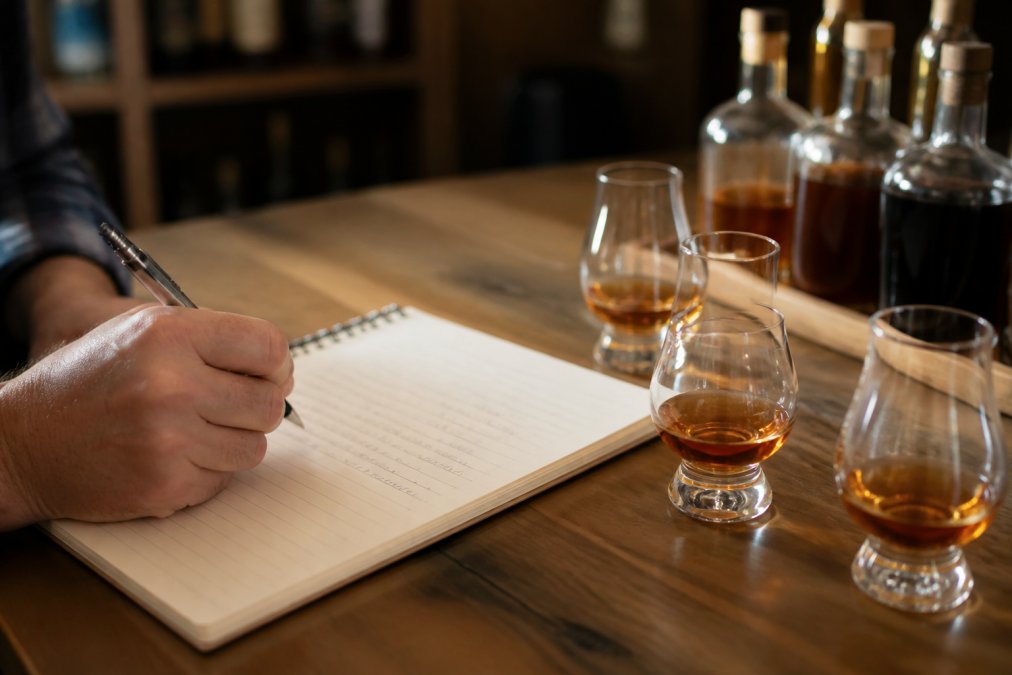
 how-to
How to Rate Bourbon Tasting Notes: A Step-by-Step Guide
Table of Contents
- Understanding the Five Basic Tastes in Bourbon
- How to Properly Nose Bourbon and Identify Aromatics
- Evaluating the Palate and Mouthfeel
- Assessing the Finish and Aftertaste
- Creating a Bourbon Rating Scale Template
- How to Keep a Bourbon Tasting Journal
- Using the Common Bourbon Flavor Wheel to Rate Tasting Notes
- Managing Palate Fatigue and Standardizing Your Scoring Process
Last Updated: August 19, 2026
Understanding the Five Basic Tastes in Bourbon
Bourbon tasting starts with understanding the five fundamental taste categories your palate detects: sweetness, acidity, bitterness, umami, and saltiness. Sweetness typically comes from the grain mashbill and develops during maturation in charred oak casks. Acidity creates brightness on your palate and balances sweetness. Bitterness appears as a dry sensation from tannins or higher proof spirits. Umami adds savory depth, while saltiness is rare but can appear in high-proof or heavily charred expressions. Start by isolating each taste category as you nose and sip to train your palate to break down complex flavor profiles.
How to Properly Nose Bourbon and Identify Aromatics
Nosing is where most of the tasting experience happens. Your sense of smell detects far more nuance than your taste buds alone. Hold your glass at a 45-degree angle and take a gentle inhale first, hard breathing overwhelms the olfactory receptors. The first aromas you detect are lighter, more volatile compounds like fruit, floral, or spice notes. Wait 10-15 seconds and nose again to reveal more complex, wood-forward characteristics like vanilla, caramel, or baking spices.

Many tasters add a small amount of water to their bourbon before nosing. This practice, called "opening up" the spirit, reveals additional aromatics by reducing the alcohol burn that numbs your olfactory senses. A few drops of water, about a 1:10 ratio, can make a significant difference in what you detect.
Evaluating the Palate and Mouthfeel
After nosing, take a small sip and let it rest on your palate before swallowing. This reveals flavors the nose alone cannot and lets you assess mouthfeel: the texture and weight of the spirit. Mouthfeel is determined by proof, viscosity, and barrel char level. Higher-proof bourbons feel heavier and more viscous. Cask strength bourbons, which skip chill filtration, typically have thicker, more luxurious mouthfeel than standard bottlings.
Focus on the progression of flavors. Does the bourbon taste sweet on the front of your tongue and spicy on the back? Does it develop complexity as it sits in your mouth? Stone fruit, baking spices, vanilla, and caramel are common flavor descriptors. The Kentucky chew, a technique where you gently chew the bourbon and draw air through it, aerates the spirit and intensifies flavors, helping you detect subtle notes.
Assessing the Finish and Aftertaste
The finish is what remains after you swallow, the lingering flavors that persist on your palate. Some bourbons have short finishes that disappear within seconds; others have long, complex finishes that evolve over 30 seconds or more. A long finish typically indicates better aging and higher quality. Pay attention to how the finish evolves, does it start sweet and become spicy? Does it develop warmth or a cooling sensation?
Some finishes are drying, leaving your mouth parched, which indicates higher tannin content from heavily charred barrels. Others feel smooth and buttery, indicating good wood-forward aging. The aftertaste, what you taste minutes after swallowing, should be pleasant. A quality bourbon leaves an aftertaste you want to experience again.
Creating a Bourbon Rating Scale Template
A standardized bourbon rating scale transforms subjective impressions into consistent, comparable data. A good template includes categories for appearance, nose, palate, finish, and overall impression, with numerical scores for each. Start with appearance: note the color and clarity. For the nose, rate intensity and complexity. For the palate, score the balance of sweetness, spice, and wood characteristics. Rate the finish on length and character. Finally, assign an overall score.
A simple 10-point scale works well: 10 = exceptional, 8-9 = excellent, 7 = very good, 6 = good, 5 = average, below 5 = not recommended. The key is consistency, use the same scale every time so your ratings remain comparable.
How to Keep a Bourbon Tasting Journal
A bourbon tasting journal is your record of every bottle you've tasted, complete with detailed notes, ratings, and personal observations. Each entry should include the bottle name, distillery, proof, age statement, and the date you tasted it. Add your detailed notes: what you smelled, what you tasted, how the finish felt, and your overall rating. Include context, were you tasting with friends? After a meal? These factors influence your perception.
The most useful journals include a section for comparisons. After tasting several bourbons from the same distillery or with similar mashbills, note which you preferred and why. Digital platforms like Bourbon Tracker™ make keeping organized tasting notes effortless. You can log tasting notes immediately after each session, tag bottles by style or region, and access your complete tasting history from any device. The platform's AI-powered recommendations learn from your tasting journal, suggesting new bourbons that match your documented preferences, no download required, and completely free to use.
Using the Common Bourbon Flavor Wheel to Rate Tasting Notes
The bourbon flavor wheel is a visual tool that organizes common tasting descriptors into categories: fruit, spice, wood, grain, and caramel/vanilla. When you detect a flavor but can't quite name it, the flavor wheel helps you narrow it down. You might know you're tasting something fruity, but is it stone fruit (peach, apricot) or dried fruit (raisin, fig)? This precision makes your tasting notes more useful.
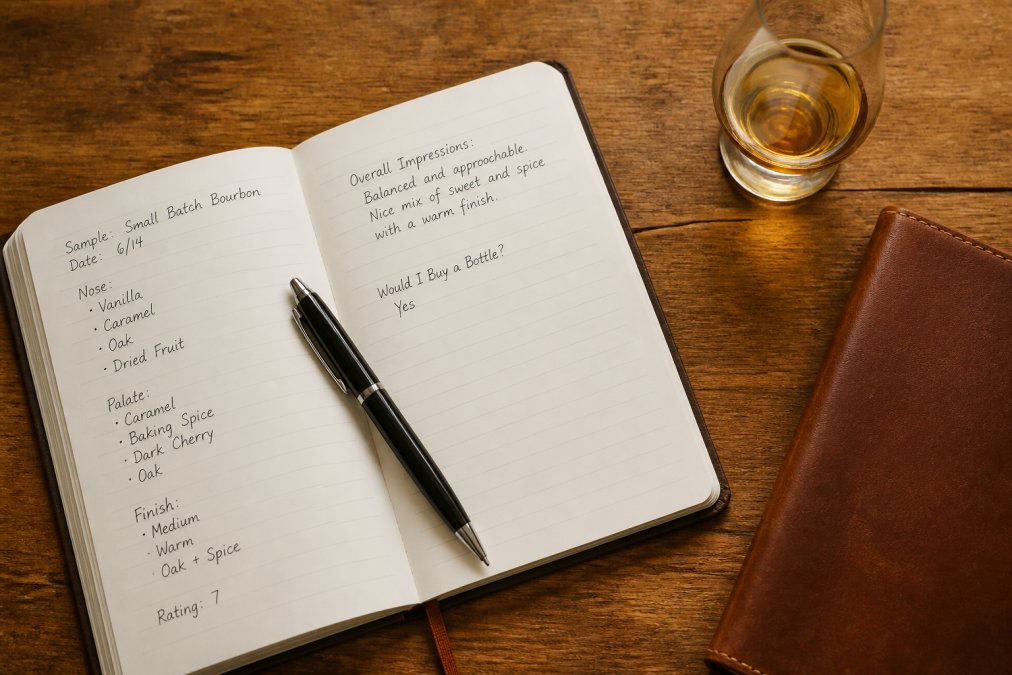
Common bourbon flavor profiles include grain-forward notes (corn sweetness, cereal), wood-forward notes (vanilla, caramel, oak), spice notes (cinnamon, black pepper, clove), and fruit notes (apple, cherry, stone fruit). When rating using the flavor wheel, start broad and get specific. Identify whether you're tasting primarily fruit, spice, or wood characteristics, then drill down to the specific type.
Managing Palate Fatigue and Standardizing Your Scoring Process
Palate fatigue occurs when you've tasted too many bourbons in succession and your taste receptors become desensitized. Limit yourself to 5-7 bourbons per tasting session. Between each bourbon, cleanse your palate with water and neutral food like unsalted crackers. Wait at least 30 seconds between sips to allow your palate to reset.
The order in which you taste matters significantly. Always start with lighter bourbons and progress to bolder, higher-proof expressions. Tasting a 140-proof cask strength bourbon first will numb your palate and make everything else taste muted. Standardize your scoring process by using the same template every time. Taste at the same time of day when possible, your palate is typically more sensitive in the morning and early afternoon. Record your tasting conditions: room temperature, lighting, whether you used water, and how many bourbons you've already tasted.
| Tasting Phase | Duration | Key Focus |
|---|---|---|
| Appearance | 10 seconds | Color and clarity |
| Nosing (initial) | 30 seconds | First aromatics, head notes |
| Nosing (secondary) | 30 seconds | Deeper, complex aromas |
| Palate (first sip) | 15 seconds | Taste progression and mouthfeel |
| Palate (second sip) | 15 seconds | Complexity and balance |
| Finish | 30 seconds | Length and character of aftertaste |
| Overall assessment | 5 minutes | Rating and journal notes |
Rating bourbon tasting notes is a skill that improves with practice and structure. The methods covered here, understanding basic tastes, proper nosing technique, palate evaluation, finish assessment, standardized rating scales, detailed journaling, and flavor wheel classification, form a comprehensive framework for serious tasting.
Bourbon Tracker™ simplifies this entire process. The platform lets you log your tasting notes immediately after each session, organize your collection by style and preference, and access a comprehensive bourbon database that helps you understand distillery profiles and aging impacts. The AI recommendations learn from your documented preferences, suggesting new bottles that match your palate profile. Start tracking your collection today and transform casual bourbon enjoyment into a data-driven hobby.
Frequently Asked Questions
What's the difference between nose, palate, and finish in bourbon?
Nose refers to the aromatics you smell when you bring the glass to your face. Palate is what you taste on your tongue and mouth, the flavors, sweetness, spice, and mouthfeel. Finish is the aftertaste that lingers after you swallow. Together, these three components form a complete sensory profile. Mastering all three is essential when you rate bourbon tasting notes accurately and consistently.
How do I avoid palate fatigue when rating multiple bourbons?
Palate fatigue happens when your taste receptors become overwhelmed after tasting several spirits in succession. To manage it, taste no more than 4-5 bourbons in one session, take 15-20 minute breaks between tastings, drink water between samples, and cleanse your palate with plain crackers or bread. Start with lower-proof spirits and work up to higher-proof ones. Recording your initial impressions in your bourbon tasting journal before fatigue sets in ensures more accurate notes.
What's the best way to use a bourbon flavor wheel when rating?
A common bourbon flavor wheel organizes tasting notes into categories like fruit, spice, wood, and grain. Start at the center with broad categories, then move outward to specific flavors. When evaluating a bourbon, begin with the aromatics on the nose, reference the wheel to identify which family the scent belongs to, then narrow down to the specific flavor. Repeat this process for the palate and finish. Recording these wheel-based notes in your bourbon tasting journal creates consistency across all your ratings.
How do I create a standardized scoring system for my bourbon collection?
Develop a bourbon rating scale template that assigns points to each element: nose (0-25 points), palate (0-25 points), finish (0-15 points), and overall impression (0-35 points), totaling 100. Define what each score range means, 90-100 is exceptional, 80-89 is very good, 70-79 is good. Use the same template for every bourbon you rate so your scores remain comparable over time. Store your completed templates in a digital platform like Bourbon Tracker to track trends in your preferences.
This article was written using GrandRanker