 ultimate-guide
How to Organize Large Bourbon Collection: Step-by-Step
Table of Contents
- Assess Your Space and Choose Storage Method
- How to Store Bourbon Long Term
- Bourbon Storage Ideas for Display and Organization
- Organize by Region, Style, and Proof
- Set Up a Whiskey Inventory App for Tracking
- Protect Your Collection: Security and Insurance
- Maintain Your Organized Collection Over Time
- Conclusion
Last Updated: August 9, 2026
Assess Your Space and Choose Storage Method
Organizing a large bourbon collection starts with understanding your physical space and deciding between vertical and horizontal storage. This foundational choice determines how many bottles you can accommodate, how easily you can access them, and how well you can monitor their condition.
Vertical vs. Horizontal Storage
Upright storage is the standard approach for most bourbon collections. It saves space, simplifies inventory tracking, and lets you read labels without moving bottles. For sealed bottles kept long-term, this works well since the bourbon isn't in constant contact with the cork. The downside is that upright storage requires more linear shelf space, which becomes a constraint for collections exceeding 100 bottles.
Horizontal storage, traditionally used for wine, is less common for bourbon but worth considering for specific situations. It keeps the cork moist and is space-efficient vertically, but requires deeper shelving and makes label reading inconvenient. Reserve horizontal storage for bottles you're not actively rotating or displaying.
The practical recommendation: use upright storage for 90% of your collection. It's the most functional approach for organizing large bourbon collections. Horizontal storage works only if you have deep shelving and don't mind the access trade-off.
Climate Considerations for Your Space
Before installing shelves, assess your space for temperature stability and light exposure. Bourbon doesn't require climate control like wine, but extreme fluctuations and direct sunlight will degrade your collection over time. Temperature swings cause the liquid inside to expand and contract, potentially compromising the seal. Direct sunlight accelerates oxidation and fades labels.
Identify the coolest, most stable room in your home. Basements work well because they naturally maintain steady temperatures year-round. Interior closets or cabinets away from exterior walls also perform well. Avoid spaces near heating vents, air conditioning units, or windows.
Light control is straightforward: keep bottles away from direct sunlight and UV exposure. If your display space gets natural light, use UV-filtering window film or keep bottles in opaque storage behind glass doors. Darker storage is better for long-term preservation.
How to Store Bourbon Long Term
Long-term bourbon storage requires attention to temperature, humidity, and oxidation prevention. Get these right, and your collection will remain stable for decades.
Temperature and Light Control
The ideal storage temperature for bourbon is between 55-65°F, with minimal fluctuation. This range slows oxidation while avoiding extreme cold that can affect flavor compounds. Most home basements naturally fall into this range. If your space runs warmer than 70°F consistently or experiences seasonal swings exceeding 15 degrees, you're creating conditions that will age your bourbon faster than intended.
Humidity matters less for bourbon than temperature, but it affects label preservation and cork integrity. Aim for 50-65% relative humidity. Too dry, and cork material shrinks and cracks. Too humid, and labels peel. A hygrometer is essential for monitoring this variable, especially in closed storage spaces.
Light control prevents cork degradation and label fading. Keep bottles out of direct sunlight entirely. If displaying your collection in a home bar or cabinet, use low-heat LED lighting rather than incandescent bulbs.
Humidity Monitoring and Oxidation Prevention
Install a digital hygrometer in your storage space to track humidity levels. They cost under $20 and eliminate guesswork. Check readings weekly during your first month, then monthly thereafter. If humidity drifts outside your target range, add a small dehumidifier or humidifier depending on your climate.
Oxidation happens slowly in sealed bottles but accelerates when seals fail. For bottles you plan to keep sealed long-term, ensure caps are tight and cork material hasn't dried out. For open bottles, store them upright with caps sealed tightly and plan to consume them within 1-2 years. A whiskey inventory app helps you log opening dates and flag bottles approaching their peak drinking window.
Bourbon Storage Ideas for Display and Organization
Display and functional storage serve different purposes but don't have to conflict. A well-organized collection can be both beautiful and practical.
Shelving and Display Cabinet Solutions
Wooden shelving is the standard choice for bourbon collections. It's affordable, looks professional, and works with any home decor. Use shelves rated for at least 50 pounds per linear foot for 100+ bottles, since bourbon bottles weigh roughly 1.75 pounds each when full. Space shelves 10-12 inches apart vertically to accommodate standard 750ml bottles with room to remove them easily.
Glass-fronted display cabinets protect bottles from dust and accidental damage while keeping them visible. They also help control humidity if sealed properly. Quality display cabinets run $300-800, so reserve these for premium bottles or if displaying your collection as a centerpiece.
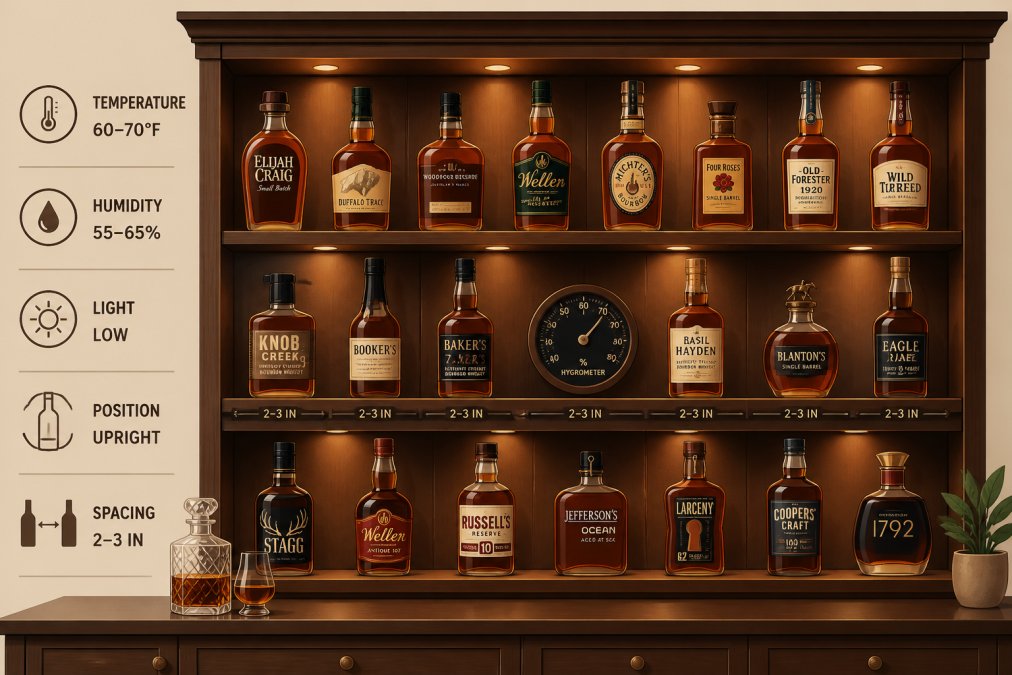
Open shelving is the most flexible approach. Standard metal or wood shelving units from hardware stores work perfectly. Arrange bottles by region, proof, or personal preference, leaving gaps so you can see labels clearly and access any bottle without moving others. This setup costs $100-300 for solid shelving that holds 150+ bottles.
Modular Furniture Hacks for Space-Saving
If space is constrained, modular shelving systems designed for small spaces can work well. Vertical shelving units that go floor-to-ceiling maximize square footage. IKEA-style modular units are popular because they're affordable and adjustable as your collection grows.
Another approach: use the top of a bar cart or console table for your most-displayed bottles, then store the bulk of your collection on wall-mounted shelving above or beside it. This creates a tiered display that looks intentional rather than cramped.
Organize by Region, Style, and Proof
How you categorize your collection determines how easily you can find specific bottles and spot gaps in your inventory. The best system is one you'll actually maintain.
Organization by region makes sense if you're building around specific distilleries or geographic areas. This approach tells a story and makes it easy to spot which regions you're underrepresented in.
Organization by proof works well if you prefer lighter, lower-proof bourbons for casual drinking and higher-proof bottles for sipping occasions.
Organization by style appeals to collectors who focus on flavor profile variations, grouping wheated bourbons separately from high-rye bourbons. This method requires knowing the mash bill of each bottle, where a whiskey inventory app becomes invaluable.
Hybrid systems work best for large collections. Use your primary organization method, then subdivide by proof or style within each region.
Set Up a Whiskey Inventory App for Tracking
Once you've organized your physical collection, you need a digital system to track it. Spreadsheets work for collections under 50 bottles, but they become unwieldy fast. A dedicated whiskey inventory app scales with your collection and provides features spreadsheets can't match.
Digital Inventory Management Tools
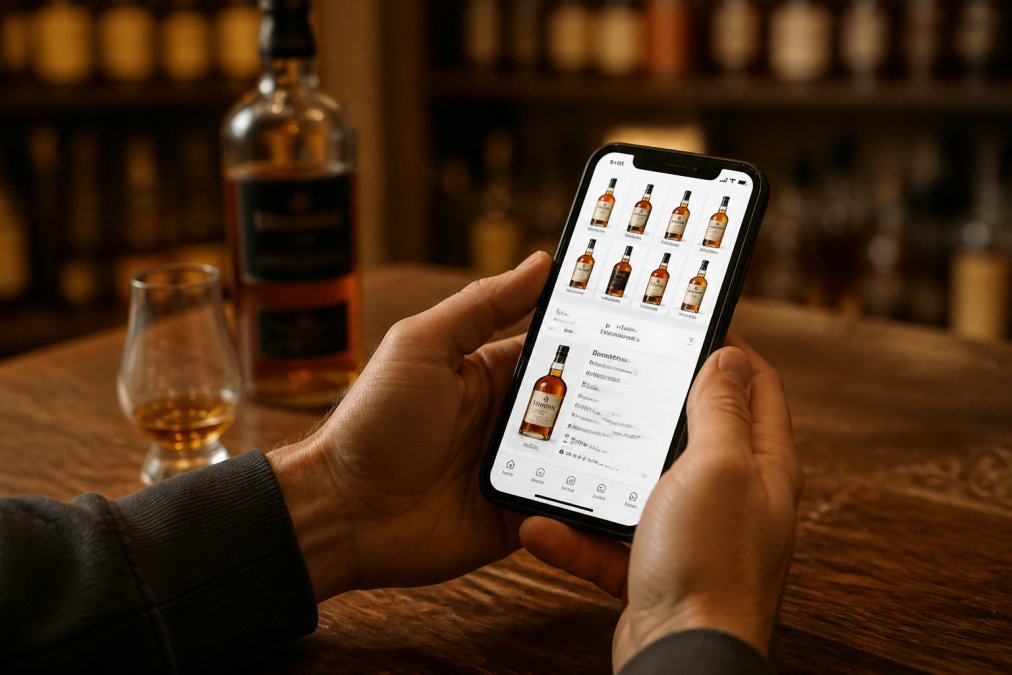
A whiskey inventory app logs every bottle you own, tracks bottles you've opened and consumed, and flags bottles approaching their drinking peak. Bourbon Tracker™ is built specifically for this purpose. It's a free, no-download platform that lets you log bottles in seconds and access your inventory from any device.
The core workflow is simple: you add a bottle by searching the app's database or manually entering details. The app stores the distillery, proof, age statement, and price you paid. As you consume bottles, you log tasting notes and update the bottle's status. Over time, you build a personal database of what you've tried and what you own.
The real value emerges at 100+ bottles. You can instantly see which regions you're heavy in, which proofs you prefer, and which bottles are sitting untouched. You can also track spending: how much you've invested, average price per bottle, and cost per bottle consumed.
Logging Tasting Notes and Collection Value
Tasting notes transform an inventory list into a personal reference guide. When you open a bottle, log what you taste: the nose, palate, finish, and overall impression. Include context: what you ate beforehand, what glassware you used. Over months and years, your tasting notes become a map of your palate preferences, helping you spot patterns and make more intentional future purchases.
Logging collection value serves two purposes: it helps you understand your investment, and it's essential for insurance claims. Record what you paid for each bottle and update the estimated current value as market prices fluctuate. Tracking this gives you a realistic picture of your collection's worth.
Protect Your Collection: Security and Insurance
A large bourbon collection represents significant financial value and emotional investment. Protecting it requires both physical security and proper insurance coverage.
Keep your collection in a locked cabinet or room if possible. This deters casual theft and prevents accidental damage.
Insurance is critical but often overlooked. Standard homeowners policies typically cap coverage for alcohol collections at $2,500, which won't cover a serious bourbon collection. You need a separate rider or specialized policy covering the full replacement value of your bottles.
Contact your insurance agent about scheduled personal property coverage for your bourbon collection. You'll need a detailed inventory with estimated values for each bottle. A whiskey inventory app is essential here: you can generate a report showing every bottle, its value, and total collection worth. Expect to pay 1-3% of your collection's total value annually for coverage.
Maintain Your Organized Collection Over Time
Organization isn't a one-time project. As you add new bottles, consume old ones, and evolve your preferences, your system needs maintenance. Build in a quarterly review: spend 30 minutes updating your inventory app, checking storage conditions, and assessing whether your organization method still works.
When you acquire new bottles, log them immediately in your whiskey inventory app. Same applies when you consume a bottle: update its status right away so your inventory stays accurate.
Every six months, do a physical walk-through of your collection. Check for any signs of cork degradation, label damage, or seal failure. A quick inspection catches problems early before they spread to nearby bottles.
As your collection grows beyond 150 bottles, you might need to adjust your shelving or storage method. Modular shelving makes this transition painless.
Organizing a large bourbon collection requires thoughtful planning around storage conditions, display aesthetics, and tracking systems. The physical setup, shelving, climate control, and security, protects your investment. The digital layer, a whiskey inventory app, makes your collection functional and enjoyable. Bourbon Tracker™ handles the inventory side with a free platform that logs bottles, tracks tasting notes, and provides AI-powered recommendations tailored to your palate preferences. Start with proper shelving and climate monitoring, then layer in Bourbon Tracker™ to track your collection with the precision it deserves. Track My Collection today and build a system that scales with your passion for bourbon.
Frequently Asked Questions
Should bourbon be stored upright or on its side?
Store sealed bottles upright. Bourbon has a high alcohol content that can degrade cork over time if the bottle is horizontal. Upright storage keeps the spirit away from the cork, reducing oxidation risk and cork degradation. Only store bottles on their side if they're in a climate-controlled wine fridge with consistent humidity below 65%. Open bottles should be consumed within 1-2 years regardless of orientation.
What temperature should I maintain for long-term bourbon storage?
Keep your collection between 55-65°F with minimal temperature fluctuations. Avoid direct sunlight and heat sources like radiators or sunny windows. Consistent temperature is more important than hitting a specific number, fluctuations cause expansion and contraction, which increases oxidation risk. A basement or interior closet works better than an attic or garage exposed to seasonal changes.
How do I organize a large bourbon collection with a whiskey inventory app?
Start by photographing each bottle and logging its distillery region, proof, mash bill, and purchase date into your inventory app. Use the app's tagging features to organize by style (single barrel, cask strength, etc.), region, or proof level. Add tasting notes after opening. Digital inventory management prevents duplicate purchases, tracks shelf stability for open bottles, and helps you value your collection for insurance purposes. Apps with community features let you share reviews and curate wishlists with other collectors.
How do I protect my collection from light and humidity damage?
Store bottles away from direct sunlight and UV exposure, which degrades labels and affects spirit preservation. Monitor humidity with a hygrometer, aim for 50-65% relative humidity. Too much humidity encourages mold and label damage; too little causes cork shrinkage and oxidation. Use a dehumidifier or humidifier as needed. For valuable collections, consider a display cabinet with UV-filtering glass and climate control, which also provides security for your most prized bottles.
This article was written using GrandRanker