 ultimate-guide
How to Find Rare Bourbon Bottles: A 2026 Guide
Table of Contents
- Understanding Allocated Releases and Why Rare Bourbon Is So Hard to Find
- Building Relationships With Liquor Store Owners and Staff
- Lotteries, Bourbon Societies, and Social Media Groups
- Bourbon Secondary Market Prices: What to Expect and What to Avoid
- How to Spot Fake Bourbon Bottles Before You Buy
- Rare Bourbon Release Calendar: Timing Your Search Around Special Releases
- How to Build a Bourbon Collection Without Overpaying
- Conclusion
Last Updated: August 4, 2026
Knowing how to find rare bourbon bottles is harder than it looks. This guide from Bourbon Tracker™ cuts straight to what actually works in 2026: building the right relationships, timing your searches around release calendars, and protecting yourself from counterfeits and secondary market fraud. The strategies here work whether you're hunting your first Pappy Van Winkle or adding a private barrel selection to a 150-bottle inventory.
The collectors who consistently find bottles treat it as a network problem, not a shopping problem.
Understanding Allocated Releases and Why Rare Bourbon Is So Hard to Find
Allocated bourbon is whiskey that a distillery produces in quantities too small to meet open market demand, so it distributes bottles through a controlled allocation system rather than standard retail. The distillery sets the total production run, the distributor divides that inventory across licensed retailers, and each retailer receives a fraction of what their customers want.
The economics of scarcity in bourbon are structural, not accidental. Age statement bottlings like 12-year and 18-year expressions require distilleries to commit barrel space a decade or more in advance. When demand spikes faster than aging inventory can keep pace, the gap between supply and retail price widens fast. Every layer of the supply chain has an incentive to keep the system exactly as it is.
Understanding this chain matters because it tells you where to apply pressure. You cannot negotiate with a distillery directly in most states. You can, however, work with the retailer, who is the last link you actually have access to.
According to the Distilled Spirits Council of the United States, American whiskey has seen sustained growth in consumer demand over multiple consecutive years, which has tightened allocated release inventories at the retail level significantly.
Building Relationships With Liquor Store Owners and Staff
The single most reliable strategy for finding rare bourbon bottles is becoming a regular at two or three liquor stores and making yourself known to the staff.
Store owners and managers control which customers get called when allocated bottles arrive. That call list is not posted publicly. It's built on trust, purchase history, and personal relationships. Collectors who walk in once a year asking for Weller Full Proof don't make the list. Collectors who buy regularly, ask intelligent questions about new inventory, and treat staff like professionals do.
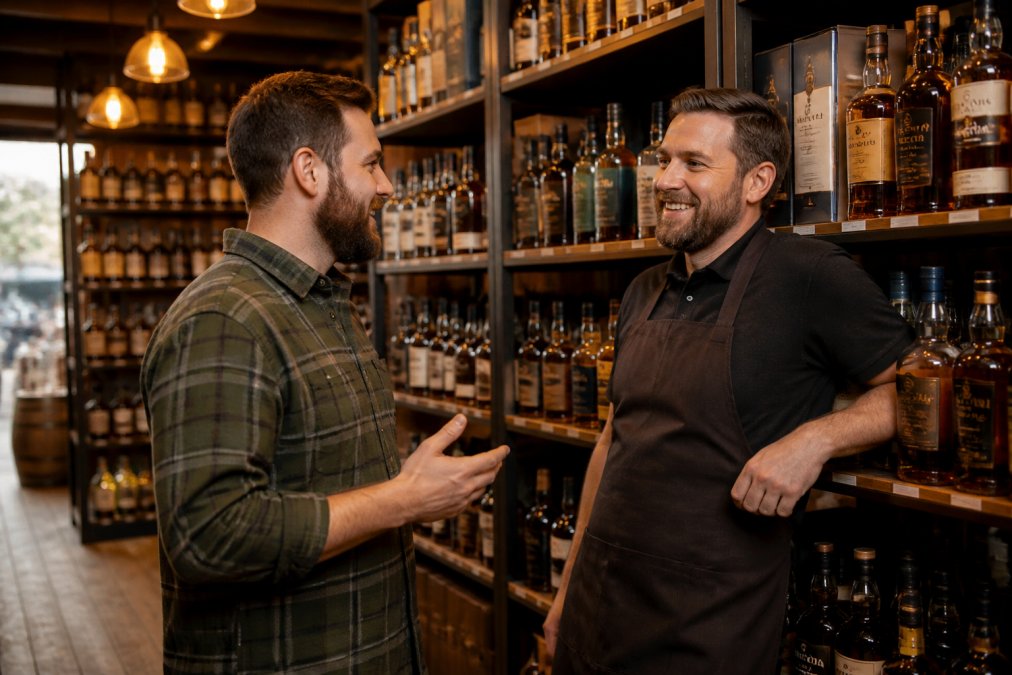
Identify the stores in your area that carry the widest selection of allocated and limited edition bottles. Visit several times before asking about rare stock. Buy something each visit, even if it's just a solid everyday bottle. Ask the staff what they're personally drinking. When you do ask about allocated releases, frame it as curiosity rather than demand.
Loyalty Programs, Spend Thresholds, and Private Barrel Selections
Many independent retailers have formalized their call lists into loyalty programs with spend thresholds. Some require a minimum annual purchase to qualify for allocated bottle access. Others tier their customers, with the highest spenders getting first access to private barrel selections before bottles hit the general floor.
Private barrel selections are worth understanding separately. A retailer or bourbon society can work directly with a distillery or independent bottler to select a single barrel, which is then bottled exclusively for that group. These bottles carry the retailer's label, a unique batch number, and often cask strength proof that differs from the standard release.
| Strategy | Time Investment | Access Level | Best For |
|---|---|---|---|
| Regular store visits | Ongoing | Allocated releases, call list | All collectors |
| Loyalty spend threshold | 6-12 months | Priority allocated access | Serious collectors |
| Private barrel selection | 12+ months relationship | Exclusive single barrels | Advanced collectors |
| Lottery entry | Minimal | Chance at high-demand bottles | All levels |
| Distillery visit | One-time trip | Distillery exclusives | Enthusiasts |
| Bourbon society membership | Ongoing dues | Group buys, events, tastings | Community-focused collectors |
Lotteries, Bourbon Societies, and Social Media Groups
State-Run and Store-Specific Lottery Systems
Lottery systems have become the standard mechanism for distributing the most in-demand allocated releases. Understanding how to find rare bourbon bottles through these systems requires knowing the rules before registration opens.
State-run lotteries are administered by state alcohol control boards in states with tighter regulatory frameworks. These lotteries typically open for a short registration window, select winners randomly, and require pickup at a designated retailer or state store. Missing the registration window means missing the lottery entirely. The National Alcohol Beverage Control Association maintains resources on how control states manage allocated spirits distribution.
Store-specific lotteries work differently. A retailer announces a lottery on their website, email list, or social media, collects entries, and draws winners who then have a short window to purchase. The key is being on the right notification lists before the announcement goes out, because entries often close within hours.
Joining Bourbon Societies and Online Enthusiast Communities
Bourbon societies and online communities are where serious whiskey hunting happens at scale. These groups share release intel, coordinate group lottery entries, and organize private barrel selections that individual collectors couldn't access alone.
Local bourbon societies often have direct relationships with distributors and distillery brand ambassadors. Members get advance notice of releases, invitations to distillery events, and access to bottles that never reach the general retail floor.
Online communities on platforms like Reddit's r/bourbon and dedicated Facebook groups provide real-time sourcing intelligence. Members post when they spot bottles on shelves, share lottery announcements, and warn each other about secondary market scams. These groups are particularly valuable for collectors in smaller markets where local retail options are limited.
Bourbon Secondary Market Prices: What to Expect and What to Avoid
Identifying Fair Market Value vs. Secondary Markup
Secondary market prices for rare bourbon can run two to ten times retail price, and sometimes higher for the most sought-after bottles. Fair market value on the secondary market is not the retail price. It's the price a willing buyer and willing seller agree on in the current market, which fluctuates based on release year, proof, age statement, and condition.
The secondary market is deeply inefficient. The same bottle can sell for vastly different amounts on different platforms on the same day. Before buying any bottle on the secondary market, check completed sale prices on multiple platforms rather than asking prices. Asking prices reflect seller optimism. Completed sales reflect what buyers actually paid.
Legal Online Auctions and Secondary Market Platforms in the US
The legal landscape for secondary bourbon sales in the United States is complicated. Most states prohibit the unlicensed resale of alcohol. A small number of licensed auction platforms operate legally by holding the appropriate state licenses and acting as the licensed seller of record.
Licensed auction platforms provide more protection: verified seller histories, dispute resolution, and in some cases, authentication services. For high-value bottles, the additional cost of using a licensed platform is worth it.
How to Spot Fake Bourbon Bottles Before You Buy
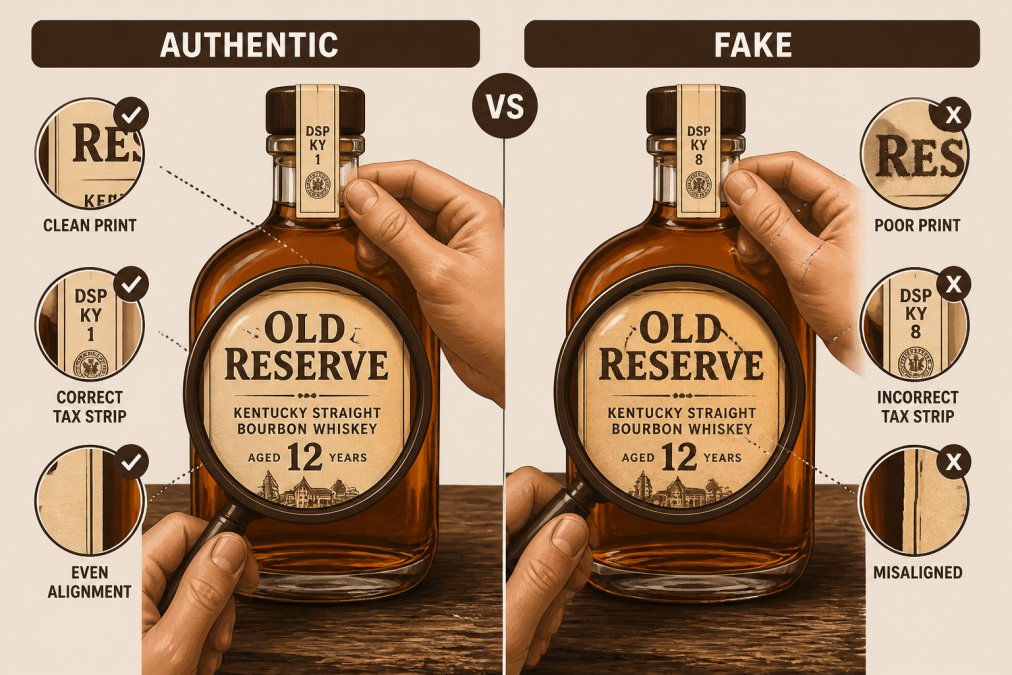
Counterfeit bourbon is a real and growing problem in the secondary market. The most common fraud involves refilling authentic bottles with lower-quality whiskey and resealing them. A bottle that looks perfect on the outside can contain completely different contents.
Here are the primary authentication checks:
- Tax strip integrity: The federal tax strip across the cap should be intact, unbroken, and show no signs of regluing.
- Label printing quality: Authentic labels use high-resolution printing with consistent ink saturation. Faded colors, blurry text, or misaligned label placement suggest a reproduction.
- Batch number and bottle number consistency: Cross-reference the batch number on the label against known production records.
- Fill level: Authentic bottles have consistent fill levels. A bottle that appears slightly low may have been opened and resealed.
- Cork and capsule condition: The cork should seat firmly with no play. Capsules that spin freely or show adhesive residue have likely been removed and replaced.
- Weight and sound: Experienced collectors develop a feel for how a full, sealed bottle should weigh and sound when gently tapped.
Rare Bourbon Release Calendar: Timing Your Search Around Special Releases
A rare bourbon release calendar is a collector's most underused tool. Most major annual releases follow predictable seasonal patterns.
Fall is the heaviest season for special releases. The Buffalo Trace Antique Collection, Heaven Hill's Parker's Heritage series, and most distillery anniversary expressions land between September and November. Spring brings a secondary wave of limited edition and cask strength releases from smaller craft distilleries.
Start building your retail relationships and lottery registrations in the summer, before the fall rush. Collectors who show up in October asking about bottles that arrived in September are always too late.
Distillery-exclusive releases are only available at the distillery gift shop, often in limited quantities per visitor. Planning a distillery visit around a known release window can yield bottles that never reach retail at all. According to the Kentucky Distillers' Association, Kentucky's bourbon trail attracts millions of visitors annually, and distillery-exclusive releases have become a significant draw for serious collectors.
How to Build a Bourbon Collection Without Overpaying
Non-Secondary Alternatives: Distillery Visits, Barrel Picks, and Age Statement Hunting
The most sustainable way to build a rare bourbon collection is to minimize secondary market purchases entirely. The collectors with the strongest collections in 2026 built them through patience, relationships, and sourcing channels that most people overlook.
Distillery visits offer access to bottles that simply don't exist in retail. Single barrel picks, experimental releases, and distillery-only expressions can only be purchased on-site. For collectors willing to travel, a well-planned trip to Kentucky, Tennessee, or one of the growing craft distillery regions can yield a year's worth of unique additions.
Age statement hunting is another underrated strategy. As bourbon's popularity has driven distilleries to release younger whiskey at higher prices, older age statement bottles from smaller or lesser-known producers have become disproportionately undervalued.
Tracking Your Wishlist, Tasting Notes, and Purchase History
A collection without a tracking system is a collection you'll eventually lose control of. Collectors who manage 50 or more bottles quickly discover that memory alone isn't reliable.
Bourbon Tracker™ is a free, no-download-required platform built specifically for this. You can log tasting notes for every bottle you open, maintain a wishlist organized by priority, and receive AI-powered recommendations based on your actual palate rather than what's trending. For collectors with large inventories, the ability to search and filter a 150-bottle collection without the system slowing down is exactly the kind of practical feature that separates a purpose-built tool from a generic spreadsheet.
The AI recommendation engine analyzes your logged tasting notes and purchase history to suggest expressions that match your documented preferences. If you consistently favor high-proof, wheated mash bills with long age statements, the recommendations reflect that.
Keeping organized purchase history also has a practical secondary benefit: when you're evaluating a secondary market price, knowing exactly what you paid at retail for similar bottles gives you a reliable reference point for fair market value.
Building a rare bourbon collection in 2026 requires more than luck. It requires a system: relationships with retailers, calendar awareness around special releases, protection against counterfeits, and a way to track what you own and what you're hunting. Bourbon Tracker™ handles the organizational side of that system, giving you a free platform to log tasting notes, manage your wishlist, and get AI-driven recommendations tailored to your palate. Track My Collection at Bourbon Tracker™ and spend less time managing spreadsheets and more time finding the bottles worth drinking.
Frequently Asked Questions
What are the most difficult bourbon bottles to find in the US?
Bottles from distilleries with very limited annual output and strong collector demand consistently top the list of hard-to-find releases. Single-barrel picks, cask strength expressions with low proof batches, and age statement releases from well-known Kentucky distilleries tend to disappear fastest. Allocated releases tied to specific distributor territories also create regional scarcity, meaning a bottle common in one state can be nearly impossible to source in another. Tracking release calendars and building retail relationships ahead of drop dates is the most reliable approach.
Are there legal ways to buy rare bourbon online in the US?
Yes, though the rules vary by state. Several states permit licensed retailers to ship bourbon directly to consumers, and a growing number of online auction platforms operate legally under state alcohol regulations. However, buying from unlicensed private sellers is illegal in most states and carries real risks, including counterfeit bottles. Always verify that any platform you use holds the appropriate retail or auction license in your state before completing a purchase. The TTB and your state's alcohol control board are the relevant regulatory bodies.
How do bourbon secondary market prices work, and are they worth paying?
Secondary market prices are set by supply and demand among collectors, not by the distillery or retailer. A bottle priced at $60 at retail can trade for several times that amount on the secondary market when inventory runs dry. Whether the premium is worth it depends on your goals. For drinking, paying a heavy markup rarely makes sense when comparable bottles exist at retail price. For collecting or completing a set, it can be justified. Always cross-reference prices across multiple platforms to establish fair market value before committing.
How can I tell if a bourbon bottle is collectible or worth tracking down?
A few signals point to genuine collectibility: a stated age statement, a named batch or barrel number, cask strength proof levels, limited annual production, and a history of selling out quickly at retail. Special releases tied to anniversaries or private barrel selections from respected distilleries also tend to hold collector interest. That said, collectibility shifts over time as enthusiast tastes change. Logging bottles you acquire along with tasting notes and purchase details helps you spot patterns in what your palate and your collection actually value.
What is the best way to find rare bourbon release dates before bottles hit shelves?
Following distillery announcements directly is the most reliable method. Most major Kentucky and craft distilleries post special release schedules on their websites and social media channels each fall. Joining local bourbon societies and store mailing lists puts you on early notification lists. State-run lottery systems, like those used by Kentucky's ABC stores, also publish release windows in advance. Keeping a personal release calendar and setting reminders for known annual drops, such as fall allocated releases, gives you a real head start over casual shoppers.
How do I avoid buying counterfeit or tampered bourbon bottles?
Inspect the tax strip across the cap before buying any bottle secondhand. A broken, re-glued, or misaligned strip is an immediate red flag. Check that the label font, distillery address, and TTB permit number match known authentic examples. Unusually low fill levels, loose corks, or off-color liquid are also warning signs. For high-value purchases, buy only from licensed retailers or reputable auction platforms with authentication policies. Sourcing from verified channels is the single most effective way to avoid counterfeit bottles.
This article was written using GrandRanker