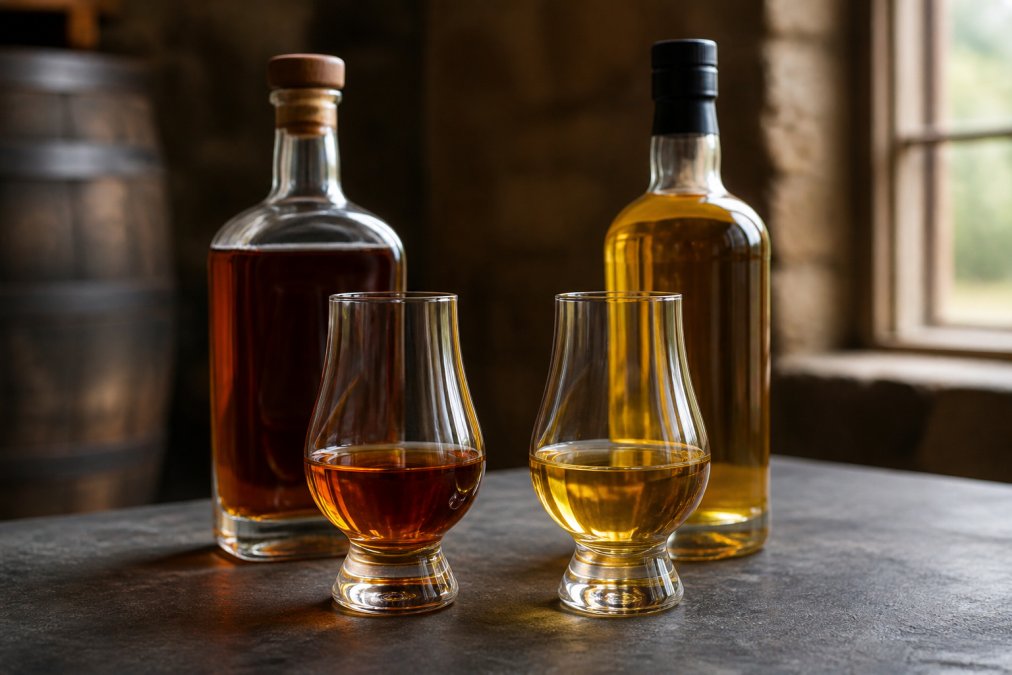
 comparison
Bourbon vs Scotch: A Tasting Guide
Table of Contents
- What Sets Bourbon and Scotch Apart
- How Production Methods Shape Flavor
- How to Taste Whiskey Like a Pro
- How to Host a Whiskey Tasting Party
- Whiskey Tasting Notes Template for Your Collection
- Best Entry Level Scotch for Bourbon Drinkers
- Food Pairing: Bourbon and Scotch at the Table
- Track Your Tasting Journey
- Frequently Asked Questions
Last Updated: September 22, 2026
What Sets Bourbon and Scotch Apart
Bourbon and scotch differ far beyond geography. Legal definitions shape everything you taste: bourbon must be U.S.-produced from at least 51% corn, while scotch must be Scottish and aged in oak for three years minimum. These rules dictate production methods and flavor.
Legal definitions and geographical requirements
U.S. law requires bourbon to be distilled to no more than 160 proof, aged in new charred oak barrels, and bottled at minimum 80 proof. Scotland's Scotch Whisky Association requires three years aging in oak casks (not necessarily new) and minimum 80 proof bottling.
Geography and adherence to regional standards define the spirit. A Scottish whiskey with bourbon-style mash bill is scotch; a Kentucky whiskey with scotch-style production is bourbon.
Grain bills: corn-based versus barley-driven
Bourbon's mash bill must be at least 51% corn, contributing sweetness, vanilla notes, and lighter body. The remaining 49% typically includes rye (spice) or wheat (softness). Corn makes bourbon sweeter and more approachable than scotch.
Scotch traditionally relies on malted barley, which is earthier and more complex than corn. Malting converts starches to fermentable sugars and develops deeper, savory characteristics. This creates a drier palate and more pronounced grain character than bourbon.
The grain distinction is the single biggest factor in taste. The grain bill difference explains roughly 60% of what you'll notice in a bourbon vs scotch tasting experience.
How Production Methods Shape Flavor
Production methods determine aromatic complexity, mouthfeel, and finish. Spirits with different grains diverge further during distillation and aging.
Distillation techniques and charred oak barrel aging
Bourbon distillers use continuous column stills, producing a lighter, cleaner spirit that serves as a neutral canvas for new charred oak barrels. Mandatory new charred oak contributes caramel, vanilla, and color while filtering unwanted compounds and imparting wood sugars.
Scotch producers often use pot stills, batch distillation vessels producing heavier, more flavorful spirits with more congeners. Scotch ages in used casks (often ex-bourbon or sherry), which add complexity without overwhelming grain character.
Barrel choice creates measurable differences. New charred oak dominates the profile, making bourbon taste like vanilla and caramel. Used casks layer flavor subtly, making scotch taste like wood, spice, and grain.
Peat smoke and cask strength differences
Many scotch producers use peat during malting. When barley dries over peat smoke, it absorbs phenolic compounds creating medicinal, smoky, earthy flavors, a distinctive element of the bourbon vs scotch tasting experience. Bourbon never has this character because corn isn't malted and bourbon production doesn't use peat.
Not all scotch is peaty. Lowland and Speyside scotches are often unpeated or lightly peated. Peaty Islay scotch is unmistakable and polarizing, some drinkers love it, others find it off-putting.
Cask strength matters too. Bourbon is often diluted to 80-100 proof; cask strength bourbon is bottled directly from the barrel at 110-140 proof. Scotch similarly comes in standard and cask strength variants. Higher proof spirits have more intense flavor, alcohol burn, and longer finish. For a serious bourbon vs scotch tasting experience, try cask strength versions.
How to Taste Whiskey Like a Pro
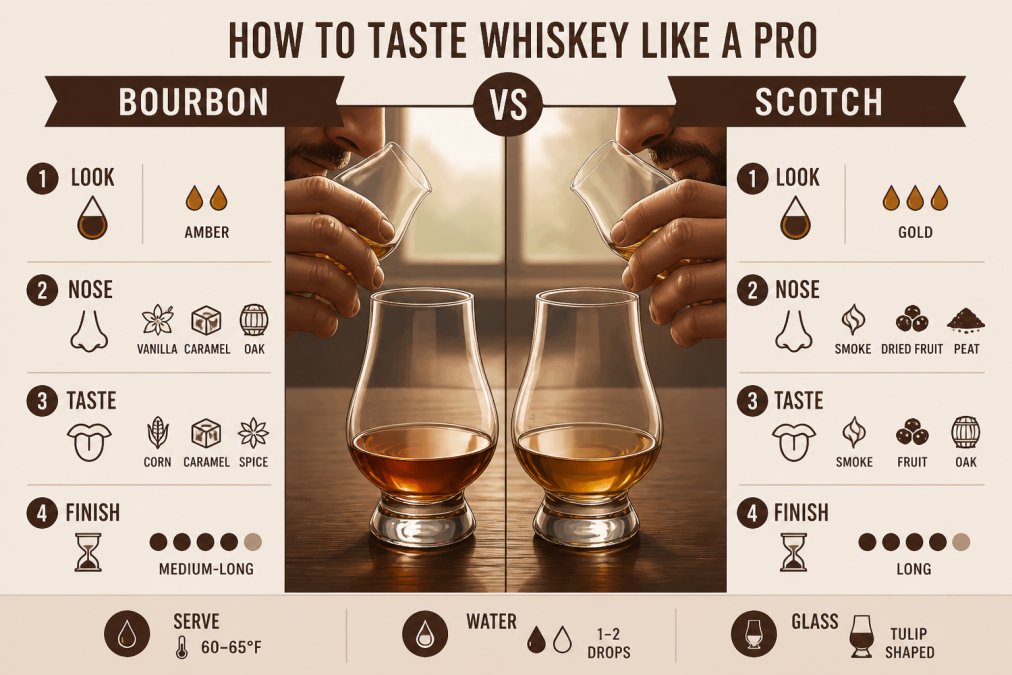
Tasting whiskey is active observation. You train your palate to recognize subtle differences in aroma, flavor, and finish. The process is the same for bourbon or scotch, but the skills reveal why they taste different.
Nosing, palate development, and finish evaluation
Start with nosing. Pour about 1 ounce into a tulip glass (the shape concentrates aromas) and breathe gently. Your first impression is often the most honest. You might notice vanilla, caramel, spice, or smoke depending on whether you're nosing bourbon or scotch.
Take a small sip (about a teaspoon) and let it coat your tongue. Identify the spirit's mouthfeel (thin, oily, silky, or heavy) and primary flavor notes. Bourbon typically has thicker mouthfeel from corn and new oak. Scotch often feels drier, especially if unpeated or aged in ex-bourbon barrels.
The finish is what lingers after you swallow. Does the flavor fade quickly or persist for several seconds? Is it smooth or does it have a slight burn? Bourbon often finishes with vanilla and oak sweetness. Scotch finishes with grain, spice, or smoke depending on its production method. The finish is where you notice the true character of the spirit.
Palate cleansing and avoiding chill filtration bias
Between tastings, cleanse your palate with water and a neutral cracker or bread. This resets your taste receptors so each spirit stands on its own merit. Without palate cleansing, the flavors from the first bourbon will influence how you perceive the scotch.
One technical note: many commercial scotches and bourbons are chill filtered, a process that removes fatty compounds to prevent cloudiness at cold temperatures. Chill filtration strips away some flavor compounds.
How to Host a Whiskey Tasting Party
Hosting a bourbon vs scotch tasting experience at home is straightforward if you follow a few structural principles. The goal is to create an environment where guests can focus on the spirits without distraction, and where the tasting order allows each whiskey to shine.
Setting up your tasting space and selecting glassware
Use tulip glasses or Glencairn glasses, they're designed to concentrate aromas at the rim. Avoid shot glasses; they're too small and don't allow proper nosing. Set up a clean, well-lit space with minimal background noise. Natural light is ideal; fluorescent light distorts color perception.
Structuring a whiskey tasting flight order
The order matters. Start with lighter spirits and progress to heavier, more complex ones. Begin with an unpeated scotch or a wheated bourbon (which has a softer profile). Move to a rye bourbon or a lightly peated scotch. End with a peaty scotch or high-proof cask strength bourbon.
Whiskey Tasting Notes Template for Your Collection
Spirit Name & Details:
- Distillery:
- Region:
- Age Statement:
- Proof/ABV:
- Cask Type:
Appearance:
- Color (pale gold, deep amber, mahogany):
- Clarity:
Nose (Aroma):
- First impression:
- Secondary notes:
- Any off-aromas:
Palate:
- Mouthfeel (thin, oily, silky, heavy):
- Flavor notes:
- Alcohol burn (yes/no):
Finish:
- Duration (short, medium, long):
- Lingering flavors:
Overall Assessment:
- Rating (1-10):
- Would you buy again:
- Food pairings that worked:
Digital tracking is easier than pen and paper. Bourbon Tracker™ offers a structured platform to log these details, and the AI-powered recommendations learn from your tasting history to suggest bottles you're likely to enjoy. Over time, your notes become a personal reference library that helps you understand your own palate preferences.
Best Entry Level Scotch for Bourbon Drinkers
If you're a bourbon drinker exploring scotch for the first time, you need a bridge, a scotch that respects bourbon's sweetness and approachability while introducing you to scotch's grain-driven character.
Bridging the peat and mouthfeel gap
Start with an unpeated or lightly peated Speyside scotch. Speyside scotches are typically fruity, slightly sweet, and less challenging than Islay scotches. They have less peat smoke than their Islay counterparts, so the transition from bourbon feels less jarring. Look for scotches aged in ex-bourbon barrels; they'll have vanilla and caramel notes familiar to bourbon drinkers, but with the barley complexity that defines scotch.
Food Pairing: Bourbon and Scotch at the Table
Bourbon and scotch aren't just after-dinner drinks. They pair brilliantly with food, and understanding how each spirit complements different dishes deepens your appreciation of their distinct flavor profiles.
Track Your Tasting Journey
The difference between casual whiskey drinking and deliberate whiskey education is documentation. When you taste bourbon and scotch side by side, take notes. When you taste the same spirit six months later, compare your notes to how your palate has evolved.
Frequently Asked Questions
Will I like Scotch if I like bourbon?
Many bourbon drinkers enjoy scotch, but it depends on your palate preferences. Bourbon typically offers vanilla notes and caramel undertones from new charred oak barrels, while scotch, especially peated varieties, brings medicinal and smoky character. Start with lighter, unpeated scotches that emphasize fruity and spicy notes rather than peat smoke. These bridge the gap between bourbon's sweetness and scotch's earthier profile, making the transition smoother for your palate.
What's the best entry level scotch for bourbon drinkers?
Look for single malts from Speyside or the Highlands that skip heavy peat influence. These regions produce barley-driven spirits with honey, fruit, and subtle spice, flavors bourbon enthusiasts recognize. Avoid heavily peated expressions initially; they're an acquired taste. Once you track several scotches in Bourbon Tracker™, you'll identify which aromatic complexity and finish profiles match your preferences, helping you navigate beyond entry-level options with confidence.
How should I structure a whiskey tasting flight order?
Arrange your whiskey tasting flight order from lightest to heaviest: start with unpeated or lightly peated scotches, move to bourbon with moderate ABV, then finish with higher-proof cask strength expressions. This progression prevents palate fatigue and allows you to detect subtle vanilla notes and caramel undertones early. Between flights, use water or plain crackers for palate cleansing. Recording each tasting in your notes template helps you remember which order worked best for your palate development.
What's the difference between bourbon and scotch whiskey tasting experiences?
Bourbon vs scotch tasting experiences differ in what you're evaluating. Bourbon tastings focus on vanilla, caramel, and oak influence from new charred barrels and corn-based mash bills. Scotch tastings emphasize grain-to-glass terroir, peat smoke intensity, and the maturation process in used casks. The sensory vocabulary differs too: bourbon drinkers describe finish and mouthfeel in dessert terms, while scotch enthusiasts use medicinal, spicy, and maritime descriptors. Both benefit from structured nosing and palate cleansing between samples.
Why does watering down bourbon or scotch matter for tasting?
Adding water to whiskey opens up aromatic complexity by releasing volatile compounds that were masked by alcohol burn. A few drops, not full dilution, allows you to detect subtle vanilla notes, spicy character, and nuanced finish without overwhelming your palate. Many distilleries release cask strength expressions specifically for enthusiasts who want undiluted character, but even those benefit from a splash of water during nosing. Track how different ABV levels affect your palate in your tasting notes template.