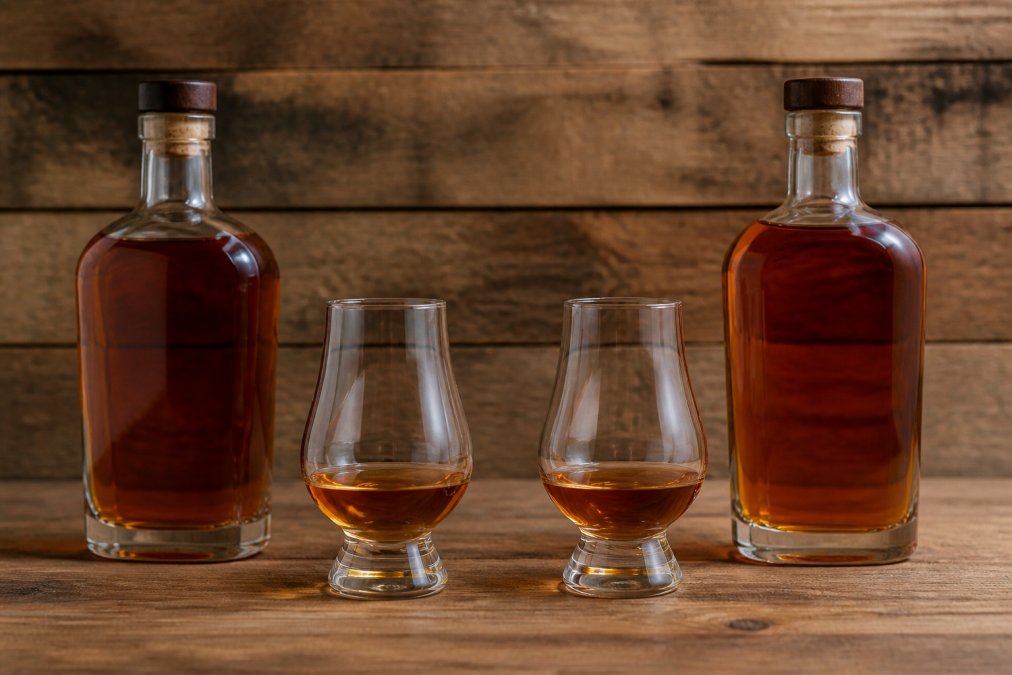
 comparison
Bourbon vs Rye Whiskey: Flavor Differences Explained
Table of Contents
- Bourbon vs Rye Whiskey: Side-by-Side Comparison
- How Mash Bill Shapes Flavor
- Tasting Notes: What You'll Notice in Each Spirit
- How to Taste Whiskey Like a Pro
- Bourbon and Rye in Cocktails: Best Uses
- Rye Whiskey Cocktail Recipes and Pairings
- Aging, Barrel Influence, and Production Differences
- Which Spirit Should You Choose?
- Frequently Asked Questions
Last Updated: September 18, 2026
Bourbon vs Rye Whiskey: Side-by-Side Comparison
Understanding bourbon vs rye whiskey starts with one ingredient: grain. Bourbon must contain at least 51% corn, which gives it a naturally sweeter, smoother character. Rye whiskey, by contrast, uses rye grain as its primary component, delivering a spicier, drier finish. At Bourbon Tracker™, we help enthusiasts understand these distinctions so they can discover new bottles with confidence.
| Characteristic | Bourbon | Rye Whiskey |
|---|---|---|
| Grain Base | At least 51% corn | Primarily rye grain |
| Flavor Profile | Sweet, vanilla, caramel | Spicy, herbal, peppery |
| Mouthfeel | Smooth, oily | Drier, more astringent |
| Barrel Aging | Charred new American oak | Charred American oak (typically) |
| Proof Range | 80-125 proof common | 80-120 proof common |
| Best Cocktail Use | Old Fashioned, Manhattan base | Rye-forward cocktails, Sazerac |
How Mash Bill Shapes Flavor
The mash bill, the recipe of grains used to make whiskey, is the single biggest factor determining flavor and where bourbon and rye diverge most dramatically.
Bourbon's mash bill must contain at least 51% corn, which ferments into sugars that caramelize during barrel aging, creating signature vanilla and caramel notes. Distillers add rye grain (or wheat), barley, and other grains to complete the recipe. When you taste bourbon, you're tasting the grain ratio baked into the distillery's formula.
Rye whiskey's mash bill centers on rye grain as the dominant ingredient. Rye ferments differently than corn, producing compounds that create herbal depth and a drier finish. A high-rye bourbon will taste noticeably spicier than a wheated bourbon (one with wheat instead of rye as the secondary grain).
The mash bill explains why two bourbons from different distilleries taste completely different. A 10-point difference in rye content shifts the entire flavor profile toward spice and complexity.
Log a bourbon's mash bill in Bourbon Tracker™ to record the exact recipe that shaped its flavor. Over time, you'll spot patterns in your preferences and discover new bottles.
Tasting Notes: What You'll Notice in Each Spirit
Bourbon Flavor Profile
Bourbon tastes fundamentally sweet. When you nose a bourbon, you'll catch vanilla, caramel, oak, and sometimes fruit notes like apple or peach. On the palate, it feels smooth and oily with a warm, lingering finish.
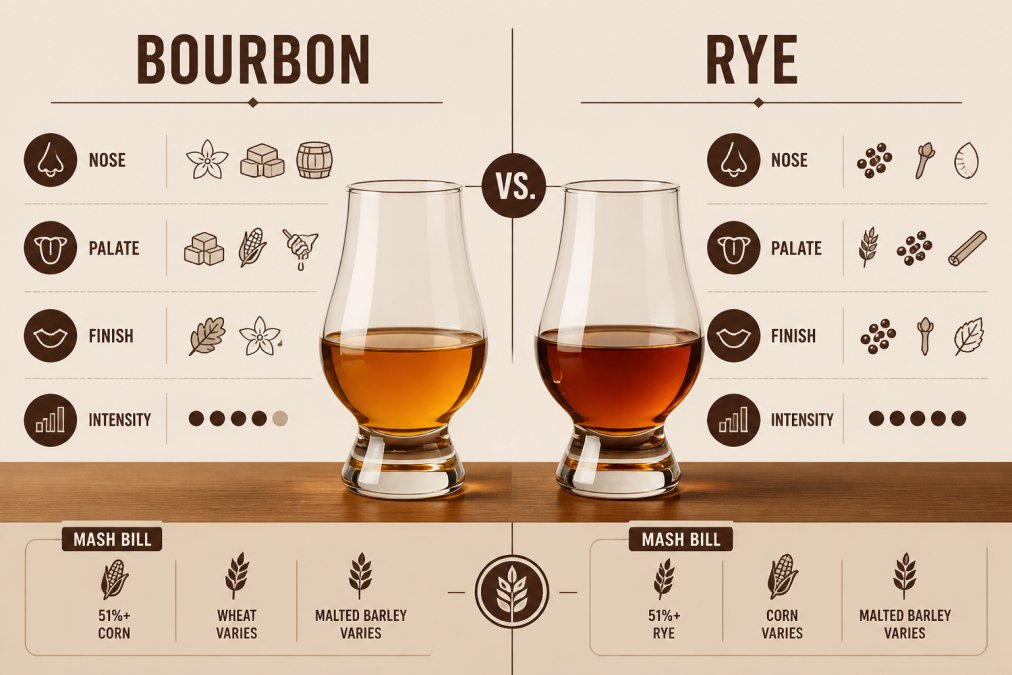
Common bourbon flavor descriptors include caramelized sweetness, vanilla, oak spice, and hints of brown sugar or honey. The smoothness comes from the corn and aging in charred oak barrels, which is why bourbon appeals to people new to whiskey.
Bourbon must age in new, charred American oak barrels (Industry Circular: 76-28). The charring caramelizes the wood's sugars, infusing vanilla and caramel notes. A 4-year bourbon tastes different from a 12-year bourbon because longer aging intensifies these flavors.
Rye Whiskey Flavor Profile
Rye whiskey tastes dry and spicy. When you nose a rye, you'll catch black pepper, herbal notes, and a sharper oak character than bourbon. On the palate, it feels more astringent with a drier finish and lingering spice.
Common rye flavor descriptors include peppery spice, herbal depth, citrus notes, and a drier finish. The astringent quality comes from rye's compounds, which create a tighter, more complex mouthfeel that demands attention.
Rye ages in charred American oak, but the barrel influence plays differently. Where bourbon's sweetness softens the oak, rye's spice amplifies it, creating a more pronounced oak presence and complex finish. Extended barrel time sharpens and deepens herbal and spice notes.
The key difference: bourbon feels like a warm hug; rye feels like a handshake. One is approachable and sweet; the other is bold and complex.
How to Taste Whiskey Like a Pro
Tasting bourbon and rye strategically means using your senses deliberately. Here's the process that builds your palate over time.
Step 1: Look. Pour about half an ounce into a whiskey glass and hold it to the light. Bourbon typically appears amber to deep gold; rye often looks slightly darker with reddish tones. Darker color usually means longer barrel aging. Note clarity and viscosity (the "legs" running down the glass).
Step 2: Nose. Bring the glass close to your nose and breathe gently, don't inhale sharply. Identify the first aromas, then let them evolve. Bourbon often leads with vanilla and caramel; rye with spice and herbal notes. Write down three descriptors for each whiskey. Over time, your nose trains to spot subtler notes.
Step 3: Taste. Take a small sip and let it coat your mouth before swallowing. Notice the mouthfeel (smooth and oily for bourbon, drier and astringent for rye) and flavor progression (first, middle, finish). Does sweetness fade or linger? Does spice build or soften?
Step 4: Add water. A few drops of water opens up the whiskey's flavors and reveals subtle notes that proof can mask. This is standard professional practice.
Step 5: Compare. Taste bourbon and rye back-to-back. The contrast sharpens your perception and trains your palate faster than tasting them separately.
Log your tasting notes in Bourbon Tracker™ to record flavor profiles, proof, age, and personal impressions. Over months, you'll see patterns in your preferences, and that data becomes your AI-powered recommendation engine.
Bourbon and Rye in Cocktails: Best Uses
Bourbon and rye perform completely differently in cocktails because of their flavor profiles. Understanding where each excels helps you choose the right spirit for the drink you're making.
Bourbon in cocktails works best when you want sweetness and smoothness to anchor the drink. The classic Old Fashioned showcases bourbon: the spirit's sweetness balances the bitters and smooth mouthfeel carries the drink. Bourbon also excels in whiskey sours, where its sweetness softens the lemon juice.
Rye in cocktails works best when you want spice and complexity to stand out. The Sazerac is rye's signature cocktail, where the spirit's spice dominates and absinthe adds herbal depth. Rye also excels in Manhattans, where its drier finish balances vermouth's sweetness.
The rule of thumb: if you want a smooth, approachable cocktail, reach for bourbon.
Rye Whiskey Cocktail Recipes and Pairings
Sazerac
The Sazerac is rye's most famous cocktail. It's simple, bold, and lets the spirit shine.
- 2 oz rye whiskey
- 1 tsp absinthe (or pastis)
- 2-3 dashes Peychaud's bitters
- Lemon peel
Rye Manhattan
The Manhattan is rye's other classic. It's smooth but complex.
- 2 oz rye whiskey
- 1 oz sweet vermouth
- 2 dashes Angostura bitters
- Cherry for garnish
Food Pairings with Rye
Rye's spice and herbal depth pair beautifully with rich, savory foods. Smoked meats, aged cheeses, and dark chocolate all work. The peppery finish cuts through fat and cleanses the palate between bites. Rye also pairs well with spiced desserts like cinnamon cake or gingerbread. The spirit's own spice echoes the food's flavors, creating harmony rather than contrast.
Aging, Barrel Influence, and Production Differences
Aging transforms whiskey from a raw spirit into a complex drink. Both bourbon and rye age in charred American oak, but the process affects each spirit differently.
Which Spirit Should You Choose?
The choice between bourbon and rye comes down to three questions: What's your palate preference? How will you drink it? What flavors do you want to explore?
Frequently Asked Questions
What are the primary flavor differences between bourbon and rye whiskey?
Bourbon tends toward caramelized sweetness, vanilla, and oak warmth because its mash bill is at least 51% corn. Rye whiskey delivers spicy, peppery, and herbal notes with a drier finish due to its high rye grain content. The corn in bourbon creates oily mouthfeel and citrus undertones, while rye's astringent quality adds complexity and bite. Your palate preference determines which suits you, sweeter notes or bold spice.
How does the mash bill affect the taste of bourbon versus rye?
Mash bill, the grain recipe, directly controls flavor. Bourbon requires at least 51% corn, which produces sweetness and smoothness. Rye whiskey uses a higher rye grain ratio, creating spicy and herbal depth. A bourbon mash bill explained: corn provides the base sweetness, while secondary grains like rye or barley add complexity. Rye's high grain content produces peppery notes and a tighter, drier finish. Distillers adjust these ratios to fine-tune the final spirit's character.
Can you use bourbon and rye interchangeably in cocktails?
Not always. Bourbon's sweetness and smoothness shine in Old Fashioneds, Manhattans, and sours where you want caramelized oak and vanilla to balance citrus or bitters. Rye's spicy, astringent profile cuts through rich mixers and adds boldness to spirit-forward drinks. In a Manhattan, rye's herbal depth complements vermouth better than bourbon's sweeter profile. For cocktails calling for rye specifically, substituting bourbon softens the drink and changes the intended flavor balance.
Is rye whiskey always spicier than bourbon?
Rye whiskey is typically spicier and drier than bourbon due to its grain composition, but not always dramatically so. A bourbon with a high rye secondary grain can approach rye's peppery notes. Age and barrel influence also matter, older spirits develop more oak astringency. High-proof rye emphasizes spice more than lower-proof versions. Tasting both side-by-side reveals the difference clearly, but individual distillery choices in mash bill and aging affect how pronounced the spice becomes.
What role does barrel aging play in bourbon versus rye flavor?
Charred oak barrels shape both spirits profoundly. Bourbon develops caramelized sweetness, vanilla, and oak influence from the charred interior, the longer it ages, the more complex these notes become. Rye also gains vanilla and oak character, but its natural spicy, herbal foundation remains dominant. Fermentation and distillation set the base flavor, but the barrel adds depth, smoothness, and aged complexity to both. Proof, barrel char level, and time in wood determine how much oak influence each spirit absorbs.