 listicle
Whiskey Alternatives: A 2026 Guide for Collectors
Table of Contents
- Why Whiskey Enthusiasts Seek Alternatives
- Non-Alcoholic Whiskey Brands and Spirit Alternatives
- Home Whiskey Aging Kits and DIY Maturation Methods
- Legal Status of Home Distilling in the US
- Global Spirit Alternatives: Rum, Armagnac, and Mezcal
- Independent Bottlers and Small-Batch Sourcing
- Sensory Mapping and Tasting Notes for Substitutes
- Sustainability and Craft Ethics in Spirit Production
Last Updated: August 10, 2026
Why Whiskey Enthusiasts Seek Alternatives
Whiskey collectors face a genuine problem: desired bottles are either impossible to find, prohibitively expensive, or locked behind allocation systems. A 30-year-old Pappy Van Winkle that cost $60 in 2010 now trades for $3,000 on the secondary market.
This scarcity drives serious collectors toward whiskey alternatives, not as substitutes, but as legitimate exploration. Some seek non-alcoholic options for health or lifestyle reasons. Others chase global spirit alternatives that offer similar complexity, terroir, and craft production values. Still others turn to home aging kits and independent bottlers as ways to expand their palates without emptying their wallets.
This guide from Bourbon Tracker™ covers the full spectrum of whiskey alternatives available to collectors in 2026. Whether you're looking to diversify your palate, respect your budget, or explore non-alcoholic options, you'll find practical pathways forward.
Non-Alcoholic Whiskey Brands and Spirit Alternatives
Non-alcoholic whiskey has evolved beyond novelty. These products now deliver genuine flavor complexity through botanical infusion, careful blending, and aging in charred oak, without ethanol.
Early entries tasted thin and overly herbal. Current offerings are substantially better. They won't fool a bourbon expert, but they deliver genuine drinking pleasure for situations where alcohol doesn't fit. Some collectors use non-alcoholic alternatives for afternoon tastings, avoiding cognitive drag from multiple high-proof pours.
Brands like Seedlip and Ghia have established that non-alcoholic spirits can command respect. They're expensive, comparable to mid-range whiskeys, but craft production methods justify the cost.
For collectors, the value proposition differs from casual drinkers. You're not replacing whiskey; you're adding a category that shares whiskey's emphasis on flavor development, terroir, and craft production.
Home Whiskey Aging Kits and DIY Maturation Methods
Home aging represents one of the most accessible ways to explore whiskey alternatives while maintaining creative control. You buy a spirit, bourbon, rye, or high-proof neutral grain spirit, and age it yourself using charred oak staves, chips, or small barrels.
Oak influence comes from extraction (pulling compounds from the wood) and oxidation (exposing the spirit to oxygen through porous barrel). Commercial distilleries age whiskey for years in full-size barrels. Home aging accelerates this through higher surface-area-to-volume ratios and active management.
A common misconception is that home aging produces whiskey. Technically, it doesn't. Federal law restricts the "whiskey" designation to spirits aged in charred new oak barrels under specific conditions. Home-aged spirits are instead "distilled spirits" or "aged spirits."
Wood Staves and Charred Oak Techniques
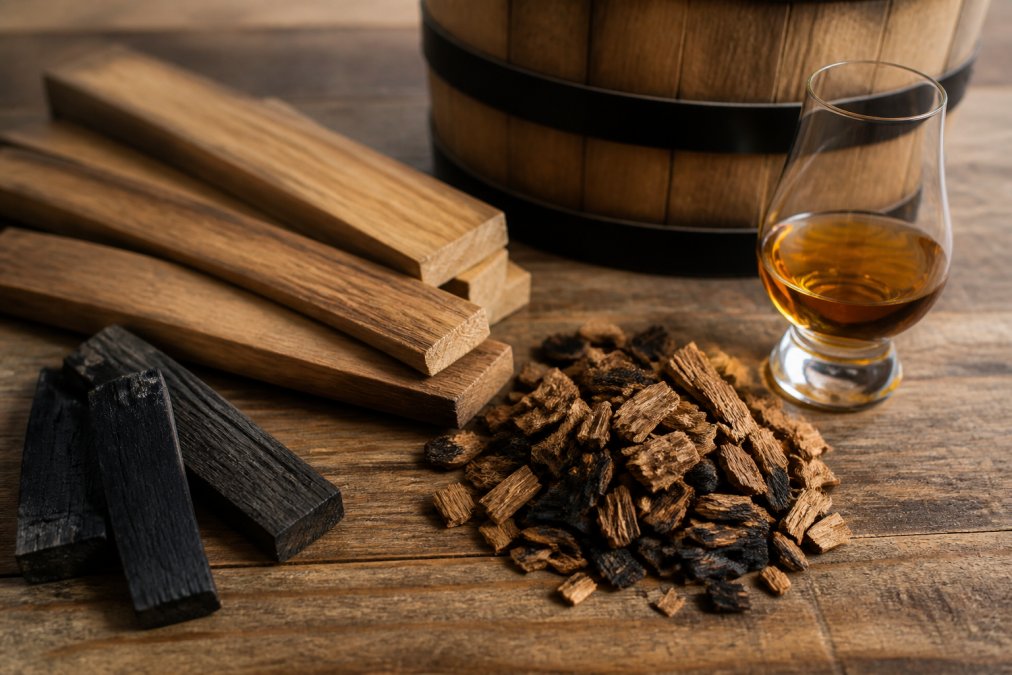
Wood staves represent the most practical home aging method. They're inexpensive, space-efficient, and deliver measurable results within weeks rather than years.
The char level matters significantly. Light char develops vanilla and caramel notes. Medium char adds spice and oak character. Heavy char introduces deeper wood flavors and tannins. Most home enthusiasts start with medium-char American oak, which produces balanced results.
Infusion duration depends on your goals. Many collectors report noticeable change within 2-4 weeks. By 8-12 weeks, oak influence becomes pronounced. Beyond 16 weeks, the spirit risks becoming over-oaked.
Temperature stability matters more than expected. Spirits aged in warm environments develop faster than those in cool basements. A consistent 65-70°F produces predictable results.
The spirit you start with shapes everything. High-proof bourbon (100+ proof) accepts oak influence better than lower-proof spirits. Rye develops spice notes that complement oak beautifully.
Flavor Profile Development Through Home Aging
Tracking flavor evolution is where home aging becomes genuinely interesting. Unlike commercial whiskey, home aging lets you document how a spirit changes week by week.
Bourbon Tracker™ becomes invaluable here. You log your starting spirit's characteristics, then add tasting notes as oak influence develops. Over time, you build a personal database showing exactly how different base spirits, oak types, and aging durations affect flavor profile.
Many collectors discover preferences they didn't know they had. Someone might expect to prefer heavily oaked spirits but find that medium oak and shorter aging produces more balanced results.
The sensory mapping process involves evaluating appearance, nose, palate, and finish separately. Appearance shifts from clear to amber as oak compounds leach into the spirit. The nose develops from simple alcohol vapors to complex aromatics: vanilla, caramel, spice, wood. The palate gains body and warmth. The finish extends from sharp to lingering and smooth.
Legal Status of Home Distilling in the US
Home distillation, creating new spirits through fermentation and distillation, is federally illegal in the United States, even for personal use. Home aging (taking an existing spirit and treating it with oak) is legal. Home fermentation (making wine or beer) is legal within specific limits. Home distillation is not legal under any circumstance.
Federal law prohibits unlicensed distillation regardless of intended use. The penalties are serious: federal charges can result in fines and imprisonment.
For collectors, this means your home aging experiments must start with commercially produced spirits. You cannot legally create the base spirit yourself. You can purchase high-proof neutral spirits and age them at home, or buy unaged whiskey (white dog) from distilleries and age it themselves. The key distinction: you're starting with a legal, commercial product and modifying it, not creating new spirit from scratch.
Global Spirit Alternatives: Rum, Armagnac, and Mezcal
Exploring alternatives doesn't mean abandoning whiskey's core appeal, complexity, craft production, and flavor depth. It means recognizing that other spirits deliver these qualities through different production methods and terroir.
Rum offers perhaps the broadest range of flavor profiles. Agricultural rum (made from fresh sugarcane juice) tastes completely different from molasses-based industrial rum. Rhum agricole from Martinique delivers grassy, vegetal notes with spice. Aged rum develops oak influence similar to whiskey, creating a natural bridge for collectors transitioning from bourbon.
Armagnac represents one of the oldest continuous spirit traditions in the world. Often overshadowed by Cognac, serious collectors recognize Armagnac as more rustic and complex. Single distillation and aging in black oak create a different flavor trajectory. Armagnac develops slower, creating more integrated oak character and deeper fruit notes.
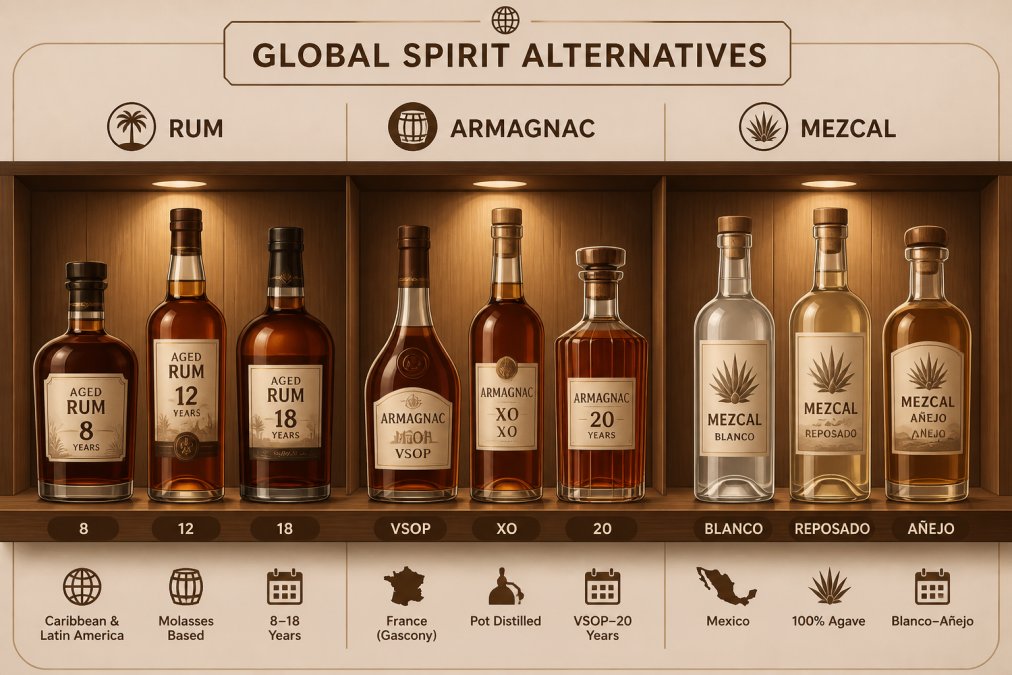
Mezcal represents an entirely different approach to spirit production. Rather than distillation in copper stills, mezcal uses traditional pit-roasting of agave hearts, creating smoky, complex flavor profiles that appeal to collectors seeking something genuinely different from whiskey.
The key difference between mezcal and tequila matters. Tequila is a specific type of mezcal made from blue agave in a defined region. Mezcal can use various agave species from across Mexico, creating vastly different flavor expressions. Mezcal's terroir, the specific agave variety, soil, altitude, and traditional production methods, creates a sense of place comparable to what whiskey enthusiasts seek in bourbon from specific Kentucky regions.
Independent Bottlers and Small-Batch Sourcing
Independent bottlers represent one of the most exciting developments for serious collectors. These companies source whiskey from distilleries and bottle it under their own label, often purchasing cask-strength whiskey before commercial blending and dilution.
This model offers several advantages. First, cask-strength whiskey delivers more flavor complexity than standard bottlings. The difference in mouthfeel and aromatic intensity is substantial. Second, independent bottlers often release single-barrel or small-batch selections. Rather than blending hundreds of barrels for consistency, they bottle individual casks. Third, independent bottlers access whiskey that never reaches retail.
The challenge is sourcing. Independent bottlers don't have the distribution networks of major distilleries. You find them through specialty retailers, auction houses, or direct relationships. Pricing varies widely. Some independent bottlings cost less than official releases because of lower overhead. Others command premiums because they're rare or from particularly sought-after distilleries.
Sensory Mapping and Tasting Notes for Substitutes
When exploring alternatives, systematic sensory evaluation becomes essential. You're building a personal database of how different spirits compare across multiple dimensions.
Sensory mapping involves evaluating four distinct categories: appearance, nose (aroma), palate (taste), and finish.
Appearance reveals information. Color intensity indicates oak influence and age. Legs (viscosity trails on the glass) suggest proof and body.
Nose evaluation requires technique. First, smell from a distance to catch volatile aromatics. Then bring the glass closer for subtle notes. Finally, take a small sip and exhale through your nose, retronasal olfaction reveals flavors your palate alone would miss.
Palate assessment evaluates taste and mouthfeel. Taste includes sweetness, bitterness, spice, and fruit notes. Mouthfeel includes body, warmth, and texture.
Finish describes what happens after you swallow. Does it fade quickly or linger? A long, pleasant finish indicates quality and balance.
Bourbon Tracker™ lets you record these observations systematically. Over time, you build a personal tasting database showing how different spirits compare.
Sustainability and Craft Ethics in Spirit Production
Serious collectors increasingly care about how spirits are produced, not just how they taste. Sustainability and craft ethics have moved from niche concerns to mainstream considerations.
The sustainability question involves multiple dimensions. Water usage in production is significant. Grain sourcing matters, some distilleries partner with local farmers using sustainable practices. Packaging represents another sustainability dimension. Glass bottles are recyclable but energy-intensive to produce and transport.
Craft ethics involves human dimensions. How are workers treated? What wages do distillery employees earn? Some producers prioritize fair labor practices and community investment.
The mezcal category illustrates these tensions particularly well. Traditional mezcal production involves small-scale producers using family methods. Rapid market growth has created incentives for industrial-scale mezcal production that abandons traditional methods and overexploits agave resources.
Exploring alternatives offers an opportunity to align your collecting practices with your values. Bourbon Tracker™ helps you track not just what you're drinking but why. You can note the distillery's sustainability practices, sourcing methods, or craft ethics alongside your tasting notes.
The whiskey alternatives landscape offers genuine opportunities for collectors to expand their palates, respect their budgets, and align their collecting practices with their values. Whether you're exploring non-alcoholic options, aging spirits at home, discovering independent bottlers, or investigating global alternatives, the infrastructure now exists to do this systematically and thoughtfully.
Bourbon Tracker™ makes this exploration more rewarding by letting you track your discoveries, document your preferences, and connect with a community of collectors pursuing similar paths. Start logging your alternatives today, you'll be surprised what you learn about your own palate when you're tracking the full spectrum of what you're tasting.
| Alternative Type | Best For | Key Consideration |
|---|---|---|
| Non-Alcoholic Spirits | Health-conscious collectors, afternoon tastings | Higher price point; genuine quality available |
| Home Aging Kits | Budget-conscious exploration, creative control | Requires patience; legal only with commercial base spirits |
| Global Alternatives (Rum, Armagnac, Mezcal) | Expanding palate, discovering new terroir | Different production methods require adjusted tasting approach |
| Independent Bottlers | Access to rare, high-proof expressions | Requires sourcing effort; pricing varies widely |
| Small-Batch Sourcing | Uniqueness, single-barrel character | Less consistent availability; premium pricing common |
Frequently Asked Questions
Is home distilling legal in the United States?
No. Federal law prohibits home distillation of spirits under 26 U.S.C. § 5601, even for personal use. Unlike home beer and wine production, which are legal in limited quantities, distilling whiskey or any spirit at home violates federal law and can result in criminal penalties. However, aging spirits you've purchased legally, using wood staves or kits, is permissible.
What are the best non-alcoholic whiskey brands available?
Several brands replicate whiskey's flavor profile without alcohol: Ritual Zero Proof, Seedlip, and Lyre's offer botanical-based spirits with smoky, oaky, or spiced notes. These use fermentation, distillation of botanicals, and oak infusion to approximate whiskey's mouthfeel and aromatic complexity. Quality varies; taste-testing is recommended to find your preference.
Can I age whiskey at home using wood aging kits?
Yes. Home whiskey aging kits use charred oak staves or small barrels to mature spirits you've purchased legally. The wood aging process develops flavor through interaction with charred oak, creating tasting notes of vanilla, caramel, and spice. Results depend on wood type, char level, and aging duration, typically 2-12 weeks for noticeable changes in flavor profile and proof.
How do whiskey alternatives compare in taste to actual whiskey?
Whiskey alternatives vary widely. Non-alcoholic spirits use botanical infusions and oak influence to approximate whiskey's character, but lack the fusel alcohols and complex distillation byproducts that define traditional whiskey's mouthfeel. Independent bottlers and craft spirits often match whiskey's sensory profile more closely than commercial alternatives, though at higher cost.
What should I look for when choosing a whiskey alternative?
Consider your primary intent: flavor replication, collection diversity, or health/dietary reasons. For taste, examine the mash bill or botanical composition and read tasting notes. For collection expansion, explore global alternatives like rum, armagnac, or mezcal with similar aging processes. For non-alcoholic options, prioritize brands using charred oak and fermentation-based production methods.
This article was written using GrandRanker