 listicle
Best Tools for Whiskey Collectors: A 2026 Guide
Table of Contents
- Essential Glassware for Whiskey Collectors
- Water Droppers, Pipettes, and Measuring Tools
- Chilling Stones vs. Ice Sphere Molds: What Serious Collectors Actually Use
- Decanters, Storage Solutions, and Tasting Journals
- How to Store Whiskey Bottles Long Term Without Losing Value
- Whiskey Inventory Management Software for Collectors
- Building the Right Whiskey Collector Tools Setup for Your Level
- Conclusion
Last Updated: August 5, 2026
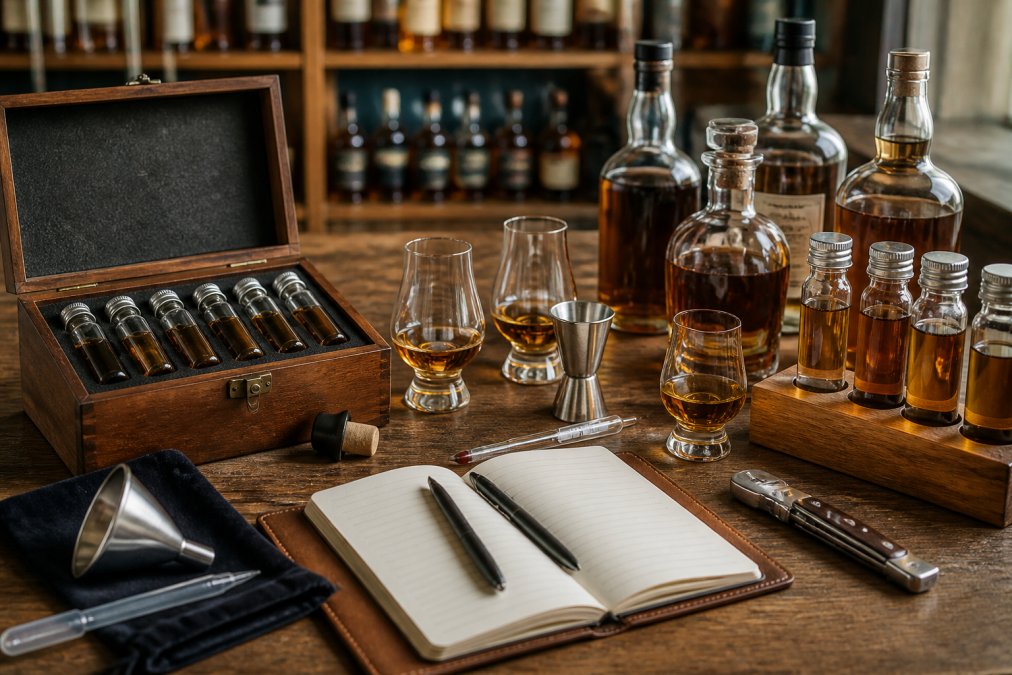
The best tools for whiskey collectors go far beyond a nice glass and a bottle of good bourbon. Serious collectors need the right physical gear, smart storage solutions, and digital tools to track their inventory. At Bourbon Tracker™, we've put together this guide covering every layer of a collector's toolkit, from the nosing glass on your tasting table to the software tracking your 150-bottle inventory.
Below, you'll find specific product recommendations, honest trade-offs, and two angles most collector guides skip entirely: collection insurance and the climate control details that actually protect your investment long term.
Quick Picks:
- Best Nosing Glass: Glencairn Whisky Glass, the collector's standard for aroma concentration
- Best Modern Glass: Norlan Double-Walled Glass for precision nosing with a contemporary aesthetic
- Best Chilling Option: Ice sphere molds for serious tasters; chilling stones for zero dilution purists
- Best Digital Tool: Bourbon Tracker™ for free, no-download inventory management with AI recommendations
- Best Storage Solution: Dedicated whiskey cabinet with temperature and light control
Essential Glassware for Whiskey Collectors
The right glass directly shapes what you smell and taste in every pour. A standard rocks glass flattens the aroma profile; a proper nosing glass concentrates it. For collectors who spend serious money on bottles, using the wrong glass wastes the investment.

Glencairn Glass: The Collector's Standard
The Glencairn Whisky Glass is the industry benchmark. Its tulip shape concentrates aromas toward the nose while the wide bowl lets you appreciate the spirit's color. The solid base prevents hand warmth from affecting the whiskey, and the crystal-clear glass doesn't distort what's in it.
At around $7.99 per glass, it's one of the most affordable upgrades a collector can make. Many experienced tasters own a set of six so they can run a proper tasting flight without washing between pours. The only drawback: some collectors find the stemless design less elegant than a traditional copita, though this is purely a style preference.
Norlan Double-Walled Glass: Modern Nosing Precision
The Norlan Whisky Glass uses double-walled borosilicate construction to insulate the whiskey from your hand's heat. The inner bowl geometry directs vapor toward the nose more efficiently than a standard tulip shape. The design was refined with input from master distiller Jim McEwan, giving it genuine technical credibility.
A set of two runs $48.00, roughly six times the per-glass cost of a Glencairn. For most collectors, the Norlan earns its price as a dedicated single-malt nosing glass. The borosilicate glass is more durable than standard crystal, which matters for travel to distillery events. For precision nosing of high-proof or cask strength expressions, the Norlan delivers a meaningfully different experience.
Water Droppers, Pipettes, and Measuring Tools
Dilution is one of the most misunderstood tools in a whiskey enthusiast's kit. Adding a few drops of water to a cask strength pour opens up the aroma profile by breaking chemical bonds that suppress volatile compounds at higher proof.
A glass pipette, like the Urban Bar USA Whisky Water Pipette ($14.00), gives you drop-by-drop control over dilution. The glass construction keeps the dropper taste-neutral, and the long stem keeps your hand warmth away from the bowl. The trade-off is fragility; glass pipettes break easily at crowded tasting events.
For measuring pours consistently across a flight, a precision jigger with clear measurement lines ensures serving consistency when comparing two expressions side by side. According to the Scotch Whisky Research Institute's guidance on sensory evaluation, water addition can significantly alter the perception of aroma compounds in high-proof spirits, which is why professional nosing panels routinely use pipettes.
Chilling Stones vs. Ice Sphere Molds: What Serious Collectors Actually Use
This debate comes down to what you're optimizing for. Zero dilution requires whiskey stones; meaningful temperature reduction with minimal dilution requires a large ice sphere.
| Option | Dilution | Chill Speed | Reusable | Best For |
|---|---|---|---|---|
| R.O.C.K.S. Granite Stones | None | Slow | Yes | Zero-dilution purists |
| Ice Sphere Mold | Minimal | Moderate | Yes (mold) | Chilled neat pours |
| Standard ice cubes | High | Fast | No | Cocktails, not neat |
R.O.C.K.S. Whiskey Chilling Stones ($26.95 for a set of six) are made from solid granite and hold temperature reasonably well after a few hours in the freezer. The honest limitation: stones don't chill as fast or effectively as ice. They work best for collectors who want a subtle temperature drop without any dilution.
Houdini Ice Sphere Molds ($9.99 for a four-cavity tray) create large spheres that melt significantly slower than standard ice cubes because they have less surface area relative to their mass. A well-made sphere will chill a pour meaningfully while adding only minimal dilution over 20-30 minutes. The food-grade silicone is dishwasher safe. The main inconvenience is planning ahead: spheres need several hours to freeze.
Most serious whiskey enthusiasts own both. Stones for quick, zero-dilution sips of expressions they know well; spheres for longer sessions where a slight chill improves the experience.
Decanters, Storage Solutions, and Tasting Journals
Crystal Decanters for Display and Serving
A decanter serves display and serving functions. The Waterford Lismore Square Decanter ($350.00) showcases the amber color of aged whiskey in a way that a standard bottle cannot.
Important clarification: whiskey does not benefit from decanting the way wine does. Spirits are shelf-stable in their bottles, and long-term storage in a decanter increases oxidation and evaporation. A decanter is for serving and display, not long-term storage. If you're pouring from a bottle you plan to finish within weeks, a crystal decanter adds aesthetic value. For storing a rare bottle for months, keep it in the original sealed bottle.
Tasting Journals: Paper vs. Digital Note-Taking
Tasting notes are the collector's long-term memory. After 50 or 60 bottles, individual impressions blur without documentation.
The Whisky Journal by One More Dram ($14.99) is a compact paper journal with 50 structured note-taking sheets, a color reference chart, and an introductory chapter on tasting. The limitation is obvious: 50 entries fills quickly, and paper notes aren't searchable.
Digital note-taking is searchable, shareable, and scalable. A platform integrating tasting notes with inventory tracking eliminates friction between cross-referencing notes and your bottle list.
How to Store Whiskey Bottles Long Term Without Losing Value
Proper long-term storage separates a collection that holds its value from one that quietly degrades on a shelf.
Climate Control and Light Exposure
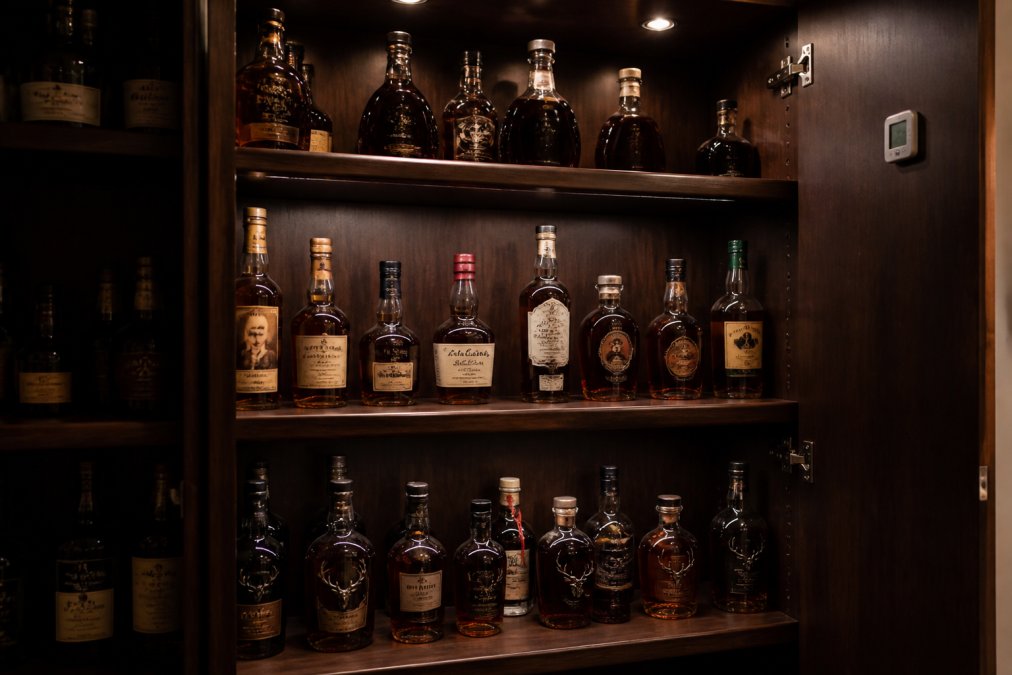
Temperature is the primary variable. Whiskey stored consistently between 59°F and 65°F experiences less expansion and contraction. Repeated thermal cycling accelerates oxidation and can degrade the cork seal. A dedicated whiskey cabinet, temperature-controlled wine cooler, or basement storage area with stable ambient temperature all work well.
Light exposure is equally damaging. UV light degrades both the whiskey's color and flavor compounds. Direct sunlight is worst, but consistent fluorescent lighting causes cumulative damage. Store bottles away from windows, and use UV-filtering glass on cabinet doors if your display is in a lit room.
Bottle position matters for spirits differently than wine. Store whiskey upright, not on its side. High-proof spirits can degrade natural cork if in constant contact with it, introducing off-flavors and risking the seal. As the Distilled Spirits Council of the United States notes, upright storage is the standard recommendation for opened and unopened bottles alike.
Cleaning and Maintenance for Long-Term Preservation
Residual detergent inside a nosing glass disturbs aroma perception. Rinse nosing glasses with hot water only, no soap, and allow them to air dry inverted. For crystal decanters, a decanter cleaning kit with small brushes and rinse beads is worth owning.
For bottle labels, avoid high-humidity storage areas. Label damage reduces resale value significantly on collectible bottles. A silica gel packet inside an enclosed cabinet helps manage moisture.
Whiskey Inventory Management Software for Collectors
Whiskey inventory management software is the tool most collectors add last and wish they'd added first. Once a collection grows past 30 or 40 bottles, managing it mentally becomes unreliable. A proper digital inventory system tracks what you have, prevents duplicate purchases, and preserves tasting notes.
The best whiskey inventory management software logs bottles with useful detail, stores searchable tasting notes, manages a wishlist, surfaces recommendations based on your palate, and stays accessible without requiring a dedicated app install.
What Bourbon Tracker™ Does Differently
Bourbon Tracker™ combines free access, no-download convenience, AI-powered recommendations, and integrated community features in a single tool.
Most collectors who have tried other platforms encounter the same frustrations: the app goes behind a paywall once you've invested your data, the recommendation engine surfaces popular releases rather than bottles matched to your palate, or the platform feels designed for casual drinkers rather than serious collectors managing 100+ bottles.
Bourbon Tracker™ addresses all of these directly. The platform is free to use with no download required, so you can access your collection from any device. The AI-powered recommendations are built around your specific tasting history, not general popularity rankings. The platform handles 150+ bottles without slowing down.
The community features matter too. Sharing reviews, curating wishlists, and seeing what other collectors are tracking adds a social dimension that purely private inventory tools lack.
Digital Security and Collection Insurance Considerations
Collection insurance is not covered by standard homeowners or renters insurance in most cases. Spirits collections are typically classified as personal property with payouts capped well below replacement value. A dedicated collectibles rider or standalone spirits insurance policy is worth investigating if your collection has significant market value. The Insurance Information Institute's guide to collectibles coverage is a useful starting point for understanding what standard policies cover.
Your collection records, tasting notes, and wishlist represent years of documentation. Ensure any platform you use has clear data privacy controls, and understand whether your collection data is visible to other users by default or only when you choose to share it.
Building the Right Whiskey Collector Tools Setup for Your Level
The best tools for whiskey collectors differ at every stage of the hobby.
| Collector Level | Priority Tools | Skip For Now |
|---|---|---|
| Beginner (1-20 bottles) | Glencairn glasses (x4), tasting journal, Bourbon Tracker™ | Crystal decanter, chilling stones |
| Intermediate (20-75 bottles) | Norlan glass, pipette, ice sphere mold, dedicated cabinet | Expensive reference books |
| Advanced (75+ bottles) | Full glassware set, climate-controlled storage, collection insurance | Nothing; most tools are now relevant |
For beginners, the priority is developing palate through consistent glassware and note-taking. Four Glencairn glasses, a tasting journal or digital equivalent, and Bourbon Tracker™ covers everything you need. Resist buying expensive decanters before you have a clear sense of what you're building.
For intermediate collectors, the gaps tend to be in precision tools and storage. A pipette for controlled dilution, an ice sphere mold for chilled pours, and a proper cabinet with temperature and light control are the meaningful upgrades.
For advanced collectors, the toolkit is largely complete, and the focus shifts to protection. Climate-controlled storage, collection insurance, and a digital inventory system that handles large collections are the priorities.
A common mistake at every level is buying display pieces before functional tools. A beautiful crystal decanter with no proper nosing glasses and no inventory system is an aesthetic choice, not a collector's setup.
According to the American Craft Spirits Association's resources on spirits appreciation, developing a structured tasting practice with the right glassware, note-taking habits, and consistent methodology is the foundation of meaningful palate development for serious collectors.
Managing a whiskey collection well requires the right physical tools, proper storage conditions, and a digital system that grows with your collection. Bourbon Tracker™ brings together inventory tracking, tasting notes, wishlist management, and AI-powered recommendations in a single free platform with no download required. For collectors at any level, it is the most direct path to a collection that is organized, documented, and actively improving. Track My Collection at Bourbon Tracker™ and start building the system your bottles deserve.
Frequently Asked Questions
What are the best apps for tracking a whiskey collection?
The best whiskey inventory management software lets you log bottles, record tasting notes, manage a wishlist, and get personalized recommendations all in one place. Bourbon Tracker™ is a free, no-download option built specifically for bourbon and whiskey collectors. It includes AI-powered suggestions based on your palate and connects you with a broader collector community, making it a practical choice whether you have 10 bottles or over 150.
What accessories do you need for a whiskey tasting at home?
A solid home tasting setup starts with proper nosing glasses, ideally a tulip-shaped option like the Glencairn. Add a glass pipette for controlled water dilution, a jigger for precise pours, and a tasting journal to record aroma profiles and palate impressions. Chilling stones or an ice sphere mold round out the kit if you prefer your whiskey cold. For collectors running a tasting flight, having matching glassware and a pour spout helps maintain serving consistency.
How should you store a whiskey collection to maintain value?
Store bottles upright to prevent the cork from prolonged spirit contact, which can cause deterioration over time. Keep them in a cool, dark space between 59 and 65°F with stable humidity. Direct sunlight fades labels and can affect the whiskey's color and aroma profile. A dedicated whiskey cabinet with UV-resistant glass offers the best protection. For high-value bottles, document your collection digitally and check whether your homeowner's insurance covers spirits as personal property.
Are whiskey stones worth using for serious collectors?
Whiskey stones, typically made from granite or soapstone, chill your drink without any dilution, which preserves the original proof and flavor profile. For cask strength pours where you want zero added water, they make sense. The trade-off is that they chill more slowly and less deeply than ice. Ice sphere molds offer a middle ground: a large, slow-melting sphere adds minimal dilution while dropping the temperature more effectively. Most connoisseurs keep both on hand depending on the pour.
What is the best way to catalog whiskey bottles in a large collection?
Digital cataloging beats paper for collections over 20 bottles. A dedicated platform like Bourbon Tracker™ lets you log each bottle with tasting notes, purchase details, and wishlist status without needing to download anything. For physical organization, store bottles with labels facing forward and group by distillery or region. Cross-referencing your physical setup with a digital inventory makes it easy to locate specific bottles and track which you've opened, finished, or set aside for long-term storage.
This article was written using GrandRanker